Zona Rosa (Pink Zone): Mexico City's Nightlife, Korean Food, and LGBTQ+ District
Zona Rosa is a dense, walkable district in central Mexico City known for its LGBTQ+ scene, Korean restaurants, late-night bars, and proximity to Paseo de la Reforma. Free to enter and open around the clock, it rewards visitors who know when and how to explore it.
Quick Facts
- Location
- Colonia Juárez, central Mexico City — bounded roughly by Avenida Insurgentes (east), Avenida Chapultepec (south), Paseo de la Reforma (north), and Avenida Florencia/near Calle Londres (west)
- Getting There
- Insurgentes (Line 1) — a short walk into the district's core
- Time Needed
- 2–3 hours for a daytime walk; a full evening can stretch to 5+ hours
- Cost
- Free to enter (open public district). Individual bars and clubs charge their own covers in MXN — verify with each venue
- Best for
- LGBTQ+ travelers, Korean food seekers, nightlife, people-watching, urban walking
What Zona Rosa Is
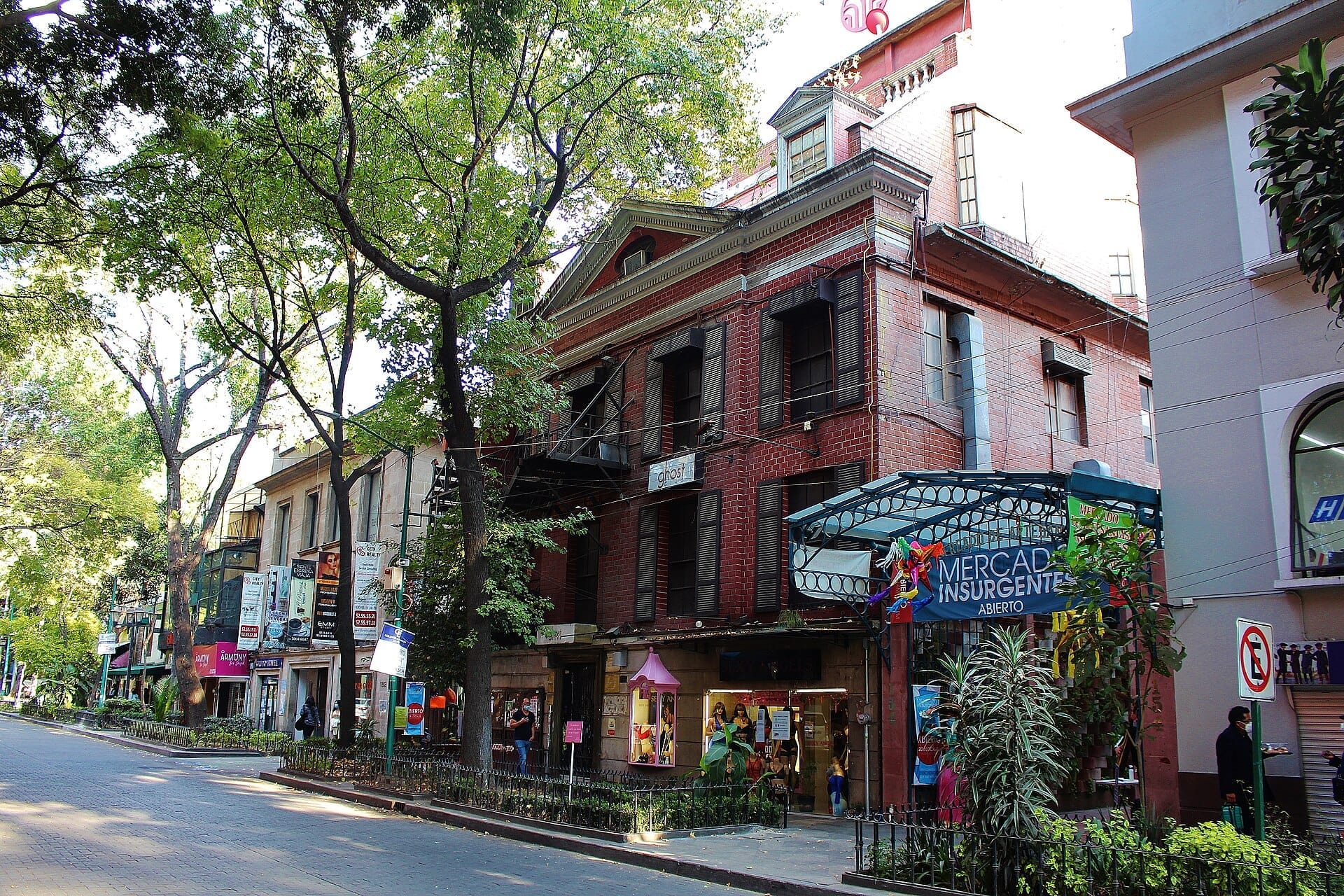
Zona Rosa is not a park, a museum, or a ticketed experience. It is a neighborhood — specifically a sub-district within Colonia Juárez — that has spent decades accumulating layers of identity. The Pink Zone, as it translates literally, started life as one of Mexico City's fashionable early-20th-century residential addresses, a landing spot for artists and the affluent who moved westward from the Centro Histórico in the early 20th century. Over the following decades it evolved into a tourist and commerce corridor. Then it became something more specific: a recognized hub for the LGBTQ+ community and, less commonly discussed in travel guides, a significant center for Mexico City's Korean population.
The result today is a district with genuine character — if somewhat uneven. Streets like Calle Génova and Calle Hamburgo form the pedestrian core, lined with restaurants, bars, clubs, souvenir shops, and hotels. There is nothing precious about it. Zona Rosa wears its commercial DNA openly, and that candor is part of what makes it interesting.
ℹ️ Good to know
Zona Rosa has no admission fee and no gate. Its streets are accessible 24 hours a day. Nightlife venues operate on their own individual schedules and may charge covers — always check in advance.
The Korean Quarter: An Unexpected Detour
Among the things that surprise first-time visitors is the density of Korean businesses concentrated in and around Zona Rosa. Korean immigration to Mexico City accelerated significantly in the late 20th century, and this part of Colonia Juárez became the natural anchor point. Walk a few blocks in the right direction and you will find Korean BBQ restaurants, Korean supermarkets, beauty supply shops, and karaoke rooms stacked side by side with Mexican taquizas and Spanish-language pharmacies.
This is one of the neighborhood's more underreported qualities. The overlap between Korean-owned restaurants and the broader food scene in Zona Rosa means you can eat credibly well here across multiple cuisines. If you have been surviving on tacos and quesadillas and suddenly want dakgalbi or a proper Korean fried chicken plate, Zona Rosa is one of the very few places in Mexico City where that craving is reliably satisfied.
For visitors who want to understand how different immigrant communities have shaped the city's food culture, the contrast between Zona Rosa and somewhere like Mercado de San Juan — which has its own imported and specialty food ecosystem — is worth exploring on the same day.
Tickets & tours
Hand-picked options from our booking partner. Prices are indicative; availability and final rates are confirmed when you complete your booking.
Puebla and Cholula guided tour from Mexico City with optional lunch
From 43 €Instant confirmationFree cancellationXochimilco, Coyoacan and Frida Kahlo Museum with skip-the-line tickets
From 63 €Instant confirmationFree cancellationMexico City exploration game and tour in Chimalistac
From 10 €Instant confirmationFree cancellationCuernavaca and Taxco Guided Tour with Optional Lunch
From 40 €Instant confirmationFree cancellation
The LGBTQ+ Scene: Reputation vs. Reality
Zona Rosa holds a significant place in the history of LGBTQ+ life in Mexico City. For many years it was the most visible and concentrated zone of queer nightlife and community in the capital, and while that reputation still holds, the scene has also expanded into other neighborhoods, including parts of Roma and Condesa. Zona Rosa remains the symbolic and practical center, especially around Calle Amberes, where several long-running bars and clubs are located.
Mexico City has a comparatively progressive legal and social framework regarding LGBTQ+ rights, and Zona Rosa functions accordingly: same-sex couples move through the neighborhood without the friction common elsewhere in the country. The annual Pride march, one of the largest in Latin America, typically follows a route along Paseo de la Reforma toward the Ángel de la Independencia and the Zona Rosa area and draws enormous crowds each June.
If Pride or LGBTQ+ nightlife is a priority, it is worth reading a focused guide on timing and safety in Mexico City before your trip. The Mexico City nightlife guide covers the broader landscape, including how Zona Rosa compares with other neighborhoods after midnight.
How the Neighborhood Changes by Time of Day
Daytime Zona Rosa is a working commercial district with a tourist overlay. The pedestrian streets around Génova and Hamburgo have outdoor seating, vendors, and a fairly relaxed pace. Morning and early afternoon are low-key: good for coffee, Korean lunch, or a quiet walk without navigating crowds. Shops that cater to tourists tend to open mid-morning.
Late afternoon the energy shifts. The after-work crowd begins filtering into terrace bars. Street food vendors consolidate near the Metro entrances, particularly along Insurgentes, where the smell of grilled corn and tacos al pastor from trompos rotating on the sidewalk becomes hard to ignore. The pedestrian stretches get noisier, music begins leaking from doorways.
By 10pm to midnight, Zona Rosa is functioning at full pitch. The bars on Calle Amberes and the surrounding blocks fill up, with queues forming outside the more popular clubs. This is not a quiet neighborhood at night — bass from sound systems, groups moving between venues, and the general compression of people in a small area are all part of the experience. If you want to observe the scene rather than participate deeply in it, the outdoor seating of any bar on the edge of the pedestrian zone offers a good vantage point.
💡 Local tip
Arrive in Zona Rosa before 8pm to eat comfortably at a Korean restaurant without a wait. The most popular spots fill quickly after 9pm on weekends.
Getting There and Getting Around
The Metro is the most practical way to arrive. Insurgentes station on Line 1 deposits you at the eastern edge of the Zona Rosa area, steps from the main pedestrian streets such as Calle Génova. The station itself sits at one of Mexico City's largest and most active intersections, at Avenida Insurgentes and Avenida Chapultepec, so orientation is straightforward. From here the district spreads westward and north toward Paseo de la Reforma.
Zona Rosa is also walking distance from Paseo de la Reforma, which means you can combine it naturally with a visit to the Monumento a la Independencia or continue west toward Chapultepec Park. That loop — Reforma to Zona Rosa to Metro — makes for a solid half-day in this part of the city.
Ride-hailing apps including Uber, DiDi, and Cabify all operate in this area. Late at night, after midnight, using an app rather than a street taxi is the safer and more predictable option. Confirm drop-off points before ordering — some streets in the pedestrian core are closed to vehicles.
⚠️ What to skip
Like any dense urban entertainment district operating late at night, Zona Rosa calls for standard city awareness: keep your phone out of sight when not in use, do not leave drinks unattended in clubs, and use app-based transport rather than unmarked street taxis when leaving late at night.
Worth Your Time?: Is It Worth Your Time?
Zona Rosa is not Mexico City's most historically significant neighborhood, its most architecturally interesting, or its most praised by food critics. Colonia Roma and Condesa, both within walking distance, consistently receive better marks for restaurant quality and street character. The souvenir shops that dominate parts of the pedestrian zone cater specifically to mass tourism, and the daytime crowds can feel transactional.
That said, dismissing Zona Rosa entirely would be a mistake. For LGBTQ+ travelers, it remains one of the most comfortable and affirming neighborhoods in the city. For anyone curious about Mexico City's Korean community and the food it has produced, there is no comparable alternative. And for nightlife — not the cocktail-bar-with-a-DJ variety but actual late-night club culture — Zona Rosa delivers in a way that more polished neighborhoods do not. If your trip focuses on daytime culture, art, and cuisine, your time may be better spent in Roma and Condesa. If you are specifically interested in the LGBTQ+ scene or Korean food, come here.
Travelers who strongly dislike loud, commercial entertainment districts, or who find late-night urban scenes uncomfortable, should probably skip Zona Rosa as a destination. It is the kind of neighborhood that rewards specific purposes rather than general wandering.
Photography and Practical Notes
Daytime shooting is easy here. The pedestrian streets have manageable light and plenty of street-level detail: Korean signage alongside Spanish, rainbow flags mounted above bar entrances, market carts loaded with churros. The area around Calle Génova, with its open-air seating and older buildings, photographs better than the busier commercial blocks.
At night, the neon and signage from Korean restaurants and club entrances make for interesting photography, but the conditions are low-light and crowded. A phone camera on night mode handles this reasonably well. Avoid pointing a camera at individuals without implicit consent, particularly in bars and clubs.
Zona Rosa sits at approximately 2,240–2,250 meters above sea level, which is standard for central Mexico City. If you have recently arrived and are still acclimatizing, a late night of dancing will feel more taxing than usual. For context on altitude adjustment, see the Mexico City altitude guide.
Insider Tips
- The best Korean BBQ spots are clustered on the streets just northwest of the Insurgentes Metro exit, not on the tourist-facing pedestrian corridor. Look for restaurants with Korean-language menus posted in the window alongside the Spanish ones — these tend to cater more to the local Korean community than to tourists.
- If you want to visit a club without paying a cover, arriving before 11pm on a weeknight often gets you in free. Weekends are a different story entirely.
- The Zona Rosa area around Reforma and Insurgentes has several good hotel options that are significantly cheaper than equivalent quality in Polanco but equally central. It is one of the more underrated places to base yourself for a Mexico City trip.
- Mexico City Pride typically takes place in late June and routes along Paseo de la Reforma toward the Ángel de la Independencia and into the Zona Rosa area. Crowds are enormous — several hundred thousand people — so plan accommodation and transport well in advance if visiting during this period.
- If you are eating Korean food here, note that many restaurants charge for banchan (side dishes) as standalone items rather than serving them complimentary as is traditional in Korea. Check the menu before ordering to avoid bill surprises.
Who Is Zona Rosa For?
- LGBTQ+ travelers looking for the most established and visible queer-friendly district in Mexico City
- Food travelers curious about Mexican-Korean cuisine and the cultural overlap between the two communities
- Nightlife seekers who want late-night club culture rather than cocktail bars
- Visitors staying in the Reforma corridor who want an evening destination within walking distance
- Travelers on a budget — Zona Rosa has a wider range of affordable eating and drinking options than nearby Polanco
Nearby Attractions
Combine your visit with:
- Acuario Inbursa
Built beneath Plaza Carso in the Nuevo Polanco district, Acuario Inbursa holds 1.6 million litres of seawater and roughly 14,000 specimens across more than 230 species. It opened in 2014 and remains one of the most technically ambitious aquariums in Latin America. Here is what the visit actually involves, and whether it is worth your time.
- Arena México
Inaugurated in 1956 and holding up to roughly 16,800 spectators, Arena México is the home of CMLL and the most storied lucha libre venue in the world. Matches run on Tuesday, Friday, and Sunday evenings in Colonia Doctores, making it one of the most accessible live spectacles in Mexico City.
- Basilica of Our Lady of Guadalupe
The Basilica of Our Lady of Guadalupe is one of the most visited Catholic shrines on earth, receiving over 20 million pilgrims and visitors each year. Built around the 1531 apparition site on Tepeyac Hill, it holds the venerated tilma of Juan Diego and offers a rare encounter with living Mexican faith at its most intense.
- Cineteca Nacional
The Cineteca Nacional de México is the country's national film archive and its most important arthouse cinema complex. Rebuilt after a devastating 1982 fire and transformed in 2012 into a world-class cultural campus, it combines 10 indoor screens, a large open-air screening forum, galleries, a bookshop, and restaurants in a single destination that attracts cinephiles, students, and casual visitors alike.