Weltmuseum Wien: A World of Cultures Inside the Imperial Palace
Housed in the monumental Neue Burg wing of the Hofburg, the Weltmuseum Wien holds one of Europe's largest ethnographic collections, with roughly 400,000 to 500,000 objects spanning every inhabited continent. It is a serious museum for curious travelers, not a quick stop.
Quick Facts
- Location
- Neue Burg, Heldenplatz, 1010 Vienna (Innere Stadt)
- Getting There
- U3 Volkstheater (Ring exit); Trams D, 1, 2, 71 to Burgring
- Time Needed
- 2–3 hours for highlights; 4+ hours for a thorough visit
- Cost
- Adult €16, reduced €15. Verify current prices at weltmuseumwien.at
- Best for
- History enthusiasts, art lovers, and travelers interested in global cultures
- Official website
- www.weltmuseumwien.at/en
What Is the Weltmuseum Wien?
The Weltmuseum Wien, known formally as the World Museum Vienna, is Austria's premier ethnographic museum and one of the oldest and largest of its kind in the German-speaking world. It occupies the Corps de Logis of the Neue Burg, the final and most imposing wing of the Hofburg Imperial Palace complex. Stepping through its entrance on Heldenplatz, you cross from one of Europe's great public squares directly into a palace-sized repository of human civilization.
The collection traces its origins to 1876, when ethnographic holdings were first assembled within the Natural History Museum. By 1928, the collection had outgrown that home and moved independently into the Neue Burg, where it has remained ever since. Today the museum houses approximately 400,000 to 500,000 ethnographic and archaeological objects, accompanied by extensive photographic and print archives. The scope is genuinely global: Africa, the Americas, Oceania, South and Southeast Asia, East Asia, and the ancient Near East are all represented in depth.
ℹ️ Good to know
Opening hours: Tuesday to Sunday 10:00–18:00; Tuesday until 21:00. Closed most Mondays, with occasional special Monday openings (10:00–15:00). Confirm your visit date at weltmuseumwien.at before going.
The Setting: Inside the Hofburg's Most Theatrical Wing
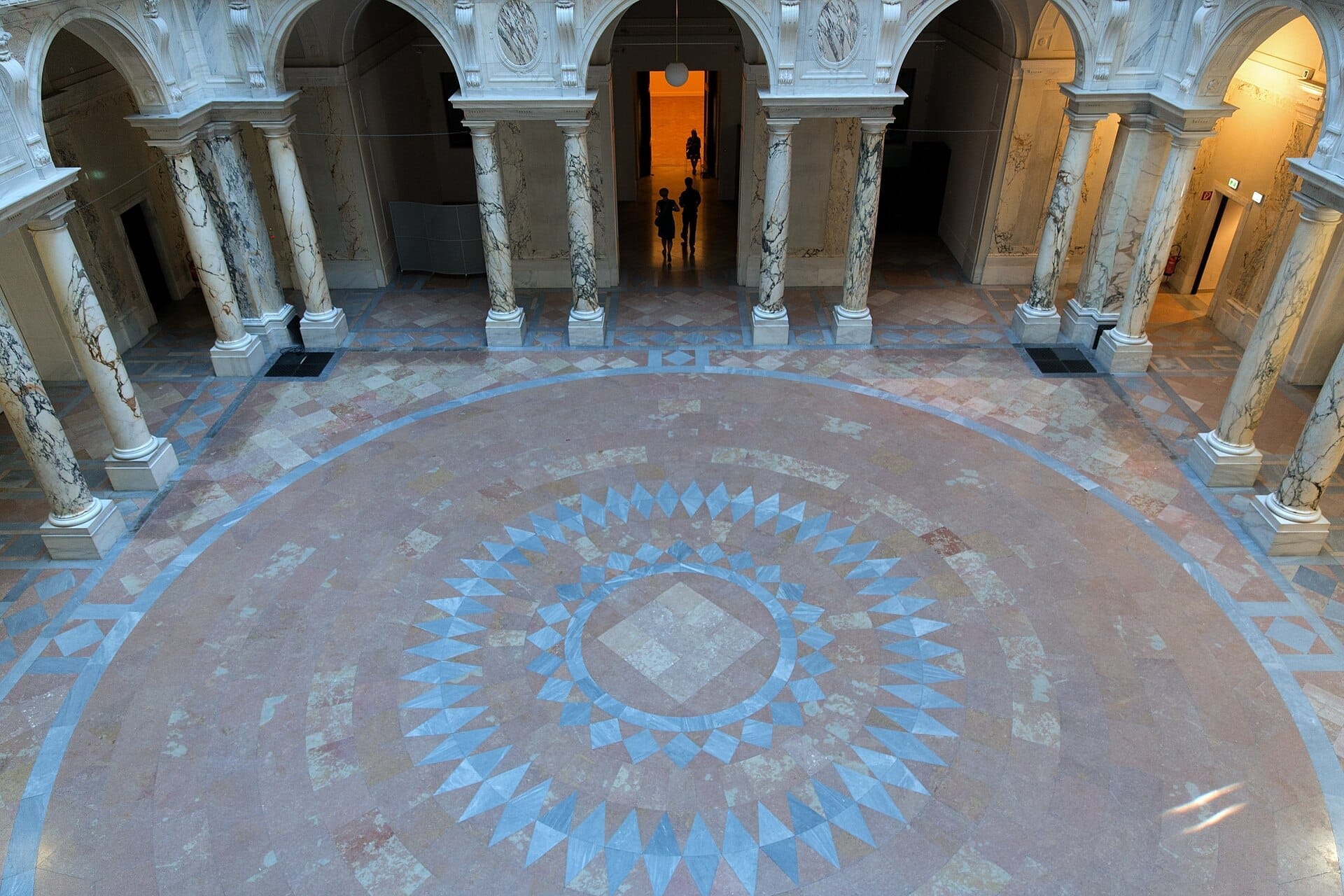
The Neue Burg was conceived in the late 19th century as the final grand gesture of the Habsburg Empire, a building that was never fully completed before the empire's collapse in 1918. That unfinished ambition is somehow still legible in the architecture: the ceilings are high enough to make you feel small, the stairways are proportioned for ceremonial processions, and the stone underfoot has the slight unevenness of a century of visitors. The museum has been carefully inserted into this shell without entirely sanitizing it.
If you're already planning to visit the Hofburg Palace complex, the Weltmuseum shares the same address at Heldenplatz and can be logically combined into a half-day or full-day visit. The two institutions do not share a ticket, however, so budget separately.
The main exhibition halls retain their original proportioned windows and coffered ceilings, and on a clear morning the light cuts across the display cases in a way that feels theatrical. By afternoon the light flattens out and the rooms feel more evenly lit, which suits close reading of labels and objects. If you care about the visual experience of the architecture, arrive between 10:00 and noon.
Tickets & tours
Hand-picked options from our booking partner. Prices are indicative; availability and final rates are confirmed when you complete your booking.
Wiener Melange coffeehouse experience
From 34 €Instant confirmationFree cancellationSelf-guided digital scavenger hunt in Wiener Neustadt
From 13 €Instant confirmationVienna KunstHausWien Museum Hundertwasser tickets
From 15 €Instant confirmationFree cancellationImperial Vienna 72-hour hop-on hop-off bus
From 55 €Instant confirmationFree cancellation
The Collection: What You Will Actually See
The Weltmuseum's permanent collection is organized by geographic region rather than by theme, which means you move through the world continent by continent. The African galleries hold masks, ritual objects, and everyday implements from across sub-Saharan Africa. The Oceania rooms contain objects from the Pacific Islands, including some pieces collected during the 18th and early 19th century voyages that brought European explorers into first contact with these cultures. The significance of those acquisition histories is addressed directly in parts of the museum, which is a relatively recent development and worth noting.
The pre-Columbian Americas section is one of the highlights. Among the objects here are a small number of items associated with the Aztec world, including the famous feather headdress long attributed to Moctezuma II, which has been the subject of decades of repatriation discussions between Austria and Mexico. The headdress itself remains in Vienna, and its presence here carries considerable cultural and political weight. The museum presents this context honestly rather than brushing past it.
South and Southeast Asian galleries cover religious sculpture, textile traditions, and ceremonial objects from India, Sri Lanka, Thailand, Indonesia, and beyond. The East Asian rooms include Japanese armor, lacquerwork, and Chinese ritual bronzes. Collectively, these rooms reward slow attention. There is too much to absorb in one pass, and visitors who try to see everything in under two hours typically come away with a blur rather than a picture.
💡 Local tip
Pick two or three geographic regions to focus on rather than attempting the whole museum in one visit. The Americas and Oceania rooms together make a coherent two-hour itinerary. The audio guide or app, where available, helps significantly in contextualizing objects that are otherwise easy to walk past.
How the Experience Changes by Time of Day
Weekday mornings before noon are the quietest. School groups begin arriving around 10:30 on some days, but they tend to cluster in specific sections and move through relatively quickly. If you are visiting with the intention of reading labels carefully and pausing in front of individual objects, Tuesday morning or a Wednesday mid-morning are the most comfortable slots.
Tuesday evenings, when the museum stays open until 21:00, offer a noticeably different atmosphere. The tour groups are gone, the light outside has changed, and the galleries feel more contemplative. This extended evening is genuinely useful rather than just a marketing add-on. The Neue Burg's stone interiors are cool even in summer, which makes a Tuesday evening visit particularly pleasant in July and August when daytime temperatures in Vienna can push past 30°C.
Weekend afternoons in peak season, roughly May through September, bring larger general crowds. Heldenplatz itself draws many visitors, and foot traffic flows naturally into the museum. Lines at the ticket desk can form, though the museum does not yet draw the queue lengths seen at the Kunsthistorisches Museum or Schönbrunn. Booking a timed entry online, if that option is available on the official site, is worth checking before a weekend visit.
Getting There and Practical Navigation
The museum's address is Heldenplatz, which is one of Vienna's most accessible points. From the U3 Volkstheater station, use the Ring exit and walk toward the palace complex: the walk takes about five minutes and is straightforward. Trams D, 1, 2, and 71 all stop at Burgring, which puts you directly at the base of Heldenplatz. Trams 46 and 49 stop at Dr.-Karl-Renner-Ring, a two-minute walk away.
If you are combining this visit with the Kunsthistorisches Museum, note that it sits directly across the Ringstrasse from the Hofburg complex. Both museums are reachable on foot from the same transit stops, making them a logical pairing for a museum-focused day.
Accessibility: The museum is situated at ground level with lift access available within the building. Visitors with mobility requirements should consult the official website or contact the museum directly before arrival, as the Hofburg complex as a whole has uneven historic surfaces in surrounding areas that may require planning.
There is a cloakroom for coats and larger bags, which is worth using: the galleries are extensive and carrying a heavy bag through them for two hours is tiring. Photography without flash is generally permitted in permanent collection galleries, though this should be confirmed on arrival as policies can vary by exhibition.
Cultural Weight and Honest Limitations
The Weltmuseum Wien sits within a wider conversation about European ethnographic collections and their colonial-era acquisition histories. The museum has been more transparent than many institutions in addressing these questions, but visitors who come expecting a fully resolved narrative will find ongoing complexity instead. That honesty is, arguably, one of the museum's genuine strengths. For broader context on how Vienna positions its cultural institutions, the best museums in Vienna guide covers how the Weltmuseum compares to the city's other major collections.
The sheer size of the collection also means that permanent exhibitions can feel uneven in their presentation quality. Some rooms have been renovated with contemporary interpretive design; others retain an older, more encyclopedic display style where objects are grouped densely with minimal narrative framing. This is not necessarily a fault, but it does mean some sections reward prior knowledge more than others.
Visitors looking for a light, casual museum experience may find the scale and density of the collection more demanding than expected. This is a museum that repays preparation and focus. It is not designed as a casual walk-through attraction, and visitors who treat it as one typically leave underwhelmed. Those with genuine curiosity about non-European cultures and material history will find it among the most substantive experiences available in Vienna.
⚠️ What to skip
The museum is closed on most Mondays. If your Vienna itinerary falls on a Monday, plan around this. Check the official calendar at weltmuseumwien.at, as holiday schedules and occasional special opening days can alter the pattern.
Combining the Weltmuseum With the Surrounding Area
Heldenplatz and the Hofburg complex anchor the Innere Stadt, Vienna's historic First District. After visiting the museum, the immediate surroundings offer several natural extensions. The Burggarten, the small park on the eastern side of the Hofburg, is a quiet place to decompress. The Imperial Treasury is a short walk through the inner courtyards and holds the Habsburg crown jewels, a very different kind of cultural weight.
For those interested in the architectural fabric of the district as a whole, the Ringstrasse boulevard runs directly past the Neue Burg and connects the Hofburg to the Kunsthistorisches Museum, the Parliament building, the Rathaus, and the Burgtheater within a single walkable stretch. This is one of the most architecturally coherent urban sequences in Europe and worth slow attention in its own right.
Insider Tips
- The Tuesday late opening (until 21:00) is significantly less crowded than weekend afternoons. If your schedule allows, a Tuesday evening visit between 18:00 and 21:00 gives you near-empty galleries and cooler temperatures in summer.
- The Moctezuma feather headdress in the Americas section is one of the most discussed objects in any European ethnographic museum. Reading a little about its history before you visit makes standing in front of it a far more charged experience.
- The museum café and shop are located in the main foyer area. The shop stocks a well-curated selection of ethnographic publications and is worth a browse even if you are not buying.
- If you are visiting multiple Hofburg-area attractions in one day, check whether a combination ticket or the Vienna City Card offers savings. The official ticket desk can advise on current partnership offers.
- Some of the most remarkable objects in the collection are not the largest or most prominently displayed. The Oceania rooms, in particular, contain small everyday objects, fishing implements, navigation tools, that tell quieter but equally significant stories. Slow down in these sections.
Who Is Weltmuseum Wien (World Museum) For?
- Travelers with genuine interest in world cultures, anthropology, and material history
- Architecture enthusiasts drawn to the Neue Burg's late Habsburg interior spaces
- Museum-focused visitors building a full Hofburg complex day
- Those who want intellectual substance rather than spectacle from their museum visits
- Visitors on a Tuesday who can take advantage of the extended evening hours
Nearby Attractions
Other things to see while in Innere Stadt (1st District):
- Albertina Museum
Housed in a former Habsburg palace at the edge of the Ringstrasse, the Albertina holds one of the largest and finest graphic art collections in the world. With over one million drawings and prints alongside rotating exhibitions of modern masters, it rewards both the casual visitor and the serious art traveler.
- Austrian National Library (Prunksaal State Hall)
The Prunksaal, or State Hall of the Austrian National Library, is a Baroque masterpiece built for Emperor Charles VI between 1723 and 1726. At roughly 80 metres long and crowned by Daniel Gran's sweeping ceiling frescoes, it is one of the most visually arresting interiors in central Europe, and still holds around 200,000 historic volumes in its carved walnut shelves.
- Burgtheater
The Burgtheater is Austria's national theatre and one of the most significant German-language stages in the world. Its Neo-Renaissance building on Vienna's Ringstraße dates to 1888, and its institutional history stretches back to the court of Empress Maria Theresa. Whether you come for a performance or a guided tour, it rewards attention.
- Café Central
Housed inside the Palais Ferstel in Vienna's historic first district, Café Central has been serving coffee and conversation since 1876. Once the gathering point for Freud, Trotsky, and a constellation of Central European intellectuals, it remains one of the most architecturally remarkable coffeehouses in the world.