Wat Chiang Man: Chiang Mai's Oldest Temple and Its Sacred Buddha Images
Founded in the late 13th century as part of the original city plan, Wat Chiang Man is the oldest temple in Chiang Mai. Set inside the Old City walls, it holds two of the most revered Buddha images in northern Thailand and offers a quieter, more contemplative alternative to the city's busier temple circuit.
Quick Facts
- Location
- Ratchaphakhinai Road, inside the Old City walls, Chiang Mai
- Getting There
- 10-15 min walk from Tha Phae Gate; songthaew or tuk-tuk from Nimman or Night Bazaar area
- Time Needed
- 30–60 minutes
- Cost
- Free entry (donations appreciated)
- Best for
- History, architecture, temple photography, quiet reflection
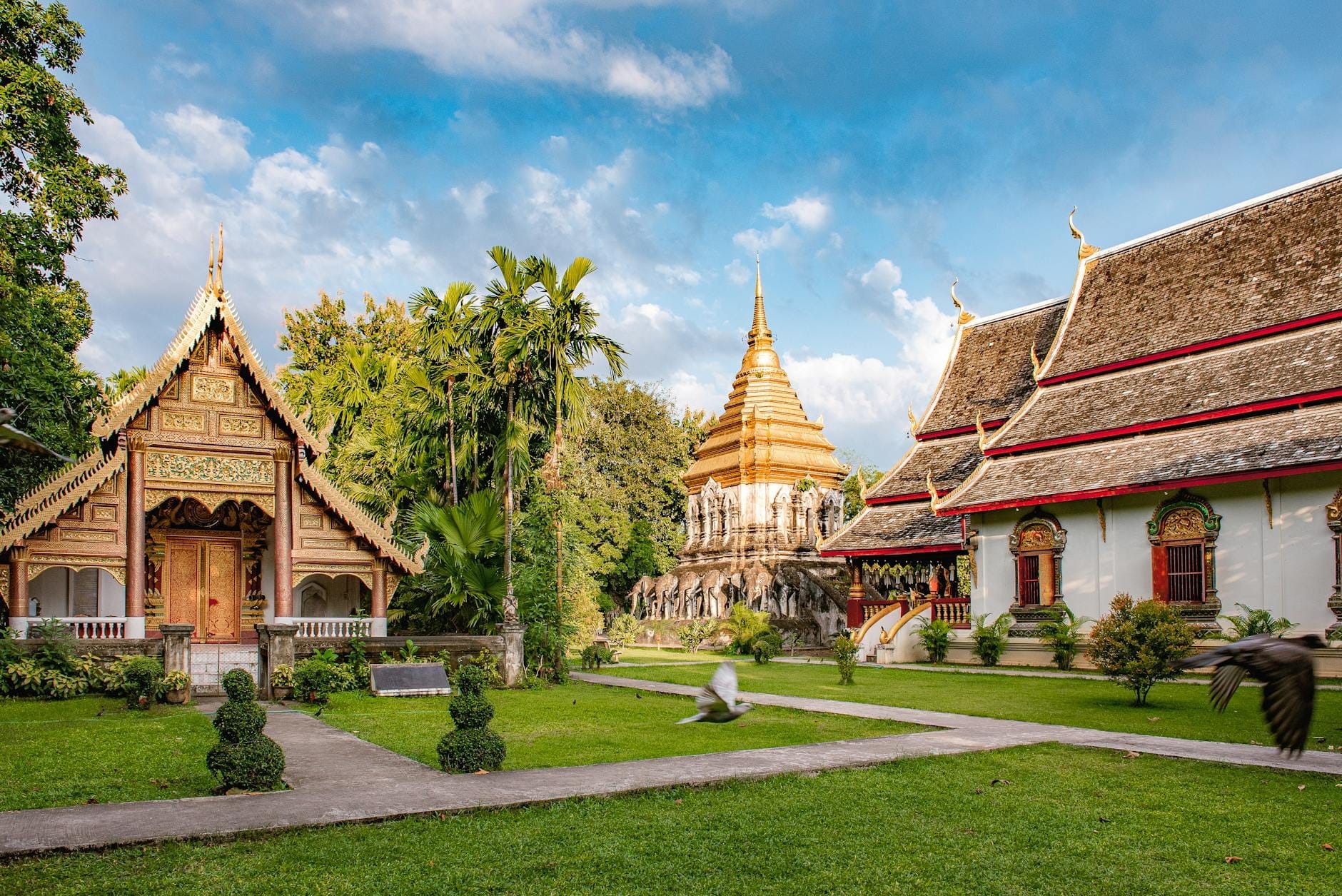
Why Wat Chiang Man Stands Apart
Most first-time visitors to Chiang Mai make a beeline for Wat Phra Singh or Wat Chedi Luang. Wat Chiang Man is older than both, and for travelers who value historical depth over spectacle, it is the more rewarding stop. Founded in 1297 CE by King Mengrai, the king who unified the Lanna Kingdom and established Chiang Mai itself, this temple is believed to have served as his royal residence while the city was being constructed around it. That origin story is not ceremonial — it means the temple predates the surrounding streets, moat, and city walls by decades in terms of significance.
The compound is compact by Thai temple standards, which works in its favor. Unlike the sprawling complexes elsewhere in the Old City, Wat Chiang Man can be explored thoroughly in under an hour, and its scale invites careful looking rather than rushed walking. On most mornings, the grounds are quiet enough that you can hear monks chanting from the ordination hall, a sound that carries across the open courtyard without any amplification.
💡 Local tip
Arrive before 9am on a weekday for the fewest visitors. The light inside the wihan (assembly hall) is softer in the morning, and the courtyard is usually empty enough for unobstructed photography.
The Sacred Buddha Images: What You Are Actually Seeing
The temple's two most important objects are kept in a small building to the right of the main wihan, typically behind a protective grill. The first is Phra Sila, a dark stone bas-relief Buddha image believed to originate from Sri Lanka and often described as being over 1,000 years old. The second is Phra Sae Tang Khamani, a crystal Buddha image traditionally said to date back many centuries, with some local accounts suggesting origins in northern India. Both images are credited in local belief with the power to bring rain and protect the city from fire.
These are not displayed with museum-style signage or spotlights. You approach them through a low-ceilinged room, and they sit on a tiered altar among offerings of flowers, incense, and candles. The atmosphere is active rather than archival — monks and local worshippers visit regularly, not just tourists. It is worth pausing here longer than feels instinctive. Give your eyes time to adjust to the dimness and study the detail of the Phra Sila relief, which depicts the Buddha in a posture that differs from the more common Thai iconographic tradition.
⚠️ What to skip
The building housing the sacred images has restricted opening hours and may be closed in the early morning or during certain religious observances. If it is locked, ask a monk or a staff member at the entrance — it is often opened on request for respectful visitors.
Tickets & tours
Live prices and dates from our booking partner. If you book, we may earn a commission at no extra cost to you.
Ancient cities tour of Wiang Kum Kam and Wat Chiang Man
From 31 €Instant confirmationFree cancellationChiang Mai - Chiang Dao Cave and 5 Hill Tribe villages
From 42 €Instant confirmationFree cancellationArt in Paradise Chiang Mai 3D Art Museum entrance tickets
From 8 €Instant confirmationFree cancellationChiang Mai temples and night market tuk-tuk tour
From 23 €Instant confirmationFree cancellation
Architecture: What to Look For on the Grounds
The most photographed structure inside Wat Chiang Man is the Chang Lom-style chedi, a square-based stupa supported at its base by a row of elephant buttresses. Fifteen elephant figures protrude from the plinth, their backs carrying the weight of the spire above. This architectural form is associated with the Sukhothai period and is less common in Chiang Mai than the Lanna-style tapered chedis found at other temples. The stucco detailing on the elephants has been restored over the centuries, but the proportions remain faithful to the original design.
The main wihan is a classic Lanna structure with a multi-tiered roof that drops low over the entrance in a long slope, creating a dramatic visual weight before you step inside. The interior walls carry painted murals in various states of preservation — older sections show the faded geometry of 19th-century decorative schemes, while newer sections have been repainted with more vivid colors. Neither is inauthentic; temples in Thailand are living religious spaces, not frozen exhibits, and continuous restoration is part of that tradition.
There is also a smaller mondop (square-based pavilion) on the grounds that is often overlooked. It contains additional Buddha images and carved wooden panels that repay close inspection, particularly if you have already developed some familiarity with Lanna decorative motifs from visits to other Old City temples.
For context on how Wat Chiang Man fits into the broader temple landscape of the Old City, the Chiang Mai temples guide covers the full circuit with practical walking order and historical background.
How the Temple Changes Through the Day
Early morning, roughly 6:30 to 8:30am, is when the temple feels most alive in a religious sense. Monks are present in numbers, the smell of incense is strongest, and local residents stop in before work to make offerings. The light at this hour comes in low across the courtyard, catching the gold leaf on the chedi and the corrugated texture of the elephant buttresses in a way that midday light completely flattens.
By mid-morning, tour groups begin arriving, though Wat Chiang Man never reaches the crowd density of Doi Suthep or Wat Phra Singh. The temple is simply less marketed, which keeps the visitor numbers manageable throughout the day. Afternoons between 1pm and 3pm see the fewest visitors overall, but the heat inside the enclosed courtyard can be significant from March through May.
Late afternoon, around 4pm, brings a second wave of local worshippers and occasionally school groups. The light becomes warm again and the shadows from the teak trees inside the compound stretch across the flagstones in long diagonals. This is a good time for photography if you missed the morning window.
ℹ️ Good to know
Wat Chiang Man is generally open daily from approximately 6am to 6pm. These hours can vary slightly during major Buddhist holidays and festivals. Confirm locally if visiting during Visakha Bucha, Asahna Bucha, or Loy Krathong periods.
Getting There and Practical Logistics
Wat Chiang Man sits on Ratchaphakhinai Road in the northeastern quadrant of the Old City, a roughly 10 to 15 minute walk from Tha Phae Gate. The walk from the gate takes you along the inside of the moat road before turning north through quieter residential streets — a pleasant route in the morning before the heat builds.
Red songthaew trucks and tuk-tuks can drop you nearby; give the driver the road name and the temple name together to avoid confusion with similarly named streets. If you are staying in the Nimman area, a songthaew east across the moat will get you within a short walk. The temple does not have a dedicated car park, but the surrounding streets have space for motorcycles and bicycles. Cycling the Old City and including Wat Chiang Man as a stop is one of the most practical ways to cover multiple temples in a single morning.
For full logistics on navigating the Old City area, including songthaew routes, bicycle rental spots, and walking distances between major temples, see the guide to Chiang Mai's Old City.
Dress code is strictly observed. Cover your shoulders and knees before arriving; there is no clothing rental stall at this temple as there is at some larger sites. Women should note that the ordination hall (ubosot) may be off-limits for entry, which is standard for many Thai temples. The main wihan and the sacred image building are accessible to all visitors dressed appropriately.
Who Should Visit, and Who Might Not
Wat Chiang Man rewards visitors who approach it with some preparation. Reading about the temple's founding before you arrive transforms a pleasant courtyard into a genuinely significant historical site. If you are already interested in Lanna history, Buddhist iconography, or northern Thai architecture, this temple consistently ranks among the more interesting stops in the city.
Travelers looking primarily for large-scale visual drama or Instagram-ready set pieces will likely prefer Wat Chedi Luang, which offers more imposing ruins and a more theatrical scale. Wat Chiang Man's appeal is quieter and more cumulative. The courtyard is compact, the structures are not enormous, and the most important objects in the complex are quite small. That restraint is exactly what makes it worth seeking out.
If you are building a broader Old City itinerary, this three-day Chiang Mai itinerary places Wat Chiang Man in a logical sequence with nearby temples and walking streets so you are not backtracking across the grid.
Photography enthusiasts should also cross-reference the Chiang Mai photography guide for specific shooting angles at the elephant chedi and notes on light direction inside the wihan at different hours.
Insider Tips
- The elephant buttresses on the chedi are best photographed from the far left corner of the courtyard, where you can capture the full curve of the row with the spire rising behind them. Shooting straight-on from the front flattens the composition.
- If the sacred image building appears locked, look for a monk or temple caretaker near the main wihan. A respectful request in simple English or a gesture toward the building is usually enough to have it opened for you.
- The teak trees inside the compound provide shade that most open-courtyard temples in the Old City lack. On hot afternoons, this temple is noticeably more comfortable to explore than Wat Phra Singh or Wat Chedi Luang.
- Wat Chiang Man is far less crowded during major festivals like Yi Peng or Songkran, when visitor attention concentrates elsewhere. These periods can actually be ideal for a quiet visit here.
- The temple is an active monastic site. If you see monks in conversation or engaged in study near the smaller pavilion, give them space rather than approaching for photographs — the temple's working character is precisely what makes it authentic.
Who Is Wat Chiang Man For?
- History travelers who want to understand Chiang Mai's founding beyond surface-level facts
- Architecture enthusiasts interested in Lanna and Sukhothai-influenced temple design
- Photographers looking for strong structural subjects and good morning light without crowds
- Travelers who have already seen the major temples and want a more contemplative experience
- Anyone building a walkable Old City temple circuit and starting from the northeastern quadrant
Nearby Attractions
Other things to see while in Old City (Chiang Mai Old Town):
- Chang Phuak Night Market (North Gate Food Market)
Chang Phuak Night Market, known to locals as the North Gate Food Market, is a compact open-air street food gathering outside Chiang Mai's ancient city walls. Night after night, it draws a faithful crowd of students, office workers, and savvy travelers in search of authentic northern Thai cooking at prices that haven't caught up with the tourist economy.
- Chiang Mai City Arts and Cultural Centre
Housed in a beautifully restored colonial-era building on the edge of the Old City's Three Kings Monument plaza, the Chiang Mai City Arts and Cultural Centre offers one of the most accessible and well-curated introductions to Lanna history and northern Thai culture. It rewards both first-time visitors and those who want genuine context before exploring the city's temples and neighborhoods.
- Chiang Mai City Walls and Moat
The rectangular moat and surviving brick walls of Chiang Mai's Old City are the physical outline of a 700-year-old Lanna capital. Free to explore at any hour, they offer one of the most atmospheric walks in northern Thailand, framing temples, corner bastions, and four ceremonial gates.
- Chiang Mai National Museum
The Chiang Mai National Museum offers one of the clearest introductions to northern Thailand's Lanna Kingdom, covering 700 years of history through royal artifacts, Buddhist sculpture, ceramics, and ethnographic collections. It's calm, well-organized, and genuinely undervisited compared to the temples nearby.
Planning a trip? Discover personalized activities with the Nomado app.