Union Oyster House: America's Oldest Restaurant in the Heart of Boston
Operating continuously since 1826, Union Oyster House is the oldest continuously operating restaurant in the United States, sitting one block from Faneuil Hall and steps from the Freedom Trail. It serves classic New England oysters, chowder, and seafood in a low-ceilinged, wood-paneled dining room that feels largely unchanged by the centuries.
Quick Facts
- Location
- 41 Union St., Boston, MA 02108 — Downtown Boston, one block from Faneuil Hall
- Getting There
- MBTA Haymarket Station (Green & Orange Lines) or Government Center Station (Green & Blue Lines)
- Time Needed
- 1 to 2 hours for a full meal; 30–45 minutes for oysters and a drink at the bar
- Cost
- No admission fee; pay for food and drink. Expect $35–$45 per person for a casual lunch with chowder and oysters, more for a full dinner.
- Best for
- History enthusiasts, seafood lovers, first-time Boston visitors, and anyone walking the Freedom Trail
- Official website
- http://www.unionoysterhouse.com
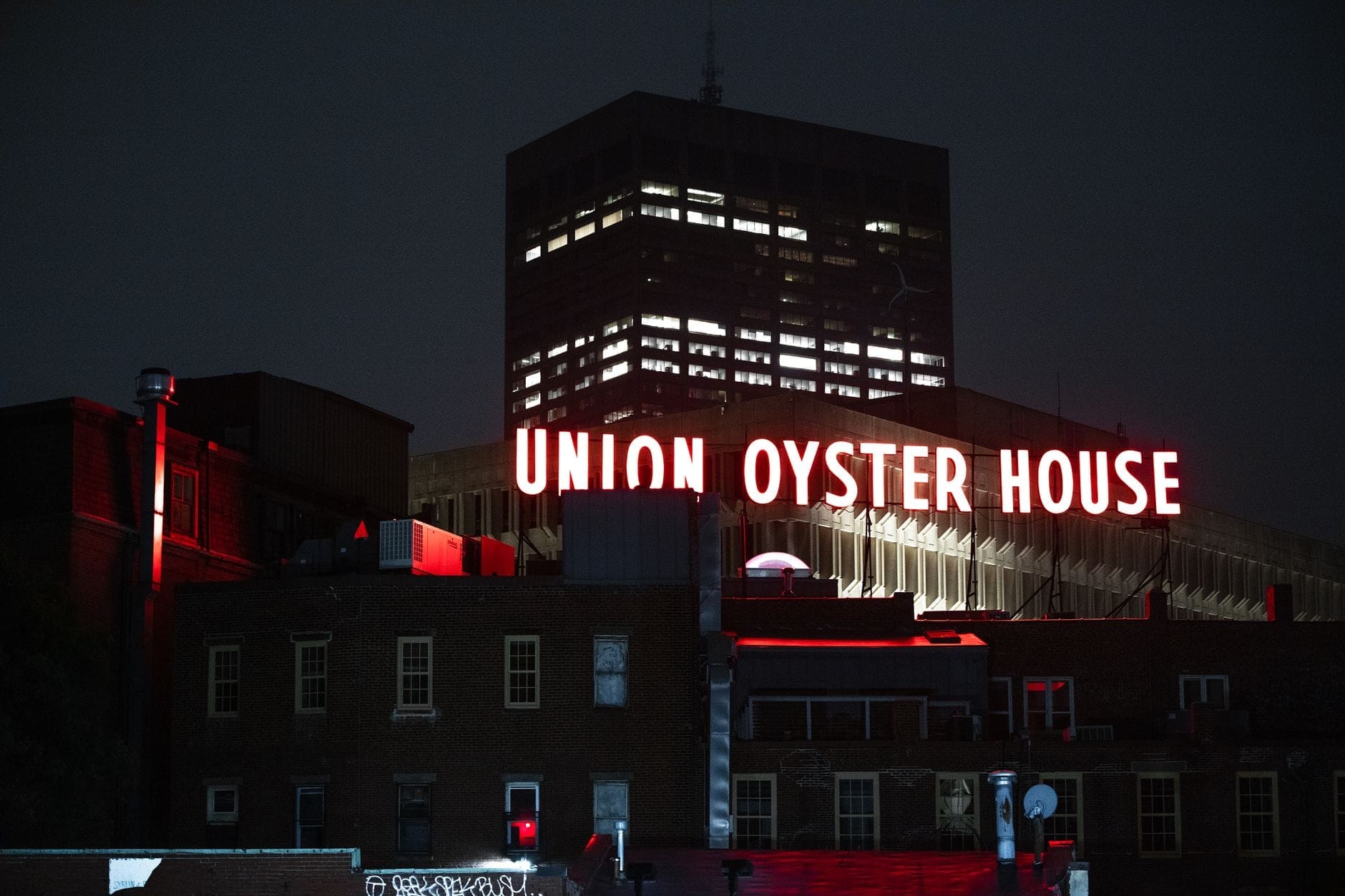
What Union Oyster House Actually Is
The Union Oyster House has been seating diners since 1826, making it the oldest known continuously operating restaurant in the United States. The building itself predates the restaurant, constructed around 1714, and the oyster bar has been shucking without interruption for nearly two centuries. It sits on Union Street in downtown Boston, steps off the Freedom Trail and a single block from Faneuil Hall, in a part of the city that has absorbed centuries of foot traffic without losing its physical shape.
This is, at its core, a working restaurant. There is no museum admission, no audio guide, no velvet rope separating you from the history. You sit down, you order chowder, you eat oysters off a curved wooden bar worn smooth by generations of elbows. The historical weight of the place is entirely ambient.
💡 Local tip
The semicircular oyster bar on the ground floor fills up quickly, especially at lunch. Arrive at 11:00 a.m. when doors typically open if you want a stool without waiting. The bar seats roughly a dozen people and operates on a first-come basis.
The Building and Its History
The Federal-style brick building at 41 Union Street is one of the oldest commercial structures still in active use in Boston. Before it became a restaurant, the upper floors housed a print shop and dry goods business. During the years leading up to American independence, the building played a minor but documented role in the political ferment of colonial Boston — it was used, at various points, as a dress goods shop and later as a place where the Massachusetts Spy, one of the patriot newspapers, was published.
When the oyster bar opened in 1826, oysters were not a luxury food in Boston. They were cheap, plentiful, and sold from street carts throughout the city. The Union Oyster House formalized that tradition under one roof, and the semicircular mahogany bar it installed remains in place today. Daniel Webster, the Massachusetts senator and orator, was reportedly a devoted regular, said to consume improbable quantities of oysters washed down with brandy and water during his visits.
The restaurant sits along the Freedom Trail, Boston's 2.5-mile marked walking route connecting 16 historical sites. Visitors who are already tracing the trail on foot will pass directly in front of it, and many stop in without planning to. It is also closely tied to the surrounding area covered in any solid Boston history guide.
Tickets & tours
Hand-picked options from our booking partner. Prices are indicative; availability and final rates are confirmed when you complete your booking.
Boston Summer Night Trolley Tour and River Cruise
From 27 €Instant confirmationFree cancellationLEGOLAND Discovery Center Boston tickets
From 26 €Instant confirmationFree cancellationGhosts and Gravestones tour of Boston
From 39 €Instant confirmationFree cancellationBest of Boston tour
From 182 €Instant confirmationFree cancellation
What a Visit Feels Like
The building is narrow and organized across several levels. The ground floor is dominated by the original oyster bar: a curved wooden counter with tall, backless stools, a wall of mirrors behind the shucker's station, and low ceilings that make the space feel intimate to the point of compression. The smell when you walk in is unmistakably oceanic — brine, lemon, and the faint char of chowder held warm in heavy bowls.
Upstairs dining rooms are slightly less atmospheric but no less historic. The wood paneling is dark, the lighting is dim even at midday, and the booths are high-backed enough that conversations stay private. One booth on the upper level is identified as a favorite of John F. Kennedy, who reportedly dined here regularly during his years as a Massachusetts congressman and senator. A small plaque marks it. The booth is often requested; it is not guaranteed.
At lunch on a weekday, the crowd skews toward office workers from the nearby Government Center area and tourists finishing the northern section of the Freedom Trail. By dinnertime on a Friday or Saturday, the wait for a table can stretch to 45 minutes or more. The bar area absorbs some of that overflow, and standing at the oyster bar with a half-dozen littlenecks and a cold draft beer is, frankly, the better experience anyway.
ℹ️ Good to know
Hours: Sunday–Thursday 11:00 a.m.–9:00 p.m.; Friday–Saturday 11:00 a.m.–10:00 p.m. The bar may stay open later than the kitchen; confirm current bar hours directly with the restaurant. The kitchen closes before the bar, so confirm last food orders if you arrive after 9:00 p.m.
The Food: What to Order and What to Skip
The menu is unapologetically traditional New England. New England clam chowder is the anchor — a thick, cream-based soup served in a ceramic bowl with oyster crackers on the side. It is quite good, not a tourist-trap approximation. The oysters on the half shell are the other non-negotiable: freshly shucked at the bar, served on ice with mignonette and cocktail sauce, and priced per piece or by the dozen.
The lobster dishes range from a straightforward broiled tail to a lobster bisque that earns its place on the menu. Fried seafood platters and grilled fish round out the options. Where the kitchen is less compelling is in the landlocked entrees — steak and chicken dishes that exist to satisfy companions who don't eat seafood, but do not represent the kitchen at its best. If you're coming here for the steak, recalibrate.
This is not a cheap meal by Boston standards, but it is not tourist-trap pricing either. A lunch of chowder, six oysters, and a beer will land somewhere around $35–$45 per person with tip. A full dinner for two, with lobster and wine, can reach $120–$150. Those figures will shift over time, so treat them as directional rather than definitive.
How to Get There and When to Go
The most convenient MBTA options are Haymarket Station on the Green and Orange Lines, or Government Center Station on the Green and Blue Lines. Both are a short walk from Union Street. Driving to this part of downtown Boston is not recommended — parking is expensive, limited, and unnecessary given the transit access.
The best time to visit is a weekday lunch, arriving close to the 11:00 a.m. opening. Weekend evenings draw significant crowds, and the wait times reflect that. If you are planning a broader walk through the historic core of downtown Boston, build the Union Oyster House into the northern end of your route, combining it with a stop at Faneuil Hall Marketplace and the nearby Old State House.
Weather does not significantly affect the experience here since the restaurant is entirely indoors. That said, visiting in fall when Boston is at its best for walking makes it a natural anchor point on any day spent in the historic district. Cold weather also makes the chowder hit harder, and there is something appropriate about eating oysters in January in a 300-year-old building.
⚠️ What to skip
No specific accessibility information is published on the restaurant's website. The building is historic and multi-story, so visitors with mobility concerns should call ahead to confirm what accommodations are available before making plans.
Who Should Reconsider
If you are looking for innovative cooking, this is not your restaurant. The Union Oyster House trades on tradition, not technique, and the kitchen has no ambitions beyond executing classic New England seafood correctly. Food travelers chasing the most exciting dining in Boston will find more interesting meals elsewhere in the city. Similarly, visitors who are indifferent to historical context may find the experience underwhelming given the prices — without the framing of being in America's oldest restaurant, it is a solid but unremarkable seafood house.
Large groups without a reservation will face a difficult wait, particularly on weekend evenings. If you are traveling with children, the menu is accessible and the setting is manageable, though the tight quarters on the ground floor can feel crowded. For broader ideas on keeping younger travelers engaged in Boston, see Boston with kids.
Insider Tips
- Sit at the oyster bar rather than waiting for a table. You get a direct view of the shucker working, the service is faster, and the atmosphere is more authentic to what this place has always been.
- The upstairs JFK booth requires no special reservation but is worth requesting when you check in. The host will note your preference and seat you there if it opens up, but don't count on it during peak hours.
- If you are walking the Freedom Trail, the Union Oyster House makes a logical lunch stop after downtown sites such as Faneuil Hall and the Old State House, before continuing into the North End for the Paul Revere House and Old North Church. Timing your walk to arrive here at noon sidesteps the worst of the midday rush.
- The bar stays open until midnight even when the kitchen winds down. A late-evening visit for oysters and a drink, after the dinner crowd clears, is one of the quieter and more atmospheric ways to experience the space.
- Reservations are accepted for the dining rooms and are strongly recommended for Friday and Saturday evenings. The oyster bar itself does not take reservations.
Who Is Union Oyster House For?
- First-time Boston visitors wanting an experience that connects food and history in one stop
- Seafood enthusiasts who want to eat fresh-shucked oysters and proper New England chowder in an authentic setting
- Freedom Trail walkers looking for a natural midpoint meal with genuine historical significance
- Travelers interested in American culinary and architectural history
- Anyone seeking a classic, no-gimmicks Boston dining experience that locals still actually use
Nearby Attractions
Other things to see while in Downtown & Financial District:
- Boston Common
Founded in 1634, Boston Common is the oldest public park in the United States and the civic anchor of downtown Boston. Free to enter and open year-round, it serves as a gathering place for locals, a landmark on the Freedom Trail, and the starting point for exploring everything the city has to offer.
- Boston Harbor Whale Watching
The New England Aquarium Whale Watch presented by Boston Harbor City Cruises sends a high-speed catamaran from Long Wharf out to Stellwagen Bank National Marine Sanctuary, one of the most productive whale feeding grounds on the East Coast. With onboard aquarium naturalists and a whale-sighting guarantee, it is one of the few Boston experiences that delivers on its premise.
- Boston Public Market
Open daily from 8:00 AM to 8:00 PM and free to enter, Boston Public Market brings together more than 30 New England farmers, fishers, and food artisans in a year-round indoor market above Haymarket Station. It is the first public market in the United States to require that everything sold is produced in or originates from New England.
- Custom House Tower
Standing 496 feet above McKinley Square, the Custom House Tower was Boston's tallest building for about half a century until 1964. Today it operates as a Marriott Vacation Club property, and its free public observation deck tours remain a lesser-known opportunity for a panoramic view of the harbor and skyline.