Tokyo Metropolitan Art Museum: What to Know Before You Go
The Tokyo Metropolitan Art Museum opened in 1926 as Japan's first public art museum and remains one of the most active exhibition venues in the country. Housed in a distinctive building by architect Kunio Maekawa inside Ueno Park, it rotates major international and Japanese special exhibitions throughout the year alongside smaller gallery shows.
Quick Facts
- Location
- 8-36 Ueno Park, Taito-ku, Tokyo 110-0007 (inside Ueno Park)
- Getting There
- JR Ueno Station (Park Exit), Tokyo Metro Ueno Station, or Keisei Ueno Station — all within 10 minutes on foot
- Time Needed
- 1.5 to 3 hours depending on exhibition size
- Cost
- Museum entry free; special exhibitions charge separately (general tickets around ¥2,300 for major shows; visitors under 18 free)
- Best for
- Art enthusiasts, culture-focused travelers, rainy-day museum-goers, anyone combining with a broader Ueno Park visit
- Official website
- www.tobikan.jp/en
What the Tokyo Metropolitan Art Museum Actually Is
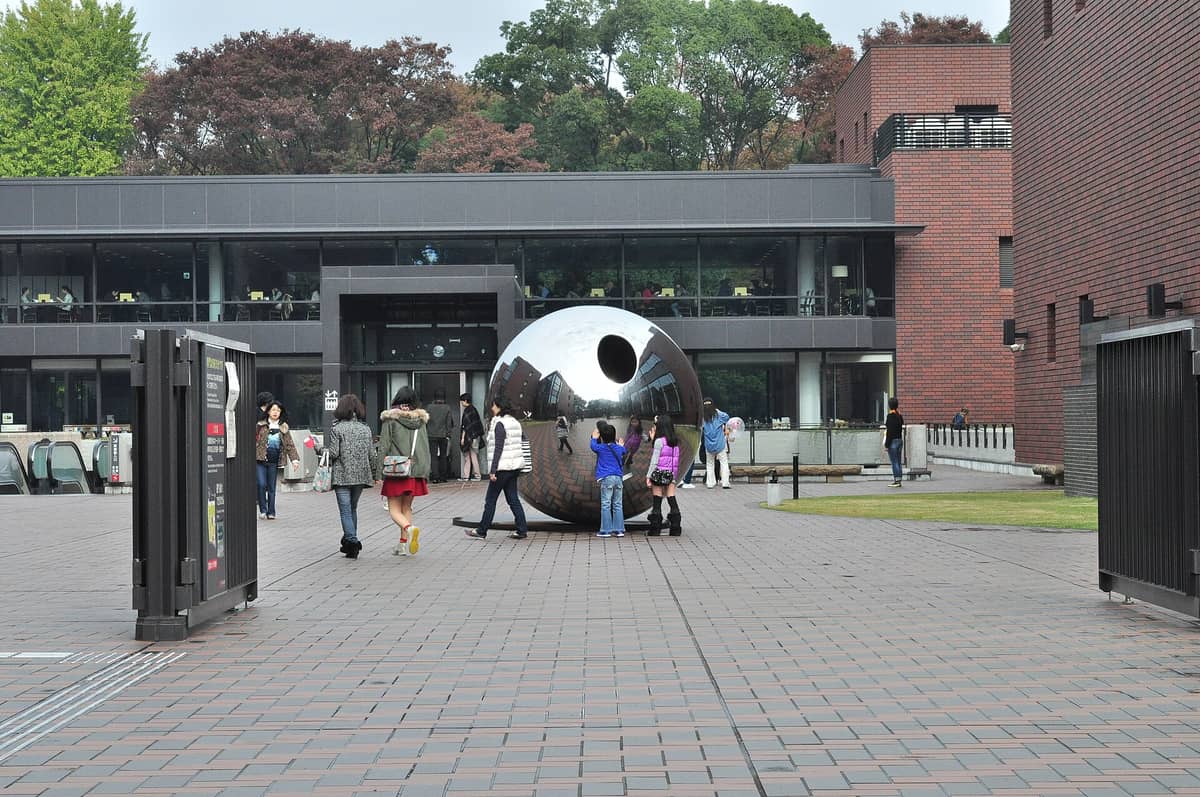
The Tokyo Metropolitan Art Museum (東京都美術館, Tōkyō-to Bijutsukan) holds the distinction of being Japan's first public art museum, originally opened in 1926. The current building, completed in the early 1970s, was designed by Kunio Maekawa, one of the most significant modernist architects in postwar Japan and a former student of Le Corbusier. Maekawa's design keeps the majority of the structure below ground level, which lets the building integrate quietly into the park landscape without dominating it visually.
The museum is operated by the Tokyo Metropolitan Government, which means it functions more like a civic institution than a private gallery. That shapes its programming philosophy: it runs several major international loan exhibitions each year alongside a parallel program of thematic exhibitions and open-submission group shows by artists' associations. On any given visit you might find a survey of European Impressionism, a retrospective of a contemporary Japanese painter, and an amateur calligraphy society's annual display all happening simultaneously in different wings.
ℹ️ Good to know
The museum building itself is free to enter. You only pay admission when entering a specific special or thematic exhibition. This makes the lobby, cafe, and garden accessible without any ticket.
Getting There and Finding the Entrance
The museum sits inside Ueno Park, which is itself one of Tokyo's most culturally dense stretches of public space. From JR Ueno Station's Park Exit, the walk takes around 7 to 10 minutes along a broad tree-lined path. The route passes several other major institutions, including the Tokyo National Museum and the National Museum of Nature and Science, so it is easy to orient yourself by following the cluster of museum buildings.
The museum's entrance is slightly sunken from street level. First-time visitors sometimes walk past it because the building's profile is deliberately low, the result of Maekawa's below-grade design. Look for the wide concrete plaza and the signage near the path leading toward the park's interior. From Keisei Ueno Station, the approach takes a similar amount of time from the opposite direction through the park.
There is no dedicated museum car park for general visitors. Wheelchair users who plan to arrive by car should contact the museum's administrative office in advance to arrange access. For everyone else, rail is the practical choice, and the connections from both Haneda and Narita airports are straightforward via JR or Keisei lines to Ueno.
Tickets & tours
Hand-picked options from our booking partner. Prices are indicative; availability and final rates are confirmed when you complete your booking.
Tokyo Dining Bar Experience with Darts Throwing Plan
From 8 €Instant confirmationFree cancellationTokyo Dining Darts Bar Experience with Unlimited Darts Plan
From 8 €Instant confirmationFree cancellationManga Art Workshop in a Traditional Tokyo House
From 88 €Instant confirmationFree cancellationTour to Mt. Fuji Area, Oshino Hakkai and Kawaguchi Lake from Tokyo
From 57 €Instant confirmationFree cancellation
Opening Hours, Tickets, and What Changes by Day
Standard opening hours are 9:30 to 17:30, with last admission at 17:00. On Fridays during Special Exhibitions and Thematic Exhibitions, the museum extends its hours to 20:00, with last admission at 19:30. This Friday evening window is genuinely useful: crowd density drops noticeably after 18:00, lighting inside the galleries feels different with fewer people, and you avoid the midday and late-afternoon surge that builds on weekends.
The museum is closed on the 1st and 3rd Monday of each month. Special and thematic exhibitions also close on Mondays in principle, though the exact schedule can shift when a Monday falls on a public holiday, in which case the museum is open Monday and closed Tuesday. The museum also closes for maintenance periods and around the New Year holidays. Checking the official schedule before travel is worth the two minutes it takes, particularly for short Tokyo stays.
Building entry is free, but individual exhibitions carry their own ticket prices. Major international loan exhibitions at this museum can run to around ¥2,300 for a general same-day ticket, with reduced prices for university students (around ¥1,300) and seniors aged 65 and over (around ¥1,600). Visitors under 18 enter the special exhibitions free. People presenting specified disability certificates, plus one accompanying person, are also admitted free. These figures reflect recent exhibitions and should be verified for the specific show you plan to attend, as prices differ by exhibition.
💡 Local tip
Buy tickets online in advance for major international exhibitions. Popular shows at this museum sell out same-day tickets on weekends and during school holidays. Advance tickets sometimes carry a small discount over the door price.
How a Visit Feels at Different Times of Day
Arriving at opening (9:30) on a weekday puts you ahead of school groups and the mid-morning tour wave that typically arrives from around 10:30 onward. The lobby at opening is calm, with natural light coming in from the upper-level windows at a low angle, and the information desk staff are unhurried and more available for questions.
By early afternoon, especially on weekends, the galleries in major exhibitions fill to the point where you queue to stand in front of central works. The museum's layout, which routes visitors through a series of connected underground galleries, means bottlenecks form predictably around the most prominent pieces. If a blockbuster show is on, expect that the final rooms, usually where the most famous works are displayed, will be the most congested at peak hours.
The Friday evening extension is the most underused part of the museum's schedule. After 18:00 the atmosphere shifts: fewer families with children, quieter acoustics, and a noticeably more relaxed pace. The park outside is dark but well-lit along the main paths, and the walk back to Ueno Station at night is pleasant.
What to Look For Inside
Maekawa's building is worth paying attention to independent of whatever is on the walls. The exposed concrete is characteristic of his work, rough-textured but precisely detailed. Stairwells and circulation corridors have a weight to them that many newer museum buildings lack. The spatial sequencing, moving between brighter upper spaces and more enclosed lower gallery rooms, creates a rhythm that influences how you experience the works.
The programming divides broadly into three types: large-scale international loan exhibitions organized with overseas partner institutions, thematic exhibitions curated around a specific period or subject, and open-application group exhibitions from arts organizations. The international shows are typically the most ambitious and draw the longest queues. The group exhibitions, which often fill smaller gallery spaces with less fanfare, can be genuinely interesting and are free or low-cost to enter.
The museum's neighborhood context matters. Ueno Park is home to several other major institutions, and combining visits makes practical sense. The Tokyo National Museum is a 10-minute walk away and holds one of the world's most important collections of Japanese art and artifacts. The National Museum of Western Art, a UNESCO World Heritage building designed by Le Corbusier, is also in the park. Planning a Ueno museum day around two or three institutions is a realistic and rewarding way to use the area.
Practical Details: Accessibility, Facilities, and Photography
The museum's accessibility provision is thorough. Wheelchairs can be borrowed free of charge at the information desk. Wheelchair-accessible restrooms are available on each floor, and there is a universal restroom with a baby chair and dedicated breastfeeding room with diaper-changing facilities. The elevator access between floors is well-signed, and the main exhibition routes are navigable without using stairs.
Photography policies vary by exhibition: some international loan shows prohibit all photography, while others designate specific sections or individual works as photo-permitted. Check the signage at each exhibition entrance rather than assuming. Tripods and monopods are generally prohibited, and flash photography is almost always banned. The lobby and architectural common areas are typically photographable without restriction.
The museum has a cafe on-site, useful for a mid-visit break. A museum shop sells exhibition catalogues and related goods, and the catalogues for major international exhibitions here are often well-produced and worth buying if the show interests you. They sell out on the final days of popular exhibitions, so buy early if you want one.
⚠️ What to skip
Large bags and backpacks must be stored in the coin lockers near the entrance before entering exhibition spaces. The lockers take ¥100 coins, which are returned when you retrieve your bag. Bring coins or be prepared to get change at the information desk.
Honest Assessment: Who Benefits Most and Who Might Be Disappointed
For travelers who follow art and want to see major touring exhibitions, this museum is one of the most important venues in Japan and should be on the list. For general tourists with limited time who are not specifically drawn to the current program, Ueno Park itself justifies the trip, and a brief look at the museum building and lobby adds little time and no cost.
Visitors expecting a permanent collection to browse at leisure will be disappointed. Unlike the Tokyo National Museum nearby, the Tokyo Metropolitan Art Museum does not maintain a large permanent display. Its strength is in its temporary programming, which means the value of a visit depends entirely on what is showing during your stay. If the current exhibitions do not interest you, there is not much to keep you here beyond the architecture.
Children are welcome and under-18s enter special exhibitions free, but the programming is rarely designed with young children as the primary audience. Families with very young children may find the National Museum of Nature and Science a more engaging option within the same park, as it has more hands-on and interactive content.
Insider Tips
- Check the official website's exhibition calendar before your trip rather than assuming something interesting is on. The museum has off-peak gaps between major shows where only the smaller group exhibitions are running, which is a very different experience from a major international loan show.
- Friday evening visits after 18:00 are consistently less crowded than any other slot for major exhibitions. If you have flexibility, this is the best time to see a popular show without spending half your visit queuing inside the galleries.
- The park approach from Keisei Ueno Station is slightly less trafficked than the main JR route and takes you through a quieter section of the park, useful if you want to arrive without fighting the midday Ueno tourist flow.
- Exhibition catalogues for major shows sell out in the final week. If you want one, buy it on your first day, not as you leave on the last day of the exhibition run.
- The lobby and common areas are free to enter and worth visiting even if you skip the paid exhibitions. Maekawa's concrete detailing and the spatial quality of the interior have their own interest for anyone following Tokyo's architectural heritage.
Who Is Tokyo Metropolitan Art Museum For?
- Art and culture travelers tracking major international loan exhibitions through Japan
- Architecture enthusiasts interested in Kunio Maekawa's postwar modernist work
- Travelers planning a full Ueno museum day combining multiple institutions in the park
- Visitors in Tokyo during rainy or cold weather looking for an indoor half-day program
- Under-18 visitors, who enter special exhibitions free
Nearby Attractions
Other things to see while in Ueno & Akihabara:
- Akihabara Electric Town
Akihabara Electric Town (秋葉原電気街) is the beating heart of Tokyo's electronics and otaku culture. Stretching from Akihabara Station along Chuo-dori and its surrounding alleys, the district packs multi-story electronics megastores, retro game shops, anime merchandise outlets, and maid cafés into a few dense city blocks. Entry is free. The real cost is time and willpower.
- Ameyoko Market
Ameyoko Market (Ameya-Yokocho) stretches between Ueno and Okachimachi stations in central Tokyo, packing fresh seafood, discount clothing, snacks, and cosmetics into roughly 500 meters of covered and open-air stalls. Entry is free, the energy is genuine, and the history runs deep.
- Kanda Myojin Shrine
Kanda Myojin Shrine has stood as Edo's spiritual guardian for nearly 1,300 years, yet sits a seven-minute walk from one of Tokyo's most modern districts. The shrine grounds are free to enter and effectively accessible at all hours, making it an accessible counterpoint to the neon intensity of nearby Akihabara.
- Kyu-Iwasaki-tei Garden
Kyu-Iwasaki-tei Garden preserves the former Tokyo residence of the Iwasaki family, founders of Mitsubishi, in the Ikenohata area of Taito Ward near Ueno. The estate combines a Victorian-style wooden mansion, a connected billiard hall, and a traditional Japanese garden — all for one of the lowest admission prices of any historic site in the city.