The Cobblestone: Where Dublin's Traditional Music Scene Still Has a Pulse
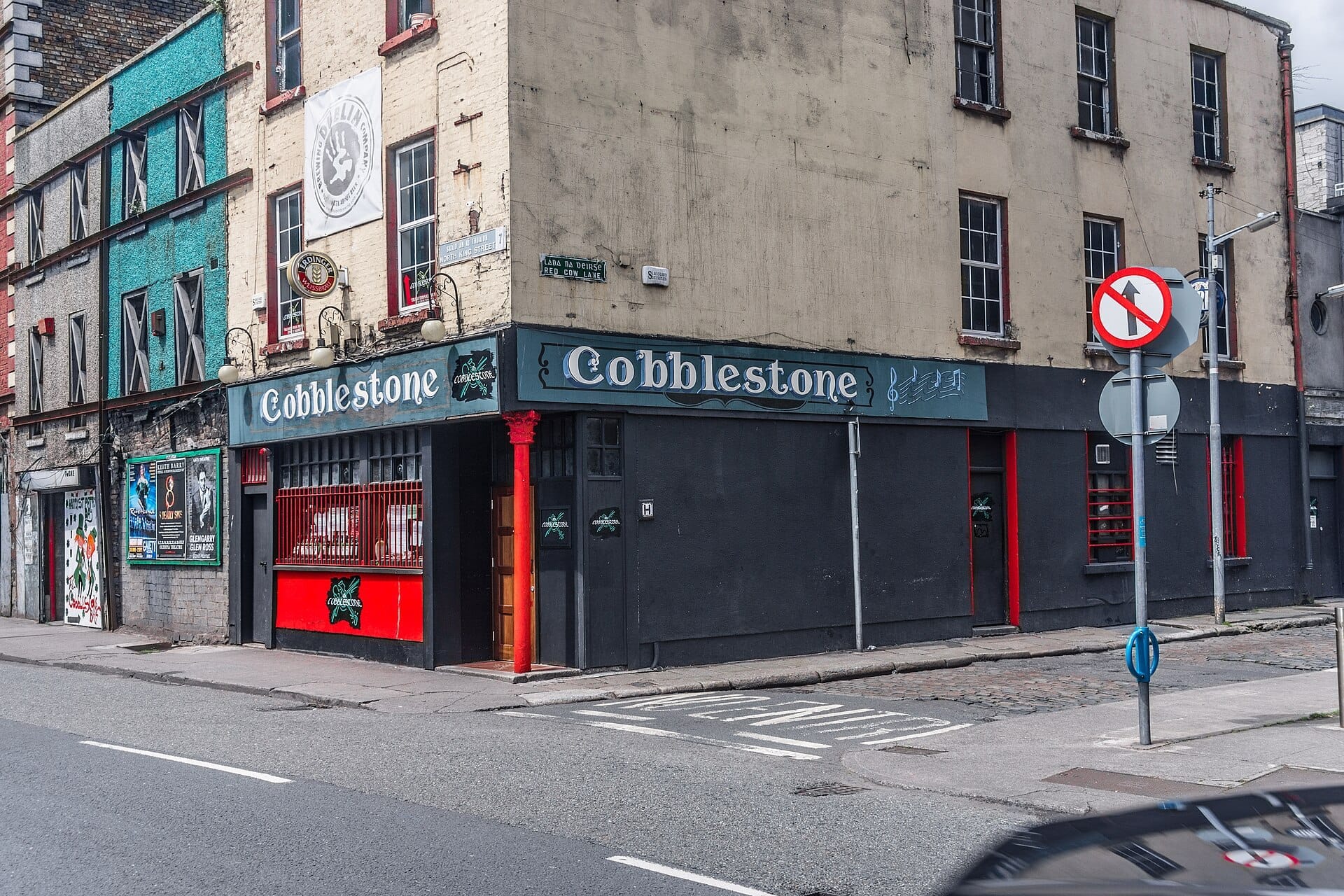
At 77 North King Street in Smithfield, The Cobblestone is the kind of Irish pub that makes you question every other Irish pub you've ever been in. Family-owned since 1987, it runs nightly traditional music sessions without a cover charge, without a stage show, and without apology. This is where musicians come to play for the love of it.
Quick Facts
- Location
- 77 North King Street, Smithfield, Dublin 7 (corner of Red Cow Lane)
- Getting There
- Smithfield Luas stop (Red Line), approx. 1 minute walk
- Time Needed
- 1.5 to 3 hours depending on session
- Cost
- Free to enter the main bar; standard drink prices; ticketed gigs in the Backroom (prices vary by event)
- Best for
- Traditional Irish music enthusiasts, solo travelers, anyone seeking an authentic Dublin pub experience
- Official website
- www.cobblestonepub.ie
What The Cobblestone Actually Is
The Cobblestone is a traditional Irish music pub at 77 North King Street in Smithfield, Dublin 7. It has been run by the Mulligan family since 1987, and the family's connection to Irish music in Dublin spans five generations. That lineage matters: it explains why the pub operates as it does, placing the music above everything else, including profit-maximising decisions like charging admission or booking tribute acts.
The format is a session pub. Musicians arrive, take their positions near the bar or at the traditional seating area, and play. There is no announcement, no amplification in the main bar, and no set list handed to a compere. The music simply starts. On weeknights sessions typically begin from late afternoon (around 4:30pm–6:30pm depending on the day); on weekends they start from early afternoon (from about 2pm–2:30pm). Nothing about this is staged.
ℹ️ Good to know
The Cobblestone does not serve food and does not take table reservations. Arrive early on weekends to secure a seat near the music.
The Music: What to Expect Inside
The instruments you are most likely to hear on any given night include uilleann pipes, fiddles, tin whistles, flutes, bodhráns, and occasionally concertina or banjo. The repertoire covers reels, jigs, hornpipes, and slow airs, rotating through a shared vernacular that experienced session players know without discussion. Requests are generally not how this works.
The sound in the main bar is intimate to the point of being overwhelming if you position yourself at the session corner. The acoustics are old-pub-close: wooden floors, low ceilings, the smell of hops and candle wax, and conversation from the bar mixing with the music in a way that forces you to listen actively rather than passively receive. This is live traditional music as it was before it became entertainment.
The Backroom is a separate venue within the building that hosts more formally organised gigs, workshop sessions, talks, and cultural events. These are ticketed and vary significantly in format. Checking the event listings on the official website or social media before you visit is worthwhile if you want to catch something specific.
Tickets & tours
Hand-picked options from our booking partner. Prices are indicative; availability and final rates are confirmed when you complete your booking.
Giant's Causeway, Dark Hedges, and Belfast Tour from Dublin
From 85 €Instant confirmationFree cancellationDublin self-guided audio tour
From 10 €Instant confirmationBird of Prey, Cliffs of Moher and Aillwee Cave from Dublin
From 201 €Instant confirmationFree cancellationGame of Thrones Studio tour with return transfer from Dublin
From 63 €Instant confirmationFree cancellation
How the Pub Changes Through the Day
The Cobblestone typically opens at 4pm on weekdays, with earlier opening hours on weekends. From opening until around 5pm on weekdays, it is quiet: a handful of regulars, a pint being slowly consumed at the bar, the kind of silence that genuine neighbourhood pubs have before the evening crowd arrives. If you want a drink and a look at the space without the crowd, this is your window.
By 6pm on a weekday, the session is underway and the room starts filling. By 7pm, it is busy. Friday and Saturday evenings see the pub reach capacity relatively quickly, particularly in summer when visitors are abundant. On weekend afternoons from 2pm, the sessions draw a more mixed crowd of locals, musicians, and visitors, with a slightly lower temperature overall than Friday night.
The smartest approach for first-time visitors is a Tuesday or Wednesday evening around 5:30pm. The session is in full flow, the crowd is manageable, and the proportion of musicians to audience is higher, which shifts the atmosphere toward something resembling a working gathering rather than a spectator event.
💡 Local tip
Weekend sessions start from 2pm, making The Cobblestone one of the only places in Dublin where you can experience live traditional music in the early afternoon without it being part of a paid tourist package.
History, Significance, and the 2021 Controversy
The Mulligan family took over The Cobblestone in 1987, though the building's role as a Smithfield drinking establishment predates this. Over the following decades, the pub became a reference point for Dublin's traditional music community: a place where professional musicians came to practise, where visiting players from rural Ireland could find a session, and where the boundaries between audience and performer were deliberately blurred.
The pub's profile sharpened significantly in September 2021 when a planning application was submitted to develop the site with a hotel and apartment complex that would have substantially altered or demolished parts of the property. The response from Dublin's music and cultural community was significant: a protest on 18 September 2021 drew crowds estimated in the thousands to Smithfield Square in defence of the pub. The episode placed The Cobblestone in the broader conversation about what kind of city Dublin is becoming, and what kinds of spaces are worth protecting. For more on the cultural weight that places like this carry, see Dublin's less visible cultural landmarks.
The planning controversy did not result in the pub's closure or demolition, but it underlined the symbolic importance of the space. The Cobblestone is now as much a civic statement as it is a pub.
Getting There and the Surrounding Area
The Cobblestone sits at the corner of Red Cow Lane and North King Street, on the western edge of Smithfield Square. The Smithfield Luas stop on the Red Line is approximately one minute's walk away, making it genuinely easy to reach from the city centre without navigating Dublin's evening traffic. The walk from the city centre takes around 15 minutes. Dublin's Luas and public transport options cover the Red Line in more detail if you are planning connections from elsewhere in the city.
Smithfield itself is worth arriving early to explore. The Smithfield and Liberties area has a character distinct from the tourist-facing south side: the square is large, windswept, and lined with a mix of residential blocks, the old distillery complex now operating as Jameson Distillery Bow St, and independent businesses. It is not a polished neighbourhood, which is part of why the pub fits it.
Photography, Practicalities, and Who This Is Not For
Photography in the main bar during sessions is a question of etiquette rather than policy. Brief phone photography is generally tolerated; extended recording, flash photography directed at musicians, or treating the session as a performance for your own content is not going to be well received. The musicians are not there to be filmed. If you want to document the atmosphere, a quick wide shot from the back of the room is the respectful approach.
There is no accessibility information published publicly by the venue. The building is old, and step-free access cannot be assumed. Visitors with specific mobility requirements should contact the pub directly before visiting.
The Cobblestone is not the right stop for everyone. If you want a designed cocktail menu, a table with food, a quieter setting, or background music you can talk over, this is not your pub. It also sits in a different orbit from the more theatrical trad experiences available closer to the city centre. The pub does not package itself for visitors, which is precisely its value to those who want something that has not been packaged. Visitors who find value in that distinction tend to leave with something different than they expected. Those expecting a Temple Bar experience will be confused or disappointed.
⚠️ What to skip
The Cobblestone does not serve food. If you plan to spend the evening here, eat beforehand. There are no table reservations, so groups larger than four or five should arrive early or accept that they may be separated.
Insider Tips
- The seating bench that runs along the wall nearest the session musicians fills up fast. If you arrive before 5pm on a weekday, you can claim a position before the session starts and watch the musicians arrive and tune up, which is itself interesting.
- The Backroom programme occasionally includes instrument workshops and song sessions aimed at learners rather than professionals. These are listed separately on the venue's social media and website and are worth checking if you have any interest in learning traditional music forms.
- Tuesday nights are widely considered among Dublin's traditional music community to be among the most reliable sessions at the pub in terms of player quality and atmosphere. It is a weeknight so the crowd is less thick, but the music commitment is high.
- If you are visiting Dublin around the time of a major traditional music event in the calendar, expect the pub to be significantly busier than usual. Check what is happening in the broader Irish music calendar before assuming a midweek evening will be quiet.
- The pub stocks a range of Irish whiskeys beyond the standard back-bar offerings. Asking the bar staff for a recommendation is a genuine conversation rather than a sales exercise in a place like this.
Who Is The Cobblestone For?
- Traditional Irish music enthusiasts looking for a session environment rather than a performance
- Solo travelers who want to sit at a bar, listen to live music, and observe Dublin social life without a tour group
- Visitors with some background in Irish or Celtic music who want to hear the real repertoire played by people who know it deeply
- Anyone interested in Dublin's cultural politics and the question of what the city is trying to preserve
- Travelers on a tight budget who want a full evening of live music for the price of a drink
Nearby Attractions
Other things to see while in Smithfield & The Liberties:
- Christ Church Cathedral
Christ Church Cathedral has anchored Dublin's skyline for nearly a thousand years, predating the city's most famous landmarks by centuries. This guide covers what you actually see inside, when to go, how to get there, and whether the admission fee is worth it.
- Dublinia Viking and Medieval Museum
Dublinia brings over a thousand years of Dublin's earliest history to life through immersive reconstructions of Viking longships, medieval streetscapes, and hands-on archaeology exhibits. Housed in the 19th-century Gothic Revival Synod Hall beside Christ Church Cathedral, it rewards curious visitors of almost any age.
- Guinness Open Gate Brewery
Tucked inside the St. James's Gate complex on James's Street, the Guinness Open Gate Brewery is a working experimental taproom where Guinness brewers test recipes that never make it to supermarket shelves. No queues, no theatrics, just serious beer in a real brewery setting.
- Guinness Storehouse
The Guinness Storehouse takes you through seven floors of brewing history at St James's Gate, the birthplace of one of the world's most recognisable drinks. The experience ends at the rooftop Gravity Bar with a complimentary pint and views across the Dublin skyline. It draws more visitors than any other paid attraction in Ireland, and whether that's a recommendation or a caution depends entirely on what you're after.