Ten Katemarkt: Amsterdam's Everyday Neighbourhood Market
Ten Katemarkt is a free, open-air street market on Ten Katestraat in Amsterdam-West, open Monday through Saturday from 09:00 to 18:00. Trading since at least 1912, it draws a mixed local crowd shopping for produce, affordable clothing, spices, and street food — with none of the tourist theatre found at more famous Amsterdam markets.
Quick Facts
- Location
- Ten Katestraat, 1053 CG Amsterdam-West (Kinkerbuurt)
- Getting There
- Tram 7 or 17 to Ten Katestraat stop
- Time Needed
- 30–60 minutes
- Cost
- Free entry
- Best for
- Everyday Amsterdam life, produce, affordable street food
- Official website
- www.tenkatemarkt.nl
What Ten Katemarkt Actually Is
Ten Katemarkt is a daily neighbourhood street market that has occupied Ten Katestraat in the Kinkerbuurt district of Amsterdam-West since at least 1912. The street itself was officially named in 1890, and the market that grew along it became one of the more durable examples of the working-class open-air trading culture that once defined much of the city's outer neighbourhoods.
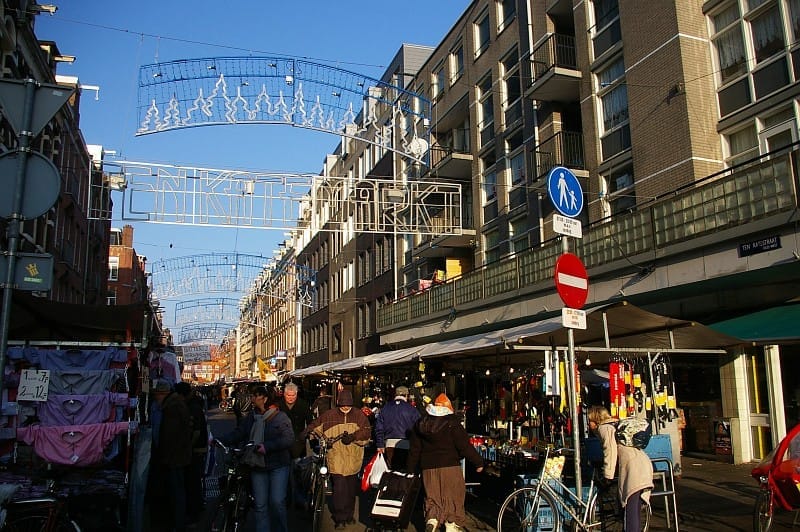
It is not a tourist market. There are no souvenir stroopwafels packaged for Instagram. What you find instead are stalls selling loose vegetables by weight, bolts of fabric, discount household goods, fresh fish, herbs, and affordable ready-to-eat food. The customer base is predominantly local: families from the surrounding blocks, older residents doing their weekly shop, students from nearby apartments, and a broad cross-section of Amsterdam-West's notably diverse population.
If you want to understand how a large part of Amsterdam actually lives and eats, this market tells you more than most. For context on how it fits into the city's wider food culture, see our guide to what to eat in Amsterdam.
💡 Local tip
Arrive between 10:00 and 11:00 on a weekday for the best balance of full stalls and manageable crowds. Saturday mornings are the busiest and the most atmospheric, but the narrow street can feel genuinely packed by noon.
The Sensory Experience: What You'll See, Hear, and Smell
Ten Katestraat is a short, relatively narrow street, and the market fills it almost completely on both sides. Stalls are set close together, which means the aromas layer quickly: cumin and coriander from a spice vendor mix with the sharp smell of fresh herring from a fish stall a few metres away, then give way to the warm, slightly sweet scent of bread or deep-fried snacks. On cool mornings, steam rises from hot food carts, and the collective noise of vendor calls, shopping trolleys on cobblestones, and overlapping conversations in Dutch, Arabic, Turkish, and English creates a low but persistent hum.
The visual texture is practical rather than curated. Produce is stacked in open crates at street level, so you can see and handle it before buying. Clothing stalls hang items on outdoor rails, often with handwritten price signs. Display is secondary to function, which is part of what makes the market feel authentic rather than staged.
Light conditions change noticeably across the day. Early morning in autumn or winter means low-angle sun catching the market from the end of the street, throwing long shadows between stalls. Midday in summer turns the street into a narrow corridor of reflected light and warmth. If you are coming specifically to photograph the market, overcast mornings tend to give the most even, workable light.
Tickets & tours
Live prices and dates from our booking partner. If you book, we may earn a commission at no extra cost to you.
Netherlands off the beaten track hidden gems tour
From 99 €Instant confirmationFree cancellationGray Line Canal Cruise with snackbox & Heineken Experience
From 48 €Instant confirmationFree cancellationAmsterdam evening canal cruise
From 18 €Instant confirmationFree cancellationJewish Museum and Portuguese Synagogue entrance ticket
From 20 €Instant confirmationFree cancellation
How the Market Changes Through the Day
Opening time at 09:00 is quiet. Vendors are still arranging stock, early shoppers move quickly and purposefully, and the pace is unhurried. This is a good time to walk the full length of the market without being jostled, and to actually talk with vendors if you want to ask questions about produce or prices.
By mid-morning on a Saturday, the crowd density increases sharply. Families with children, people with wheeled shopping bags, and groups of friends shopping together make the street harder to navigate quickly. The energy is higher and noisier, which some visitors find engaging and others find frustrating. If you are sensitive to crowds or noise, a Tuesday or Wednesday morning will give you the same stalls with significantly less pressure.
The market winds down noticeably after 16:00, with some vendors beginning to pack up before the official 18:00 close. The selection at that point is thinner, particularly for fresh produce. If you want the best choice of fruit, vegetables, and fish, go before noon.
⚠️ What to skip
The market is closed on Sundays and public holidays. If your Amsterdam visit falls over a public holiday, check the official site at tenkatemarkt.nl before making a specific trip.
What to Buy: A Practical Category Breakdown
Fresh produce dominates. Seasonal fruit and vegetables are sold at prices well below what you would pay at a supermarket, and the selection reflects the neighbourhood's demographic mix: alongside Dutch staples like potatoes, carrots, and endive, you will find plantains, large bunches of fresh coriander, dried chilies, multiple varieties of aubergine, and root vegetables that are harder to find in standard Dutch grocery stores.
Fish stalls typically offer herring, mackerel, and smoked fish alongside ready-to-eat options. Street food at Ten Katemarkt tends toward affordable and filling: fried snacks, bread rolls, and prepared dishes from vendors reflecting the neighbourhood's Turkish and Moroccan communities are common. Prices are low by Amsterdam standards.
- Fresh seasonal vegetables and fruit, often cheaper than supermarkets
- Fresh and smoked fish, sometimes with ready-to-eat portions
- Dry goods: spices, legumes, nuts in bulk
- Bread and baked goods from several vendors
- Affordable clothing, socks, underwear, and practical accessories
- Household items: cleaning products, kitchenware, textiles
- Street food for eating while you walk
Ten Katemarkt sits immediately next to De Hallen, a former tram depot converted into a food hall and cultural venue. The two work well together as a combined visit. You can browse the market for fresh ingredients, then step into De Hallen for a coffee or a more structured meal. For other options in the broader area, the Foodhallen inside De Hallen is worth knowing about before you go.
Getting There and Moving Around
Tram lines 7 and 17 both stop at Ten Katestraat, making access from the city centre straightforward. The journey from Amsterdam Centraal takes roughly 15 minutes by tram. The stop drops you almost directly at the market entrance.
The market is also easily reachable by bicycle, which is how most locals arrive. Cycling from the Jordaan neighbourhood takes under 10 minutes. Bike parking is available on the surrounding streets, though it can be tight on Saturday mornings. There is no dedicated parking structure, and arriving by car in this part of Amsterdam-West is not practical given the narrow streets and limited parking.
If you are planning a broader day in Amsterdam-West and the central districts, the cycling in Amsterdam guide covers route planning and bike rental options that pair well with a market visit.
The market operates on a single street at street level. Because it is an open-air, paved street market rather than a covered facility, wheelchair access is physically possible, but uneven cobblestones in parts of Ten Katestraat and the density of stalls and shoppers on busy days can make navigation difficult. There are no formal accessibility facilities listed on the official site.
Who This Market Is For — and Who Should Skip It
Ten Katemarkt rewards visitors who are interested in Amsterdam as a lived city rather than a highlight reel. If your interest is in observing how a genuinely mixed urban neighbourhood organises its daily life around a public market, this is one of the more instructive places in the city to spend an hour.
It is also straightforwardly practical: if you are staying in Amsterdam-West or the Jordaan area in self-catering accommodation, the produce prices and variety here are hard to beat.
Travellers who want a more structured or atmospheric market experience might prefer the Albert Cuyp Market in De Pijp, which is larger, better known, and more set up for browsing. Those interested in organic and artisan products on weekends will find the Noordermarkt in the Jordaan more suited to that purpose.
Visitors who find crowds difficult, who are looking for unique crafts or vintage goods, or who expect the kind of curated food-market experience common in other European cities are likely to be underwhelmed. Ten Katemarkt makes no effort to appeal to tourists, which is precisely its character, but also its limitation for certain visitor types.
ℹ️ Good to know
Ten Katemarkt is free to enter and requires no booking. The official site at tenkatemarkt.nl carries current information on hours and any closures.
Insider Tips
- Weekday mornings between 10:00 and 12:00 give you full stalls, light crowds, and the best produce selection. Saturday is the most atmospheric day but also the most crowded.
- Bring cash. While some vendors may accept card payments, many stalls at neighbourhood markets like this operate on a cash-only basis. Small denominations make transactions faster.
- The spice and dry goods stalls often sell items in larger quantities than you might expect. If you want small amounts, ask before assuming a fixed bag size is the only option.
- Combine the visit with De Hallen next door. The covered food hall and indoor market provide a useful contrast to the open-air stalls, particularly if the weather is poor.
- If you want to photograph vendors or specific stalls, a brief acknowledgment before pointing a camera goes a long way. The market has a regular, community-based customer base and vendors notice unfamiliar faces.
Who Is Ten Katemarkt For?
- Travellers interested in everyday Amsterdam life outside the tourist circuit
- Self-catering visitors who want affordable, fresh produce
- Food-curious visitors drawn to the neighbourhood's multicultural food culture
- Cyclists or those already exploring Amsterdam-West looking for a natural midpoint stop
- Photographers interested in documentary-style urban market scenes
Nearby Attractions
Combine your visit with:
- Amsterdam Dance Event (ADE)
Every October, Amsterdam transforms into the global capital of electronic music for five days. Amsterdam Dance Event brings together more than 1,000 shows across nearly 200 venues, from intimate club nights to warehouse raves, alongside a major industry conference that shapes the direction of dance music worldwide.
- Amsterdamse Bos (Amsterdam Forest)
Covering nearly 1,000 hectares on Amsterdam's southwestern edge, Amsterdamse Bos is a man-made forest park three times the size of New York's Central Park. Free to enter and open year-round, it offers cycling paths, a rowing lake, wildlife meadows, and genuine breathing room that the city centre simply cannot provide.
- Dappermarkt
Running along Dapperstraat in Amsterdam-East since 1910, Dappermarkt is a street market with around 200 stalls selling everything from fresh produce and spices to fabrics and secondhand clothing. Free to enter, open Monday through Saturday, and drawing locals from across the city, it offers a sharply different experience from the tourist-facing markets in the centre.
- Haarlem
Just under 20 km west of Amsterdam, Haarlem is the capital of North Holland and one of the Netherlands' oldest cities, granted city rights in 1245. A compact historic centre, the landmark Grote Kerk, the Frans Hals Museum, and a lively market square make it one of the most rewarding half-day escapes from the capital.
Planning a trip? Discover personalized activities with the Nomado app.