Teatro Heredia (Teatro Adolfo Mejía): Cartagena's Grand Theater Inside the Walled City
Officially named Teatro Adolfo Mejía but universally known as Teatro Heredia, this restored early-20th-century horseshoe theater is one of Cartagena de Indias' most elegant landmarks. Guided tours cost around US$2.50 and reveal cedar-lattice balconies, a storied performance history, and architecture that feels out of step with the heat outside — in the best possible way.
Quick Facts
- Location
- Plaza de la Merced / Calle de la Chichería No. 38-10, Centro Histórico, Cartagena de Indias, Colombia
- Getting There
- Walkable from most Walled City hotels; taxis or ride-hailing apps (Uber, inDrive) drop you directly at Plaza de la Merced
- Time Needed
- 45–90 minutes for a guided tour; allow extra time if attending a performance
- Cost
- Guided tour approx. US$2.50 per person (paid in COP on-site); performance tickets vary by event
- Best for
- Architecture lovers, culture seekers, history enthusiasts, couples, slow travelers
- Official website
- ipcc.gov.co/escenarios-culturales-vivos/teatro-adolfo-mejia
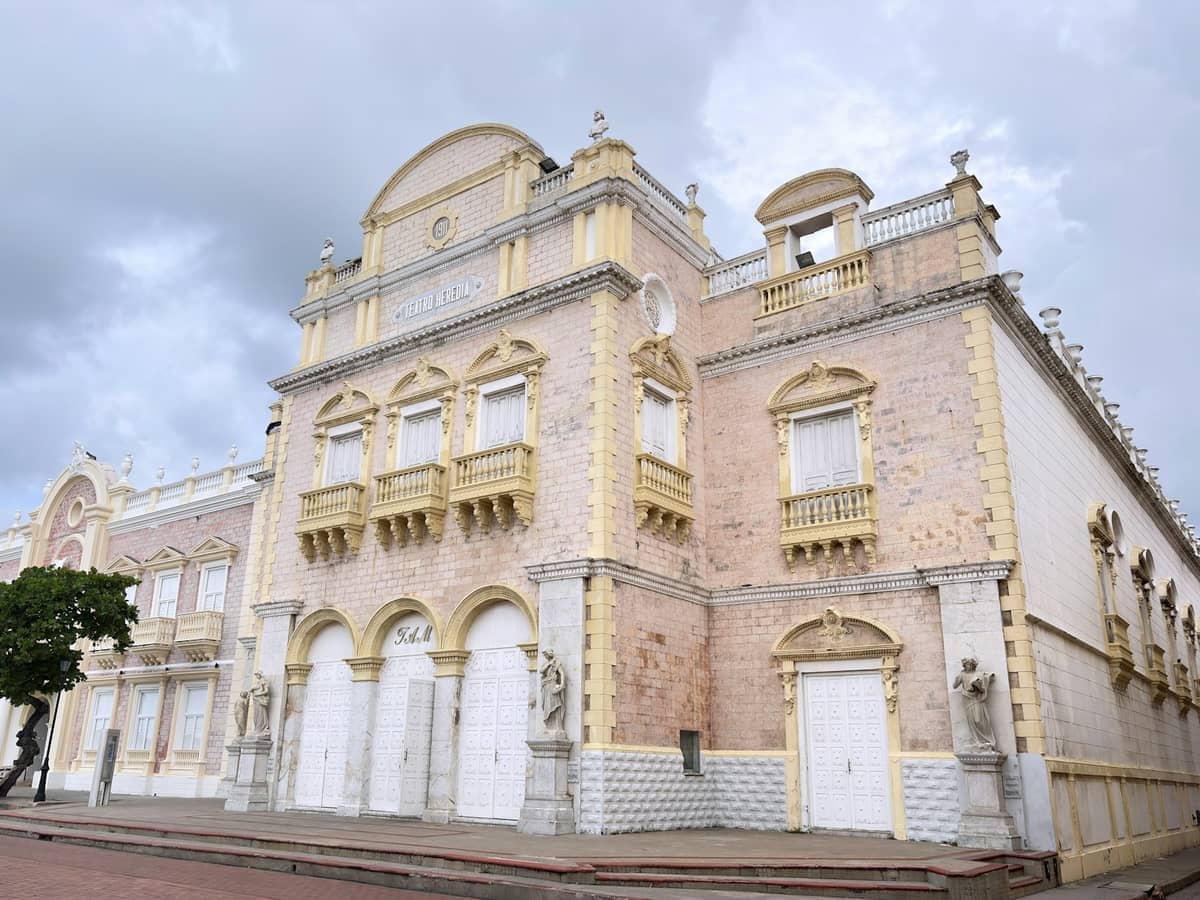
What Is Teatro Heredia?
Teatro Adolfo Mejía, universally known as Teatro Heredia, is a horseshoe-shaped theater on Plaza de la Merced inside Cartagena's walled historic center. With around 650 seats arranged across the stalls, boxes, and cedar-latticed balconies, it is the grandest performance venue in Cartagena de Indias and one of the most beautifully preserved early-20th-century theaters in the Colombian Caribbean.
The theater was officially renamed in honor of Adolfo Mejía, a composer born in San Luis de Sincé, Sucre, who became one of Colombia's most celebrated musical figures of the 20th century. The new name is the formal one you will see on signage and official documents from the Instituto de Patrimonio y Cultura de Cartagena de Indias (IPCC), the municipal body that administers it. In everyday conversation, in taxi directions, and on most tourist maps, the building is still called Teatro Heredia.
💡 Local tip
When asking a taxi or mototaxi driver for directions, say 'Teatro Heredia' or 'Plaza de la Merced' — both are universally understood. 'Teatro Adolfo Mejía' is the official name but less familiar to locals giving street directions.
The Architecture: Cedar Latticework and Colonial Elegance
The interior is the reason to come. The horseshoe plan wraps the audience around the stage in tiers, with private boxes separated by cedar latticework carved into fine geometric patterns that the official Colombia Travel description compares to lacework. Under the warm stage lights during a rehearsal, or even in the diffuse afternoon light that filters into the auditorium on a quiet tour day, those cedar screens glow amber against the cream-and-gold walls.
The proportions are intimate rather than imposing. At around 650 seats the theater is large enough to feel grand, small enough that there is no truly bad sightline. The upper balconies bring you close to the painted ceiling detail, and the angle down to the stage is steep enough to make even a small orchestra look theatrical. Visitors on guided tours are typically allowed onto the stage itself, which gives a useful reverse perspective: looking up at the tiered boxes from the stage is the single best photograph you can take inside.
If colonial architecture is your primary interest in Cartagena, the theater pairs well with the nearby Catedral Santa Catalina de Alejandría and the Palacio de la Inquisición, both within a few minutes' walk. A broader context for these buildings is in our guide to Cartagena's colonial architecture.
Tickets & tours
Hand-picked options from our booking partner. Prices are indicative; availability and final rates are confirmed when you complete your booking.
Totumo Volcano and lunch at a VIP hotel from Cartagena
From 34 €Instant confirmationFree cancellationCity tour of Cartagena with entry to San Felipe castle
From 25 €Instant confirmationFree cancellationSan Andres Islands pontoon tour through the inner bay
From 26 €Instant confirmationFree cancellationGlass-bottom boat tour to San Andres aquarium and mangroves
From 21 €Instant confirmationFree cancellation
Visiting on a Guided Tour: What to Expect
The standard way to see the interior is a guided tour, available Monday through Friday between 08:00 and 12:00 and again from 14:00 to 18:00. Tours cost approximately US$2.50 per person and are paid in Colombian pesos on-site; confirm the exact rate at the door, as prices can adjust with inflation. The guides are typically knowledgeable about the theater's performance history and architectural details, though most tours run in Spanish. If you need English, it is worth calling ahead or asking at the door when you arrive.
The tour covers the stalls, at least one level of boxes, and usually the stage. The whole circuit takes around 45 minutes at a relaxed pace. If you are pressed for time, 30 minutes is sufficient to see the key spaces. Photography is generally permitted during tours; the low interior lighting favors a wider aperture or a camera with strong low-light performance. Phone cameras in portrait mode tend to handle the warm tones better than auto HDR settings.
⚠️ What to skip
Opening hours and tour availability can change when the theater is in active rehearsal or hosting an event. If you are making a specific trip for the tour, call the IPCC ahead of time or check the theater's page on the IPCC website before you go.
Performances and the Cultural Calendar
Teatro Heredia hosts classical concerts, chamber music, theatrical productions, film premieres, and literary events across the year. The performance season is not always consistent: it tends to be most active in the early months of the year and around Cartagena's major cultural festivals, including the Hay Festival, which typically takes place in late January and uses the theater as one of its main venues.
Attending a live event here is a different experience from the daytime tour. In the evening, with the house lights low and the cedar balconies filled, the acoustic intimacy of the horseshoe plan becomes apparent in a way that photographs simply do not convey. Tickets for performances are sold separately through event platforms, including eticket.co, and through the theater's own promotions. Prices vary widely by event and show date, so check in advance. Demand for popular shows can be high during festival periods.
For a full picture of what is on across the city during your stay, the things to do in Cartagena guide covers seasonal events alongside the main attractions.
Time of Day: How the Experience Changes
Mornings, particularly between 08:00 and 10:30, are the quietest time for the daytime tour. The surrounding Plaza de la Merced is relatively calm, the air is a few degrees cooler than by midday, and the light coming through the theater's upper openings is softer. This is the best window if you want time on the stage without other tour groups around.
By early afternoon the heat in the plaza is significant — Cartagena's daytime temperatures consistently reach around 30–31°C — and the cool interior of the theater becomes something of a relief in itself. Late afternoon visits, around 16:00 to 17:00, catch the building in its warmest interior light before the day tour closes at 18:00. Evening visits are only possible when a performance is scheduled, and the atmosphere is noticeably more charged: vendors selling agua de panela and fresh juice sometimes appear near the plaza entrance on event nights.
Getting There and Practical Logistics
The theater sits on Plaza de la Merced at Carrera 4 De La Merced No. 36-38 / Calle de la Chichería No. 38-10 in the Centro Histórico. From most accommodation inside the Walled City, it is a walk of five to fifteen minutes depending on your starting point. The plaza itself is a pleasant, tree-shaded square with benches — a good place to sit before or after the tour.
If you are arriving from outside the Walled City, taxis from Bocagrande to the Centro Histórico typically take 10–20 minutes and cost around 16,000–20,000 COP (verify current rates locally). Ride-hailing apps including Uber and inDrive operate in Cartagena. The Transcaribe bus system connects broader areas of the city to the historic center for a fraction of the taxi fare. For a full breakdown of how to move around, see our guide to getting around Cartagena.
Wear light, breathable clothing. The interior is not air-conditioned in the conventional sense, but the thick colonial walls and high ceilings keep it noticeably cooler than the streets outside. Bring water for the walk to and from the theater. There is no formal bag storage, so travel light or keep a daypack with you during the tour.
Accessibility
As a restored early-20th-century building, Teatro Heredia has multiple levels, tiered balconies, and internal staircases. Specific step-free access details are not clearly documented in publicly available sources. If mobility access is a concern, contact the IPCC directly before your visit — they manage the building and are best placed to advise on current arrangements.
Practical Assessment: Is It Worth Your Time?
At roughly US$2.50, the guided tour is one of the best-value cultural stops in Cartagena. The building earns its reputation: the cedar balconies and horseshoe interior are genuinely beautiful, and the tour is short enough that it does not compete with larger half-day commitments. For architecture or performing-arts enthusiasts, it is an easy decision.
That said, visitors whose primary interest is the beach, island day trips, or outdoor activity may find a dedicated theater visit a lower priority. If you have only one full day in the city, the 3-day Cartagena itinerary puts the theater in context with the city's other major draws so you can plan your time accordingly.
The theater is also not a good fit for visitors with young children who are unlikely to sit through a 45-minute Spanish-language tour. The interior is beautiful but there is nothing specifically designed for younger visitors, and the tour requires patience and quiet attention.
Insider Tips
- If you want the stage to yourself for a photograph, arrive at opening time (08:00) on a weekday. Later in the morning, school groups and organized tours arrive, and the auditorium gets crowded quickly.
- The Hay Festival, held in Cartagena in late January, uses Teatro Heredia as a primary venue. Tickets for high-profile talks and performances sell out fast — check the festival's official program weeks in advance if you are planning your trip around it.
- From the upper balcony during the daytime tour, the cedar latticework is close enough to touch. Look at the craftsmanship of the carved joints rather than just photographing the overall view — the detail work at arm's length is the real story of the building.
- The IPCC (Instituto de Patrimonio y Cultura de Cartagena de Indias) website lists upcoming events at the theater and other city venues. Cross-reference it with eticket.co if you want to book performance seats in advance from outside Colombia.
- Plaza de la Merced has shade trees and benches that make a good 10-minute rest stop between the theater and the Torre del Reloj area. Combine the visit with a walk along the nearby city walls to extend the afternoon without adding significant distance.
Who Is Teatro Heredia (Teatro Adolfo Mejía) For?
- Architecture and design enthusiasts who want to see Cartagena's finest interior beyond the churches
- Travelers attending the Hay Festival or other cultural events looking for a venue-specific experience
- Couples on a cultural itinerary through the Walled City
- History-minded visitors interested in Colombia's performing arts heritage
- Slow travelers with time to combine the tour with an evening performance
Nearby Attractions
Other things to see while in Centro Histórico (Ciudad Amurallada):
- Cartagena City Walls (Murallas)
The Murallas de Cartagena de Indias are the best-preserved colonial defensive walls in the Americas, ringing the historic center with roughly 3 kilometers of coral-stone ramparts, cannons, and Caribbean sea views within an 11-kilometer defensive system overall. Entry is free, the walk takes 1 to 3 hours depending on your pace, and the experience changes dramatically depending on the time of day you show up.
- Catedral Santa Catalina de Alejandría
Standing at the east corner of Parque de Bolívar in Cartagena de Indias, the Catedral Basílica Metropolitana de Santa Catalina de Alejandría is one of the oldest episcopal sees in the Americas. Construction began in the 16th century, and the building remains the seat of the Archbishop of Cartagena de Indias today. Entry is free, the doors open daily, and the surrounding plaza makes this one of the most rewarding stops in the entire Centro Histórico.
- Iglesia de Santo Domingo
The Iglesia de Santo Domingo is widely considered the oldest surviving church in Cartagena de Indias, anchoring a plaza that doubles as one of the historic center's most lively gathering points. The building itself rewards close inspection, while the square around it offers a completely different experience depending on the hour you arrive.
- India Catalina Statue
Standing at the entrance to Cartagena de Indias, the bronze India Catalina Statue has marked the city's identity since 1974. Free, open around the clock, and loaded with historical weight, it is the first landmark many visitors encounter and the last symbol they remember.