teamLab Planets Tokyo: The Immersive Art Experience Worth the Hype
teamLab Planets TOKYO DMM.com is a walk-through digital art museum in Toyosu where visitors go barefoot, wade through shallow water, and move through large-scale installations that blur the boundary between body and image. It is smaller and more intimate than teamLab Borderless, but frequently described as more intense.
Quick Facts
- Location
- 6-1-16 Toyosu, Koto City, Tokyo 135-0061
- Getting There
- Shin-Toyosu Station (Yurikamome Line), 1-minute walk from North Exit
- Time Needed
- 1.5 to 2.5 hours
- Cost
- Around ¥3,600–¥4,000 for adults (verify current pricing at official ticket store)
- Best for
- Digital art lovers, couples, curious first-time visitors to Tokyo
- Official website
- www.teamlab.art/e/planets
What teamLab Planets Actually Is
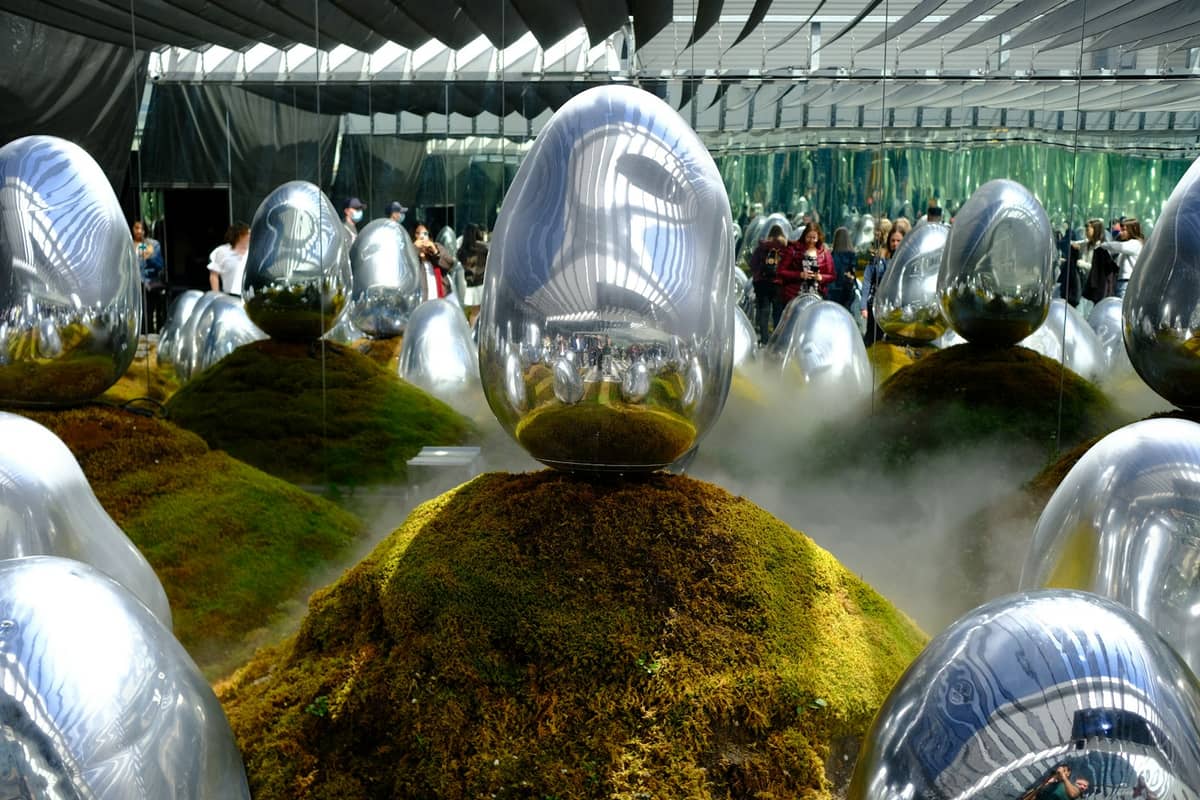
teamLab Planets TOKYO DMM.com is a digital art museum in the Toyosu district of Koto Ward, created by the art collective teamLab in partnership with DMM.com. The building contains a series of large, enclosed rooms where projections, mirrors, water, and light are combined into immersive environments that surround visitors entirely. There are no paintings on walls and no glass cases. You walk into the artwork itself.
The experience is physically participatory in a way that photographs don't fully capture. You remove your shoes and socks at the entrance, roll your trousers or skirt up to the knee, and walk through rooms that include a shallow water feature covering the entire floor. The water is cold but rarely deeper than 10 to 15 centimeters. The floor surfaces shift between water, soft inflatable material, and flat ground, so your balance and sense of space are genuinely challenged throughout.
ℹ️ Good to know
Wear clothes you can roll up easily. Skirts and wide-leg trousers work better than fitted jeans. Valuables left in lockers near the entrance are secure, but keep your phone with you if you plan to photograph.
If you've been following Tokyo's digital art scene, you likely know teamLab from teamLab Borderless, the collective's larger museum that reopened in Azabudai Hills in 2024. Planets is a separate venue with a different character: fewer rooms, smaller crowds per session, and a layout that feels more like a curated sequence than an open-ended maze. Both are worth considering, but they are not interchangeable.
Moving Through the Installations
The museum is organized as a linear progression through distinct rooms rather than a free-roaming floor plan. Each space has its own logic, scale, and sensory character. Some are vast enough that groups of visitors spread out and lose each other; others are narrow corridors where you move single-file through projected color.
The water room is the experience most visitors describe first. The shallow pool stretches wall to wall and reflects projections from above and below simultaneously, creating an optical effect that makes the space feel bottomless. At quiet moments, when few other visitors are present, the silence and the soft sound of water moving underfoot give the room a meditative quality that feels genuinely unusual for a commercial attraction. In busier sessions, the same room fills with conversation and the visual impact is diluted.
Other installations work with hanging crystal spheres that visitors can touch and illuminate, rooms filled with slowly drifting botanicals projected at scale across every surface, and mirror environments that multiply your reflection into apparent infinity. The inflatable floor installation deserves specific mention: it is physically disorienting, and some visitors find it briefly nauseating. If you are sensitive to motion or have balance concerns, note this before you book.
Tickets & tours
Hand-picked options from our booking partner. Prices are indicative; availability and final rates are confirmed when you complete your booking.
Tsukiji Fish Market Walking Food Tour
From 40 €Instant confirmationFree cancellationMt.Fuji,Owakudani, Hakone Cruise & Ropeway, Oshino Hakkai 1-Day Trip
From 54 €Instant confirmationFree cancellationTour to Mt. Fuji Area, Oshino Hakkai and Kawaguchi Lake from Tokyo
From 57 €Instant confirmationFree cancellationNikko UNESCO Shrine and Nature View 1-Day Tour from Tokyo
From 78 €Instant confirmationFree cancellation
Best Time to Visit and Crowd Dynamics
teamLab Planets uses timed-entry tickets, which helps control capacity within each session. Even so, the experience varies considerably by time slot. Early morning sessions, particularly the first slot around 08:00, see noticeably fewer visitors, and the water room in particular takes on a different quality when fewer people are crossing it simultaneously. Photographs are also much cleaner with minimal strangers in the frame.
Weekends and public holidays draw the heaviest traffic regardless of slot time. If you visit on a Saturday afternoon, expect each room to feel occupied throughout your session. Weekday mornings in low season, roughly late January through February and again in June during the rainy season, offer the closest thing to a near-empty experience. Summer holidays bring large groups of teenagers and families. This is not necessarily a negative, but it changes the atmosphere significantly.
💡 Local tip
Book tickets in advance through the official DMM ticket store at teamlabplanets.dmm.com. Walk-in availability is limited and on popular dates the museum sells out days or weeks ahead.
The Toyosu area itself rewards some exploration around your visit. The Toyosu Market is a short distance away and opens very early, making it a practical morning pairing if you time your Planets slot for mid-morning. The waterfront between the two sites offers views across Tokyo Bay and is pleasant on clear days.
Getting There
The most straightforward route is the Yurikamome Line to Shin-Toyosu Station. From the station's North Exit, the museum entrance is visible within about one minute of walking. The Yurikamome is an automated elevated railway that runs from Shimbashi through Odaiba and into Toyosu, and the views from the elevated carriages over Tokyo Bay are part of the journey.
From central Tokyo, the Yurikamome journey from Shimbashi takes roughly 20 to 25 minutes. From Shibuya or Shinjuku, allow around 35 to 40 minutes including transfers. Taxi from Tokyo Station takes approximately 15 minutes under normal traffic conditions, but Toyosu road access can slow during rush hour. Haneda Airport to the venue by expressway is also approximately 15 minutes, making it a reasonable first or last stop on travel days, though you should verify traffic conditions before planning around that timing.
⚠️ What to skip
The museum offers only limited wheelchair accessibility. Uneven surfaces, sloped floors, and the water feature make independent navigation by wheelchair difficult, and some areas are not accessible. Strollers are not permitted inside, though a buggy park is available. Visitors with specific mobility needs should contact the venue before booking to confirm what is possible for them.
Photography and Practical Details
Photography is permitted throughout, and most visitors photograph extensively. Phones handle the low-light conditions adequately; dedicated cameras with wide lenses do well in the larger rooms but can be awkward in narrow corridors. Avoid using flash, which disrupts the projections and irritates other visitors. In the mirror rooms, experiment with long exposure if your phone allows it: the effect of multiplied light trails is one of the more visually striking images you can take at the venue.
The entrance area provides lockers for bags and shoes. You carry only what fits in a small bag or your pockets through the installations. Waterproof phone cases are not required but give peace of mind in the water room if your instinct is to hold your phone low for reflection shots. The water depth stays shallow, but fumbling a phone is genuinely possible.
Opening hours are typically around 08:00 to 22:00, with last admission about one hour before closing, though hours on specific dates and holidays can differ. Admission prices are approximately ¥3,600–¥4,000 for adults as of recent reporting, but prices vary by date and time slot. Always check the official ticket store for current pricing before booking.
Is It Worth Your Time?
teamLab Planets is one of those attractions that lands very differently depending on what you expect from it. Visitors who approach it as a sensory and physical experience, willing to be disoriented and wet-footed, tend to find it genuinely affecting. Visitors who arrive expecting a conventional art museum, or who find crowds, darkness, or uneven surfaces uncomfortable, often leave underwhelmed.
It is not cheap by Tokyo standards, and the core experience runs around 90 minutes for most visitors. But the combination of physical immersion and visual scale is unusual enough that it occupies a different category from most commercial attractions. There is nothing quite like the water room on a quiet morning, and that specific quality is hard to find anywhere else in the city.
For context on how Planets fits into Tokyo's broader digital and contemporary art landscape, the Tokyo digital art guide covers the key venues alongside each other. If you are also considering the Mori Art Museum or the National Art Center Tokyo, those can be combined into a longer art-focused day depending on where you are staying.
Planning more than a day or two in Tokyo? The 3-day Tokyo itinerary places Planets within a realistic schedule that accounts for transit time and neighborhood logistics.
Insider Tips
- Book the earliest available time slot on a weekday. The 08:30 session on a Tuesday or Wednesday in low season is as close to a private experience as you will get at a popular Tokyo attraction.
- Wear a light, stretchy outfit. The act of rolling trousers up in a small, dim entryway with other visitors pressing in behind you is more stressful than it sounds. Shorts, a wrap skirt, or wide-leg trousers that roll quickly are worth planning for.
- Move through the water room slowly. Most visitors rush through it, especially when groups are behind them. If you pause mid-room and let the projections settle around you, the visual effect is considerably stronger than it is while walking.
- The inflatable floor room disorients almost everyone. If you have a companion who struggles with balance or motion sensitivity, go through that room together and move close to the wall where the surface is more stable.
- Combine the visit with Toyosu Market in the morning. The market's viewing area opens early and the tuna auction viewing (booked separately in advance) finishes well before your Planets time slot. The two venues are about a 5-minute walk apart.
Who Is teamLab Planets For?
- Couples looking for an atmospheric and unusual shared experience
- Design and technology enthusiasts interested in where art and computation intersect
- Visitors who want something specifically Tokyo and contemporary rather than historical
- Photographers comfortable working in low light and tight spaces
- Curious travelers willing to engage physically, not just visually, with an exhibition
Nearby Attractions
Combine your visit with:
- Akasaka Palace (State Guest House)
The State Guest House, Akasaka Palace is Japan's principal diplomatic residence and one of the few Western-style palaces in Asia open to the public. Built in neo-baroque style for the Crown Prince in the early 20th century, it now receives heads of state and, on select days, ordinary visitors. The combination of ornate gilded interiors, formal French gardens, and a Japanese-style annex makes it one of the most architecturally unusual stops in Tokyo.
- Edo-Tokyo Open Air Architectural Museum
Spread across the grounds of Koganei Park, the Edo-Tokyo Open-Air Architectural Museum rescues and reassembles more than 30 historic structures spanning the Edo period through the early 20th century. From a dismantled farmhouse to a reconstruction of a Showa-era Tokyo streetscape, it is one of the most thoughtful and undervisited cultural sites in the metropolitan area.
- Enoshima
A small island off the Shonan coast of Kanagawa Prefecture, Enoshima packs a surprising amount into a short walk: a three-part Shinto shrine, ancient sea caves, a hilltop botanical garden, a lighthouse observation tower, and seafood stalls lining a stone-paved shopping street. It works as a half-day excursion or a full day if you combine it with nearby Kamakura.
- Gotokuji Temple
Gotokuji Temple in Setagaya is a working Soto Zen Buddhist temple that happens to be one of the claimed birthplaces of the maneki-neko, Japan's iconic beckoning cat. Hundreds of white ceramic cats line the shelves of a dedicated shrine, creating one of Tokyo's most quietly striking visual spectacles. Entry is free, crowds are manageable, and the surrounding grounds offer genuine calm.