Toyosu Market: Inside Tokyo's Working Fish Market
Toyosu Market is Tokyo's central wholesale seafood market and the successor to the legendary Tsukiji. Free to enter on operating days, it offers public observation decks above the tuna auction floor, a cluster of seafood restaurants, and a rare look at the infrastructure behind Japan's fish trade. It is a genuine working market first, tourist attraction second.
Quick Facts
- Location
- 6-6-1 Toyosu, Koto City, Tokyo 135-0061
- Getting There
- Shijo-mae Station (Yurikamome Line) — about 1 min walk
- Time Needed
- 1.5 to 3 hours depending on meal and pace
- Cost
- Free entry (visitor areas and observation decks)
- Best for
- Food lovers, early risers, photographers, market culture enthusiasts
- Official website
- www.shijou.metro.tokyo.lg.jp/english/toyosu
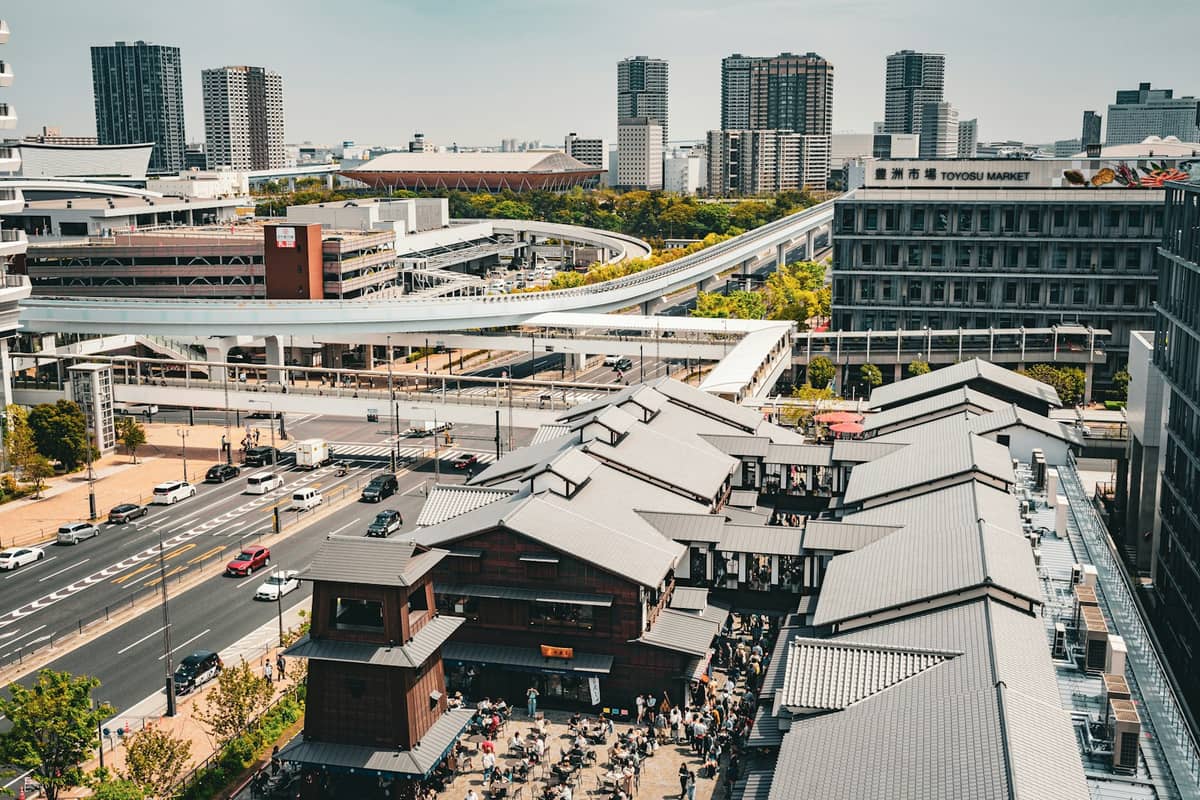
What Toyosu Market Actually Is
Toyosu Market, officially the Tokyo Metropolitan Wholesale Market Toyosu Market (豊洲市場), is the largest wholesale seafood market in Japan and one of the largest in the world. It opened in October 2018 after years of delays, replacing the iconic Tsukiji Market as Tokyo's central hub for seafood distribution. Every morning, thousands of tonnes of fish, shellfish, and marine products move through its auction halls and shipping bays before dawn, long before most visitors arrive.
This is a working facility with real commercial stakes. Restaurants across Tokyo and beyond depend on what is traded here each day. For visitors, the market offers public observation corridors above the main auction floors, a dedicated restaurant zone, and shops selling professional-grade kitchen equipment and sushi ingredients. If you want the street-food energy and open-air chaos of the old Tsukiji, you will not find it here. What you will find is a place that takes fish more seriously than anywhere else in the country. Those still seeking that outdoor market feel should know that the Tsukiji Outer Market still operates independently and makes a natural companion stop.
⚠️ What to skip
Toyosu Market is closed on Sundays, national holidays, and many Wednesdays (market holidays). The closure schedule varies each month. Always check the official business calendar on the Tokyo Metropolitan Government website before planning your visit.
Getting There: Simpler Than It Looks on a Map
The market sits on a man-made island in Tokyo Bay, in the Koto Ward, which sounds remote but is easily reached by the Yurikamome Line, an automated elevated rail line that runs from Shimbashi through Odaiba. Take the line to Shijo-mae Station, the stop built specifically to serve the market. From the station platform, covered elevated walkways connect directly to the market buildings with no need to go street-level, so even on wet mornings you arrive dry and oriented.
An alternative route starts at Toyosu Station on the Tokyo Metro Yurakucho Line. From there, transfer to the Yurikamome Line and ride two stops north to Shijo-mae. Toei Bus services also connect from Tokyo Station and Shimbashi for those who prefer ground-level travel. The bus ride offers views of the bay waterfront that the elevated train misses.
💡 Local tip
If you are coming for the early morning atmosphere, the Yurikamome Line runs from around 5:30 a.m. from Shimbashi on weekdays, putting you at Shijo-mae before 6 a.m. Taxis are also available, but the train is faster and more predictable at that hour.
Tickets & tours
Hand-picked options from our booking partner. Prices are indicative; availability and final rates are confirmed when you complete your booking.
Toyosu tuna auction, seafood breakfast, and tsukiji stroll in Tokyo
From 80 €Instant confirmationFree cancellationTsukiji Fish Market Walking Food Tour
From 40 €Instant confirmationFree cancellationMt.Fuji,Owakudani, Hakone Cruise & Ropeway, Oshino Hakkai 1-Day Trip
From 54 €Instant confirmationFree cancellationTour to Mt. Fuji Area, Oshino Hakkai and Kawaguchi Lake from Tokyo
From 57 €Instant confirmationFree cancellation
The Tuna Auction: What You Can and Cannot See
The tuna auction is the reason most international visitors make the effort. Every weekday morning, rows of frozen bluefin tuna — many of them weighing over 200 kg — are laid out on the auction floor while licensed buyers move quickly between them, assessing fat content, color, and texture by flashlight. The bids happen in seconds through a rapid hand-signal system, and the atmosphere is genuinely unlike anything in everyday public life.
Visitors observe from a glass-enclosed gallery above the auction floor. You cannot descend to the floor itself. The auction takes place in the very early morning hours, typically wrapping up well before 7 a.m. The gallery viewing time is correspondingly brief. Sightlines through the glass are clear, but the distance and the glass mean photography requires some patience; strong early lighting from the auction floor helps.
A separate authorized visitor lottery program has historically allowed a small number of visitors to watch from a closer designated zone. That program has been suspended and reinstated at various points, and its current status should be verified directly with the Tokyo Metropolitan Government before you plan around it. The standard observation gallery is always available on operating days without reservation during visitor hours, which generally run from 5:00 a.m. to 5:00 p.m.
ℹ️ Good to know
Arrive at the observation deck before 6:30 a.m. to catch the tail end of auction activity. By 7 a.m. the floor is already shifting to post-auction logistics, which is quieter and less visually dramatic.
The Buildings and How the Market is Laid Out
Toyosu Market occupies several large, purpose-built structures connected by enclosed elevated walkways. The main visitor-facing facilities are in three primary blocks: Building 5 (produce market), Building 6 (seafood intermediate wholesale), and Building 7 (tuna auction and sushi restaurant zone on the upper floor). For most visitors, Building 7 is the priority, as it contains both the tuna auction viewing corridor and the cluster of restaurants on its upper level.
The architecture is modern and utilitarian, designed for hygiene, cold-chain logistics, and volume throughput rather than aesthetic impact. The elevated walkways are efficient but also give elevated views over the loading bays and refrigerated truck queues below, which have their own industrial appeal early in the morning. The scale of the facility is striking from the walkways: this is a city within a city, organized entirely around fish.
Accessibility is well-considered throughout. Elevators and escalators connect all levels, and the covered walkways from Shijo-mae Station mean visitors with mobility limitations can reach the main observation and restaurant areas without navigating stairs or exposed outdoor terrain. For a broader picture of Tokyo's waterfront development context, the Odaiba district — visible from the market's exterior walkways — fills out the surrounding geography.
Eating at Toyosu: The Restaurants Above the Auction Floor
Building 7's upper floor hosts a row of sushi and seafood restaurants that open early to serve the market's own workers and visiting traders. By 7 a.m. on weekdays, queues form outside the most popular sushi counters. The fish served here is bought from the market that morning, which means the quality ceiling is genuinely high. Expect omakase-style sets, donburi bowls with thick cuts of tuna or salmon over rice, and occasionally market-specific preparations you will not see on standard restaurant menus.
The queue situation is real and worth planning around. The most well-known sushi restaurants can see waits of 30 to 60 minutes during the 7 to 9 a.m. window. Arriving at 6:30 a.m. or after 9:30 a.m. usually cuts the wait significantly. The restaurants are compact and counter-focused; expect to share space and eat efficiently rather than linger. Prices are reasonable given the quality — a sushi set will typically cost less than an equivalent meal in central Tokyo's restaurant districts.
For those who want the fresh-fish experience without the early start, the Toyosu restaurant zone stays open through midday and beyond, and the ingredients at 10 a.m. are the same as at 7 a.m. Alternatively, Tokyo's sushi scene spans every price point and schedule if the market timing does not fit your itinerary.
Sensory Details: What the Visit Actually Feels Like
The cold is the first thing you notice in the seafood buildings. The intermediate wholesale hall where buyers pick through iced fish is kept at low temperatures, and the tuna auction observation corridor can feel genuinely chilly even in summer. A light jacket or layering option is worth carrying regardless of the season.
The smell is less intense than most visitors expect. Because the fish is primarily frozen or kept on ice in enclosed spaces rather than displayed open-air as at the old Tsukiji, the sharp brine smell of a traditional fish market is muted. The loading areas and outdoor walkways carry more of the marine scent, especially in warmer months. The sounds from the elevated walkways at peak morning hours — the rumble of motorized carts calledターレ (turret trucks), refrigerated lorry engines, and the clatter of buyers moving quickly between stalls — give the market a specific rhythm that is very different from a tourist attraction.
By 10 a.m., the auction halls are largely quiet and the market shifts toward the intermediate retail and processing phase. The kinetic energy of the early morning is gone, replaced by a more methodical operational pace. If you are there primarily for atmosphere rather than dining, earlier is definitively better.
Photography Tips and Practical Logistics
Photography of the public observation areas, elevated walkways, and restaurant zones is generally permitted. Photography inside the auction hall itself, through the observation glass, is possible and can yield strong results in the early morning when the auction floor is brightly lit against the ambient dark. A longer focal length helps bridge the distance from the gallery to the floor. Wide-angle shots of the tuna rows laid out below work well if you arrive before the crowd thickens around the viewing windows.
Bring your own bag for any purchases from the market-adjacent shops, which sell high-grade dashi ingredients, dried fish products, and professional knife lines. Cash is widely accepted and often preferred at smaller stalls. The market has no dedicated luggage storage, so if you are arriving from elsewhere with bags, plan accordingly.
Weather has limited effect on the visitor experience since most of the route from station to observation deck to restaurant is covered. Rain is not a deterrent. Extreme summer heat can make the outdoor walkway sections between buildings uncomfortable, so morning visits are especially practical in July and August. For more on timing a Tokyo trip by season, the best time to visit Tokyo guide covers seasonal considerations in detail.
Insider Tips
- The turret trucks (taretsuku) used by market workers to move fish crates have the right of way everywhere. On operating days, they move fast and quietly through the loading corridors. Stay alert on walkway crossings during peak morning hours.
- Building 6 has a separate cluster of shops and a less-visited restaurant section that often has shorter queues than the famous row in Building 7. The quality is comparable and the sightlines into the intermediate wholesale hall are a bonus.
- The best light for tuna auction photography through the observation glass is between 5:30 and 6:15 a.m., when the auction floor lighting contrasts against the pre-dawn darkness outside. After the auction ends, the floor is less visually striking.
- Wednesday is often a holiday for the market, but not always. The specific closure calendar is published monthly on the Tokyo Metropolitan Government website. Checking it the week before is more reliable than any printed guide.
- If the sushi queues are long and you are short on time, several restaurants in the building serve grilled fish, seafood curry, and tsukemen ramen using market-grade ingredients. These counters have consistently shorter waits than the sushi counters.
Who Is Toyosu Market For?
- Food-focused travelers who want to eat the freshest possible fish at reasonable prices
- Early risers willing to arrive before 6:30 a.m. to catch the tuna auction in progress
- Photographers interested in industrial and culinary subjects in low-light conditions
- Travelers curious about the logistics of Japan's food supply chain
- Anyone who visited the old Tsukiji and wants to see how Tokyo's wholesale market infrastructure evolved
Nearby Attractions
Combine your visit with:
- Akasaka Palace (State Guest House)
The State Guest House, Akasaka Palace is Japan's principal diplomatic residence and one of the few Western-style palaces in Asia open to the public. Built in neo-baroque style for the Crown Prince in the early 20th century, it now receives heads of state and, on select days, ordinary visitors. The combination of ornate gilded interiors, formal French gardens, and a Japanese-style annex makes it one of the most architecturally unusual stops in Tokyo.
- Edo-Tokyo Open Air Architectural Museum
Spread across the grounds of Koganei Park, the Edo-Tokyo Open-Air Architectural Museum rescues and reassembles more than 30 historic structures spanning the Edo period through the early 20th century. From a dismantled farmhouse to a reconstruction of a Showa-era Tokyo streetscape, it is one of the most thoughtful and undervisited cultural sites in the metropolitan area.
- Enoshima
A small island off the Shonan coast of Kanagawa Prefecture, Enoshima packs a surprising amount into a short walk: a three-part Shinto shrine, ancient sea caves, a hilltop botanical garden, a lighthouse observation tower, and seafood stalls lining a stone-paved shopping street. It works as a half-day excursion or a full day if you combine it with nearby Kamakura.
- Gotokuji Temple
Gotokuji Temple in Setagaya is a working Soto Zen Buddhist temple that happens to be one of the claimed birthplaces of the maneki-neko, Japan's iconic beckoning cat. Hundreds of white ceramic cats line the shelves of a dedicated shrine, creating one of Tokyo's most quietly striking visual spectacles. Entry is free, crowds are manageable, and the surrounding grounds offer genuine calm.