Stagnone Lagoon & Mothia Island: Sicily's Phoenician Lagoon
Stagnone Lagoon is Sicily's largest lagoon ecosystem, a shallow, glittering expanse of saltwater sheltering four islands and centuries of history. At its heart, Mothia (Mozia) preserves the ruins of a Phoenician city founded around the mid-8th century BC, reachable only by a short boat crossing from the salt-pan-lined shore near Marsala.
Quick Facts
- Location
- Between Marsala and Trapani, western Sicily. Follow SP21 north from Marsala or south from Trapani to reach the lagoon piers.
- Getting There
- Car recommended. Nearest piers: Molo Arini e Pugliese and Salina Infersa pier (Mozia Line), both off SP21. Marsala is the closest town with rail connections.
- Time Needed
- Half day minimum (3–4 hours for lagoon + Mothia). A full day allows relaxed exploration and a stop at the salt pans.
- Cost
- Island entry approx. €9–10 adults, €6 children/students. Boat crossing approx. €5 return (adults), €2.50 (children). Prices vary by operator; verify before visiting.
- Best for
- History enthusiasts, photographers, birdwatchers, slow travellers, families with older children.
- Official website
- www.seisaline.it/en/the-stagnone-lagoon
What Is the Stagnone Lagoon?
The Riserva naturale orientata 'Isole dello Stagnone di Marsala' is Sicily's largest coastal lagoon, covering more than 2,000 hectares of protected water between Capo San Teodoro and Capo Boeo, just north of Marsala. Established as a nature reserve in 1984, it is a shallow body of water, rarely deeper than one to two metres, held in place by a thin barrier island called Isola Grande. The result is an almost mirror-flat expanse that catches the afternoon light in shades of amber, rose, and silver, particularly during the hours when the salt pans on the southern shore are at peak evaporation.
Four islands sit within the lagoon: Isola Grande, Isola San Pantaleo (where Mothia stands), Isola Schola, and Isola Santa Maria. The surrounding shallows support dense beds of seagrass, making the reserve an important habitat for migratory and resident birds, including herons, egrets, and flamingos in the wetter months. The water smells faintly of salt and marine vegetation, and the air carries the faint mineral sharpness that is inseparable from any lagoon ecosystem.
💡 Local tip
The lagoon is calm enough for kayaking and stand-up paddleboarding. Several operators along SP21 rent equipment in season (roughly April to October). The shallow depth makes it particularly suitable for families and beginners.
Mothia (Mozia): A Phoenician City in the Water
The real draw for most visitors is Isola di San Pantaleo, universally known by its ancient name, Mothia or Mozia (also spelled Motya). This oval island, roughly 45 hectares in area and about two kilometres across at its widest, holds what remains of one of the western Mediterranean's most significant Phoenician settlements. Founded around the mid-8th century BC, Mothia grew into a prosperous trading city before being besieged and largely destroyed by the Syracusan tyrant Dionysius I in 397 BC. After that defeat, the surviving population moved to the mainland site that would become Marsala, and Mothia was never resettled as a city.
That abandonment is precisely what makes the island remarkable. Because no subsequent city was built over it, the Phoenician street grid, cothon (a small artificial harbour cut into the island), tophet (a sacred precinct), and sections of the city wall have survived in a form rarely seen elsewhere. Walking the island, you move between ancient masonry, dense vegetation, and the constant presence of the surrounding water. The scale is intimate: you can circumnavigate most of the island in under two hours at a leisurely pace.
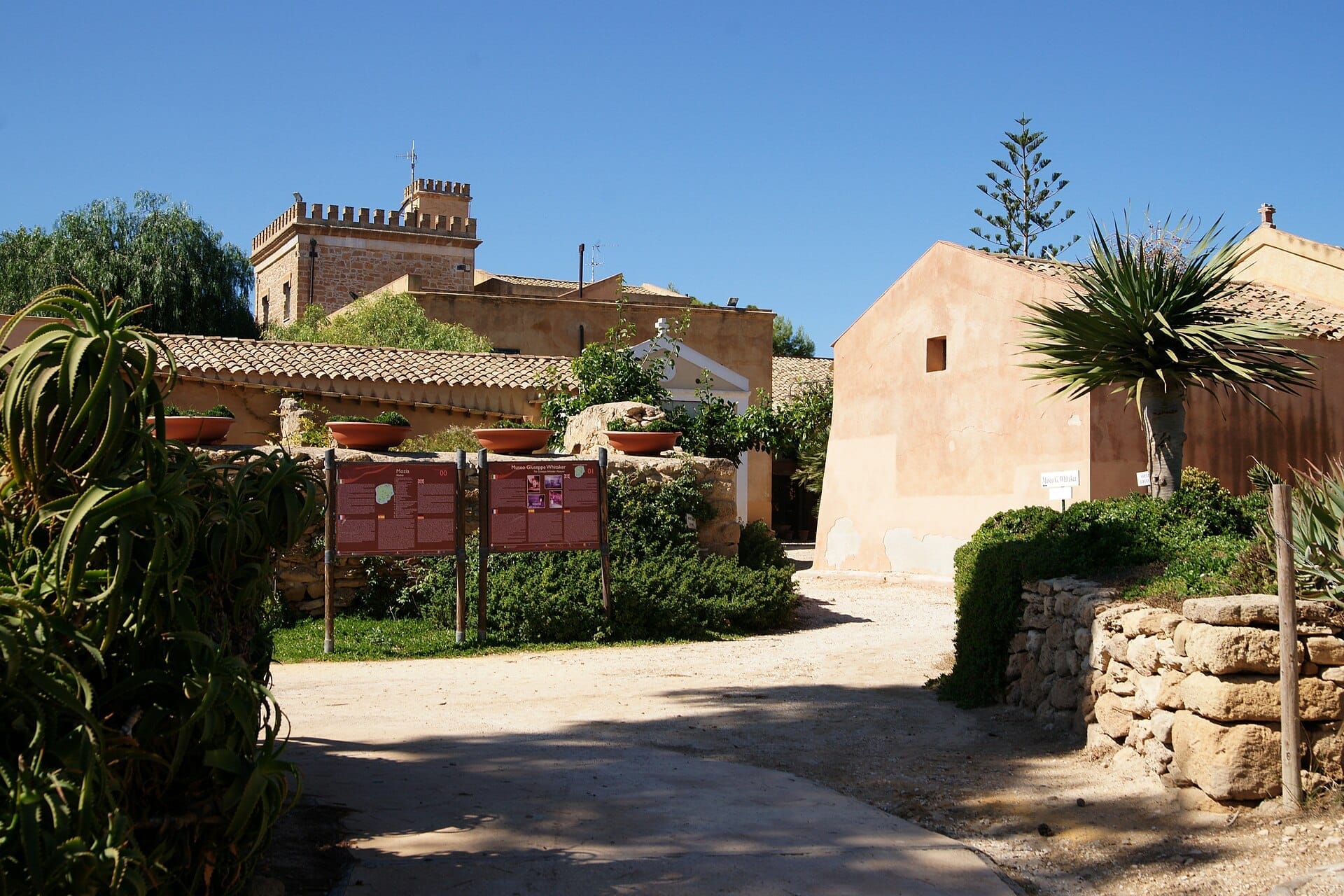
The island's Museo Whitaker houses an important collection of Phoenician artifacts, including the celebrated 'Giovinetto di Mozia', a full-size Greek marble statue of a young man in a clinging tunic, probably dating to the early 5th century BC and likely made for a Phoenician client. Its exact origin and purpose remain debated among archaeologists, which only adds to its fascination. The museum building itself was once a villa belonging to Joseph Whitaker, the English wine merchant and archaeologist who purchased the island in the late 19th century and conducted the first systematic excavations. For broader context on the island's ancient setting, the best ancient sites in Sicily includes several comparisons with Mothia.
Tickets & tours
Hand-picked options from our booking partner. Prices are indicative; availability and final rates are confirmed when you complete your booking.
Etna South Upper Craters Guided Excursion from Taormina
From 42 €Instant confirmationFree cancellationTaormina private tour with an expert guide
From 42 €Instant confirmationFree cancellationIsola Bella boat tour and snorkeling
From 55 €Instant confirmationFree cancellationSyracuse and Ortygia Island guided tour from Taormina
From 65 €Instant confirmationFree cancellation
The Salt Pans: What You See From the Shore
Before you even reach the boat pier, the landscape of the Stagnone tells you something is different here. The coastal strip between Marsala and Trapani is lined with working salt pans, some of which have been producing sea salt since Phoenician times. The evaporation pools shift colour through the seasons: pale grey in winter, mineral white as summer progresses, and deep coral-pink in late summer when halophilic microorganisms bloom in the most saline pools. The slowly turning wooden windmills that pump water between the pans are among the most photographed sights in western Sicily.
The Ettore e Infersa salt pans, located near the Salina Infersa boat pier, are still active and open to visitors. A small museum explains the production process, and the onsite shop sells local sea salt and salt-based products. This stretch of coast connects directly with the Trapani salt pans, one of the most striking natural and industrial landscapes in Sicily, and worth treating as a combined half-day itinerary with the lagoon.
ℹ️ Good to know
Late afternoon, roughly one to two hours before sunset, is when the salt pans and lagoon look their most dramatic. The low light turns the water copper and the windmills cast long shadows across the white salt. If photography is a priority, plan your boat return from Mothia before 16:00 in summer so you have time to position yourself along the salt pan road before the light peaks.
How to Get to Mothia: The Boat Crossing
Access to the island is by boat only. Two main departure points sit along the SP21 coastal road. The first is the Molo storico Arini e Pugliese, a historic pier used by traditional wooden boats. The second is the Salina Infersa pier, which is where the Mozia Line operates. The crossing takes only a few minutes, the water being so shallow that the flat-bottomed boats practically skim across the surface. From the lagoon during the crossing, you can see the island's silhouette framed by windmills and the distant outline of the Egadi Islands on clear days.
Boats run throughout the day during opening hours. In peak season (April to October) they are frequent enough that you rarely wait more than 15 to 20 minutes. Outside that period, particularly in winter, services can be less regular. There is no public transport to the piers, so a car is the practical option for most visitors. Alternatively, Marsala, about 12 kilometres south, has a railway station with connections to Trapani and Palermo, and local taxis can cover the remaining distance.
⚠️ What to skip
Boat services and ferry operators can change between seasons. Always confirm departure points, schedules, and current ticket prices directly with the operators before your visit. Island entry fees and boat fares are charged separately.
The Experience on the Island: What to Expect
Once on San Pantaleo, the pace shifts entirely. There are no vehicles, no crowds during most of the year, and no commercial noise. The island has a single main path that circuits the perimeter, passing the ancient walls, the cothon harbour cut, the tophet, and various excavated zones. The interior is partly cultivated with olive and vine, continuing an agricultural tradition that dates to the post-Phoenician occupation by Roman-era farmers.
The Museo Whitaker, housed in the old Whitaker family villa near the centre of the island, is where you begin and end most visits. The museum is small but dense with finds, and the curators have made genuine efforts at contextualisation. The 'Giovinetto' statue is displayed in its own room and justifies the visit alone. Allow at least 30 to 40 minutes here before setting out on the exterior path.
On the exterior circuit, the ancient city wall is the most tangible large-scale structure. Sections of the Phoenician masonry survive to several courses high, and where the wall meets the water, you get a strong sense of how deliberately the city was designed to use the lagoon as a defensive moat. The cothon, a rectangular harbour basin cut from the island itself, is visible and interpreted with signage, though it is mostly dry and overgrown. Pack sunscreen and a hat in summer: the island has little shade away from the villa and museum building.
Visitors with a deeper interest in Phoenician and Greek Sicily might pair Mothia with a visit to Selinunte Archaeological Park, about an hour's drive south along the coast, which represents the Greek counterpoint to Mothia's Phoenician world and was, in fact, one of the cities that competed with Motya for dominance of western Sicily.
Opening Hours, Tickets, and Practical Details
The Mothia archaeological site and Museo Whitaker are generally open daily. As of the latest published information, opening hours are approximately 09:00–15:00 from 1 November to 31 March and 09:30–18:30 from 1 April to 31 October, but these can vary; always check current times before your visit. These hours apply to the island itself; boat departure times from the mainland piers are tied to these windows and effectively set the outer limits of your visit.
Admission to the island archaeological site costs approximately €9 to €10 for adults and €6 for students and children, depending on operator and season. The boat crossing is charged separately at approximately €5 return for adults and €2.50 for children, though these figures vary by operator. All prices are in euros. Confirm current fees with the boat operator or the Whitaker Foundation before visiting, as both may update tariffs seasonally.
The area around the lagoon fits naturally into a wider Trapani itinerary. The city of Trapani is about 30 kilometres north along SP21, and the road between Trapani and Marsala passes directly by the lagoon piers, making it easy to build a day that combines the salt pans, Mothia, and Marsala's historic centre.
When to Visit and What to Watch Out For
The Stagnone is one of those places where the season genuinely changes the experience. July and August bring the most visitors, concentrated mainly on weekends, but even at peak summer the island itself rarely feels genuinely crowded given how spread out the site is. The heat in July and August can be intense, reaching over 35°C, and the island's exposed terrain offers limited relief. Morning visits starting at opening time are noticeably more comfortable.
Spring, particularly April to early June, offers cooler temperatures, wildflowers along the island path, and the salt pans at an active but pre-peak stage of the evaporation cycle. September and October bring the salt harvest period, when the pans are at their most visually dramatic and the light is gentler. Winter visits are perfectly possible and can be atmospheric in a stripped-back way, but check boat schedules carefully as services are reduced and the site closes earlier.
If you are planning a broader itinerary through western Sicily, the one-week Sicily itinerary includes suggestions for combining the Trapani coast with other key sites in the west.
⚠️ What to skip
Wind can be a factor on the lagoon, especially in spring and autumn. If you are planning water activities such as kayaking or paddleboarding, check local wind conditions in the morning. The Tramontane and Sirocco winds affect western Sicily periodically and can make the lagoon choppy even when skies are clear.
Who Should Think Twice Before Visiting
The Stagnone Lagoon and Mothia are not the right fit for every traveller. If your primary interest is beach swimming, the lagoon offers calm wading water rather than open sea swimming, and there are no facilities comparable to a beach resort. The archaeological site at Mothia, while historically important, is relatively compact and not as cinematically dramatic as places like the Valley of the Temples or Selinunte. Visitors expecting grand colonnaded ruins or large-scale dramatic landscapes may find the island underwhelming. For those with significant mobility limitations, confirm in advance with operators about pier access and path conditions on the island, as detailed accessibility information is not widely published.
Insider Tips
- Arrive at the mainland pier by 09:30 in summer to catch the first boat and have the island almost to yourself for the first hour. Coach groups typically arrive mid-morning.
- The path around the island perimeter is partly unpaved and uneven in sections. Closed-toe shoes with grip make a real difference, especially after rain or in the heat when sandals slip on dusty stone.
- Buy locally produced sea salt from the Ettore e Infersa salt pans shop before leaving the area. Stagnone salt is coarser and less processed than supermarket varieties and comes in flavoured options using local herbs. It is sold in recycled paper bags that travel easily.
- The lagoon at low tide reveals a partially submerged ancient causeway that once connected Mothia to the mainland in Phoenician times. You can sometimes see it as a pale stripe through the water from the boat. Ask the boat operator to point it out if visibility is good.
- Marsala, 12 kilometres south, produces the famous fortified wine of the same name. Combining a Mothia morning with a Marsala wine cellar visit in the afternoon makes for a well-rounded day without adding much driving time.
Who Is Stagnone Lagoon & Mothia Island For?
- History and archaeology travellers who want to go beyond the well-trodden Greek and Roman circuit and encounter Sicily's older, Phoenician layer
- Photographers targeting the salt pans at golden hour, particularly in September and October during the salt harvest
- Families with children aged 8 and above who appreciate a boat crossing, outdoor walking, and a museum with a genuinely unusual centrepiece statue
- Slow travellers looking for a half-day that combines landscape, wildlife, and culture without the crowds of Sicily's top-ranked sites
- Birdwatchers, as the lagoon's shallow waters attract herons, egrets, and seasonal flamingos, particularly in spring and autumn
Nearby Attractions
Other things to see while in Trapani & the West:
- Cave di Cusa
Cave di Cusa is a 2-km stretch of open-air ancient quarry in western Sicily where Greek stonemasons abandoned their work mid-cut in 409 BC, leaving colossal column drums embedded in calcarenite rock. Part of the Selinunte Archaeological Park, it is one of the most atmospheric and least crowded ancient sites in Italy.
- Cretto di Burri
The Grande Cretto di Gibellina is one of the largest land art works on Earth: 85,000 square metres of white concrete encasing the ruins of a town destroyed by the 1968 Belice earthquake. Created by Alberto Burri, it is simultaneously a tomb, a monument, and a walk through absence. Entry is free and the site is open-air, but reaching it requires a car.
- Favignana
Favignana, the largest of the Aegadian Islands off western Sicily, is a compact limestone island with crystalline coves, a dramatic tuna-fishing heritage, and terrain flat enough to circle by bicycle in a day. Getting there takes around 30–40 minutes from Trapani by hydrofoil, and there is no entrance fee to the island itself.
- Marettimo
The westernmost of Sicily's Egadi Islands, Marettimo is a car-free island of limestone peaks, sea caves, and water so clear it borders on unreal. Reached only by hydrofoil or ferry from Trapani, it rewards travelers willing to swap convenience for one of Italy's most genuinely uncommercialised island experiences.