St. Peter's Church (Alter Peter): Munich's Oldest Parish Church and Its Unmissable Tower View
Standing just steps from Marienplatz, St. Peter's Church is Munich's oldest parish church and home to the 'Alter Peter' tower, a 91-metre climb rewarded with one of the city's finest panoramas. The church itself is free to enter; the tower costs €5 and earns every cent.
Quick Facts
- Location
- Rindermarkt 1, 80331 München — just southeast of Marienplatz, next to Viktualienmarkt
- Getting There
- U3/U6 or S1–S8 to Marienplatz (2-minute walk); Bus 52 also stops nearby
- Time Needed
- 30–45 minutes for church and tower; allow extra time for queues in peak season
- Cost
- Church: free. Tower: €5 adults, €3 reduced, €2 students (6–18), free under 6
- Best for
- City panoramas, Baroque interiors, photography, history lovers
- Official website
- www.alterpeter.de
What St. Peter's Church Actually Is
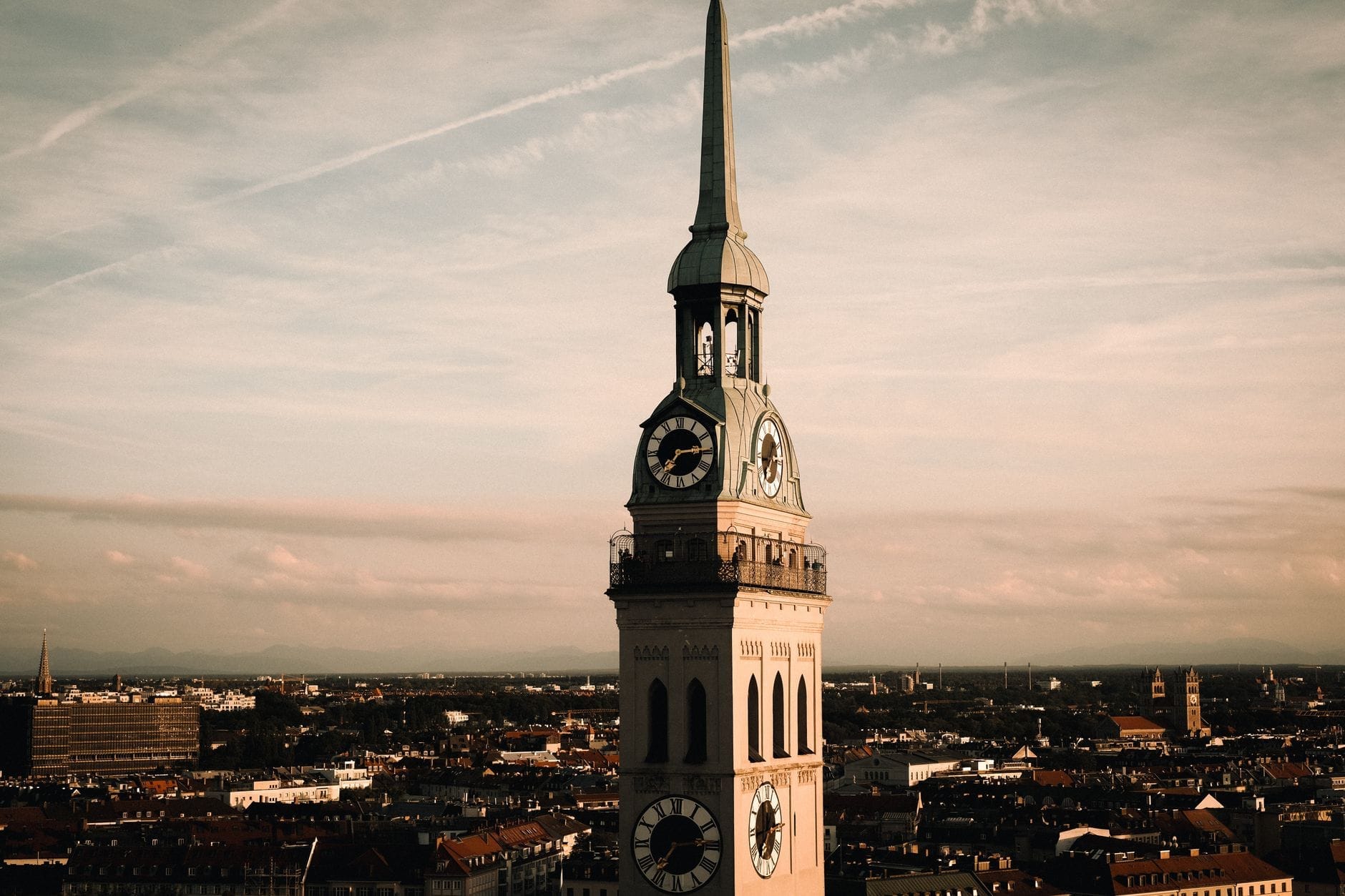
St. Peter's Church (Peterskirche), known to Munich residents simply as "Alter Peter" (Old Peter), is the oldest parish church in the city. It sits on a slight rise at Petersplatz, just a two-minute walk southeast of Marienplatz, making it one of the first landmarks visitors encounter when exploring the Altstadt on foot. The 91-metre tower has been a fixture of Munich's skyline for centuries, and the bells of Alter Peter still ring across the city centre on the hour.
There are two distinct reasons to visit: the interior, which is free and rewards attention to detail, and the tower, which costs €5 and delivers one of the most unobstructed 360-degree views available in central Munich. Neither experience takes long. Together, they form one of the most time-efficient stops in the entire Altstadt.
💡 Local tip
The church nave is free to enter and generally opens from around 08:00 daily. The tower usually opens at 09:00, with last admission roughly 30 minutes before closing. Visit on a weekday morning to avoid queues at the tower entrance.
A History Built in Layers
A church has stood on this site since at least the 12th century. A Romanesque structure predates 1180, which makes St. Peter's older than Munich itself as a formal settlement. The current Gothic building was consecrated in 1294, though what you see today reflects centuries of modification, including a substantial Baroque remodelling of the interior in the 17th and early 18th centuries. The church was severely damaged by Allied bombing in World War II and underwent careful reconstruction afterwards — a fact worth holding in mind as you admire the gilded altars and frescoes inside.
That reconstruction effort speaks to the church's central role in Munich's civic identity. It stands at the heart of Altstadt-Lehel, District 1, alongside the Viktualienmarkt and the Neues Rathaus. Where the Frauenkirche is Munich's skyline symbol seen from a distance, Alter Peter is the church locals actually grew up with, the one whose bells punctuate daily life in the old town.
Tickets & tours
Live prices and dates from our booking partner. If you book, we may earn a commission at no extra cost to you.
Luggage Storage in Munich
From 6 €Instant confirmationFree cancellationOne hour city sightseeing bus tour in Munich
From 21 €Instant confirmationFree cancellationMunich Third Reich walking tour
From 32 €Instant confirmationFree cancellation24-hour grand hop-on hop-off bus tour of Munich
From 29 €Instant confirmationFree cancellation
Inside the Church: What to Look For
Stepping inside from Petersplatz, the shift from the pedestrian zone's noise to the cool, incense-tinged quiet of the nave is immediate and noticeable. The interior is Baroque in character, with richly decorated side chapels, an elaborately carved high altar, and ceiling frescoes that reward time spent looking upward. Natural light filters unevenly through the windows, casting warm patches across the stone floor on sunny mornings.
The most unusual object in the church is the glass reliquary in one of the side chapels, which contains the skeleton of St. Munditia, dressed in elaborate robes and jewelled finery. It is not subtle, and some visitors find it startling. Others find it entirely in keeping with the tradition of Catholic relic veneration. Either way, it is genuinely unlike anything you will see in most other Munich churches and worth a deliberate look.
Dress modestly as you would for any active place of worship. Services take place regularly, and the church remains a functioning parish, not simply a tourist attraction. If a service is underway, quiet observation is appropriate but extended photography is not.
The Tower Climb: 306 Steps and What Awaits
The tower entrance is separate from the main church door. After paying the €5 adult admission, you begin a narrow spiral staircase. The staircase is genuinely tight in places, with sections where two people cannot pass each other comfortably, and there is no lift. The 306 steps take most visitors around 10 to 15 minutes to ascend at a moderate pace. Wear flat, grippy shoes. On busy days, the staircase becomes a slow-moving one-way flow, which removes any sense of urgency.
⚠️ What to skip
The tower has no elevator and involves a narrow staircase unsuitable for visitors with significant mobility impairments, those with severe claustrophobia, or young children who tire easily on stairs. The church interior is fully accessible at street level.
At the top, the viewing platform is open-air and wraps around the tower. The panorama is striking precisely because it is central: you look down directly onto the Viktualienmarkt stalls, across to the twin onion domes of the Frauenkirche at eye level, north along the pedestrian zone toward the Neues Rathaus, and on clear days far south toward the Alps. On days when the Föhn wind clears the haze, the mountain backdrop is sharp enough to feel impossibly close for a city this far north.
For photography, the early morning light falls from the east and catches the rooftops of the Altstadt in warm tones. The late afternoon, by contrast, produces flatter light but fewer visitors. The tower view is more useful for wide cityscapes than for detailed architecture shots; the railing and netting around the platform do limit some angles. If you are seriously interested in Munich's panoramic viewpoints, the Munich viewpoints guide compares this platform with other options across the city.
How the Experience Changes by Time of Day
At 09:00 on a weekday, the church is quiet. Regulars from the surrounding neighbourhood stop in briefly, and the only sounds are footsteps on stone and the occasional muffled bell. The tower at this hour has few visitors, and the morning light over the Altstadt is at its best. This is the single best window for both interior appreciation and the tower climb.
By 11:00, tour groups begin arriving. The staircase becomes congested by midday, especially in summer, and the queue for tower tickets can stretch outside. Midday light is also harsh and unflattering for photography. Between 14:00 and 16:00 the crowds are at their peak, coinciding with cruise-style walking tours of the Altstadt. If you cannot visit in the morning, late afternoon — around 17:00 — sees a notable drop in visitors before the tower closes.
In winter, opening hours shorten to approximately 09:00–18:30 on weekdays, with later closing on some weekends and holidays; visitor numbers fall substantially. The tower can be cold and exposed, so bring an extra layer. The interior on a grey winter morning has a particular stillness that summer crowds make impossible.
Getting There and Practical Logistics
St. Peter's Church is one of the easiest landmarks in Munich to reach. Marienplatz station, served by U3, U6, and all S-Bahn lines (S1 through S8), is a two-minute walk. From the main square, walk south past the Fischbrunnen fountain and the church's tower becomes immediately visible. Bus line 52 also stops in the Marienplatz area. For those using the Munich public transport network, no special ticket or day pass is needed beyond a standard inner-zone single.
The church is located within the pedestrian zone, so arriving by car is impractical. Cycling to the area is possible, with bike parking available near the Viktualienmarkt. The surrounding streets are entirely flat, making the walk from any central hotel a straightforward option.
Tower tickets are purchased on-site at the base of the tower; there is no advance online booking system. If you are visiting during a major event like Oktoberfest or a public holiday weekend, expect longer queues than usual. The tower is closed on certain days including New Year's Day, Shrove Tuesday, and Good Friday — check the parish notices before visiting on public holidays.
Worth Your Time?
St. Peter's Church is not overhyped. The church interior is genuinely beautiful and completely free, which makes it one of the better value stops in a city that can be expensive. The tower climb at €5 is reasonable for a central city panorama, though visitors expecting dramatic height or isolation should manage expectations: the platform is relatively modest in size, the netting restricts some views, and on busy days the top is crowded.
Who might want to skip the tower: visitors with limited mobility, those uncomfortable with confined spaces, and anyone who has already climbed the Neues Rathaus tower and found the Marienplatz panorama sufficient. The church itself, however, is worth a brief stop for almost any visitor to the Altstadt, given the quality of its Baroque interior and its zero entry cost.
For budget travellers, combining the free church interior with the free Viktualienmarkt just outside makes this a genuinely cost-free cultural hour. For those willing to pay, the tower adds a perspective on Munich's roofscape that ground-level exploration simply cannot provide.
Insider Tips
- Arrive at tower opening (around 09:00) on a weekday for the shortest queues and the best morning light over the Altstadt rooftops.
- The bells ring on the hour and are significantly louder inside and near the tower than they sound from the street. If you are sensitive to sudden loud sounds, be ready.
- Look carefully at the sky before climbing: on overcast days, the Frauenkirche domes and the Alps disappear into grey, and the tower view loses most of its impact. Save the climb for a clear day.
- The Viktualienmarkt directly below the tower is at its liveliest from around 08:00 to midday on weekdays. Looking down at the stall layout and the surrounding rooftops is one of the better uses of the tower platform.
- Entry to the church nave is free and uncontrolled — you can walk in, pay your respects or simply observe the Baroque interior, and leave in under 10 minutes without interacting with any ticketing system at all.
Who Is St. Peter's Church (Alter Peter) For?
- First-time visitors to Munich wanting a free Baroque interior and an affordable panoramic view in one stop
- Photographers targeting the classic Altstadt roofscape on a clear morning
- History and architecture enthusiasts interested in Munich's oldest parish church and its post-war reconstruction
- Budget travellers: the church interior is free and the Viktualienmarkt right outside costs nothing to walk through
- Couples looking for a quieter early-morning alternative to the Marienplatz crowds
Nearby Attractions
Other things to see while in Altstadt (Old Town):
- Asamkirche
Squeezed into a narrow slot on Sendlinger Strasse, the Asamkirche is a privately built late Baroque church that packs more ornamental intensity into 22 metres than most cathedrals manage in a hundred. Built by the Asam brothers between 1733 and 1746, it is free to enter and sits in the heart of Munich's pedestrian zone.
- Cuvilliés Theatre
Hidden within the Munich Residenz complex, the Cuvilliés Theatre is an 18th-century Rococo opera house of extraordinary refinement. Its gilded tiers, crimson velvet boxes, and carved ivory ornaments make it one of the most visually concentrated rooms in all of Germany.
- Deutsches Museum
The Deutsches Museum sits on its own island in the Isar river and claims a place among the largest science and technology museums on earth. With 125,000 exhibited objects spanning aviation, mining, chemistry, musical instruments, and far more, it rewards careful planning rather than a casual stroll.
- Feldherrnhalle
Standing at the southern end of Odeonsplatz, the Feldherrnhalle is one of Munich's most architecturally striking and historically loaded monuments. Built between 1841 and 1844, it witnessed the gunfire that ended Hitler's failed coup and remains freely accessible at any hour. Few structures in the city compress so much of Bavaria's and Germany's history into a single loggia.
Planning a trip? Discover personalized activities with the Nomado app.