Shugakuin Imperial Villa: Kyoto's Greatest Garden, On Imperial Terms
Shugakuin Imperial Villa is a former imperial retreat on the slopes of Mount Hiei in northeastern Kyoto, famous for its three-tiered garden landscape and panoramic views over the city. Visits are free but require joining a scheduled guided tour.
Quick Facts
- Location
- Yabuzoe, Sakyo-ku, Kyoto 606-8052 (northeastern Kyoto, on the lower slopes of Mount Hiei)
- Getting There
- Eizan Electric Railway to Shugakuin Station (20 min walk), or Kyoto City Bus to 'Shugakuin Rikyu-michi' stop (15 min walk)
- Time Needed
- Approximately 1.5 hours (guided tour duration plus walking to/from the gate)
- Cost
- Free admission. Guided tour required. Must be 18 or older to enter.
- Best for
- Garden lovers, architecture enthusiasts, anyone wanting imperial Kyoto without the crowds
- Official website
- kyoto-gosho.kunaicho.go.jp/en/shugakuin-rikyu
What Shugakuin Imperial Villa Actually Is
Shugakuin Imperial Villa (修学院離宮, Shugakuin Rikyu) is one of the most ambitious examples of Japanese imperial garden design ever completed. Situated on the northeastern edge of Kyoto city, where the urban grid quietly dissolves into rice paddies and forested hillside, this 54-hectare estate was developed as a retirement retreat for Emperor Gomizuno-o in the mid-17th century. The scale and ambition of its design set it apart from every other garden in the city: rather than enclosing a private world behind walls, Shugakuin borrows the surrounding mountains as part of its composition.
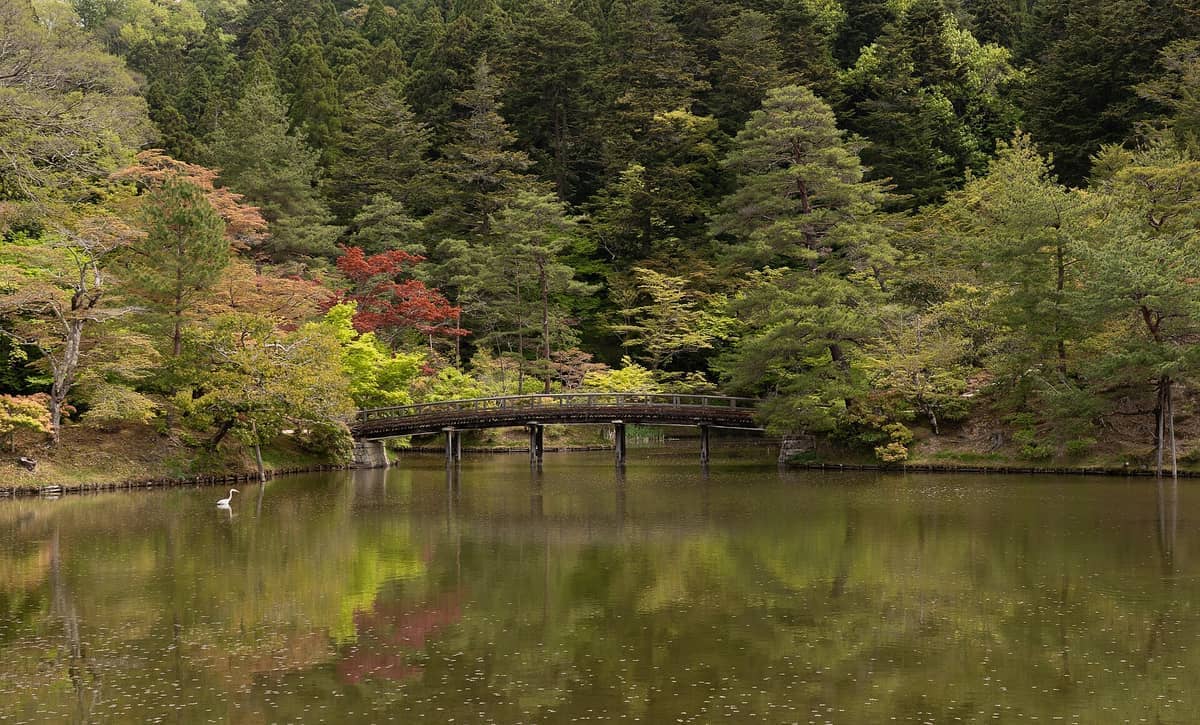
The villa complex is divided into three separate garden areas arranged at different elevations on the hillside: the Lower Villa (Shimo-no-chaya), the Middle Villa (Naka-no-chaya), and the Upper Villa (Kami-no-chaya). Each has a distinct character. The Lower Villa is intimate and refined, centered on a small moss garden and the Jugetsuken teahouse. The Middle Villa, added later by Emperor Gomizuno-o's daughter, is compact and architecturally precise. The Upper Villa is the climax: a large man-made pond called Yokuryu Pond sits within a landscape engineered to create one of the broadest uninterrupted views of Kyoto available from any garden in the city.
ℹ️ Good to know
Visits to Shugakuin Imperial Villa require joining an official guided tour run by the Imperial Household Agency. Tours are conducted in Japanese, but free audio guides are available in English. The tour covers approximately 3 kilometers of walking across the three villa levels.
The Walk Between Villas: Often Overlooked, Genuinely Memorable
One detail that most descriptions of Shugakuin undersell: the connecting paths between the three villa areas pass through working agricultural fields. A long, pine-lined earthen track runs between the Lower and Upper sections, flanked on both sides by terraced rice paddies and vegetable plots. In summer, the paddies reflect the sky in still water. In autumn, cut rice stalks dry in rows and the air carries a faintly sweet, fermenting smell that no amount of written description quite captures.
This agricultural corridor is not incidental. The Imperial Household Agency maintains these fields as part of the historic estate, and their presence is precisely what gives the approach to the Upper Villa its particular weight. You arrive at the Upper Garden not through ornamental gates but through farmland, which makes the sudden opening onto the Yokuryu Pond panorama feel earned rather than staged.
The walk from Shugakuin Station or the bus stop to the villa entrance itself is worth noting. The approach road, lined with old maples and cedars, runs parallel to small irrigation channels. InKyoto's autumn foliage season, the maples along this approach and throughout the estate turn a deep copper-red, and morning tours in late November become one of the quieter, more underrated leaf-viewing experiences the city offers.
Tickets & tours
Hand-picked options from our booking partner. Prices are indicative; availability and final rates are confirmed when you complete your booking.
Kyoto Coast, Amanohashidate and Ine Bay 1-Day Trip from Osaka or Kyoto
From 46 €Instant confirmationFree cancellationKyoto Sanzen-in, Arashiyama and Bamboo Grove Full Day Tour
From 47 €Instant confirmationFree cancellationKyoto Arashiyama insider walking tour
From 66 €Instant confirmationFree cancellationMatcha green tea tour in Kyoto's Uji Market
From 130 €Instant confirmationFree cancellation
The Upper Villa and the View That Defines the Place
The defining moment of any Shugakuin visit arrives at the earthen embankment known as Okarikomi, a massive curved hedge-and-earth dam that contains the Yokuryu Pond. The hedge is clipped low and wide, almost like a green wave frozen in place. Climbing up the stone steps set into the embankment takes roughly a minute, but the transition from enclosed garden path to open vista is immediate and dramatic.
From the top of the embankment, the view extends over the pond to a landscape of wooded hills, the distant city basin, and on clear days the peaks beyond. The borrowed scenery technique, known in Japanese garden design as shakkei, is executed here at a scale rarely seen elsewhere. The garden does not merely reference the mountains; it incorporates them so completely that the estate's actual boundary becomes irrelevant to the eye.
Weather matters significantly here. On overcast days the scene is muted but still impressive; on mornings after rain, when the hills are sharp and the sky is a clean grey, the garden often looks its best. In high summer heat and haze, the distant views soften and the experience becomes more about the garden's plantings than its panoramic ambitions. Early autumn and late spring are the most reliably rewarding seasons for this view.
💡 Local tip
Tour slots at 09:00 and 10:00 tend to have the softest light for photography and the fewest competing tour groups at the embankment viewpoint. The 13:30 slot can feel warmer and busier in spring and autumn peak seasons.
How the Tour Format Shapes the Experience
The guided tour format is the single biggest factor affecting your experience, and it is worth understanding before you arrive. Tours are conducted entirely in Japanese, at a measured pace set by the guide. The audio guide device you collect at the entrance delivers commentary keyed to numbered markers along the route. In practice, the audio guide covers the essential historical and design context clearly, and most non-Japanese-speaking visitors find the experience quite manageable.
The tour covers roughly 3 kilometers over the course of about 70 to 80 minutes. The terrain involves gentle uphill gradients and some uneven stone paths. Sturdy flat shoes are advisable; sandals or formal footwear will become uncomfortable on the agricultural track sections. There is no option to linger independently once the group moves on, and photography is permitted throughout the tour, though tripods are typically not allowed.
Because the tour group size is managed and the estate is large, Shugakuin rarely feels crowded even when fully booked. This is a meaningful contrast to most of Kyoto's famous gardens, where visitor numbers can make contemplation difficult during peak periods. The controlled access model that some visitors find inconvenient is exactly what preserves the atmosphere.
⚠️ What to skip
You must be 18 years old or older to join a tour at Shugakuin Imperial Villa. Visitors younger than 18, including toddlers and infants, cannot enter, regardless of who accompanies them. Plan accordingly if traveling with family.
Practical Information: Getting There and Booking
Shugakuin Imperial Villa is located in Sakyo-ku, the northeastern ward of Kyoto, an area that also contains Ginkaku-ji (the Silver Pavilion) and the Philosopher's Path. The nearest rail access is Shugakuin Station on the Eizan Electric Railway, from which the villa entrance is about a 20-minute walk north. Alternatively, Kyoto City Bus routes stop at 'Shugakuin Rikyu-michi,' from which the walk is approximately 15 minutes.
The Eizan Electric Railway is a single-track line that runs from Demachiyanagi Station in central Kyoto into the northeastern hills. It passes several useful stops for visitors exploring this part of the city, including access points forRurikoinand the broader Ohara area further north. A day in Sakyo-ku can reasonably combine Shugakuin with a walk along thePhilosopher's Path and a stop at Ginkaku-ji without feeling rushed.
Tours depart at set times: typically 09:00, 10:00, 11:00, 13:30, and 15:00. Advance reservations are strongly recommended through the Imperial Household Agency's official booking system, particularly for weekend and autumn visits. Walk-in availability exists but is not guaranteed. The villa is closed on Mondays (or the following Tuesday if Monday is a public holiday) and during the New Year period from December 28 through January 4.
Shugakuin in Context: Where It Fits in Kyoto's Garden Landscape
Kyoto has no shortage of exceptional gardens, and anyone planning a visit to Shugakuin should understand where it sits in that landscape.Ryoan-ji's rock garden is about reduction and abstraction. Kinkaku-ji is about a single theatrical object reflected in water. Shugakuin is neither of those things. It is about scale, agricultural integration, and the ambition to make the horizon itself part of the composition. Of all Kyoto's major gardens, it requires the most physical engagement and rewards the most patient attention.
Travelers who have already covered Kyoto's central temple circuit and want something that feels less processed will find Shugakuin genuinely different in character. The northeastern corner of Kyoto, covered in thebest gardens in Kyotoguide, offers a slower pace and fewer tour buses than areas around Kinkaku-ji or Fushimi Inari.
That said, Shugakuin is not the right choice for everyone. First-time visitors to Kyoto with only two or three days should prioritize it carefully: the guided tour format, the age restriction, the advance booking requirement, and the location away from central Kyoto all add friction that easier attractions don't have. Those who visit primarily for architecture rather than landscape gardens may find the villa buildings themselves, while historically significant, relatively modest compared to structures at Nijo Castle or Nishi Hongan-ji.
Insider Tips
- Book the 09:00 or 10:00 morning tour. The light is better for photography, the air is cooler on warm days, and you will reach the Upper Villa embankment before afternoon tour groups arrive at the same viewpoint.
- Wear comfortable walking shoes with grip. The agricultural track between the villa sections is compacted earth and can be slippery after rain. The stone steps on the Okarikomi embankment are also uneven.
- Collect your audio guide device at the entrance before the tour begins. It is free, and the English commentary is genuinely informative. Don't assume you can follow adequately from the Japanese-language guide alone.
- Combine the visit with a walk south along the Eizan Railway line toward Demachiyanagi, stopping at the Philosopher's Path and Ginkaku-ji. The full northeastern Kyoto loop makes for a coherent half-day without backtracking.
- Late November is the best single week to visit if foliage is the priority. The maple trees on the approach road and within the Lower Villa garden peak around the same time as those on the Philosopher's Path, and tour capacity at Shugakuin is lower than at the city's more famous autumn spots.
Who Is Shugakuin Imperial Villa For?
- Garden enthusiasts who want to understand Japanese landscape design beyond rocks and raked gravel
- Repeat Kyoto visitors looking for something beyond the standard temple circuit
- Photographers interested in natural and agricultural landscape rather than architectural set pieces
- Autumn foliage seekers who want a quieter, less crowded alternative to Eikan-do or Tofuku-ji
- Travelers with a half-day to spend in northeastern Kyoto combining multiple sites along the Eizan Railway line
Nearby Attractions
Combine your visit with:
- Byodo-in Temple
Byodo-in Temple in Uji City is one of Japan's most photographed and historically significant Buddhist sites. Built in 1053, its Phoenix Hall appears on the 10-yen coin and draws visitors for its garden, gilded interior, and hilltop museum. A day trip from Kyoto that genuinely rewards the effort.
- Jingo-ji Temple (Takao)
Jingo-ji Temple rises from the forested slopes of Mount Takao in Kyoto's northwest corner, a 20-minute uphill walk from the nearest bus stop and a world away from the city's busiest temple districts. The site rewards the effort with ancient Buddhist halls, one of the finest autumn foliage settings in the Kansai region, and the curious ritual of hurling clay discs off a cliff into the Kiyotaki River gorge below.
- Kamigamo Shrine
Kamigamo Shrine, formally known as Kamo Wakeikazuchi Jinja, is one of Kyoto's oldest Shinto shrines and part of the UNESCO World Heritage Site 'Historic Monuments of Ancient Kyoto.' Set in the quiet northern reaches of the city, its wide gravel forecourt, twin sand cones, and cedar-forested riverbank create an atmosphere that feels genuinely removed from the tourist circuit.
- Katsura Imperial Villa
Katsura Imperial Villa is a 17th-century detached imperial palace in western Kyoto, considered the pinnacle of Japanese garden design and shoin-style architecture. Access is by guided tour only, with strict booking requirements — but for those who plan ahead, it is one of the most quietly extraordinary places in Japan.