Byodo-in Temple: Kyoto's Most Iconic Buddhist Masterpiece
Byodo-in Temple in Uji City is one of Japan's most photographed and historically significant Buddhist sites. Built in 1053, its Phoenix Hall appears on the 10-yen coin and draws visitors for its garden, gilded interior, and hilltop museum. A day trip from Kyoto that genuinely rewards the effort.
Quick Facts
- Location
- 116 Uji Renge, Uji City, Kyoto Prefecture (about 30 min south of central Kyoto)
- Getting There
- JR Uji Station (approx. 10-min walk) or Keihan Uji Station (approx. 10-min walk)
- Time Needed
- 2–3 hours including garden, Phoenix Hall interior tour, and museum
- Cost
- Garden + Museum: ¥700 adults / ¥400 junior & senior high / ¥300 elementary. Phoenix Hall interior: additional ¥300
- Best for
- History lovers, architecture enthusiasts, photography, cultural day trips
- Official website
- www.byodoin.or.jp/en
What Is Byodo-in Temple and Why Does It Matter?
Byodo-in Temple (平等院) is a UNESCO World Heritage Site located in Uji City, a small riverside town about 30 minutes south of central Kyoto by train. Founded in 1052 by Fujiwara no Yorimichi, a regent at the height of the Heian period's aristocratic culture, the complex was converted from a private villa into a Buddhist temple in 1053. The following year, the Phoenix Hall (Hoo-do) was completed, and it has stood largely intact for nearly a thousand years — an extraordinary fact given Japan's history of fires, earthquakes, and war.
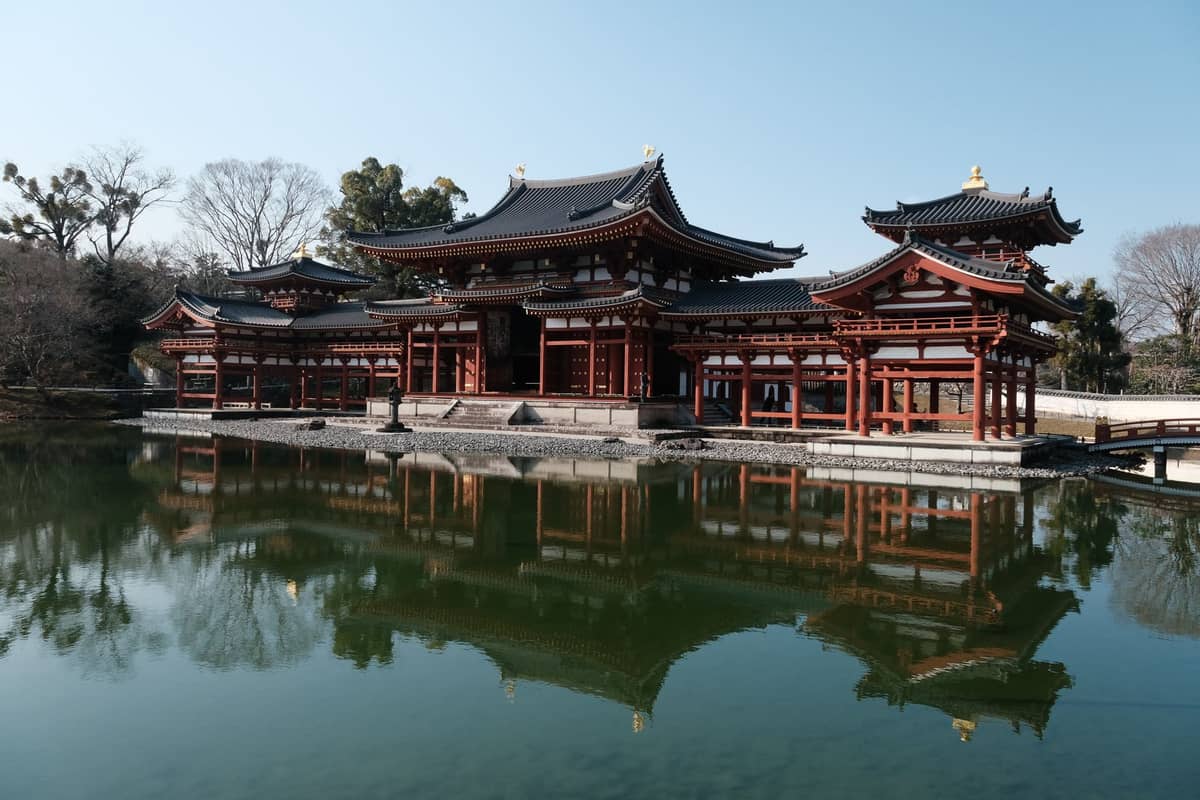
Most visitors recognize Byodo-in without knowing it. The Phoenix Hall's reflection appears on the 10-yen coin, one of the most circulated coins in Japan. That image captures exactly what you see when you arrive at the pond's edge: a low, symmetrical hall with wing-like corridors stretching on either side, mirrored perfectly in the still water when conditions are right. Few places in Japan offer such immediate visual confirmation that what you are seeing is genuinely ancient and genuinely special.
ℹ️ Good to know
Phoenix Hall interior viewing runs every 20 minutes from 9:30 to 16:10, with a maximum of 50 visitors per slot. Slots fill quickly, especially on weekends and during cherry blossom season. Queue for your timed ticket as soon as you enter the garden.
The Phoenix Hall: What You Actually See
The Phoenix Hall sits on a small island at the center of a rectangular pond, and for most visitors it is something you approach visually rather than physically — unless you join the interior tour, there is no bridge you can cross to the hall itself as a regular garden visitor. The exterior is painted in a deep ochre-orange, with bronze phoenix sculptures perched on the roof ridge. From the pond's gravel bank, you look straight across the water at the hall's central chamber flanked by its distinctive low wings and tail corridors. The reflection on calm mornings can be strikingly clear, particularly in the hour after opening.
The interior viewing is a separate, timed experience requiring an additional ¥300 ticket. Small groups of up to 50 people are guided across a bridge and into the hall's central chamber, where the gilded Amida Buddha sculpture by the sculptor Jocho sits in near-darkness, surrounded by 52 wooden bodhisattva figures arranged on the walls. The gilding catches the light in unexpected ways, and the interior wood carvings are extraordinarily detailed for their age. Even visitors who typically skip temple interiors tend to find this one worth the extra cost and wait.
Photography inside the hall is not permitted, but the exterior offers excellent opportunities all morning. The pond-reflection shot is best before 10:00, when foot traffic is still light and any wind has not yet disturbed the surface. A telephoto lens or the zoom on a smartphone helps compress the distance and bring out the hall's architectural symmetry.
Tickets & tours
Hand-picked options from our booking partner. Prices are indicative; availability and final rates are confirmed when you complete your booking.
Kyoto Coast, Amanohashidate and Ine Bay 1-Day Trip from Osaka or Kyoto
From 46 €Instant confirmationFree cancellationKyoto Sanzen-in, Arashiyama and Bamboo Grove Full Day Tour
From 47 €Instant confirmationFree cancellationKyoto Arashiyama insider walking tour
From 66 €Instant confirmationFree cancellationMatcha green tea tour in Kyoto's Uji Market
From 130 €Instant confirmationFree cancellation
The Garden and Grounds
The garden surrounding the Phoenix Hall is a restored Heian-period stroll garden, designed to evoke the Buddhist paradise known as Jodo, or the Pure Land. The pond is central to this concept: the hall was meant to look as though it floated on water, its reflection completing the vision of paradise. The gravel paths loop around the pond and through sections of manicured plantings, stone lanterns, and viewing areas at different angles.
In spring, wisteria and cherry trees bring color and additional crowds. In autumn, the maple foliage turns the garden into something different entirely, with reds and oranges framing the ochre of the hall. Winter visits are quieter and offer a contemplative quality that peak season does not, though the bare branches change the garden's mood considerably. Summer visits require practical preparation: Uji in July and August can be genuinely hot and humid, with little shade along the pond banks.
The garden is open from 8:45 to 17:30 (last entry 17:15), giving you the option of arriving close to opening time to avoid the worst of the tour groups. Uji itself is worth exploring before or after your visit — the riverside path, the historic tea district, and the town's matcha culture make it a full half-day or more. Uji is one of Japan's most important tea-producing regions, and the area around the station is lined with matcha shops ranging from traditional sellers to modern cafes. For a broader look at Kyoto's culinary culture, ourKyoto matcha guide covers Uji's role in detail.
Hoshokan Museum: The Detail That Completes the Visit
The Byodoin Museum Hoshokan is a purpose-built underground museum at the edge of the garden grounds, open from 9:00 to 17:00 (last entry 16:45). It houses the original bronze temple bell, the original phoenix sculptures from the roof (the ones on the building now are reproductions), and a significant portion of the original 52 bodhisattva figures — those not on display inside the hall. The museum is climate-controlled and quiet, and the display cases allow you to get within a meter of objects that are otherwise barely visible from the garden or interior.
The museum is included in the base admission fee (Garden + Museum: ¥700 for adults) and requires no timed ticket. Many visitors rush through it after the Phoenix Hall interior, but the figures and the original bell deserve at least 30 minutes. The Jocho-style cloud-borne bodhisattva figures, some still carrying remnants of original paint and gilding, are among the finest surviving examples of Heian Buddhist sculpture anywhere in Japan.
Getting There: Practical Transit Information
Byodo-in is not in Kyoto city itself but in neighboring Uji City, which is a separate municipality. From Kyoto Station, the JR Nara Line runs directly to JR Uji Station in approximately 17–20 minutes. Alternatively, the Kintetsu or Keihan lines connect to Keihan Uji Station via Osaka, taking longer from central Kyoto. Most visitors coming directly from Kyoto use the JR route.
From JR Uji Station, the temple is about a 10-minute walk along signposted paths through the town center and across the Uji River. The walk is flat and easy to navigate. The Keihan Uji Station is also roughly 10 minutes on foot, on the opposite bank, requiring you to cross the river. Both routes are well-marked in English.
💡 Local tip
IC cards (Suica, ICOCA) are accepted on the JR Nara Line and make the trip seamless. If you have a JR Pass, the Nara Line is covered, making Byodo-in a very low-cost addition to your Kyoto itinerary.
Uji pairs naturally with a visit to Fushimi Inari Taisha, which sits on the same JR Nara Line between Kyoto Station and Uji. You can stop at Fushimi Inari in the morning and continue to Uji afterward, or reverse the order. This makes for a well-structured day trip without excessive backtracking. More itinerary ideas are covered in our3-day Kyoto itinerary.
When to Visit and What to Expect by Time of Day
The temple opens at 8:45, and arriving within the first 30 minutes gives you the garden in near-solitude. The pond reflection photograph is most effective before wind picks up, typically before 10:00. Tour buses begin arriving from around 10:30, particularly on weekends, and the pond-side path can become congested by midday.
Late afternoon, after 15:00, sees a second quieter window as tour groups depart. The light in late afternoon shifts to a warmer angle that suits photography from the western side of the pond. However, the Phoenix Hall interior stops admitting visitors at 16:10, so if you want the interior tour, do not arrive much later than 15:30 to allow time to queue.
Spring and autumn are the peak seasons for Byodo-in, as they are across Kyoto. Cherry blossoms in late March to early April and autumn foliage in November bring large crowds and, at times, very high demand for the timed interior slots. If you are planning a spring visit, ourKyoto cherry blossom guide explains timing and what to expect at popular sites.
⚠️ What to skip
Byodo-in is occasionally closed or has restricted access during special ceremonies or maintenance. Check the official website at byodoin.or.jp/en/ before your visit, especially during national holidays and the new year period.
Is Byodo-in Worth the Trip from Kyoto?
For visitors with a strong interest in Japanese Buddhist art and architecture, Byodo-in is not just worth the trip — it is among the most genuinely rewarding temple visits in the entire Kansai region. The combination of the Phoenix Hall's age and visual impact, the museum's sculpture collection, and the Heian garden design creates a layered experience that holds up even for repeat visitors.
For visitors who are temple-fatigued — a real phenomenon after several days in Kyoto — Byodo-in might feel like another garden and another hall. If you are choosing between this and a full morning at a major Kyoto temple such as Kinkaku-ji or Kiyomizu-dera, consider your priorities. Byodo-in requires extra travel time, which is the main deterrent. But if you are curious about Heian-period art specifically, or want to pair it with Uji's matcha culture, the logistics become much more worthwhile.
Travelers who want to explore more of Kyoto's extraordinary temple landscape without the main tourist crowds should also look at our guide tothe best temples in Kyoto, which puts Byodo-in in context alongside other major and lesser-known sites.
Insider Tips
- Queue for the Phoenix Hall interior ticket immediately upon entering the garden, before walking to the pond or museum. Slots fill within the first hour, especially on weekends.
- The best pond reflection photograph is taken from the far left side of the main viewing bank at a slightly elevated angle. The symmetry is more pronounced from this position than from the central path.
- Bring exact change or a note for the additional ¥300 Phoenix Hall interior fee — the ticket counter is a separate window from main admission and can get backed up.
- The Uji River bridge a short walk from the temple entrance offers a different and uncrowded view of the surrounding landscape, including the historic Uji-bashi bridge area. Worth the five-minute detour.
- Uji's matcha shops sell fresh-ground tea to take home. The shops on the street between JR Uji Station and the temple entrance offer competitive quality — Nakamura Tokichi is one of the best-known, but smaller shops nearby offer good value without the queue.
Who Is Byodo-in Temple For?
- Travelers with a genuine interest in Heian-period Buddhist art and Japanese architectural history
- Photographers looking for one of Japan's most iconic reflection shots in a manageable, walkable site
- Visitors combining Uji's matcha culture with a significant historical landmark
- Those pairing Byodo-in with Fushimi Inari on the same JR Nara Line day trip
- Travelers who want a meaningful temple experience with fewer crowds than central Kyoto's major sites
Nearby Attractions
Combine your visit with:
- Jingo-ji Temple (Takao)
Jingo-ji Temple rises from the forested slopes of Mount Takao in Kyoto's northwest corner, a 20-minute uphill walk from the nearest bus stop and a world away from the city's busiest temple districts. The site rewards the effort with ancient Buddhist halls, one of the finest autumn foliage settings in the Kansai region, and the curious ritual of hurling clay discs off a cliff into the Kiyotaki River gorge below.
- Kamigamo Shrine
Kamigamo Shrine, formally known as Kamo Wakeikazuchi Jinja, is one of Kyoto's oldest Shinto shrines and part of the UNESCO World Heritage Site 'Historic Monuments of Ancient Kyoto.' Set in the quiet northern reaches of the city, its wide gravel forecourt, twin sand cones, and cedar-forested riverbank create an atmosphere that feels genuinely removed from the tourist circuit.
- Katsura Imperial Villa
Katsura Imperial Villa is a 17th-century detached imperial palace in western Kyoto, considered the pinnacle of Japanese garden design and shoin-style architecture. Access is by guided tour only, with strict booking requirements — but for those who plan ahead, it is one of the most quietly extraordinary places in Japan.
- Kyoto Botanical Gardens
The Kyoto Botanical Gardens (京都府立植物園) in Sakyo Ward is Japan's oldest public botanical garden, covering formal garden beds, wide open lawns, and a large tropical conservatory. It draws both serious plant lovers and locals out for a quiet afternoon walk, and rewards visitors who time it right.