Kyoto Botanical Gardens: Japan's Oldest Public Garden, Honestly Reviewed
The Kyoto Botanical Gardens (京都府立植物園) in Sakyo Ward is Japan's oldest public botanical garden, covering formal garden beds, wide open lawns, and a large tropical conservatory. It draws both serious plant lovers and locals out for a quiet afternoon walk, and rewards visitors who time it right.
Quick Facts
- Location
- Shimogamo Hangi-cho, Sakyo-ku, Kyoto 606-0823
- Getting There
- Kitayama Station (Kyoto Municipal Subway Karasuma Line), short walk to main entrance
- Time Needed
- 1.5 to 3 hours depending on interest level
- Cost
- ¥500 for adults (single ticket covering both garden and conservatory as of April 2025); reduced rates for some age groups. Verify current rates at the official site.
- Best for
- Plant enthusiasts, families with children, photographers, slow-travel visitors, and anyone needing a break from Kyoto's busiest temple circuits
- Official website
- www.kyotobotanicalgardens.jp/english
What the Kyoto Botanical Gardens Actually Is
The Kyoto Botanical Gardens, officially named 京都府立植物園 (Kyoto Prefectural Botanical Garden), holds the distinction of being Japan's oldest public botanical garden. It opened in the early 20th century as a prefectural facility dedicated to plant conservation, public education, and scientific research, and that institutional seriousness still shows in how the grounds are maintained today. This is not a casual flower park dressed up with ornamental flair. The layout moves between themed zones: formal rose and cherry collections, native woodland sections, a bamboo grove, wide lawns where Kyoto families spread out on weekends, and a substantial conservatory that houses tropical and subtropical species.
The garden covers enough ground that two visitors with different intentions can come away with entirely different experiences. A botanist can spend an afternoon in the conservatory studying labeled specimens. A parent with young children will find the open lawn sections genuinely usable, not decorative. A photographer will find peak conditions in early April and again in late November. For a visitor touring Kyoto's major temple and shrine circuit, the garden reads as a natural counterpoint, somewhere to move slowly and let the visual noise of the city reset.
ℹ️ Good to know
As of April 2025, the ¥500 adult admission is a single ticket that covers both the main garden and the conservatory. Confirm the current fee structure on the official site before visiting, as pricing for specific age groups and seasonal events can change.
Getting There and Arriving
The garden sits in Kyoto's Sakyo Ward, in the northern part of the city's urban core. The most direct approach is the Kyoto Municipal Subway Karasuma Line to Kitayama Station. The garden's main entrance is a short, flat walk from the station exit. There are no confusing turns or hidden side streets to navigate, which makes it unusually easy to arrive without consulting your phone at every step.
If you are combining this visit with other attractions in the northern and eastern parts of the city, the subway route makes logical sense.Ginkaku-ji (the Silver Pavilion) and the Philosophers' Pathare both reachable within 20 to 30 minutes by bus or bicycle from the garden. Many visitors sequence the botanical garden as a quieter morning stop before the pedestrian traffic on those routes picks up.
The garden's address is Shimogamo Hangi-cho, Sakyo-ku, Kyoto 606-0823. The main phone contact listed by the Kyoto Prefectural Government is +81-75-701-0141, which is the number to call for current accessibility queries or other pre-visit questions. The official English information page at kyotobotanicalgardens.jp/english carries the most up-to-date access details.
Tickets & tours
Hand-picked options from our booking partner. Prices are indicative; availability and final rates are confirmed when you complete your booking.
Kyoto Zen Meditation and Garden Tour at a Zen Temple
From 67 €Instant confirmationFree cancellationKyoto Coast, Amanohashidate and Ine Bay 1-Day Trip from Osaka or Kyoto
From 46 €Instant confirmationFree cancellationKyoto Sanzen-in, Arashiyama and Bamboo Grove Full Day Tour
From 47 €Instant confirmationFree cancellationKyoto Arashiyama insider walking tour
From 66 €Instant confirmationFree cancellation
Opening Hours and What to Know Before You Arrive
The main garden is open 9:00 to 17:00, with last admission at 16:00. The conservatory typically opens at 10:00 and closes at 16:00, with last entry at 15:30, though these hours can shift seasonally. The garden closes completely during the New Year holiday period, December 28 through January 4. Arriving early, around 9:00 to 10:00, gives you the open lawn sections and the formal beds mostly to yourself. By mid-morning on weekends in spring or autumn, local families and groups begin to arrive, and the mood shifts to something more sociable and active.
⚠️ What to skip
The conservatory closes for last entry at 15:30, a full 30 minutes before the main garden's cutoff. If you plan to visit the conservatory, factor this in. Arriving at 15:20 and expecting to spend time inside is a common frustration.
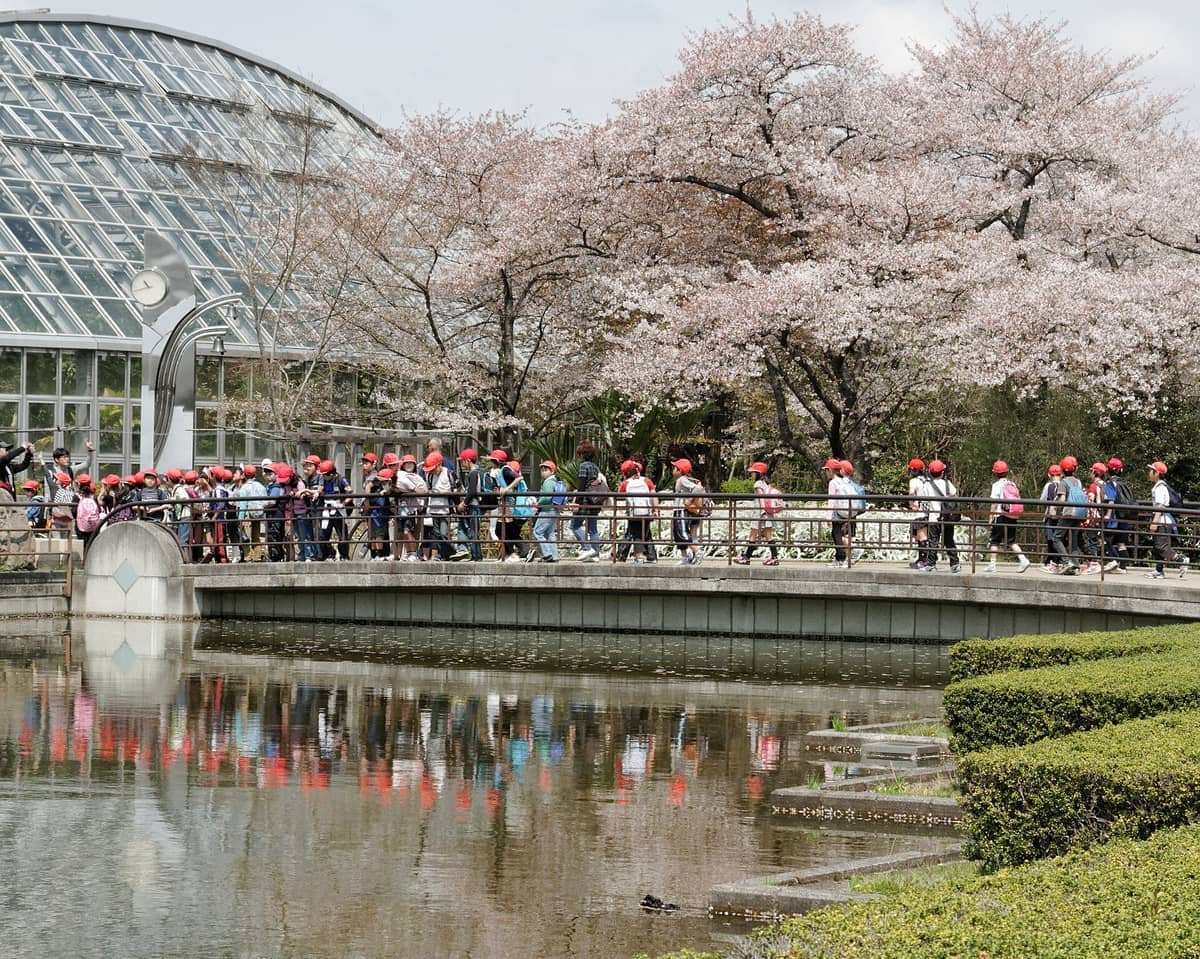
Weekday mornings between late October and mid-November, and again in early April during cherry season, represent the highest-value timing windows. The garden contains a dedicated cherry blossom area that draws serious crowds at peak bloom, typically early April though the exact dates shift year to year with temperatures. During peak cherry and autumn foliage periods, expect noticeably more visitors, especially on weekends.
What You Actually See: A Practical Walkthrough
Entering from the Kitayama gate, the first thing most visitors register is scale. The grounds are large enough that the Kyoto mountain backdrop to the north is visible above the tree line, and the hum of the city fades quickly. The main path leads through a zone of labeled specimen trees before opening onto the broad central lawn. The grass here is real, flat, and usable, a feature that matters more in Kyoto than in most cities, where open green space suitable for sitting or walking barefoot is relatively rare near the center.
The rose garden occupies its own enclosed section and is at its best in May and again in October during the second bloom cycle. The peony garden is worth a specific visit in late April to mid-May. The garden's bamboo grove is modest compared to Arashiyama's famous stand, but it is quieter and can be enjoyed without crowds. In the northern part of the grounds, a woodland trail section has the character of a secondary forest, with shade canopy, fallen leaves in autumn, and birdsong throughout.
The conservatory is the most climate-controlled space in the garden and is particularly valuable in winter or on a rainy day. Inside, the temperature climbs noticeably within the tropical section, where large-leafed plants crowd toward skylights and the air smells faintly of damp earth and vegetation. Labeling throughout the conservatory is in Japanese, with some English translations on key specimens. It is a useful reminder that this facility exists primarily for education and conservation, not for tourism.
For context on how the garden fits into Kyoto's broader garden landscape, theguide to Kyoto's best gardenscovers the full spectrum from imperial villa grounds to neighborhood moss gardens.
Seasonal Conditions and Weather Considerations
Kyoto's climate is humid subtropical, which means the botanical garden is a very different experience depending on when you arrive. Spring (March to May) brings the most photogenic conditions: mild temperatures in the 13 to 24°C range, low humidity, and the sequence of cherry blossoms, wisteria, and peonies. Early April in particular transforms the cherry section into something worth planning around, though the crowds come with it.
Summer (June through August) turns the garden into a test of heat tolerance. Temperatures regularly reach 32 to 33°C with high humidity, amplified by Kyoto's basin geography. The conservatory in August is uncomfortable, its tropical interior indistinguishable from the weather outside. If you visit in summer, arrive at 9:00, walk the shaded woodland section, and leave before noon. The wide lawn should be avoided in full afternoon sun.
Autumn (October to November) is the other peak window. Daytime temperatures drop to the 15 to 20°C range, the humidity clears, and the deciduous trees in the northern section change color through November. Late November foliage at the garden is genuinely good, though less celebrated than the autumn color at Eikan-do or the hillside temples.
Winter visits (December to February) are quiet and cold, with daytime temperatures around 5 to 10°C. The conservatory becomes the main draw. If you are planning a Kyoto trip during colder months, theguide to Kyoto in winterexplains what to expect across the city during this underrated season.
Photography and Practical Visitor Notes
The garden is photography-friendly, with no restrictions on personal cameras in outdoor areas. The most reliable compositions come from the formal garden beds in the late morning light of spring, the woodland path in autumn afternoon, and the conservatory's tropical section at any time of year for close-up botanical detail. The central lawn on a clear day gives a clean wide-angle framing of the Kitayama mountains, a view that puts the garden in its geographic context.
Wear comfortable walking shoes. The main paths are paved and flat, suitable for pushchairs and wheelchairs in most areas. The woodland trail section has uneven ground and is less accessible. The conservatory has indoor pathways with some staircase access points; anyone with specific mobility requirements should call ahead (+81-75-701-0141) or check the official site for the latest accessibility layout.
The garden sits within Sakyo Ward, an area that also contains theHeian Shrine and connects to the Philosophers' Path neighborhood, making it a natural addition to a full-day itinerary on the northeastern side of the city.
Honest Assessment: Who This Works For and Who Should Skip It
The Kyoto Botanical Gardens does not compete with Kyoto's major UNESCO-listed temples for visual drama. If you have three days in Kyoto and this is your first visit, it should sit lower on your priority list than Kinkaku-ji, Fushimi Inari, or Arashiyama. The garden's value is not spectacle. It is pace, scale, and the kind of quiet that is genuinely hard to find in Kyoto's peak seasons.
Visitors returning to Kyoto for a second or third trip tend to appreciate it most. So do parents with young children who need open space to move around, plant enthusiasts with interest in labeled specimens, and people who have spent three days walking temple stone paths and want grass underfoot. If you are building an itinerary from scratch, theKyoto first-timer guideis a useful starting point before deciding whether the botanical garden fits your schedule.
Travelers who arrive expecting a compact, curated Japanese garden in the style of a temple garden (precise stone arrangements, moss, raked gravel) will be surprised. The design here is expansive and European-influenced in its formal sections, which is historically accurate but not what some visitors picture. The garden is also not particularly exciting in the way that Fushimi Inari's 10,000 torii gates are exciting. It asks for a slower register.
Insider Tips
- The Kitayama exit of the subway station deposits you almost directly at the main entrance. Do not follow mapping apps toward the Shimogamo side entrance, which adds significant walking time and skips the best entry experience.
- The rose garden's second bloom in October is often overlooked by visitors who associate roses with May. Late October can be the better visit: fewer people, cooler temperatures, and the autumn trees beginning to turn around the garden perimeter.
- The conservatory's tropical section has a small pool area with water lilies and aquatic plants that most visitors walk past too quickly. It is one of the most photographically interesting corners of the entire garden.
- Bring a water bottle and a snack. Facilities inside the garden are limited, and the surrounding Kitayama neighborhood has a handful of cafes and a supermarket a short walk north along the main road.
- If you are visiting during cherry blossom season, the garden's cherry section is a genuine alternative to the overwhelming crowds at Maruyama Park. The trees are well-maintained, the paths allow for easy circulation, and the experience is noticeably calmer, though you should still arrive before 10:00 on weekends.
Who Is Kyoto Botanical Gardens For?
- Repeat Kyoto visitors looking beyond the main temple circuit
- Families with young children who need open, walkable green space
- Plant enthusiasts and botany-minded travelers interested in labeled species collections
- Photographers targeting cherry blossoms, roses, or tropical conservatory subjects
- Anyone visiting Kyoto in winter who wants a warm, interesting indoor space alongside the outdoor grounds
Nearby Attractions
Combine your visit with:
- Byodo-in Temple
Byodo-in Temple in Uji City is one of Japan's most photographed and historically significant Buddhist sites. Built in 1053, its Phoenix Hall appears on the 10-yen coin and draws visitors for its garden, gilded interior, and hilltop museum. A day trip from Kyoto that genuinely rewards the effort.
- Jingo-ji Temple (Takao)
Jingo-ji Temple rises from the forested slopes of Mount Takao in Kyoto's northwest corner, a 20-minute uphill walk from the nearest bus stop and a world away from the city's busiest temple districts. The site rewards the effort with ancient Buddhist halls, one of the finest autumn foliage settings in the Kansai region, and the curious ritual of hurling clay discs off a cliff into the Kiyotaki River gorge below.
- Kamigamo Shrine
Kamigamo Shrine, formally known as Kamo Wakeikazuchi Jinja, is one of Kyoto's oldest Shinto shrines and part of the UNESCO World Heritage Site 'Historic Monuments of Ancient Kyoto.' Set in the quiet northern reaches of the city, its wide gravel forecourt, twin sand cones, and cedar-forested riverbank create an atmosphere that feels genuinely removed from the tourist circuit.
- Katsura Imperial Villa
Katsura Imperial Villa is a 17th-century detached imperial palace in western Kyoto, considered the pinnacle of Japanese garden design and shoin-style architecture. Access is by guided tour only, with strict booking requirements — but for those who plan ahead, it is one of the most quietly extraordinary places in Japan.