Seven Dials, London: The Complete Visitor Guide
Seven Dials is a historic star-shaped junction in Covent Garden, laid out in 1693 and still largely intact from the late Stuart era. Lined with independent shops, cafes, and restaurants across seven radiating streets, it rewards slow exploration at any hour of the day.
Quick Facts
- Location
- Seven Dials, Covent Garden, London WC2
- Getting There
- Covent Garden (Piccadilly line); Leicester Square and Holborn also within 10 min walk
- Time Needed
- 1–3 hours depending on how much you shop or eat
- Cost
- Free to enter; individual shops and restaurants charge separately
- Best for
- Independent shopping, architecture lovers, casual wandering, food and coffee
- Official website
- www.sevendials.com
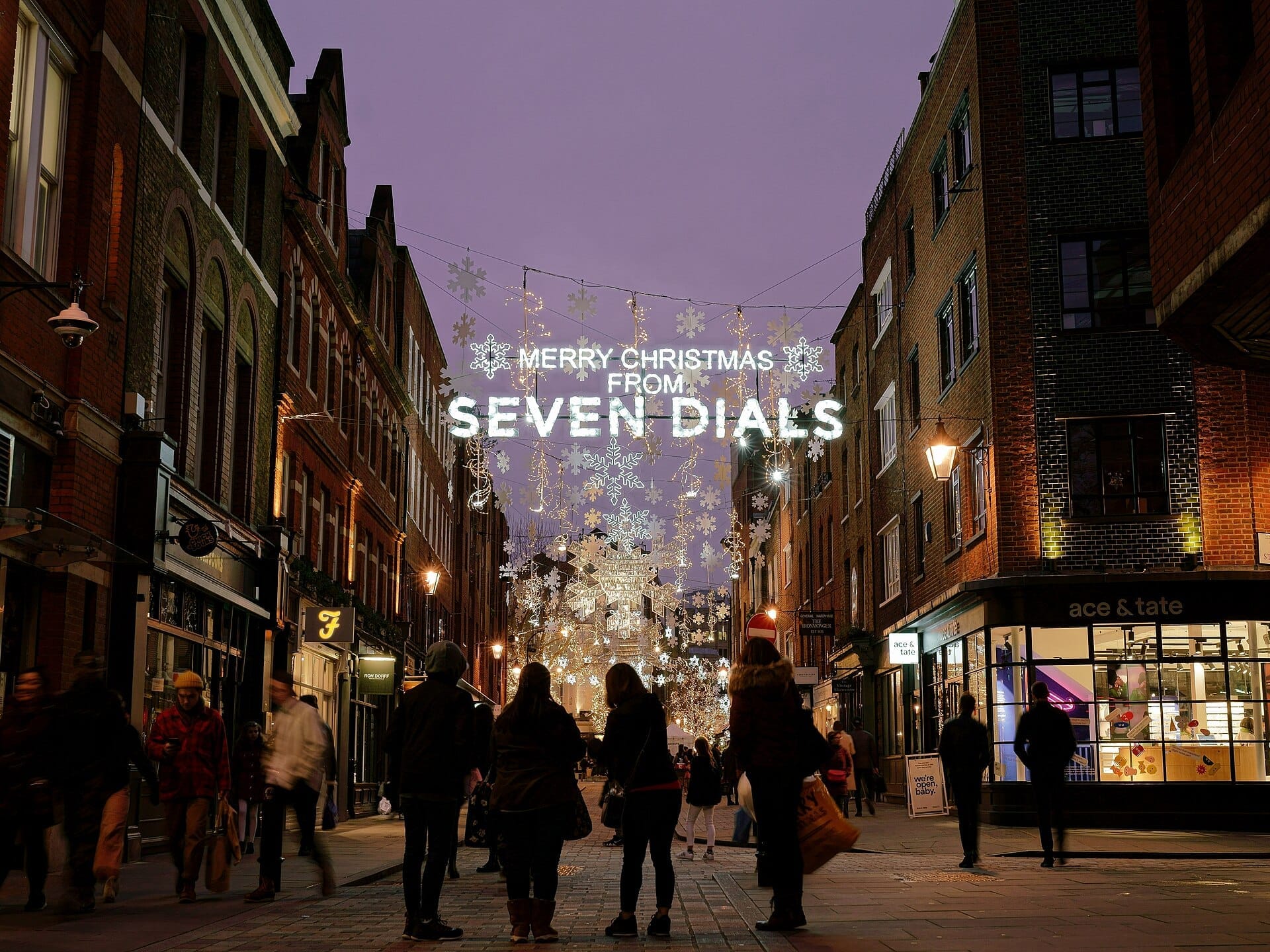
What Is Seven Dials?
Seven Dials is one of central London's most distinctive street junctions, where seven narrow roads converge at a central island topped by a tall sundial pillar. The junction sits in Covent Garden in the West End, roughly five minutes on foot from the main Covent Garden piazza and about the same distance from Leicester Square. It is a public area with no gates and no admission charge, open at all hours.
Unlike the polished plazas and franchise-heavy streets nearby, Seven Dials has held onto a more characterful, street-level identity. The seven radiating roads each have their own personality: Neal Street is densely lined with independent retailers and footwear shops, Monmouth Street is quieter and more boutique-focused, while Shorts Gardens and Earlham Street bring a mix of food, coffee, and small-scale fashion. The area rewards slow walking rather than a quick tick-off.
History: A Late Stuart Grid That Survived
Seven Dials was laid out in 1693 by Thomas Neale MP, a property developer and speculator known as 'The Great Projector.' Neale's plan was practical as much as it was geometric: by creating a star-shaped junction with streets radiating outward, he maximised the number of house plots that could front onto a named street, increasing the value of each parcel. The layout originally featured six radiating streets, with a seventh added as the development took shape.
To anchor the junction visually, Neale commissioned stonemason Edward Pierce to design and build the Sundial Pillar in 1693–94. The column originally bore six sundial faces, one for each street of the original layout. The current pillar is a faithful 1989 replica; the original was controversially removed in 1773 after local authorities blamed it for attracting crowds of disreputable characters and street traders.
What makes Seven Dials rare in London terms is that the area is considered the only quarter of the city remaining largely intact from late Stuart England. The street plan, building lines, and scale of the surrounding blocks have changed relatively little since the late 17th century. That continuity is far harder to find in central London than most visitors realise.
ℹ️ Good to know
The Sundial Pillar standing at the junction today is a 1989 replica. The original was removed in 1773. Look up at the dial faces to see how each one is oriented toward a different radiating street.
Tickets & tours
Hand-picked options from our booking partner. Prices are indicative; availability and final rates are confirmed when you complete your booking.
Soho Instagram a self-guided walking tour to top photo spots
From 6 €Instant confirmationFree cancellationTootbus London by Night: Bus tour
From 32 €Instant confirmationFree cancellationIFS Cloud Cable Car Ride and Uber Boat Hop-on Hop-off 1 Day Ticket
From 38 €Instant confirmationFree cancellationThe Making of Harry Potter Guided Tour of London Warner Bros. Studio
From 201 €Instant confirmationFree cancellation
What It Feels Like to Visit
Arriving at Seven Dials from Covent Garden station, you approach along Long Acre and then turn onto Neal Street, where the change in atmosphere is immediate. The street narrows, the chain restaurants disappear, and the shopfronts become smaller and more eclectic. You hear the sound shift too: less of the ambient roar of a main road, more of footsteps on flagstones and the conversations spilling out of coffee shops.
The central pillar comes into view as you pass the last bend on Neal Street. The island around it is small enough that you can take in all seven street openings at once, which creates an unusual sensation for London: a genuine focal point that actually organises the space around it. At busy times, visitors cluster around the base for photographs. At quieter moments, the junction has an almost theatrical quality, with the radiating streets framing it like stage wings.
The buildings around the junction are mostly three to four storeys, Georgian and Victorian brick, with the kind of narrow shopfronts and first-floor windows that feel proportioned for pedestrians rather than cars. This is not a stretch where you look up at grand facades; you look across at eye level, which suits the area's character as a place to browse and linger.
Morning, Afternoon, and Evening: How It Changes
Early mornings, before 9am, Seven Dials is essentially a local commuter route. Deliveries are arriving, the coffee shops are opening, and the streets are almost empty of tourists. This is the best time to look at the architecture clearly and to photograph the pillar without competing for space.
By mid-morning and into the afternoon, the area fills steadily. Saturday afternoons between roughly noon and 4pm are the most congested, with Neal Street in particular becoming difficult to navigate quickly. If your aim is efficient shopping, weekday mornings are noticeably more comfortable. The junction itself never becomes unpleasant, but the approach streets can feel crowded on peak weekend afternoons.
Early evenings bring a different crowd: post-work groups heading to restaurants and bars, pre-theatre diners, and people finishing a day's shopping. The area has a number of good restaurants and bars across its streets, so it stays lively well into the evening. Monmouth Street and Earlham Street both have well-regarded dining options that draw people independently of the shopping.
💡 Local tip
For the best photographs of the Sundial Pillar, arrive before 9am on a weekday. The morning light falls across the column cleanly, and the surrounding streets are quiet enough to shoot without crowds in the frame.
Shopping and Eating: What to Expect
The shopping offer at Seven Dials skews toward independent and specialist retailers, with a particularly strong concentration of footwear and streetwear brands on Neal Street. There are also several homeware and lifestyle shops, smaller fashion boutiques, and a number of well-established bookshops and music retailers in the immediate area. The mix changes gradually over time as leases turn over, but the independent-to-chain ratio has remained higher here than on nearby Oxford Street or Covent Garden's main piazza.
Monmouth Coffee on Monmouth Street is one of the most respected specialty coffee roasters in London, and the queue outside most mornings is a reliable indicator of quality. For a broader exploration of the area's food culture, the Covent Garden piazza and its surrounding market buildings are a short walk east.
The area is not budget-focused. Coffee will cost what you would expect from a specialty roaster, and the independent shops tend to price accordingly. If you are shopping on a strict budget, Seven Dials is more a place to look than to buy, but that is not a criticism: window shopping through these streets is more interesting than on most central London retail strips.
If you are building a broader West End itinerary, Seven Dials connects naturally with the West End on all sides. A walk south brings you through the Covent Garden piazza toward the Strand; heading north takes you into the quieter lanes around St Giles High Street.
Getting There and Getting Around
The most direct Underground approach is Covent Garden station on the Piccadilly line, a three to five minute walk south and west of the junction. Note that Covent Garden station has no escalators and the lift queue can be long during peak tourist hours; if you have luggage or limited mobility, Leicester Square (Northern and Piccadilly lines) is about eight to ten minutes on foot and has step-free access from street to platform.
Holborn station (Central and Piccadilly lines) is also within walking distance to the northeast, roughly ten minutes on foot through Kingsway. Charing Cross station is about a twelve-minute walk to the south. Buses serve Trafalgar Square and the Strand, from which the area is easily walkable, but no major bus routes run directly through the junction itself.
⚠️ What to skip
Covent Garden station has a very small lift with frequent queues during busy hours. If you are travelling with a pushchair, wheelchair, or large bag, consider using Leicester Square station instead and walking across.
Seven Dials is entirely walkable and the streets around the junction are pedestrian-friendly, though not fully pedestrianised. The central island and surrounding pavements are paved and flat, making them accessible at street level. Individual shops and restaurants will vary in their own accessibility provision.
Who Should Skip This
Seven Dials is an area to wander, not a single attraction with a clear payoff. If you are working through a tight sightseeing schedule focused on major landmarks, this is not a priority stop: there is no museum, no performance, and no view. The Sundial Pillar is interesting but brief; you could see it, read the history, and move on in under ten minutes. The real value here is the accumulation of small pleasures from good coffee, interesting shops, and streets that feel old, which requires time and an unhurried pace.
Visitors specifically interested in London's most iconic viewpoints or headline museums will find their time better spent at places like St Paul's Cathedral or the National Gallery, both within reasonable walking distance.
Insider Tips
- Neal's Yard, a small courtyard off Shorts Gardens, is one of the most photographed spots in the entire area thanks to its painted facades and potted plants. It is easy to miss if you stick only to the main streets, so turn into Shorts Gardens from the junction and look for the narrow alley entrance on your left.
- Monmouth Coffee opens early on weekdays and slightly later on weekends. If you want to beat the queue, arrive within the first thirty minutes of opening. The coffee is served at a standing bar with a small number of seats; it is more of a quick stop than a sit-down experience.
- The seven streets radiating from the junction are: Neal Street, Monmouth Street, Tower Street, Mercer Street, Earlham Street, Shelton Street, and Shorts Gardens. Walking down each one and looping back through the adjacent streets takes about forty-five minutes at a relaxed pace and gives you a much better sense of the area than staying near the pillar alone.
- Seven Dials hosts occasional outdoor events and pop-up markets, particularly around Christmas and in late spring. The junction itself becomes significantly more crowded during these periods; check the Seven Dials website before visiting if you are sensitive to crowds.
- The area around Endell Street, one block east of the junction, has several quieter independent shops and cafes that attract fewer tourists than Neal Street itself. Worth including in your loop if you have extra time.
Who Is Seven Dials For?
- Independent shoppers looking for footwear, fashion, and lifestyle brands outside the main Oxford Street circuit
- Architecture and history enthusiasts interested in late 17th-century street planning and the Stuart-era built environment
- Coffee and food lovers wanting specialty options in a walkable cluster
- Photographers working on a London street photography project, especially at off-peak hours
- Travellers building a broader West End half-day itinerary that includes Covent Garden and Leicester Square
Nearby Attractions
Other things to see while in West End:
- British Library
The British Library holds over 170 million items spanning thousands of years of human thought, from the Magna Carta to Beatles lyrics. Entry to the building and permanent collection galleries is free, making it one of the most rewarding stops in central London for curious travellers.
- British Museum
The British Museum holds one of the world's great collections of human history and culture, spanning two million years across more than 60 free galleries. Entry to the permanent collection is free, but knowing how to navigate the scale of it makes the difference between a rewarding visit and an overwhelming one.
- Carnaby Street
Carnaby Street is the pedestrianised shopping district in Soho that defined the look of 1960s London and continues to draw fashion lovers, food hunters, and curious walkers today. Free to explore and five minutes from Oxford Circus, it rewards those who slow down and wander its connecting lanes.
- Coal Drops Yard
Coal Drops Yard is a redeveloped Victorian industrial estate in King's Cross, now home to independent retailers, restaurants, and bars set beneath strikingly restored brick vaults. The public outdoor spaces are free to enter and a short walk from King's Cross St Pancras station.