Seoul Museum of History: The City's Story, Told for Free
The Seoul Museum of History (서울역사박물관) traces the capital's transformation from a Joseon-era royal seat to a modern metropolis. Admission is free, the collections are substantial, and it sits within easy walking distance of Gyeongbokgung Palace and Gwanghwamun Square.
Quick Facts
- Location
- 55 Saemunan-ro, Jongno-gu, Seoul (03177)
- Getting There
- Gwanghwamun Station (Line 5, Exit 7) or Seodaemun Station (Line 5, Exit 4)
- Time Needed
- 1.5–3 hours
- Cost
- Free admission
- Best for
- History lovers, first-time visitors to Seoul, rainy-day culture seekers
- Official website
- museum.seoul.go.kr/eng/index.do
What Is the Seoul Museum of History?
The Seoul Museum of History (서울역사박물관) opened on 21 May 2002 and has since become the city's primary institution dedicated to documenting Seoul's urban and cultural evolution. The permanent collection covers roughly six centuries, beginning with Seoul's establishment as the capital of the Joseon Dynasty in 1394 and running through to the rapid industrialization of the late 20th century. That arc, from wooden palaces and Confucian governance to apartment towers and subway maps, is a genuinely compelling one, and the museum tells it with depth.
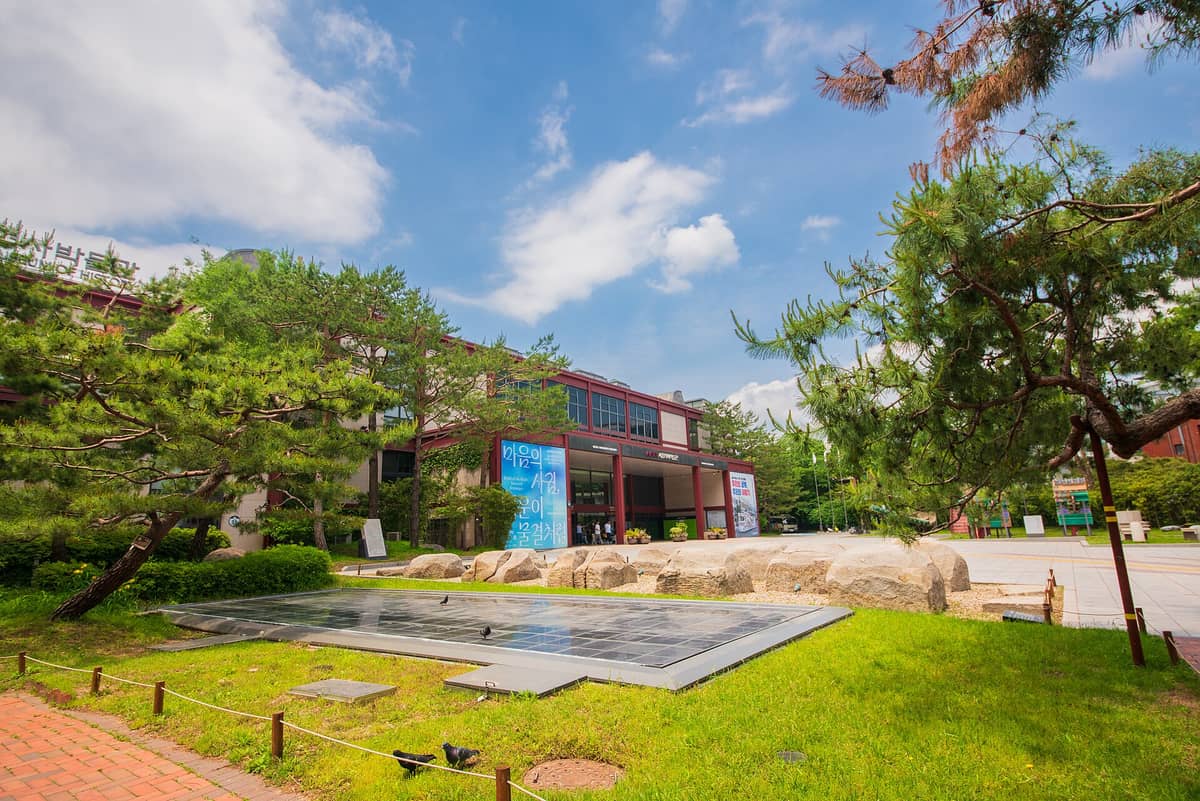
The building itself is a large, modernist structure set back from Saemunan-ro. It is not architecturally dramatic, but it is well-organized and easy to navigate. The interior is spacious enough that even on moderately busy days, the galleries do not feel crowded. For visitors short on time who want a grounded understanding of how Seoul became what it is today, this is one of the most efficient stops in the city.
💡 Local tip
Admission is completely free. The museum is closed on Mondays (unless Monday falls on a public holiday) and January 1. Friday evenings feature extended hours, typically until 22:00.
The Permanent Collection: What You'll Actually See
The permanent exhibition is organized across four broad zones. The first focuses on Joseon-era Seoul, when the city was known as Hanyang and functioned as the political and ceremonial heart of the kingdom. Here you will find reconstructed city maps, scale models of the original palace complexes, and artifacts tied to Confucian governance, royal ritual, and everyday aristocratic life. The level of detail in the cartographic materials alone is worth the visit: historic maps of Hanyang drawn in the Joseon period show a city defined by mountain ridgelines, palace walls, and the grid of the central market district.
A second section covers the Japanese colonial period and the turbulent first half of the 20th century, presenting objects, photographs, and documents related to the forced opening of Korea, annexation in 1910, and the eventual liberation in 1945. This is handled with historical care rather than overt political framing, though the subject matter carries weight. If you plan to visit the Seodaemun Prison History Hall in the same area, pairing it with this museum creates a coherent half-day of colonial-era history.
A third zone documents the Korean War (1950–1953) and Seoul's near-total destruction, followed by the extraordinary reconstruction and economic development of the 1960s through 1980s. The scale models showing the Han River waterfront before and after major infrastructure development are particularly striking, as are the exhibits on the rise of apartment culture. Seoul transformed from a low-rise, traditional city into a city of high-rises in under three decades, and this section captures that rupture clearly.
A fourth area addresses contemporary Seoul: urban planning, cultural exports, and the city's ongoing identity as a global capital. This section tends to be the lightest in terms of artifacts, leaning more on graphics and multimedia, but it provides useful context for making sense of neighborhoods you will be walking through during the rest of your trip.
Tickets & tours
Hand-picked options from our booking partner. Prices are indicative; availability and final rates are confirmed when you complete your booking.
DMZ and Lake Majang Suspension Bridge Tour from Seoul
From 57 €Instant confirmationFree cancellationHalf Day DMZ Tour from Seoul, 3rd Tunnel, Observatory and More
From 47 €Instant confirmationFree cancellationSeoul zombie city exploration game and private tour
From 10 €Instant confirmationFree cancellationLuggage Storage in Seoul
From 7 €Instant confirmationFree cancellation
How the Experience Changes by Time of Day
Weekday mornings, particularly between 9:00 and 11:00, are the quietest window. At that hour, the galleries are often shared only with older Korean visitors who move through at a deliberate pace, and the large model displays of Joseon-era Hanyang can be studied without anyone crowding your view. The natural light in the upper-floor galleries is flattering in the morning and makes the cartographic displays easier to photograph.
Weekend afternoons bring school groups and families, especially in the ground-floor areas near the interactive exhibits. The noise level rises noticeably. If you are visiting on a weekend, arriving at opening time (9:00) gives you a solid 90 minutes before the peak family crowd arrives around 11:30. The Friday evening extension is a genuinely good option for travelers who prefer to see major sights during the day and use museums as a calmer evening activity.
ℹ️ Good to know
Opening hours: 09:00–18:00 (last admission 17:30) Tuesday through Thursday and weekends; until 22:00 on Fridays. Closed Mondays and January 1. Parking is available on-site (114 spaces, including 2 for large vehicles; access hours 08:00–22:00).
Location and Getting There
The museum sits on Saemunan-ro in Jongno-gu, within comfortable walking distance of some of Seoul's most significant historical sites. From Gwanghwamun Square it is about a 10-minute walk west. From Gyeongbokgung Palace, the walk takes roughly 15 minutes on foot, which makes it a natural pairing if you are spending a morning in the historic palace district.
By subway, the most direct access is via Seoul Metro Line 5: alight at Gwanghwamun Station and use Exit 7, or at Seodaemun Station using Exit 4. Both exits place you within a short walk of the main entrance. The area around the museum is flat and pedestrian-friendly, with wide pavements and clear signage in Korean and English.
This part of Jongno-gu ties in naturally with a broader tour of Seoul's historical core. The major palaces of Seoul are all within 20 minutes on foot or a single subway stop, and the museum provides a useful conceptual framework for appreciating those sites before or after visiting them.
Practical Details: What to Know Before You Go
The museum is fully free to enter, with no timed-entry tickets or reservations required. Audio guides are available in multiple languages, which significantly improves the experience for visitors who do not read Korean, as many of the artifact labels provide their richest detail in Korean text. Check availability at the information desk on arrival.
The building is accessible and includes elevator access between floors. The ground floor houses a lobby shop and basic cafe facilities. First-floor convenience facilities are listed on the official site as continuously accessible during parking hours.
Weather does not significantly affect a visit here, which makes the museum a reliable option on rainy or very hot days. Seoul summers (June through August) bring high humidity and temperatures often above 30°C; the museum's air-conditioned galleries are a genuine comfort during those months. Winter visits (December through February) are equally practical for the same reason.
⚠️ What to skip
The museum does not currently charge admission for its permanent collection, but special or temporary exhibitions may carry a separate fee. Confirm at the entrance before assuming all galleries are free.
Is It Worth Your Time? An Honest Assessment
For first-time visitors to Seoul, particularly those spending three or more days in the city, this museum earns its place on the itinerary without question. The free admission removes the calculus entirely: even two hours here will sharpen your understanding of the neighborhoods you are about to walk through. Seoul's history is not simple, and the museum does not oversimplify it.
Repeat visitors or those with only one or two days in Seoul might reasonably deprioritize it in favor of the palaces or a neighborhood like Bukchon Hanok Village that delivers historical texture outdoors. The museum is text-heavy in places, and visitors who do not read Korean will miss some nuance even with an audio guide. That said, the scale models, maps, and photographic archives are legible across language barriers.
Those looking for interactive or immersive experiences may find the presentation style more traditional than expected. The museum leans toward display cases, panels, and models rather than experiential or digital-first exhibits. That is not a flaw, but it is worth knowing if your travel companions include younger children who engage better with hands-on environments.
Insider Tips
- Pick up the English-language floor map at the information desk immediately upon entering. The building's layout is not immediately intuitive, and the map will save you from doubling back through sections you have already covered.
- The third-floor windows on the east side offer an understated view toward the Gyeongbokgung Palace complex. It is not a dramatic viewpoint, but catching a glimpse of the palace rooftline from inside a museum about the city's history has a satisfying resonance.
- Friday evening visits (after 18:00) are among the quietest times in the entire week. Most tourists have moved on to dinner, and the extended hours are primarily used by locals. The lighting in the gallery shifts slightly in the evening, which changes the atmosphere meaningfully in the older artifact sections.
- The outdoor courtyard between the main building and the adjacent annex occasionally features temporary installations or preserved urban artifacts, including old trams and street furniture. It is easy to walk past without noticing, but worth a five-minute detour.
- If you are combining this with Gyeongbokgung Palace on the same day, visit the museum first. The historical context it provides, especially the Joseon-era city maps and the explanation of palace district planning, makes the palace visit considerably richer.
Who Is Seoul Museum of History For?
- First-time visitors to Seoul who want historical grounding before exploring the palace district
- History and urban planning enthusiasts interested in how a city transforms across centuries
- Travelers looking for a free, substantive cultural experience on a budget itinerary
- Anyone seeking a rainy-day or extreme-weather alternative to outdoor sightseeing
- Visitors pairing the museum with a morning at Gyeongbokgung or Gwanghwamun Square
Nearby Attractions
Other things to see while in Myeongdong & Jung-gu:
- Cheonggyecheon Stream
Cheonggyecheon Stream is an 11-kilometer restored waterway cutting through central Seoul, offering a rare ground-level escape from the city's elevated streets. Free to access around the clock in normal conditions, it draws early-morning joggers, evening strollers, and weekend families in equal measure.
- Deoksugung Palace
Deoksugung Palace sits in the heart of Jung-gu, surrounded by modern Seoul yet preserved as a rare meeting point of Joseon tradition and early 20th-century Western architecture. At 1,000 KRW and open until 9pm (last admission at 8pm), it is one of the few palaces you can visit after work or after dinner.
- Gyeonghuigung Palace
Once a secondary palace for Joseon kings, Gyeonghuigung stands today as Seoul's least-visited royal site, which is precisely what makes it worth your time. Free to enter and rarely crowded, it offers a grounded, unhurried encounter with Korean dynastic architecture in the heart of the city.
- Myeongdong Cathedral
Myeongdong Cathedral is Seoul's most historically significant Catholic church and one of the city's finest examples of Gothic brick architecture. Founded in 1892 and completed in 1898, it sits on a hilltop above the commercial noise of Myeongdong, offering a rare moment of calm in the middle of one of Seoul's busiest districts. Entry is free.