Catedral de San Isidro Labrador: The Neo-Gothic Cathedral Worth the Trip North
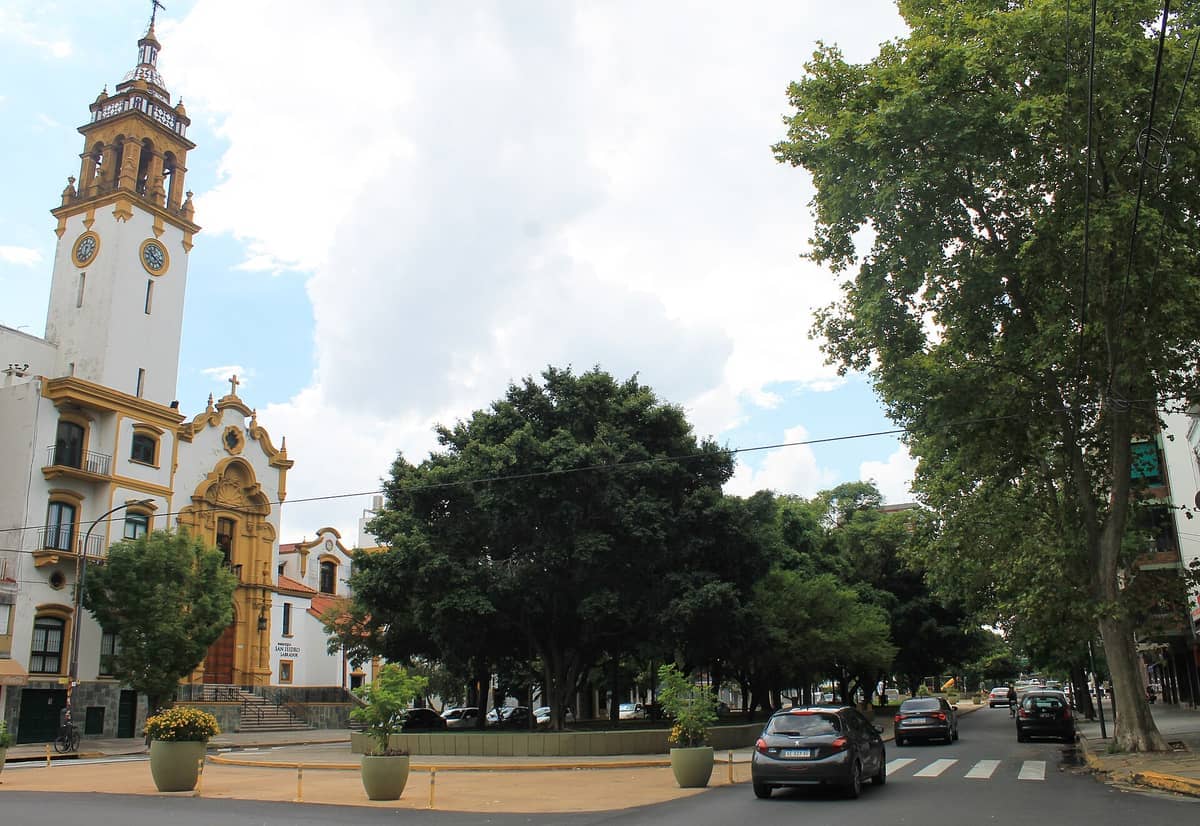
Rising above one of Greater Buenos Aires's most handsome historic squares, the Catedral de San Isidro Labrador is a free-entry neo-Gothic landmark declared a National Historic Place in 1963. The surrounding area, easily reached by suburban rail from Retiro, rewards visitors with cobbled streets, river views, and a slower pace than the capital's centre.
Quick Facts
- Location
- Av. del Libertador 16200, San Isidro, Buenos Aires Province — roughly 25 km north of central Buenos Aires
- Getting There
- San Isidro station (Mitre Line, Retiro–Tigre branch). The cathedral and historic centre are a short walk from the station.
- Time Needed
- 1.5–3 hours for the cathedral and immediate historic precinct; half a day if you explore the wider town centre
- Cost
- Free. No ticket required to enter the cathedral.
- Best for
- Architecture lovers, travellers seeking a quieter escape from the capital, and anyone curious about Argentine religious heritage
- Official website
- catedraldesanisidro.org
What San Isidro Actually Is
San Isidro is a partido (municipality) in Buenos Aires Province, sitting on the western bank of the Río de la Plata about 25 kilometres north of the capital's downtown. It is not part of the Ciudad Autónoma de Buenos Aires, but suburban rail makes it feel almost continuous with the city. For most visitors, the destination is the historic casco urbano — the old town centre clustered around the cathedral square — rather than the wider municipality, which is largely residential.
The centrepiece is the Catedral de San Isidro Labrador, a neo-Gothic church inaugurated on 14 July 1898 and later declared a National Historic Place of Argentina. It anchors a quiet, well-preserved plaza that offers a genuinely different register from Buenos Aires's dense avenues. The pace here is slower, the scale is human, and the absence of the capital's noise makes the cathedral easier to read as architecture.
ℹ️ Good to know
The cathedral is generally open daily, but specific opening hours are not fixed; access outside services is usually available and mass schedules vary by season — in the summer months (January–February) weekday masses are typically at 19:00, with different times on weekends. Check the official site before planning a visit around a specific time window.
The Cathedral Up Close: Architecture and Interior
The Catedral de San Isidro Labrador was designed by French architects Jacques Dunant and Charles Paquín and inaugurated in 1898, replacing an earlier colonial chapel on the same site. The building follows the neo-Gothic vocabulary that was fashionable across South America in the late nineteenth century: pointed arches, a central tower flanked by smaller turrets, and an interior nave that directs the eye upward through ribbed vaulting. The stone facade is pale and detailed, and catches the morning light particularly well.
Inside, the atmosphere shifts immediately. The interior is cool even on warm days, and the stained-glass windows filter the afternoon sun into coloured patches along the stone floor. The scale is impressive without being overwhelming — comparable to a mid-sized European Gothic church rather than a cathedral of metropolitan ambition. The nave is uncluttered, which lets the structural logic of the pointed arches read cleanly. Photography is possible but should be done discreetly, especially if a service is underway.
There are no regularly advertised guided visits, and entry is entirely free. The lack of a commercial layer — no ticket booth, no audio guide rental — means visitors move through at their own pace, which suits the building well. The secretariat can be contacted for specific inquiries about the space.
💡 Local tip
Arrive between 09:00 and 11:00 on a weekday. The plaza is calm at that hour, mass is not in session, and the morning light hits the west-facing facade at a useful angle for photography. By early afternoon, school groups and weekend families change the atmosphere considerably.
Tickets & tours
Live prices and dates from our booking partner. If you book, we may earn a commission at no extra cost to you.
San Isidro and Tigre Delta small-group tour
From 76 €Instant confirmationFree cancellationMadero Tango Show tickets with optional dinner
From 32 €Instant confirmationFree cancellationBuenos Aires small-group city tour with optional lunch and cruise
From 25 €Instant confirmationFree cancellationPiazzolla Tango Show VIP tickets with transfer and optional dinner
From 112 €Instant confirmationFree cancellation
The Historic Precinct Around the Cathedral
The cathedral does not stand in isolation. The surrounding streets form one of the better-preserved nineteenth-century urban cores in Greater Buenos Aires. Low-rise buildings with wrought-iron balconies, cobbled lanes dropping toward the river barranca (the bluff above the Río de la Plata), and a central plaza with mature trees make the area worth exploring on foot beyond the church itself. The descent toward the river offers views across the broad estuary, which appears more like an inland sea than a river from this vantage point.
The neighbourhood also has cafes and small restaurants along the streets adjacent to the plaza, though the area is not set up as a tourist-dining strip. Options are modest and locally oriented. If you are combining the visit with lunch, the streets between the station and the cathedral have more practical choices than the immediate plaza area.
For context on how this kind of historic Argentine civic space compares to others in the capital, the Cabildo de Buenos Aires and Plaza de Mayo offer useful reference points — both represent the colonial and post-independence layers of Argentine urban planning that San Isidro's plaza echoes at a smaller scale.
How It Changes Through the Day
Weekday mornings are the quietest period. The plaza has commuters cutting through on their way to nearby offices, a few locals on benches, and almost no other tourists. The cathedral is unlocked and essentially empty between masses, which creates an unusual opportunity to stand inside a declared National Historic Place without another visitor in sight.
Midday on weekends sees the area fill with families from the surrounding municipality, and the adjacent streets become genuinely busy. The atmosphere is pleasant but the contemplative quality disappears. Sunday afternoon, in particular, brings crowds to the plaza and makes the cathedral feel more like a social backdrop than an architectural object.
Late afternoon light, especially in autumn (March–May) and spring (September–November), is worth timing a visit around if you are interested in the exterior. The twin towers catch warm directional light in the hour before sunset, and the plaza empties somewhat after 18:00 on weekdays. Evening masses run into the night, so consult the current schedule on the official site if you plan to visit close to service times.
Getting There from Buenos Aires
The Mitre Line commuter rail (Retiro–Tigre branch) is the most direct route. Trains depart from Retiro station in central Buenos Aires and stop at San Isidro, with the journey taking approximately 30–35 minutes depending on the service type. Services run frequently throughout the day. Fares are paid with the SUBE rechargeable card, which is the standard payment method across Buenos Aires public transport — confirm current fare levels before travel, as they are subject to change.
From San Isidro station, the cathedral and historic centre are accessible on foot. The walk involves a modest climb up toward the barranca, taking roughly 10–15 minutes. The route is straightforward and signed locally. Taxis and remises are also available from the station area for those who prefer not to walk.
If you are building a broader itinerary in the northern corridor of Greater Buenos Aires, San Isidro pairs logically with a visit to the Tigre Delta, which is further along the same Mitre Line rail route. The two make a natural half-day or full-day combination without retracing any ground.
💡 Local tip
If you are coming from Palermo or Belgrano rather than Retiro, you can board the Mitre Line at closer stations, cutting travel time. Make sure to choose the Tigre branch (not Bartolomé Mitre or Ramal José León Suárez) when planning your route.
Assessment: Who This Suits and Who It Doesn't
San Isidro's historic centre and cathedral reward travellers who are genuinely interested in Argentine architectural heritage or who want a quieter, less commercially packaged day out from the capital. The cathedral is a well-executed piece of neo-Gothic design, and its status as a National Historic Place is well-earned. The surrounding streets are among the more intact examples of late nineteenth-century Argentine townscape in the Buenos Aires region.
However, visitors expecting the density of activity found in Buenos Aires's major neighbourhoods will find San Isidro's historic core quiet to the point of underwhelming, particularly outside weekends. There is no museum, no formal visitor centre, and no curated experience beyond the building itself and its immediate surroundings. For travellers with limited time who have not yet seen the capital's own major landmarks — the Teatro Colón, the Cementerio de la Recoleta, the Casa Rosada — San Isidro should probably wait.
If your interest is specifically in religious or colonial architecture within the capital itself, the Catedral Metropolitana Buenos Aires and the Basílica Nuestra Señora del Pilar in Recoleta offer comparable architectural interest without the rail journey. See our Buenos Aires architecture guide for a broader overview of the city's built heritage.
Practical Notes
- Opening hours: generally open daily, but exact visiting times outside mass are not fixed; verify current mass and access schedule at catedraldesanisidro.org before visiting.
- Admission: free, no booking required.
- Address: Av. del Libertador 16200, B1642 San Isidro, Buenos Aires Province.
- Photography: permitted inside, but exercise discretion if a service is in progress.
- Accessibility: the cathedral is a functioning church; specific accessibility features (ramps, adapted restrooms) are not listed on the official site. Contact the secretariat directly for requirements.
- Weather: San Isidro has the same humid subtropical climate as Buenos Aires. Summer (December–February) is hot and humid, with temperatures reaching 30°C. Spring and autumn are the most comfortable seasons for outdoor exploration of the surrounding streets.
- Clothing: no strict dress code is posted, but standard church etiquette applies — avoid beachwear or very short shorts inside the cathedral.
Insider Tips
- The barranca viewpoint just below the cathedral plaza offers one of the few unobstructed views of the Río de la Plata from an elevated position north of the capital. Most visitors go straight to the church and miss the river panorama entirely.
- Weekday mornings after 09:00 are consistently the emptiest period inside the cathedral. If you want to photograph the interior without other visitors in frame, this is the window.
- The Mitre Line train back to Retiro runs frequently, so you do not need to time your return precisely. That said, avoid the 07:00–09:00 and 17:30–19:30 windows when commuter services are packed.
- The streets between the station and the plaza have small cafes that open early and serve proper espresso — more useful than the tourist-facing options nearer the cathedral, which can be inconsistent in quality.
- San Isidro is on the same Retiro–Tigre rail line as the Tigre Delta embarkation point. If you are already making the trip north, continuing one or two stops further to Tigre costs almost nothing extra and adds a completely different landscape to the day.
Who Is San Isidro For?
- Travellers with an interest in Argentine neo-Gothic and colonial architectural heritage
- Anyone looking for a half-day excursion with a different pace and scale from Buenos Aires's centre
- Rail-travel enthusiasts who enjoy combining a scenic commuter journey with a heritage destination
- Photographers seeking well-preserved nineteenth-century urban streetscapes with minimal tourist infrastructure
- Visitors who want to combine San Isidro with a Tigre Delta river excursion on the same day
Nearby Attractions
Combine your visit with:
- Cementerio de la Chacarita
Larger and less visited than its famous counterpart in Recoleta, Cementerio de la Chacarita is a vast urban cemetery spanning multiple city blocks in the Chacarita neighborhood. Free to enter, it holds the tombs of cultural icons including tango legend Carlos Gardel, and its monumental mausoleums, wide internal avenues, and layers of Argentine social history make it one of the most atmospheric and underappreciated sites in the city.
- Colonia del Sacramento (Uruguay)
Colonia del Sacramento, Uruguay's oldest city and a UNESCO World Heritage Site, sits just across the Río de la Plata from Buenos Aires. Its Barrio Histórico packs cobblestone lanes, Portuguese-era walls, and a working lighthouse into a compact quarter that most visitors can absorb in a single afternoon.
- Espacio Memoria y Derechos Humanos (ex-ESMA)
Built on the grounds of one of Argentina's most notorious clandestine detention centers, Espacio Memoria y Derechos Humanos (ex-ESMA) is a 17-hectare memorial complex in northern Buenos Aires dedicated to human rights and collective memory. Entry is free, the site has regular daily opening hours, and a visit here is one of the most sobering and important experiences the city offers.
- Estadio Monumental (River Plate)
The Estadio Más Monumental Antonio Vespucio Liberti is more than a football ground. Home to Club Atlético River Plate and the largest stadium in South America, it holds around 85,000 spectators and carries decades of Argentine football history. Whether you visit on a quiet Tuesday morning or a roaring match day, the scale and atmosphere of El Monumental is unlike anything else in Buenos Aires.
Planning a trip? Discover personalized activities with the Nomado app.