Chocolatería San Ginés: Madrid's 24-Hour Churros Institution
Tucked into a narrow passageway between Calle Mayor and Calle Arenal, Chocolatería San Ginés has been serving thick hot chocolate and churros since 1894. Open around the clock today, it draws early risers, late-night revelers, and curious visitors in equal measure.
Quick Facts
- Location
- Pasadizo de San Ginés, 5, 28013 Madrid (Sol-Centro)
- Getting There
- Puerta del Sol (Lines 1, 2, 3) or Ópera (Lines 2, 5, R), both a short walk
- Time Needed
- 30–45 minutes
- Cost
- No entry fee; pay per order (prices posted in-house)
- Best for
- Late-night snacks, breakfast with locals, classic Madrid food experiences
- Official website
- chocolateriasangines.com
What Chocolatería San Ginés Actually Is
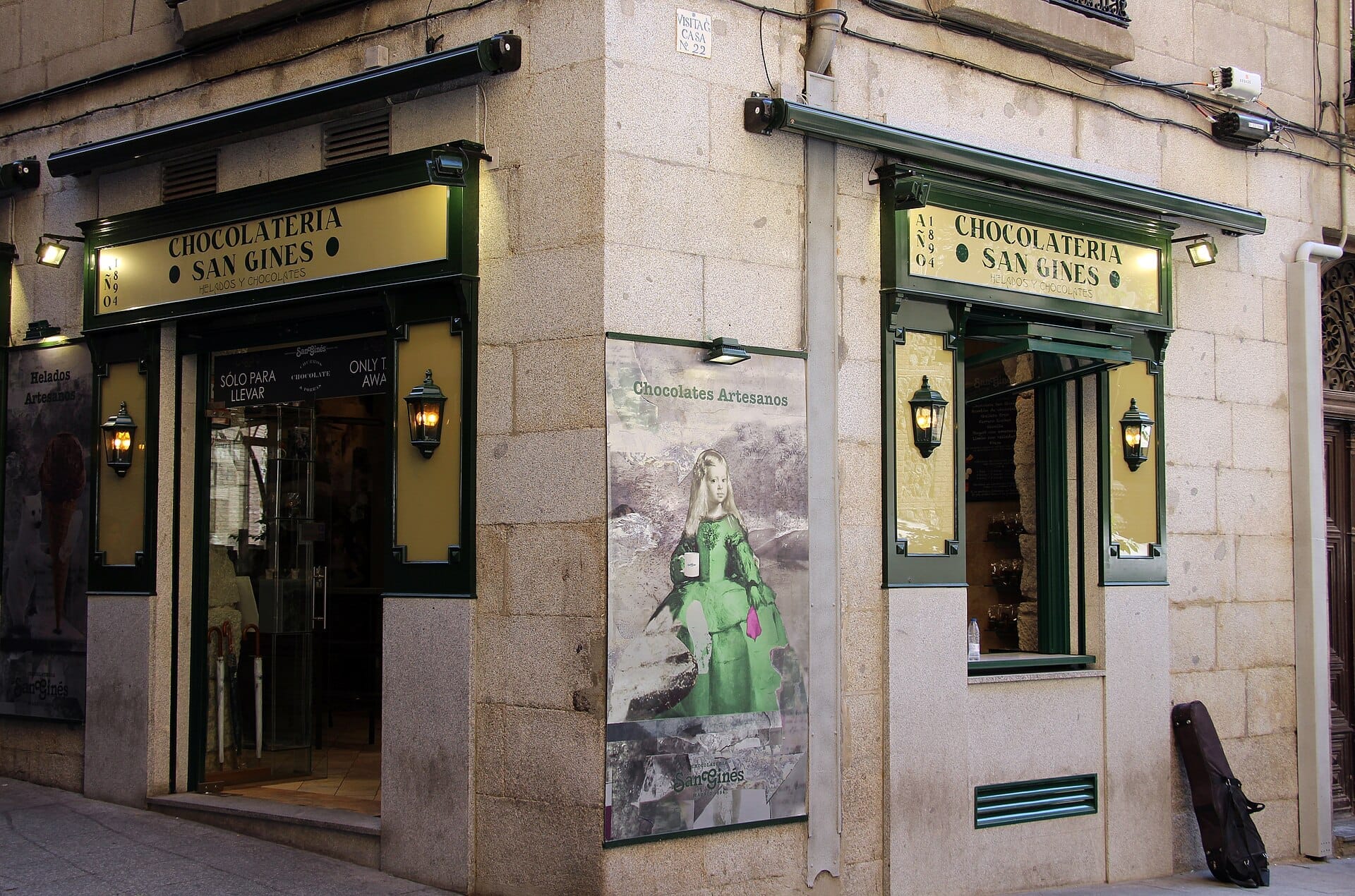
Chocolatería San Ginés is not a café in any conventional sense. It is a single‑purpose institution: it makes churros and porras (a thicker, longer variant of the churro), and it serves them primarily alongside cups of thick, dark drinking chocolate. While you will also find basic coffees, soft drinks, and a few pastries, churros con chocolate are the core of the menu. The premises occupy a low-ceilinged room in Pasadizo de San Ginés, a narrow pedestrian passage that connects Calle Mayor and Calle Arenal in the heart of Madrid's Centro district, less than two minutes on foot from Puerta del Sol.
The premises have housed San Ginés since 1894, when it opened as a dedicated chocolatería in the Pasadizo de San Ginés. That founding date makes San Ginés one of the earliest and most enduring chocolaterías in Madrid. Its early clientele included many theater‑goers from nearby venues such as the historic Teatro Eslava, and a pattern of late‑night custom has been part of its identity for well over a century.
ℹ️ Good to know
San Ginés is open 24 hours a day from Thursday to Sunday and on the eves of public holidays, and from 8am to midnight on Monday, Tuesday, and Wednesday. It does not take standard reservations for individual tables; you simply walk in and wait for a spot.
The Interior: What You Will Find Inside
Step through the entrance and the room is smaller than most visitors expect. The original layout features a marble bar, wooden benches along the walls, and small round tables set close together. The walls are tiled in a style that reads as late 19th-century Madrid, and the overhead lighting is warm but modest. There are framed photographs and a general atmosphere of things that have not changed in a long time, because most of them have not.
Orders arrive quickly. A waiter places a long oval plate of churros or porras on the table beside a ceramic cup of chocolate. The chocolate at San Ginés is notably thick: it is closer in texture to a warm pudding than to a drink. You dip, you eat, you order more if needed. This is the full transaction. There are no elaborate menus to study, no cocktail lists, no wifi passwords to ask about.
The passageway itself also has outdoor terrace seating, which operates when weather allows. For visitors with reduced mobility, the terrace is worth requesting: the indoor space, while charming, is tight and historic rather than spacious, and maneuvering between the closely set tables with a wheelchair is genuinely difficult. The establishment does not publish a formal accessibility statement on its website, so calling ahead is advisable if this is a concern.
Tickets & tours
Hand-picked options from our booking partner. Prices are indicative; availability and final rates are confirmed when you complete your booking.
Royal Monastery of El Escorial and the Valley of the Fallen trip from Madrid
From 64 €Instant confirmationFree cancellationFlexible time Real Madrid: Bernabeu Stadium & Museum Entry
From 42 €Instant confirmationMuseum of Senses Madrid entrance ticket
From 19 €Instant confirmationAvila and Segovia full-day tour from Madrid
From 50 €Instant confirmationFree cancellation
How the Experience Changes by Time of Day
The morning shift, roughly from 8am to 11am, is the most traditionally Spanish. Locals stop in on their way to work, order a single cup of chocolate and a small plate of churros, eat standing at the bar or take the first available table, and leave within twenty minutes. Conversation is brief. The room smells of hot frying oil and chocolate. Queues at this hour are usually short and move fast.
Midday and early afternoon bring tourists in greater numbers, and the wait for a table lengthens noticeably. By 1pm on weekends, queues can extend into the passageway itself. If you are visiting during this window, arrive before noon or expect to wait.
The late-night hours, from roughly midnight through 4am, are what San Ginés is most famous for internationally. Groups arriving after a night out in Malasaña, Chueca, or the bars around Puerta del Sol account for a large share of the after-midnight clientele. The atmosphere at 2am is noticeably louder than at 9am, the tables fill quickly, and the turnover slows. This is the version of San Ginés that most travel writing describes. It is genuine, but it is also the most crowded and the most chaotic. Whether that appeals depends entirely on what you are looking for.
💡 Local tip
For the quietest experience with the shortest wait, aim for a weekday morning between 8am and 10am. You will likely find a table within minutes and see the place operating as a neighborhood institution rather than a tourist attraction.
Historical and Cultural Context
San Ginés has been operating since 1894, which places it among Madrid's oldest surviving food establishments. The churro itself is a Spanish staple with unclear precise origins, but the tradition of eating churros con chocolate as breakfast or as a late-night restorative is deeply embedded in Madrid's food culture. San Ginés sits at the intersection of those two uses, serving the same thing at 7am and at 3am without distinction. For a broader look at how this fits into the city's eating culture, the Madrid food guide covers the full landscape.
The name San Ginés refers to the Church of San Ginés de Arlés, which stands at the opposite end of the passageway on Calle Arenal. That church dates to at least the 15th century, and the proximity of a late-night eating establishment to a place of worship is less incongruous in Madrid than it might seem elsewhere: the city's historic center has always packed religious, commercial, and social life into small adjacent spaces.
The surrounding Sol-Centro area is the geographic and symbolic heart of Madrid. Puerta del Sol is two minutes away on foot, Plaza Mayor is perhaps five minutes in the other direction. San Ginés sits in the middle of one of Europe's most visited urban cores, which explains both its enduring fame and its persistent crowds.
Is It Worth Visiting?
The short answer is yes, with some qualifications. The churros and chocolate at San Ginés are particularly good. The chocolate is thick and bitter-sweet in a way that packaged alternatives cannot replicate. The churros arrive hot and crisp. The price for what you get is fair by central Madrid standards. None of this is hyperbole.
The qualification is that the experience varies enormously by when you go. Visiting at a peak tourist hour on a weekend afternoon or at 1am on a Saturday puts you in a crowded, noisy, slow-moving queue before you even sit down. The food will still be the same, but the context will feel more like a theme park attraction than a neighborhood institution. If the setting matters to you, timing matters.
Visitors who dislike crowds, noise, or brief transactional service will not find this a relaxing stop. The space is not designed for lingering over multiple courses. You eat your churros, you finish your chocolate, and the implicit understanding is that another group is waiting for the table. If you want a long, leisurely breakfast in a calm setting, other options in the Sol-Centro area will serve you better.
⚠️ What to skip
San Ginés does not take reservations. On weekend evenings and late nights, outdoor queue waits of 20–30 minutes are common. The queue moves, but it does not disappear.
Getting There and Practical Notes
The address is Pasadizo de San Ginés, 5. The easiest approach on foot is from Puerta del Sol: walk west along Calle Arenal for roughly two minutes and the entrance to the passageway appears on your right. Metro users can take Lines 1, 2, or 3 to Sol, or Lines 2, 5, and R to Ópera. Both stations are within a five-minute walk. For general orientation in the city's transit network, the guide to getting around Madrid covers all transport options in detail.
There is no admission charge. You pay only for what you order. Current menu prices are displayed inside the premises; the official website does not list them, so exact costs cannot be confirmed here. Budget travelers should note that the portions are straightforward and the bill for two people sharing churros and two chocolates is typically modest.
Photography inside the historic interior is popular. The warm lighting and tiled walls photograph well, particularly in the morning when the space is less crowded and the natural light from the passageway reaches the front tables. San Ginés is a natural stop on any walking tour of central Madrid, both for the food itself and for its place in the city's history.
Insider Tips
- Porras are the better order for first-timers: they are thicker than standard churros, hold their heat longer, and handle the thick chocolate without going soggy as quickly. Ask specifically for porras if you want them.
- The outdoor terrace in the passageway offers more space and is easier to access quickly than waiting for an indoor table. In cooler months, outdoor heaters are often in use.
- If you are visiting San Ginés as part of a late-night itinerary, the queue moves faster if you arrive as a smaller group. Tables for two fill first; large groups wait considerably longer.
- The church of San Ginés de Arlés at the Calle Arenal end of the passageway is one of Madrid's oldest parishes and worth a brief look while you wait, if the queue extends that far.
- San Ginés has several more modern locations elsewhere in Madrid, but the Pasadizo de San Ginés address is the original historic premises and the one worth seeking out.
Who Is Chocolatería San Ginés For?
- Travelers wanting to experience a genuine slice of Madrid food culture rather than a reimagined version of it
- Night owls finishing a late night out who want something warm and grounding before heading home
- Early-morning visitors who prefer to see institutions operating for locals rather than tourists
- Food-focused travelers building an itinerary around Madrid's classic dishes and dining traditions
- Anyone doing a walking circuit of the Sol-Centro historic core who wants a short, satisfying stop
Nearby Attractions
Other things to see while in Sol & Centro:
- Catedral de la Almudena
The Almudena Cathedral took more than a century from the laying of its foundation stone to its consecration in 1993, making it one of Europe's newest major cathedrals. Free to enter and directly opposite the Royal Palace, it rewards visitors who look beyond its mismatched facade to discover a surprisingly bold and colorful interior.
- Campo del Moro Gardens
The Jardines del Campo del Moro spread across more than 20 hectares directly behind the Royal Palace, offering one of the most dramatic views of the Palacio Real in Madrid. Admission is free, crowds are thin compared to the palace itself, and the romantic English-style landscape feels worlds away from the city streets above.
- Círculo de Bellas Artes
Few buildings in central Madrid earn attention on multiple levels at once. The Círculo de Bellas Artes delivers: a landmark Palacios-designed tower within the Paisaje de la Luz UNESCO World Heritage area with a rooftop terrace above the Gran Vía skyline, rotating art exhibitions, and one of the city's most atmospheric cafés. Entry to the building and La Pecera café is free; the rooftop, exhibitions, and combined tickets have separate fees starting from around €6.
- Edificio Metrópolis
Standing at the junction of Calle de Alcalá and Gran Vía, the Edificio Metrópolis is Madrid's most iconic piece of Belle Époque architecture. Its slate dome, gilded detailing, and winged Victory statue make it a landmark that rewards careful observation, even though the building itself is not a public museum. Here is everything you need to know before you go.