Ravinia Festival: A Night on the Lawn at North America's Longest-Running Outdoor Music Festival
Ravinia Festival has been drawing Chicago-area audiences to its 36-acre park in Highland Park, Illinois since 1904. From classical headliners to jazz and pop acts, an evening here combines live music with al fresco dining in a way few venues anywhere can match.
Quick Facts
- Location
- 200 Ravinia Park Road, Highland Park, IL 60035 (approx. 20 miles north of downtown Chicago)
- Getting There
- Metra Union Pacific North Line to Ravinia Park station (seasonal stop, festival nights only) or Ravinia Festival station
- Time Needed
- 3–5 hours (pre-concert picnic plus full performance)
- Cost
- Lawn access and reserved pavilion seating sold separately; prices vary by performance. Check ravinia.org for current tickets.
- Best for
- Summer evening outings, classical music lovers, picnic dates, families, and first-time visitors wanting a quintessential Chicago summer experience
- Official website
- www.ravinia.org
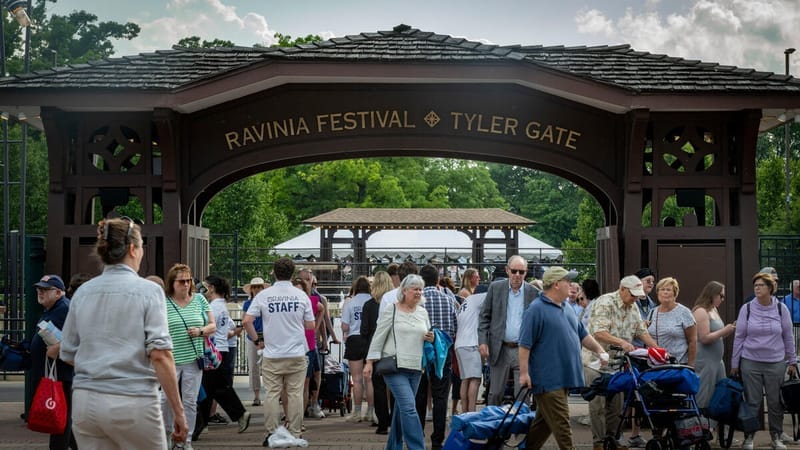
What Ravinia Actually Is
The Ravinia Festival is a seasonal open-air concert venue and music festival in Highland Park, Illinois, roughly 20 miles north of downtown Chicago along the Lake Michigan shoreline. First opened on August 15, 1904, it holds the distinction of being the longest-running outdoor music festival in North America, a claim it carries with considerable substance: over 120 years of programming, with some interruptions over its history. The park itself covers 36 acres of manicured grounds, with a covered pavilion at its center and a vast sloping lawn fanning out behind it.
The programming spans a wide range: the Chicago Symphony Orchestra holds a summer residency here, making Ravinia one of the few outdoor venues in the country where you can hear a world-class orchestra under the stars. But the schedule also includes jazz, pop, R&B, folk, and dance performances throughout the summer season, with acts ranging from legacy artists to contemporary names. Most evenings, the lawn is as much a social event as a concert, with hundreds of groups spreading out blankets and elaborate picnic spreads before the music even begins.
ℹ️ Good to know
Ravinia operates as a seasonal festival. Concerts typically run from late spring through early fall. Check ravinia.org for the current season schedule before planning your visit, as specific dates and performers change annually.
The Pavilion vs. the Lawn: Choosing Your Experience
Understanding the difference between pavilion and lawn tickets is the most important practical decision you will make before visiting. The Martin Theatre and the Pavilion offer reserved, covered seating with direct sightlines to the stage and full audio. These tickets are priced higher and sell out well in advance for popular performances, particularly CSO evenings and major pop or jazz headliners. If the performance itself is the primary reason you are making the trip, reserved seating is worth the premium.
Lawn tickets, on the other hand, unlock a completely different kind of evening. The lawn stretches out behind the pavilion, and while you can hear the concert clearly through speakers, you are watching it from a distance, often without a direct view of the stage unless you position yourself near the center path. What you gain instead is space: room to lay out a full picnic with wine, cheese, and candles, settle into camp chairs, and treat the music as atmosphere rather than spectacle. Many regular Ravinia attendees prefer the lawn precisely for this reason.
💡 Local tip
Arrive at least 90 minutes before the scheduled start time to claim prime lawn real estate. The best spots, those with partial sightlines and central audio, fill up quickly on warm weekend evenings.
There is also a food and wine marketplace on the grounds for those who do not want to haul their own supplies. The quality is decent for a festival setting, but seasoned attendees bring their own. Outside food and non-alcoholic beverages are permitted in the park, along with sealed wine and beer in limited quantities. Review the current rules on the official site before packing, as the policy has evolved over the years.
Tickets & tours
Hand-picked options from our booking partner. Prices are indicative; availability and final rates are confirmed when you complete your booking.
Go City | Chicago All-Inclusive Pass
From 127 €Instant confirmationFree cancellationiFLY Chicago Lincoln Park indoor skydiving experience
From 126 €Instant confirmationFree cancellationiFLY Chicago Rosemont indoor skydiving tickets
From 117 €Instant confirmationFree cancellationChicago lakefront neighbourhood bike tour
From 18 €Instant confirmationFree cancellation
Getting There: The Metra Is the Right Answer
Driving to Ravinia on a popular concert night is inadvisable. Parking is available on-site and in surrounding Highland Park streets, but post-concert traffic can add an hour or more to your departure. The far better option is Metra's Union Pacific North Line, which runs from Ogilvie Transportation Center in downtown Chicago and stops at Ravinia Park station on most concert evenings during the festival season. The ride takes roughly 40 to 50 minutes, deposits you steps from the festival gates, and eliminates the parking problem entirely.
Metra runs return trains shortly after concerts end, so you do not need to leave early to secure a seat. Check the Metra schedule at the guide to getting around Chicago for current fares and timetables, and note that special Ravinia-service trains are sometimes added on busy nights.
If you are driving from areas not well-served by Metra, Highland Park is accessible via US-41 (Skokie Highway) or I-94 north. Rideshare pickup after the concert can involve significant waits, particularly for the 90-minute window immediately following a major performance.
How the Evening Changes by Hour
The grounds open well before the concert starts, typically allowing two hours or more for lawn setup. The early arrivals are often families and experienced picnickers who treat the pre-concert period as the main event. You will smell grilling from designated food areas, hear corks being pulled, and notice the light changing from the golden late-afternoon sun filtering through the mature trees to the softer glow of the festival lights as dusk falls.
By 30 minutes before curtain, the atmosphere shifts. The lawn reaches peak density, the vendor lines lengthen, and the particular combination of warm Illinois summer air, low ambient light, and distant orchestra tuning creates something that is hard to describe without resorting to cliché. It is, straightforwardly, one of the better summer evenings you can spend in the Chicago area.
Weather is a real variable. Ravinia evenings in June and July can be hot and humid, occasionally interrupted by fast-moving thunderstorms typical of the region's summer climate. The pavilion offers shelter; the lawn does not. Light rain often continues during performances, and many regulars bring small umbrellas or ponchos without abandoning their spots. Heavy electrical storms are the exception that prompts a pause or cancellation, which the festival handles with brief holds rather than outright stops when possible.
⚠️ What to skip
Check the weather forecast carefully before heading to Ravinia, especially for lawn tickets. Chicago-area summers produce fast-moving thunderstorms that can roll in within the hour. A packable rain jacket and a blanket take almost no space and make a significant difference.
Historical and Cultural Context
Ravinia opened as a pleasure ground in 1904, designed to attract riders to the Chicago and Milwaukee Electric Railroad's northern line. It operated initially as an amusement park before pivoting to music programming, and by the mid-20th century had established itself as the summer home of the Chicago Symphony Orchestra. That relationship, now well over half a century old, remains the anchor of the festival's identity and its strongest argument for cultural significance.
The festival's longevity is not merely a marketing claim. The 36-acre site retains the feeling of a genuine park rather than a converted fairground, with old-growth trees shading much of the lawn and a layout that encourages wandering. It fits naturally into the broader context of the Chicago area's outdoor cultural life, which also includes events like the Chicago Jazz Festival and the Chicago Blues Festival in Grant Park, though Ravinia's suburban setting and ticketed format give it a distinctly different character.
For visitors coming from outside the United States, Ravinia offers an unusually good lens on a specific slice of American cultural life: the summer outdoor concert as a community ritual, complete with its own etiquette, its regulars, and its particular mix of formal musical programming and relaxed social gathering.
Practical Notes for First-Time Visitors
The grounds are in Highland Park, a northern suburb of Chicago with a settled residential character. There is nothing particularly notable to see in the immediate vicinity of the festival if you arrive early, so plan to head directly to the park and spend your pre-concert time there rather than exploring the surrounding streets.
If you are building Ravinia into a broader Chicago summer trip, it pairs naturally with a lakefront afternoon in the city before heading north on the Metra. The guide to Chicago in summer has suggestions for how to structure that kind of day, and the Chicago lakefront guide covers the stretch of parks and beaches you might visit beforehand.
Accessibility details are not comprehensively published in the sources available for this guide. Contact Ravinia directly via their official site before visiting if accessible seating or mobility accommodations are a consideration.
Photography with phones is generally permitted, but check the specific policy for the performance you are attending, as some artists request no recording. Professional camera equipment with detachable lenses is typically restricted.
💡 Local tip
The Bennett Gordon Hall, Ravinia's indoor venue, hosts smaller chamber concerts and recitals in a more intimate setting. These events are worth seeking out if you prefer a close, acoustically precise experience over the lawn atmosphere.
Who Might Not Enjoy Ravinia
Ravinia is not a good fit for every visitor. If you are primarily interested in seeing and hearing the performance up close, lawn tickets will disappoint: the stage is distant, sightlines are often blocked by trees or other visitors, and the social energy of the lawn can work against concentrated listening. Pavilion tickets address this, but they cost significantly more and availability for popular shows is limited.
Visitors without a strong interest in classical music, jazz, or the specific artists on the bill during their travel dates may find the trip less rewarding than other Chicago summer options. The 20-mile distance from downtown is a genuine commitment, and without the right performance on the schedule, it is a long way to go for an outdoor concert experience. Budget-conscious travelers should also note that between transportation, tickets, and food, an evening at Ravinia adds up faster than it might initially appear.
Insider Tips
- The CSO's opening weekend performances in June are among the most atmospheric of the season, when the crowds are enthusiastic, the weather is usually cooperative, and the full ritual of lawn-going feels freshest. Book these early.
- Bring a small wagon or rolling cart if you are planning a full picnic setup. You will see dozens of them at the Metra station on busy nights, and they solve the problem of carrying chairs, coolers, and bags the quarter-mile from the train to your spot.
- The center rear of the lawn, directly behind the pavilion and slightly elevated, offers the best acoustic balance from the speakers and a partial view of the stage roof. It fills early but rewards the effort.
- If your concert is a major pop or jazz act, check stub resale platforms in the week before the show. Lawn tickets in particular often appear at face value or below as the date approaches.
- Dress in layers regardless of the forecast. Highland Park sits near the lake and temperatures drop noticeably after sunset, even on warm July evenings. A light jacket that fits in a bag is worth bringing every time.
Who Is Ravinia Festival For?
- Couples or groups who want an elaborate summer picnic evening with live music as backdrop
- Classical music fans who want to hear the Chicago Symphony Orchestra in a relaxed outdoor setting
- Families looking for a structured, safe outdoor event with room for kids to move around
- Chicago visitors staying multiple days who want to experience a quintessential North Shore summer ritual
- Jazz and folk music listeners during the mid-summer and late-season programming weeks
Nearby Attractions
Combine your visit with:
- Bahá'í House of Worship
The Bahá'í House of Worship in Wilmette, Illinois, is one of the most architecturally singular buildings in North America. Free to enter, open daily, and reachable by CTA from downtown Chicago, it rewards visitors with a 135-foot lace-like dome, meditative silence, and an unusual kind of spiritual calm that transcends denomination.
- Brookfield Zoo Chicago
Brookfield Zoo Chicago is one of the largest and most historically significant zoos in the United States, covering 216 acres about 14 miles west of downtown. With more than 511 species, landmark indoor exhibits, and a genuine conservation mission, it rewards a full day of exploration. But it takes planning to get the most out of it.
- Chicago Air and Water Show
Every August, the Chicago Air and Water Show transforms the lakefront into a grandstand for one of the most spectacular free public events in the United States. Fighter jets, military demonstrations, and precision flying teams perform over Lake Michigan while hundreds of thousands of spectators line the shore from Fullerton to Oak Street.
- Chicago Botanic Garden
A living museum spread across 385 acres and nine islands north of Chicago, the Chicago Botanic Garden offers 27 gardens, four natural areas, and six miles of lake shoreline in Glencoe, Illinois. Whether you visit for a single seasonal bloom or spend a full day exploring Japanese landscapes and native prairies, this guide covers everything you need to plan a worthwhile trip.