Chicago Jazz Festival: Four Days of Free Jazz at Millennium Park
Every Labor Day weekend, the Chicago Jazz Festival transforms Millennium Park and the Chicago Cultural Center into open-air stages for local, national, and international jazz artists. Admission is completely free, making it one of the most accessible major music festivals in the United States.
Quick Facts
- Location
- Millennium Park, 201 E Randolph St, Chicago, IL 60601 (The Loop)
- Getting There
- CTA Brown, Green, Orange, Pink, Purple, and Red lines to Randolph/Wabash; Metra Millennium Station
- Time Needed
- 2–4 hours per day; 4-day festival over Labor Day weekend
- Cost
- Free admission. Alcohol available for purchase inside the park.
- Best for
- Jazz fans, families, budget travelers, first-time Chicago visitors
What the Chicago Jazz Festival Actually Is
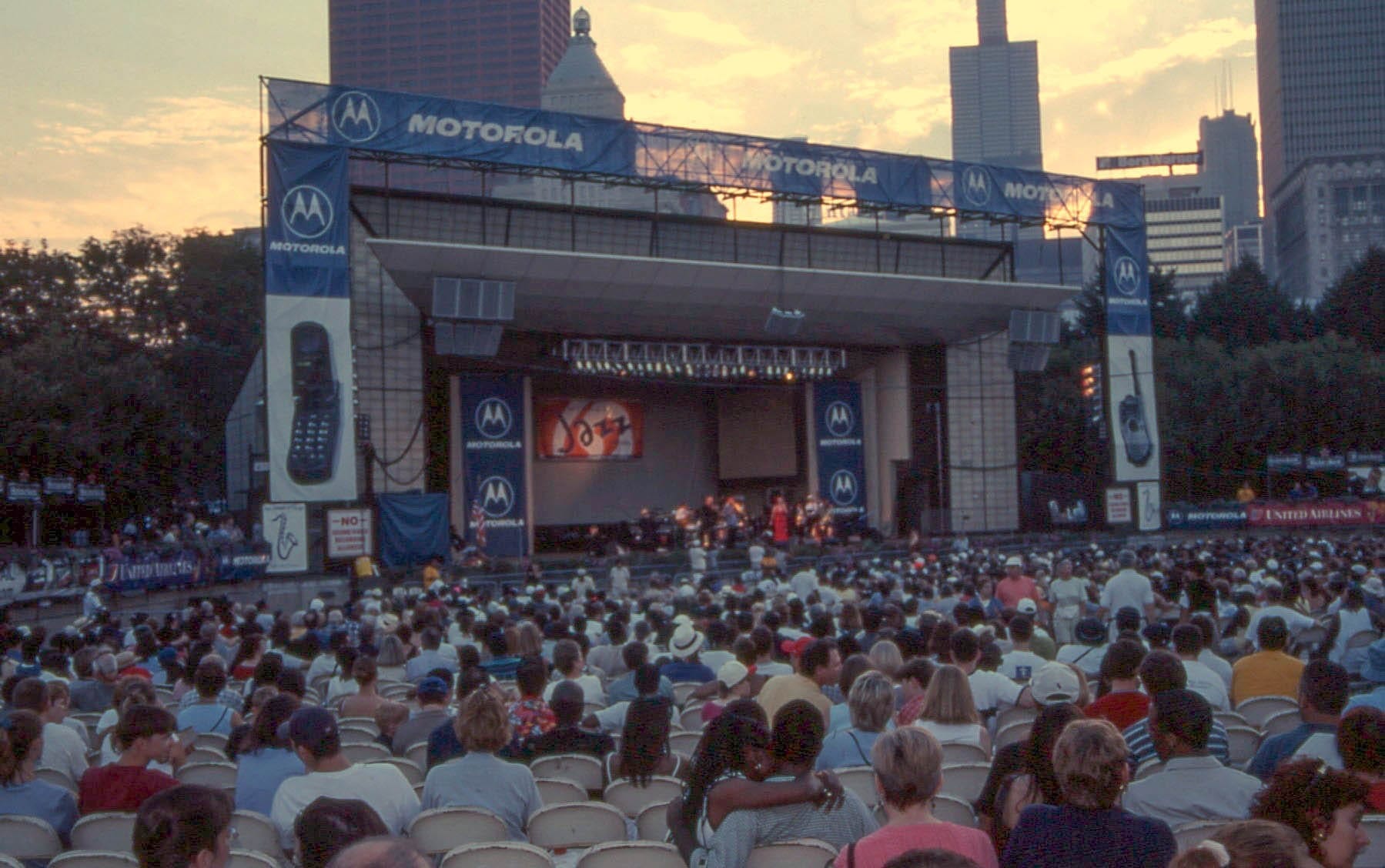
The Chicago Jazz Festival is a four-day, admission-free annual event held over Labor Day weekend in the heart of downtown Chicago. Produced by the City of Chicago's Department of Cultural Affairs and Special Events (DCASE) and programmed by the Jazz Institute of Chicago, the festival showcases local, national, and international artists performing across all forms of jazz — from straight-ahead bebop and hard bop to avant-garde, Latin jazz, and contemporary fusion.
The primary venue is Millennium Park, with the Jay Pritzker Pavilion serving as the main outdoor concert stage. Additional performances typically take place at the Chicago Cultural Center, a few blocks north on Michigan Avenue, where indoor stages offer an entirely different acoustic intimacy. Together, these two settings give the festival real range: outdoor lawn seating for thousands under the open sky at one end, and chamber-scale concert rooms at the other.
ℹ️ Good to know
Admission to all festival performances is completely free. No tickets, no wristbands, no registration — just show up. Outside alcohol is not permitted inside Millennium Park during the festival, but beer and other drinks are available for purchase on-site.
The festival sits comfortably within the broader fabric of Chicago's music identity. The city that gave the world electric blues and house music has an equally deep jazz lineage, and the Jazz Festival is one of the few events that makes that history tangible and accessible in a single weekend. If you're exploring that musical thread further, the Chicago blues and jazz guide covers the city's live music scene in depth, from Lincoln Park listening rooms to South Side institutions.
The Venues: Millennium Park and Beyond
Millennium Park is where the festival's main energy concentrates. The Jay Pritzker Pavilion, designed by Frank Gehry and completed in 2004, is the architectural centerpiece: its stainless steel ribbons and speaker-threaded trellis system distribute sound evenly across the Great Lawn, meaning the experience from 200 feet back can be as clean as front-row seating. On festival nights, when the light fades and the pavilion's steel panels catch the last gold of sunset, the setting is genuinely striking.
The lawn fills quickly for headliner sets, particularly on Saturday and Sunday evenings. Experienced attendees arrive 30 to 45 minutes early to claim a patch of grass. If you're coming with a group, bring a blanket or low-profile folding chairs — both are permitted. The park is bordered by Michigan Avenue to the west, Randolph Street to the north, Columbus Drive to the east, and Monroe Street to the south, giving it a clearly defined footprint that's easy to navigate. For context on what else the park offers outside festival season, the Millennium Park attraction guide covers it in full.
The Chicago Cultural Center, located at 78 E Washington St, provides a sharp contrast in atmosphere. Inside, performances happen in rooms like the Preston Bradley Hall, with its Tiffany glass dome, and the Garland Room. These sets attract a smaller crowd and reward listeners who want uninterrupted attention to the music rather than a festival-lawn social scene. Seating is limited and fills fast; arriving early is especially important here.
Tickets & tours
Hand-picked options from our booking partner. Prices are indicative; availability and final rates are confirmed when you complete your booking.
Go City | Chicago All-Inclusive Pass
From 127 €Instant confirmationFree cancellationiFLY Chicago Lincoln Park indoor skydiving experience
From 126 €Instant confirmationFree cancellationiFLY Chicago Rosemont indoor skydiving tickets
From 117 €Instant confirmationFree cancellationChicago lakefront neighbourhood bike tour
From 18 €Instant confirmationFree cancellation
How the Festival Feels at Different Times of Day
Afternoons at the festival are looser and more exploratory. Smaller sets and emerging artists take earlier slots, the lawn is less crowded, and there's room to move between stages and wander through the park. The temperature in early September in Chicago typically hovers between the low 60s and mid-70s Fahrenheit (around 17–24°C), though the weather is genuinely unpredictable: the city's humid continental climate means warm afternoons can tip into cool evenings, and scattered thunderstorms are possible any day of the weekend.
⚠️ What to skip
September in Chicago can shift fast. Bring a light layer for evening sets at the Pritzker Pavilion even if the afternoon felt warm. If there's any chance of rain, pack a compact poncho — the Great Lawn does not have cover, and umbrella use is discouraged in dense crowds.
Evening sets at the Pritzker Pavilion draw the largest crowds and the most celebrated artists on the lineup. By 6 p.m. on a Saturday, the lawn is a patchwork of blankets, folding chairs, and standing clusters near the stage. The sound quality at this venue is legitimately excellent — Gehry's trellis speaker system was engineered specifically to extend the acoustic performance of the pavilion into the open air. When a trumpet runs clean over a quiet rhythm section and you can hear every note from the back of the lawn, that's the infrastructure working as intended.
Early Sunday morning tends to bring a quieter, more contemplative mood to the Cultural Center performances. Weekend foot traffic hasn't peaked yet, and the indoor rooms feel more like private concerts than festival overflow. These are often the sets that serious jazz listeners prioritize.
Getting There and Getting Around
Millennium Park is one of the best-served locations in the city for public transit. CTA elevated 'L' trains on the Brown, Green, Orange, Pink, Purple, and Red lines stop at Randolph/Wabash, a short walk to the park's north entrance. The Red and Blue Lines stop at Lake and Washington respectively, both within a short walk along Michigan Avenue. Metra commuter rail drops passengers at Millennium Station on South Michigan Avenue, essentially at the park's front door.
Driving is not recommended. Parking near the park is expensive on normal days and worse on a festival weekend with Labor Day crowds. Taking the 'L' is the fastest and cheapest option from most neighborhoods. For a full breakdown of how to move around the city, the getting around Chicago guide covers CTA fares, Ventra cards, and route options in practical detail.
The Programming: What to Expect Musically
The Jazz Institute of Chicago curates the festival with range as an explicit goal. A typical lineup across the four days spans multiple generations and subgenres: the Saturday headline slot might feature a major figure in contemporary jazz or a jazz-adjacent artist with broad mainstream recognition, while Friday and Sunday afternoon slots tend toward straight-ahead players, creative improvisers, and Chicago-rooted musicians who don't always reach national touring circuits. The Cultural Center programming often leans toward avant-garde and experimental work.
Specific artists vary every year, so the lineup is worth checking in advance through the official DCASE festival page. Historically, the festival has presented internationally recognized figures alongside emerging Chicago artists, reinforcing the city's active role in jazz's ongoing development rather than treating the music as a nostalgic retrospective.
The festival fits naturally into a broader September visit. Labor Day weekend is also when Chicago weather is still reliably warm enough to enjoy outdoor events without heavy clothing. If you're building a longer itinerary around this period, the things to do in Chicago guide and the Chicago in summer guide provide context for what else the city offers in this season.
Practical Details: Food, Drink, and Accessibility
Food vendors operate within the festival footprint at Millennium Park, and the surrounding Loop neighborhood offers a dense range of dining options within a five-minute walk. The park itself sits adjacent to some of Chicago's most convenient dining corridors, and the Michigan Avenue strip includes everything from casual counter service to full-service restaurants.
Outside alcohol is not allowed inside Millennium Park during the festival, per city rules. Alcohol is available for purchase from on-site vendors. Non-alcoholic beverages and water are also sold; bringing your own sealed water bottle is generally permitted but check the current year's bag policy on the official festival site before arriving.
Accessibility at Millennium Park is strong. The park has wheelchair-accessible entrances, paved paths, and designated accessible seating areas at the Pritzker Pavilion. Nearby CTA and Metra stations are ADA-compliant. The Chicago Cultural Center is also fully accessible. Visitors with specific accessibility needs are encouraged to confirm venue layouts and viewing areas via the City of Chicago's Millennium Park accessibility page before the festival.
Who This Festival Is and Isn't For
The Chicago Jazz Festival rewards people who are genuinely interested in the music. If you're drawn to jazz as an active listening experience, the combination of world-class artists, excellent sound design at the Pavilion, and free access creates conditions that few paid festivals can match. It also works well for families: the outdoor setting, no-ticket format, and mix of daytime programming make it low-pressure and accessible for visitors of all ages.
That said, evening sets on the main stage attract large crowds, and the Great Lawn can feel genuinely packed during headliner performances. If you dislike dense outdoor festival environments, the Cultural Center programming offers a more contained alternative. Visitors looking for late-night energy or festival-style amplified rock will find the atmosphere more concert hall than street party. The festival ends at a reasonable hour each night, not in the small hours.
Travelers for whom free outdoor events are a priority will find the Jazz Festival fits naturally alongside other no-cost Chicago experiences. The free things to do in Chicago guide catalogs other zero-cost attractions across the city that pair well with a festival visit.
Insider Tips
- The Cultural Center sets are capped by room capacity and fill up fast — arrive at least 20 minutes before any listed start time, especially for Friday and Saturday afternoon slots. Once the room is full, staff won't let more people in.
- For Pritzker Pavilion evening sets, the trellis speaker system means sound quality doesn't degrade significantly as you move back. If the front lawn looks packed, settle further back on the grass — the audio experience is nearly identical and the crowd is thinner.
- Check the full schedule on the official DCASE page as soon as it's published, typically a few weeks before Labor Day. The most in-demand Cultural Center acts and workshop sessions are noted in the program and attract early crowds.
- Labor Day weekend is also a busy travel weekend in the U.S. generally. If you're booking accommodation in Chicago for the festival, do it well in advance — hotel prices in the Loop and surrounding neighborhoods spike significantly around this period.
- The festival weekend is a good anchor for exploring the Loop on foot. Millennium Park, the Chicago Riverwalk, and the surrounding Grant Park area are all walkable from the main stage, and Saturday afternoon between sets is an ideal time to explore.
Who Is Chicago Jazz Festival For?
- Jazz enthusiasts who want access to world-class programming without a ticket price
- Budget-conscious travelers looking for premium cultural experiences in Chicago
- Families with older children or teenagers interested in live music
- First-time Chicago visitors wanting to experience the city's musical identity in a single event
- Travelers building a Labor Day weekend itinerary around outdoor Chicago culture
Nearby Attractions
Other things to see while in The Loop:
- Art Institute of Chicago
One of the largest and most visited art museums in the United States, the Art Institute of Chicago anchors the eastern edge of the Loop with a collection of over 300,000 works spanning 5,000 years. From Georges Seurat's pointillist masterpiece to Grant Wood's American Gothic, the highlights alone demand the better part of a day.
- Buckingham Fountain
The Clarence Buckingham Memorial Fountain is one of the largest decorative fountains in the world, sitting at the heart of Grant Park since 1927. Free to visit during its seasonal run from spring through mid-October, it puts on hourly water displays and a nightly illuminated show that draws crowds from across the city.
- Chicago Architecture Center
Housed in Mies van der Rohe's One Illinois Center on the Chicago River, the Chicago Architecture Center packs nearly 10,000 square feet of exhibition space, a landmark scale model of the city, and access to some of the country's most informative architecture tours. It's the most comprehensive entry point into understanding what makes Chicago's skyline one of the world's most significant.
- Chicago Architecture Foundation River Cruise
The Chicago Architecture Center River Cruise aboard Chicago's First Lady is the most authoritative way to read the city's skyline. In 90 minutes, trained docents walk you through more than 40 landmark buildings across all three branches of the Chicago River, connecting architectural styles to the human decisions that shaped them.