The Power Plant Contemporary Art Gallery: Toronto's Waterfront Hub for Contemporary Art
The Power Plant Contemporary Art Gallery is Toronto's foremost public gallery dedicated entirely to contemporary visual art. Free to enter, housed in a converted industrial building at Harbourfront Centre, and committed to showing work by living Canadian and international artists, it offers a genuinely serious encounter with current art — without the price tag.
Quick Facts
- Location
- 231 Queens Quay West, Harbourfront Centre, Toronto ON M5J 2G8
- Getting There
- Streetcar to Harbourfront Centre from Union Station (Queens Quay routes); short walk from Union Station
- Time Needed
- 1 to 2 hours depending on exhibitions
- Cost
- Free general admission
- Best for
- Contemporary art enthusiasts, architecture admirers, curious visitors wanting a no-cost cultural stop on the waterfront
- Official website
- www.thepowerplant.org
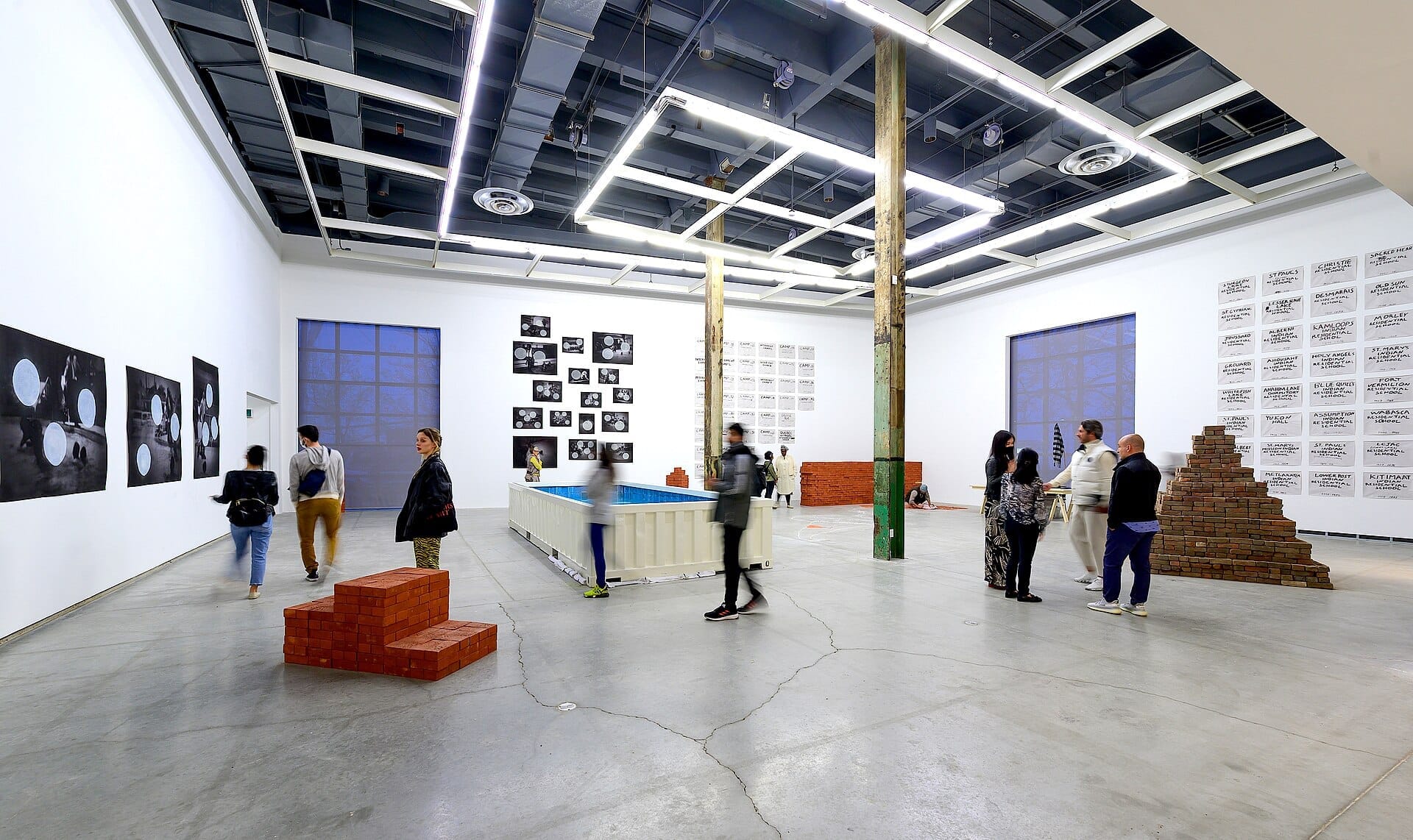
What The Power Plant Actually Is
The Power Plant Contemporary Art Gallery is not a conventional museum. It holds no permanent collection, runs no ticketed blockbuster shows, and makes no attempt to survey art history. What it does instead is focus entirely on the present: rotating exhibitions of contemporary work by living artists, both Canadian and international, presented in a building with genuine industrial character on Toronto's central waterfront.
The gallery operates under the legal name The Art Gallery at Harbourfront and sits within the Harbourfront Centre precinct at 231 Queens Quay West. Its institutional roots go back to 1976, when the Art Gallery at Harbourfront first began programming at this lakefront site. In 1987, the operation moved into its current home: a former Toronto Harbour Commission turbine hall and coal storage facility built in 1926, repurposed and rechristened as The Power Plant. The building's industrial bones — exposed steel, high ceilings, concrete floors — were left largely intact, and that decision still shapes how exhibitions feel today.
ℹ️ Good to know
Admission is free. No booking required for regular gallery visits. Check the official website before you go to confirm current opening hours, as they can vary around special events and seasonal programming.
The Building: Industrial Character with Serious Exhibition Space
From the outside, the red-brick smokestack rising beside the waterfront path is the gallery's most visible marker. It reads as distinctly industrial against the glass condominiums that now line much of this stretch of Queens Quay. The stack is no longer functional, but it orients visitors and signals the building's origins clearly. The exterior brickwork, the low-pitched roofline, and the recessed loading areas all recall the building's working-harbour past.
Inside, the gallery is organized around a series of flexible exhibition spaces that benefit directly from the industrial shell. Ceiling heights run generous, allowing large-scale installations and video works room to breathe in ways that a conventional gallery with domestic-scaled rooms could not manage. The floors are smooth concrete, slightly reflective underfoot. Lighting is controlled and specific to each exhibition rather than generic overhead fluorescents. The building does not try to disappear behind its contents — the architecture is always present, always in conversation with whatever is being shown.
For those interested in Toronto's broader architectural landscape, the contrast between The Power Plant and the city's newer cultural institutions is worth considering. The gallery sits in a neighborhood that has changed enormously since 1987, surrounded now by high-density residential and commercial development along the waterfront. You can read more about how the city's built environment has evolved in this Toronto architecture guide.
Tickets & tours
Live prices and dates from our booking partner. If you book, we may earn a commission at no extra cost to you.
Private kickstart Toronto walking tour with local guide
From 159 €Instant confirmationFree cancellationNight on Niagara experience in Canada with Power Station Light Show
From 136 €Instant confirmationFree cancellationNiagara Water Power: Skylon Tower & Tailrace Tunnel Tour
From 49 €Instant confirmationFree cancellationNiagara River Wet Jet boat tour with Canadian Departure
From 59 €Instant confirmationFree cancellation
What to Expect from the Exhibitions
Because The Power Plant maintains no permanent collection, what you encounter on any given visit depends entirely on what is currently installed. The gallery typically runs two to three concurrent exhibitions, often filling different sections of the building simultaneously. Programming tends toward conceptually rigorous work: site-specific installations, video and new media, sculpture, and practices that engage critically with contemporary social or political conditions. This is not a space where you walk in and see a row of framed paintings.
The gallery has shown work by artists of international standing over its history, including significant solo and group presentations that have introduced many Toronto visitors to practices not widely seen elsewhere in the city. If you follow contemporary art closely, you will likely recognize names on the programming list. If you do not, the work is usually contextualized well enough that sustained looking — rather than prior knowledge — is the main requirement.
One honest caveat: the programming is not designed for casual or family-oriented browsing. Some exhibitions will be immediately accessible; others are dense, challenging, or require patience. The gallery is truthful about what it is, which is an asset for serious visitors and a reasonable warning for those expecting crowd-pleasing spectacle.
💡 Local tip
Pick up the free exhibition guides available at the entrance desk. They provide curatorial context that genuinely helps when the work is conceptually layered — this is one of the better exhibition notes programs among Toronto's public galleries.
The Experience by Time of Day
Weekday mornings are the quietest time to visit. The gallery opens at 11:00 Wednesday through Friday, and in the first hour after opening the spaces are often close to empty. The industrial building absorbs sound differently when few people are present: footsteps echo off the concrete floors, and video works fill the rooms with sound rather than competing against conversation. This is when large installations can be experienced as their makers intended.
Friday evenings, when the gallery stays open until 20:00 rather than 18:00, attract a different crowd. The Harbourfront waterfront is livelier after work, particularly in warmer months, and the gallery benefits from foot traffic flowing in from the lakeside path and the surrounding restaurants and performance venues. The later closing time makes it a practical stop before dinner rather than a dedicated daytime trip.
Weekend afternoons bring the most visitors, especially when weather is poor and the waterfront's outdoor attractions lose their draw. Saturdays and Sundays follow the 11:00 to 18:00 schedule. Crowds remain manageable by most urban gallery standards — this is not the Royal Ontario Museum on a Saturday afternoon — but some popular exhibitions will fill the smaller rooms. Monday and Tuesday closures are firm, so plan accordingly.
Getting There and Getting Oriented
The most straightforward route from downtown is the streetcar along Queens Quay West, which runs from Union Station to Harbourfront Centre. The gallery entrance faces the waterfront promenade and is clearly marked. From Union Station on foot, the walk along the lake takes roughly 15 to 20 minutes and passes through the redeveloped waterfront precinct, which is worthwhile in itself when weather permits.
If you are arriving from elsewhere in the city or want to understand the broader transit network, the guide to getting around Toronto covers the TTC streetcar and subway system in practical detail. Street parking and a nearby parking garage serve drivers, though weekend waterfront traffic can be slow.
The gallery entrance faces the boardwalk rather than Queens Quay itself, so if you approach from the street side, walk through the Harbourfront Centre complex toward the water. The smokestack is visible before the entrance is. The building is wheelchair accessible.
The Waterfront Context
The Power Plant does not stand in isolation. Harbourfront Centre is Toronto's primary waterfront cultural campus, and the gallery sits within a precinct that includes performance venues, a craft studio, outdoor plazas, and seasonal programming ranging from skating in winter to outdoor concerts in summer. A visit to the gallery can anchor a longer afternoon along the waterfront. The Toronto waterfront guide maps out the full stretch from the Humber in the west to the Don in the east, including connections to the ferry terminals for the Toronto Islands.
Just east along the waterfront, Harbourfront Centre continues with its own programming calendar. The overall setting — lake views, the distant Toronto Islands, the marina — provides a counterpoint to the focused interior experience of the gallery. After an hour or two inside looking at challenging contemporary work, the straightforward pleasure of walking beside Lake Ontario has a restorative quality.
Photography and Practical Details
Personal photography policies vary by exhibition and are set by individual artists or rights holders rather than the gallery as a whole. Check signage at the entrance to each show. Some installations are explicitly designed for documentation; others restrict photography entirely. When photography is permitted, the industrial light quality in the main hall — particularly in afternoon when light enters from upper windows — is genuinely good for architectural and installation shots.
The gallery has a small shop near the entrance with publications, artist editions, and design objects. It accepts credit cards. Coat check is available, which matters in Toronto winters when layers are non-negotiable and bulky outerwear in a gallery is genuinely inconvenient.
⚠️ What to skip
The gallery is closed Mondays and Tuesdays. If your Toronto visit falls on those days, this stop needs to come out of your itinerary. Verify seasonal or holiday closures on the official website before visiting.
Who This Attraction is For — and Who It is Not
The Power Plant suits visitors with a genuine interest in contemporary visual art, architecture students and enthusiasts, and anyone who wants a serious cultural stop without paying admission. It works well as part of a broader waterfront afternoon, paired with the lakeside walk or a ferry crossing to the Toronto Islands.
Travelers looking for an accessible, broad survey of art history or a family-friendly interactive experience will find the gallery less suited to their needs. For those priorities, the Art Gallery of Ontario — with its permanent collection spanning centuries and its strong educational programs — is a more appropriate choice. The Power Plant is specifically and deliberately a space for contemporary art in the present tense, and it makes no apology for that focus.
Insider Tips
- Friday evenings until 20:00 are the most practical time for visitors with packed daytime schedules — the waterfront at dusk is worth the trip regardless of what's showing inside.
- The smokestack exterior and the building's south-facing waterfront facade photograph well in afternoon light. Allow a few minutes outside before entering to take in the industrial silhouette against the lake.
- Programming changes seasonally and major exhibition openings typically come with free public events, talks, or performances. Check the gallery's event calendar rather than just the exhibitions page — some of these evening programs offer direct access to artists.
- The Harbourfront Centre complex immediately around the gallery has covered walkways and indoor common areas, which makes the combination of the gallery and a lakeside walk feasible even in uncertain weather.
- If you are planning a broader cultural day, The Power Plant pairs logically with a visit eastward to the Distillery District, which is a short ride or a long walk away along the waterfront and offers a complementary set of commercial galleries and design shops.
Who Is Power Plant Contemporary Art Gallery For?
- Contemporary art followers wanting to see what is current in Canadian and international art practice
- Architecture and industrial heritage enthusiasts drawn to the converted 1926 turbine hall
- Budget-conscious travelers seeking a serious cultural experience at no cost
- Visitors building a full waterfront afternoon combining outdoor walking and indoor culture
- Creative professionals and students looking for conceptually rigorous exhibition programming
Nearby Attractions
Other things to see while in Toronto Waterfront:
- BMO Field
BMO Field at Exhibition Place is Toronto's premier outdoor soccer stadium, home to Toronto FC and the Toronto Argonauts. Originally built in 2007 and expanded since, it will serve as a FIFA World Cup 2026 venue. Here is everything a first-time visitor needs to know before heading to a match or event.
- Budweiser Stage
Formerly known as Budweiser Stage, the RBC Amphitheatre is a major outdoor concert venue on the Lake Ontario waterfront at Ontario Place. With a capacity of around 16,000, it draws major international acts from May through October each year. Here is everything you need to know before attending a show.
- Exhibition Place
A 192-acre event and heritage campus on Toronto's western waterfront, Exhibition Place has anchored the city's civic and cultural life since 1879. Home to the Canadian National Exhibition, major concerts, trade shows, and several sports venues, the grounds offer free outdoor access year-round with a remarkable collection of early 20th-century buildings.
- Harbourfront Centre
Harbourfront Centre is a 10-acre arts and cultural campus on Toronto's waterfront, open year-round with free public access to outdoor spaces, plus ticketed performances, exhibitions, and events. It sits about a 15-minute walk from Union Station and offers a direct view across Lake Ontario.
Planning a trip? Discover personalized activities with the Nomado app.