Peking Man Site at Zhoukoudian: Where Human Prehistory Comes Into Focus
The Peking Man Site at Zhoukoudian, carved into the limestone hills of Fangshan District roughly 50 km southwest of central Beijing, is one of the most significant paleoanthropological sites on Earth. Fossils discovered here in the 1920s and 1930s fundamentally changed scientific understanding of human evolution. The site combines outdoor cave excavations with an indoor museum, and rewards visitors who take their time.
Quick Facts
- Location
- No. 1 Zhoukoudian Street, Zhoukoudian Town, Fangshan District, Beijing
- Getting There
- Bus 832 (formerly 917) from Tianqiao to Liangxiang Beiguan, then transfer to Fangshan Bus Route 38 to the site; taxis and ride-hailing also available
- Time Needed
- 2–3 hours for a thorough visit; 90 minutes minimum
- Cost
- ¥30 standard; ¥15 discounted; free for children under 1.2 m. Museum closed Mondays; open 09:00–16:30 (Apr 1–Oct 10) and 09:00–16:00 (Oct 11–Mar 31), with ticket sales ending at 16:00 and 15:30 respectively
- Best for
- History enthusiasts, science travelers, archaeology fans, families with older children
- Official website
- www.zkd.cn
What the Peking Man Site Actually Is
The Peking Man Site at Zhoukoudian (周口店北京人遗址博物馆) sits at the foot of Longgu Mountain, a ridge of eroded limestone that has been accumulating sediments, bones, and stone tools for roughly half a million years. What looks from the road like a modest set of hillside caves and a mid-sized museum building is, in scientific terms, one of the most consequential addresses in the study of human evolution.
Between 1921 and the 1930s, excavations here produced fossils attributed to Homo erectus pekinensis, the subspecies that became popularly known as Peking Man. The finds demonstrated that an archaic human population had lived in East Asia hundreds of thousands of years ago, used fire, and manufactured stone tools. The site was inscribed as a UNESCO World Heritage Site in 1987. It covers multiple excavation localities on and around Longgu Mountain, including areas associated with Homo sapiens remains from a later period, making it a layered archive spanning hundreds of thousands of years.
ℹ️ Good to know
The museum building is closed on Mondays, but the outdoor cave and excavation sites are generally accessible on those days. Plan accordingly if your Beijing schedule is tight.
The Museum: What You See Inside
The main museum building is modern, climate-controlled, and genuinely well-presented by the standards of Chinese heritage sites. Exhibits follow a roughly chronological sequence, beginning with geological formation of the limestone caves and moving through stratigraphy, fossil discovery, and analysis. Display panels are in Chinese with English translations, though the English is occasionally awkward. The quality of the fossil casts on display is high, and the scale models of Peking Man's reconstructed appearance are useful for non-specialists who want to visualize what the science suggests.
One exhibit that tends to hold attention longer than expected is the section on the original fossil disappearance. The real Peking Man skull fossils were lost in 1941 during the Japanese occupation of China, when they were packed for transport to the United States for safekeeping and vanished en route. What exists today are casts, photographs, and written records made before the loss. The museum addresses this honestly, and the mystery has an odd grip on visitors who had not previously encountered it.
Allow at least 45 to 60 minutes inside the museum. Morning visits, particularly on weekdays, are quieter. Weekend afternoons can bring school groups and family crowds, which makes the display cases harder to approach and raises the ambient noise level considerably.
Tickets & tours
Hand-picked options from our booking partner. Prices are indicative; availability and final rates are confirmed when you complete your booking.
Private guided tour of Hangzhou's West Lake and cultural sites
From 319 €Instant confirmationFree cancellationSmall group tour of Tian'anmen Square and the Forbidden City
From 43 €Instant confirmationFree cancellationBeijing Summer Palace Entrance Ticket
From 7 €Instant confirmationFree cancellationMutianyu Great Wall and Summer Palace small-group tour from Beijing
From 171 €Instant confirmationFree cancellation
The Outdoor Site: Caves, Excavations, and the Hill
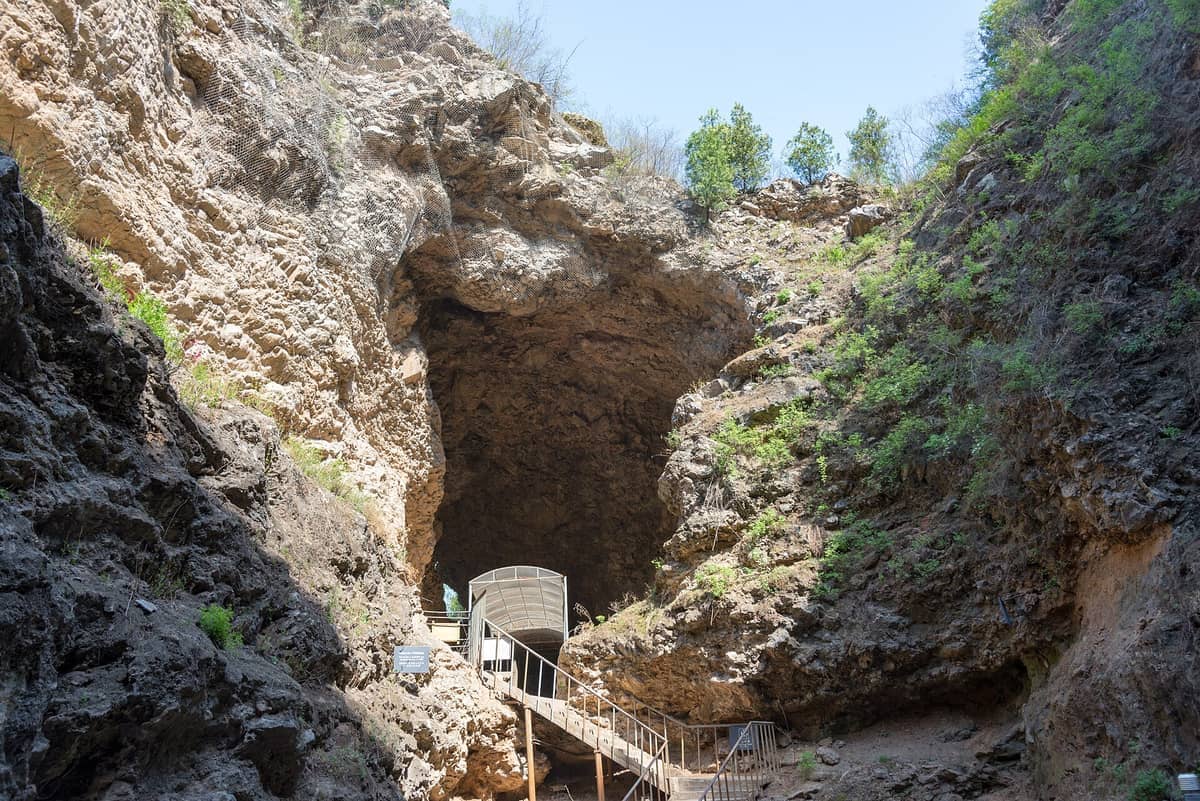
Outside the museum, a network of paths leads up Longgu Mountain to the excavation localities. The main excavation pit, known as Locality 1, is where the bulk of Peking Man fossils were found. It is fenced and covered, but visible at close range, and the scale of the excavation is striking even now. The exposed rock face shows clearly distinguishable sediment layers that took scientists decades to interpret. Standing at the edge of the pit, looking down into the stratigraphy, is the moment the site tends to click into focus for most visitors.
The walk up the hill is short but involves uneven stone steps and inclined pathways. Wear shoes with grip. The path connects several numbered localities, and small informational panels explain what was found at each. On clear days the surrounding Fangshan landscape, a mix of limestone ridges, orchard land, and distant suburban development, provides an unexpectedly pleasant backdrop. The site is quiet enough that you can hear wind through the scrub vegetation and birdsong, which makes a marked contrast to the density of central Beijing.
Locality 4, associated with Upper Cave Man finds from a later period of Homo sapiens occupation, is a short walk from Locality 1 and worth the extra few minutes. The caves themselves are smaller than most visitors expect, which actually heightens the impression of how constrained early human life was in a physical sense.
💡 Local tip
Bring water. There is limited food and drink available at the site, particularly outside peak season. A small snack and a full water bottle make the outdoor section far more comfortable.
How the Experience Changes by Time of Day and Season
Morning arrivals, ideally before 10:30, offer the quietest experience. The light on the limestone hillside is at its best in the morning hours, and the paths are largely empty on weekday visits outside school holiday periods. The air temperature matters more here than at a typical urban Beijing attraction: Fangshan District sits at a slightly higher elevation than the city center, and the site is partly shaded by the hill, so spring and autumn mornings can be noticeably cool even when the city is warm. A light jacket is worth bringing from March through May and again from September through November.
Summer visits are feasible but the outdoor section becomes uncomfortable by midday. The stone paths absorb heat, there is limited shade on the upper parts of the hill, and the humidity that settles over Beijing in July and August follows you here. If you visit in summer, start early and plan to be in the museum building during the hottest part of the day. Winter visits are cold and dry, with reduced opening hours. The site has a certain stark quality in bare-tree winter light, and crowds are negligible, but dress accordingly.
Getting There: Practical Transport Notes
Zhoukoudian is approximately 50 km southwest of central Beijing, in Fangshan District. It is not served by the Beijing Subway, so getting there requires a bus combination, a taxi, or a pre-booked private vehicle. The most common public transport route runs from Tianqiao bus terminal in Fengtai, via bus routes 917 or 836 toward Fangshan, followed by a transfer to Fangshan Bus Route 38 to the site itself. The total journey takes roughly 90 minutes each way depending on traffic.
Ride-hailing through DiDi is a practical alternative for travelers who prefer a direct journey without transfers. The fare from central Beijing will depend on traffic conditions and distance but will be considerably more than the bus option. Some visitors combine Zhoukoudian with a day-trip that includes other Fangshan attractions, since making a separate round trip solely for this site requires genuine commitment.
If you are already planning day trips from Beijing to the outer districts, Zhoukoudian fits well into a Fangshan-focused day alongside the area's other historical and geological sites. The Marco Polo Bridge at Lugouqiao is roughly on the route back toward central Beijing and can be added without a major detour.
⚠️ What to skip
Confirm opening hours before traveling. The museum closes on Mondays, and holiday schedules may differ from regular hours. A wasted 100 km round trip is avoidable with a quick check of the official website at zkd.cn or a call to +86 10 5323 0037.
Is This Worth the Journey from Central Beijing?
This is a fair question, and the honest answer depends entirely on what you are looking for. Zhoukoudian is not a visually spectacular site in the way that the Forbidden City or the Great Wall create immediate, overwhelming impressions. The caves are modest in size. The landscape is pleasant rather than dramatic. The fossils you see are casts, not originals.
What the site offers instead is intellectual weight. The place where the science actually happened has a particular quality that no reconstruction or replica museum can fully replicate. Standing at the edge of Locality 1, knowing that excavators pulled Homo erectus skull fragments from that exact stratigraphy almost a century ago, gives the abstract concept of deep human time a physical anchor. For travelers with a serious interest in paleoanthropology, the history of archaeology, or the broader sweep of human prehistory, this is one of the most significant sites accessible from Beijing.
Travelers on a tight schedule focused on imperial Beijing, hutong neighborhoods, and major landmarks should probably prioritize accordingly. A three-day Beijing itinerary has little room for a 90-minute commute each way. But if you have five or more days, a genuine interest in history and science, or a specific reason to visit Fangshan District, Zhoukoudian rewards the effort.
Photography and Accessibility
Photography is generally permitted throughout the site, including inside the museum. The excavation pit at Locality 1 photographs well from the viewing platform, particularly in the morning when the light falls across the exposed sediment layers at an angle. The limestone hill and surrounding vegetation provide reasonable landscape shots in autumn, when the scrub takes on color.
For more specific guidance on capturing Beijing's heritage sites, the Beijing photography guide covers techniques and conditions that apply here as well.
Accessibility at this site is limited by the terrain. The outdoor paths involve stone steps and slopes, which are not wheelchair-accessible in their current form. The museum building may offer better ground-level access, but detailed information on step-free routes, accessible toilets, and wheelchair availability is not comprehensively documented in official sources. Visitors with mobility requirements should contact the museum directly at +86 10 5323 0037 before making the journey to confirm current arrangements.
Context Within Beijing's Heritage Landscape
Beijing's heritage offer is dominated by imperial and dynastic history: palaces, temples, walls, and tombs. The imperial history of Beijing is genuinely extraordinary, and most visitors come for exactly that. Zhoukoudian sits outside that framework entirely, pushing the story back not centuries but hundreds of thousands of years. That is its unusual value. If you have been moving through the Forbidden City, the Temple of Heaven, and the Ming Tombs and want something that genuinely disrupts the historical scale, Zhoukoudian delivers that disruption effectively.
Insider Tips
- Arrive before 10:00 on a Tuesday or Wednesday for the quietest experience. Weekends and school holidays bring organized groups that can make the display areas crowded and the cave viewpoints congested.
- The mystery of the lost original fossils is covered in a dedicated exhibit section. Read it before visiting Locality 1 rather than after: it reframes what you are looking at when you stand at the edge of the pit.
- The site sits inside a broader designated area with multiple numbered localities. Most visitors only see Locality 1 and the museum, but the short walk to the Upper Cave at Locality 4 adds genuine depth to the visit with very little extra time.
- If you plan to combine Zhoukoudian with another Fangshan attraction, check transport logistics carefully. The local bus network in Fangshan requires transfers and timing patience. Having a fallback DiDi option is practical insurance against missed connections.
- The official museum website (zkd.cn) occasionally posts temporary closure notices for maintenance or special events. A quick check the day before travel saves a wasted round trip.
Who Is Peking Man Site at Zhoukoudian For?
- Travelers with a genuine interest in paleoanthropology, archaeology, or the deep history of human evolution
- Families with older children or teenagers who have some science background and attention span for explanation-heavy exhibits
- Visitors on longer Beijing stays of five or more days who have already covered the main imperial sites
- History and science writers, researchers, or educators looking to engage with the physical reality of a landmark site
- Travelers combining Fangshan District with other nearby attractions who want to use the day efficiently
Nearby Attractions
Combine your visit with:
- Cuandixia Village
Cuandixia Village (爨底下村) in Mentougou District is a well-preserved Ming and Qing dynasty rural settlement in northern China. With over 70 original courtyards, stone-paved alleyways, and a dramatic hillside setting roughly 90 km west of central Beijing, it rewards visitors who make the effort to get there.
- Longqing Gorge
Longqing Gorge (龙庆峡) is a dramatic natural gorge in Yanqing District, roughly 80 km northwest of central Beijing. Stretching approximately 7,000 meters through sheer limestone walls, it draws visitors for its reservoir boat rides in summer and its spectacular ice-and-lantern festival in winter. This is not a polished city attraction; it requires planning, a longer commute, and realistic expectations about the experience.
- Marco Polo Bridge (Lugou Qiao)
Built in 1189 and later rebuilt in 1698, Lugou Qiao spans the Yongding River in Fengtai District. It is both an architectural landmark and the site where the opening shots of China's full-scale war with Japan were fired in 1937. Few places in Beijing carry this much weight in a single span of stone.
- Universal Studios Beijing
Universal Studios Beijing opened in September 2021 as one of the largest Universal theme parks in the world. Located in Tongzhou District, it combines globally familiar franchises with zones designed specifically for Chinese audiences. Here is what you need to know before buying a ticket.