Longqing Gorge: Beijing's Mountain Canyon Worth the Journey
Longqing Gorge (龙庆峡) is a dramatic natural gorge in Yanqing District, roughly 80 km northwest of central Beijing. Stretching approximately 7,000 meters through sheer limestone walls, it draws visitors for its reservoir boat rides in summer and its spectacular ice-and-lantern festival in winter. This is not a polished city attraction; it requires planning, a longer commute, and realistic expectations about the experience.
Quick Facts
- Location
- Gucheng Reservoir, Jiuxian Town, Yanqing District, Beijing
- Getting There
- Bus 919 from Deshengmen to Yanqing, then transfer to bus Y43; allow 2–3 hours from central Beijing
- Time Needed
- Half day minimum; full day recommended if combining boat ride and gorge walk
- Cost
- Entrance: ¥40; winter Ice Lantern Festival: ¥100; boat round-trip: ¥100; combined summer package: ¥140. Confirm before visiting
- Best for
- Nature lovers, families, photographers, and anyone attending the winter ice festival
What Longqing Gorge Actually Is
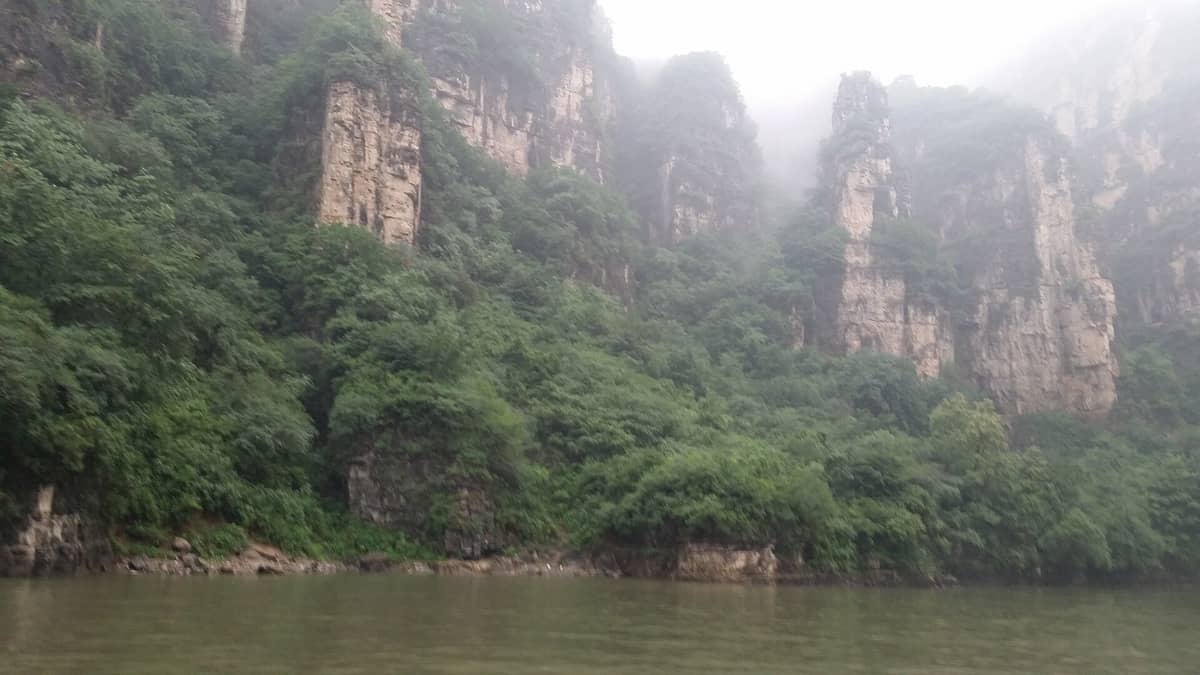
Longqing Gorge (龙庆峡) is a natural limestone canyon carved by water over millennia, located in Yanqing District on the northwestern fringe of Beijing Municipality. The gorge stretches roughly 7,000 meters in length and narrows to between 30 and 50 meters wide at its tightest points, with cliff walls rising steeply on both sides. The Gucheng Reservoir at its entrance feeds the calm water corridor that most visitors experience by boat.
This is not a manicured urban park. The appeal is genuinely geological: the compressed canyon walls, the green reservoir water, and the way the surrounding mountains shift in color from season to season. In autumn, the foliage turns yellow and russet against grey limestone. In winter, the water features inside the gorge freeze into sculptural forms, and the site hosts one of Beijing's most visually dramatic seasonal festivals.
For context on how this fits into Beijing's broader outdoor landscape, the day trips from Beijing guide covers Longqing alongside other destinations in the outlying districts worth a dedicated excursion.
ℹ️ Good to know
Opening hours: Opening hours vary seasonally; regular operation is commonly around 08:30–17:00, while weekends, holidays, and the winter Ice Lantern Festival may use extended or different hours. Always confirm before travel, as schedules change. Winter ice festival events may use extended or different hours. Always confirm before travel, as seasonal schedules change.
The Boat Ride: Core of the Summer Visit
The majority of visitors in the warmer months center their visit around the reservoir boat ride, which transports passengers from the entrance area deep into the gorge. Boats are the practical way to travel the water corridor and experience the canyon walls at close range. The ride is relatively short, but the scale of the surrounding rock faces is immediately apparent once you are on the water and the gorge tightens around you.
The water surface is typically calm enough that reflections of the cliff walls appear in the reservoir on still mornings. By midday, when group tour boats are active and the light becomes flatter, much of that stillness disappears. Early arrivals, particularly on weekdays, will find quieter conditions and better light for photography. The boat ticket for a round trip is ¥100, or ¥140 combined with entrance.
Bring a light jacket even in summer: the air temperature inside the gorge drops noticeably compared to the open areas at the entrance, particularly on the water. The shading effect of the canyon walls means direct sunlight only reaches the lower portions of the gorge for limited windows of time each day.
💡 Local tip
Arrive by 09:30 on weekday mornings if your priority is calm water and manageable crowds. Weekend afternoons from June through August see the heaviest visitor pressure, with boat queues extending significantly.
Tickets & tours
Hand-picked options from our booking partner. Prices are indicative; availability and final rates are confirmed when you complete your booking.
Small group tour of Tian'anmen Square and the Forbidden City
From 43 €Instant confirmationFree cancellationBeijing Summer Palace Entrance Ticket
From 7 €Instant confirmationFree cancellationMutianyu Great Wall and Summer Palace small-group tour from Beijing
From 171 €Instant confirmationFree cancellationPrivate Guided Tour to Temple of Heaven, Panda House and Summer Palace
From 67 €Instant confirmationFree cancellation
The Winter Ice Festival: A Completely Different Attraction
Longqing Gorge hosts an ice-and-lantern festival during winter months that transforms the site into something unrecognizable from its summer appearance. The festival has been running for decades and is one of the longest-standing seasonal events in Beijing's outer districts. Ice sculptures, illuminated lanterns, and frozen waterfall formations line the entrance corridor and extend into the gorge itself.
At night during the festival, the lighting design creates colors across the ice structures that photograph well but that feel even more striking in person. The cold is significant: Yanqing District sits at a higher elevation than central Beijing, and winter temperatures frequently drop well below zero. The difference in admission pricing reflects the festival's operation costs, with the winter rate rising to ¥80 from the standard ¥40.
Visitors attending the festival should dress for genuinely cold conditions, with insulated footwear that grips on compacted ice paths. The experience is quite different from a summer gorge visit, and many repeat visitors choose Longqing specifically for the winter event rather than treating it as a summer-and-winter site interchangeably.
⚠️ What to skip
Winter festival dates and extended operating hours are confirmed seasonally and can vary year to year. Do not rely on the standard opening hours for festival periods. Contact the attraction directly at 010-69191020 or 010-69191034 to verify the current season's schedule.
Getting There: The Longest Part of the Trip
Longqing Gorge is approximately 80 km northwest of central Beijing, and the journey is the single biggest factor in deciding whether to visit. By public transport, the standard route involves taking bus 919 from Deshengmen (accessible via multiple subway lines) to Yanqing, then transferring to bus Y43 or 875 toward the gorge. Depending on connections, a local shuttle may cover the final stretch to the entrance. Allow two to three hours in each direction and budget the full day.
Private car or pre-booked transport cuts the journey to roughly 90 minutes under normal traffic conditions via the G6 expressway toward Yanqing. This option is significantly more practical for families with children or anyone with limited mobility, as the public transport chain involves multiple transfers with luggage or equipment.
Yanqing District also contains Badaling, one of Beijing's most visited Great Wall sections. If you are organizing time in the area, the Badaling Great Wall is a logical pairing, though combining both in a single day is ambitious and would leave little time to fully experience either site.
The Gorge Walk and Surrounding Landscape
Beyond the boat ride, there are walking paths along the gorge that allow visitors to observe the canyon landscape at a slower pace. The terrain is not technically demanding but does involve uneven stone surfaces in sections. Comfortable walking shoes with closed toes are appropriate; sandals are not well-suited to the surface conditions.
The surrounding mountains, part of the broader Yanshan range, create a basin that holds morning mist for longer than the open plateau areas. In late September and October, the combination of mist, turning foliage, and still reservoir water makes this one of the more photogenic periods to visit. Autumn weekdays are consistently recommended by those who have visited across multiple seasons as the optimal balance of conditions and crowds.
If the outdoor mountain landscape appeals to you beyond Longqing itself, the Xiangshan Park in Haidian District offers a closer-to-center alternative for autumn foliage, though it lacks the canyon geography that defines Longqing.
Practical Considerations and Honest Assessment
Longqing Gorge is classified as a 4A scenic area by China's National Tourism Administration, which places it in the second tier of China's five-tier rating system. This is an honest indicator of its standing: it is a genuinely attractive natural site, but not a world-class landmark. The journey time relative to the experience means it suits travelers who prioritize natural scenery and are comfortable with a long half-day or full-day commitment for a single destination.
Accessibility information is limited in official sources reviewed. The site requires an entrance payment and, according to official listings, advance reservation. Visitors with mobility impairments or wheelchair users should contact the attraction directly before planning a trip, as step-free access details are not comprehensively published.
On busy summer weekends, the entrance area and boat queues can become congested. The gorge itself absorbs crowds reasonably well once visitors disperse along the waterway, but the bottleneck at the ticket and boarding points is real. Food options on-site are limited; bringing your own snacks and water is practical and reduces dependence on the small vendors near the entrance.
For a broader view of how to structure time outside the city center, the Beijing hidden gems guide covers several outer-district sites that reward the extra travel time, including destinations across Yanqing and Huairou.
💡 Local tip
Photography tip: The best light enters the narrower sections of the gorge in mid-morning on clear days. A wide-angle lens captures the full height of the canyon walls. In winter, night festival photography benefits from a tripod given the low-light ice sculpture settings.
Who Should Skip This
Travelers on a short Beijing itinerary of two or three days should prioritize the city's historic core. The two-to-three-hour journey each way is a significant portion of a limited schedule, and central Beijing's density of world-class sites makes the trade-off difficult to justify. Similarly, visitors who are primarily interested in history and architecture will find Longqing offers nothing in that category: it is a natural landscape attraction, full stop.
If you have four or more days in Beijing and have already covered the main imperial sites, Longqing is a worthwhile change of pace. For first-time visitors still working through core attractions, the Beijing first-timer guide provides a prioritized framework for making those decisions.
Insider Tips
- The boat ride queue moves much faster on weekday mornings before 10:30. Weekend afternoons in July and August can mean 45-minute waits at the boarding point.
- Winter festival entry pricing is commonly listed at ¥100, and festival-period hours differ from standard hours. Call 010-69191020 to confirm the current schedule before making the trip.
- The gorge air temperature drops significantly compared to the entrance area, even in summer. A light layer in a day bag prevents discomfort on the water.
- Autumn, specifically late September through mid-October, combines turning foliage with lower visitor numbers than summer peaks. This is the most consistent window for good conditions across multiple visit factors.
- If driving via the G6 expressway, there is parking at the site entrance. Arriving before 09:00 on weekends secures convenient spots; later arrivals may need to use overflow areas a short walk from the main gate.
Who Is Longqing Gorge For?
- Nature and landscape travelers seeking canyon scenery within reach of Beijing
- Families with children who will engage with the boat ride and seasonal festival elements
- Photographers targeting autumn foliage or winter ice festival imagery
- Repeat Beijing visitors who have covered the main historical sites and want an outdoor change
- Winter festival visitors looking for a distinctive seasonal event outside the city center
Nearby Attractions
Combine your visit with:
- Cuandixia Village
Cuandixia Village (爨底下村) in Mentougou District is a well-preserved Ming and Qing dynasty rural settlement in northern China. With over 70 original courtyards, stone-paved alleyways, and a dramatic hillside setting roughly 90 km west of central Beijing, it rewards visitors who make the effort to get there.
- Marco Polo Bridge (Lugou Qiao)
Built in 1189 and later rebuilt in 1698, Lugou Qiao spans the Yongding River in Fengtai District. It is both an architectural landmark and the site where the opening shots of China's full-scale war with Japan were fired in 1937. Few places in Beijing carry this much weight in a single span of stone.
- Peking Man Site at Zhoukoudian
The Peking Man Site at Zhoukoudian, carved into the limestone hills of Fangshan District roughly 50 km southwest of central Beijing, is one of the most significant paleoanthropological sites on Earth. Fossils discovered here in the 1920s and 1930s fundamentally changed scientific understanding of human evolution. The site combines outdoor cave excavations with an indoor museum, and rewards visitors who take their time.
- Universal Studios Beijing
Universal Studios Beijing opened in September 2021 as one of the largest Universal theme parks in the world. Located in Tongzhou District, it combines globally familiar franchises with zones designed specifically for Chinese audiences. Here is what you need to know before buying a ticket.