Parc de Sceaux: The Royal Garden Paris Visitors Almost Always Miss
Designed by André Le Nôtre in the 1670s and stretching across 181 hectares just south of Paris, Parc de Sceaux offers formal French gardens, a grand canal, a château-turned-museum, and one of the most spectacular cherry blossom displays in all of Île-de-France. Entry to the park is free, and the RER B gets you there in under 30 minutes.
Quick Facts
- Location
- 38 Avenue Alphonse Cherrier, 92330 Sceaux (Hauts-de-Seine), ~10 km south of Paris
- Getting There
- RER B: Parc de Sceaux, Bourg-la-Reine, or Robinson stations (10–15 min walk); ~30 min from central Paris
- Time Needed
- 2–4 hours for the park; add 1 hour if visiting the Château museum
- Cost
- Park: free. Château museum: free for under-12s; €6 for adults; €1/person for school or leisure groups
- Best for
- Picnics, photography, spring cherry blossoms, architectural history, family outings
- Official website
- domaine-de-sceaux.hauts-de-seine.fr
What Parc de Sceaux Actually Is
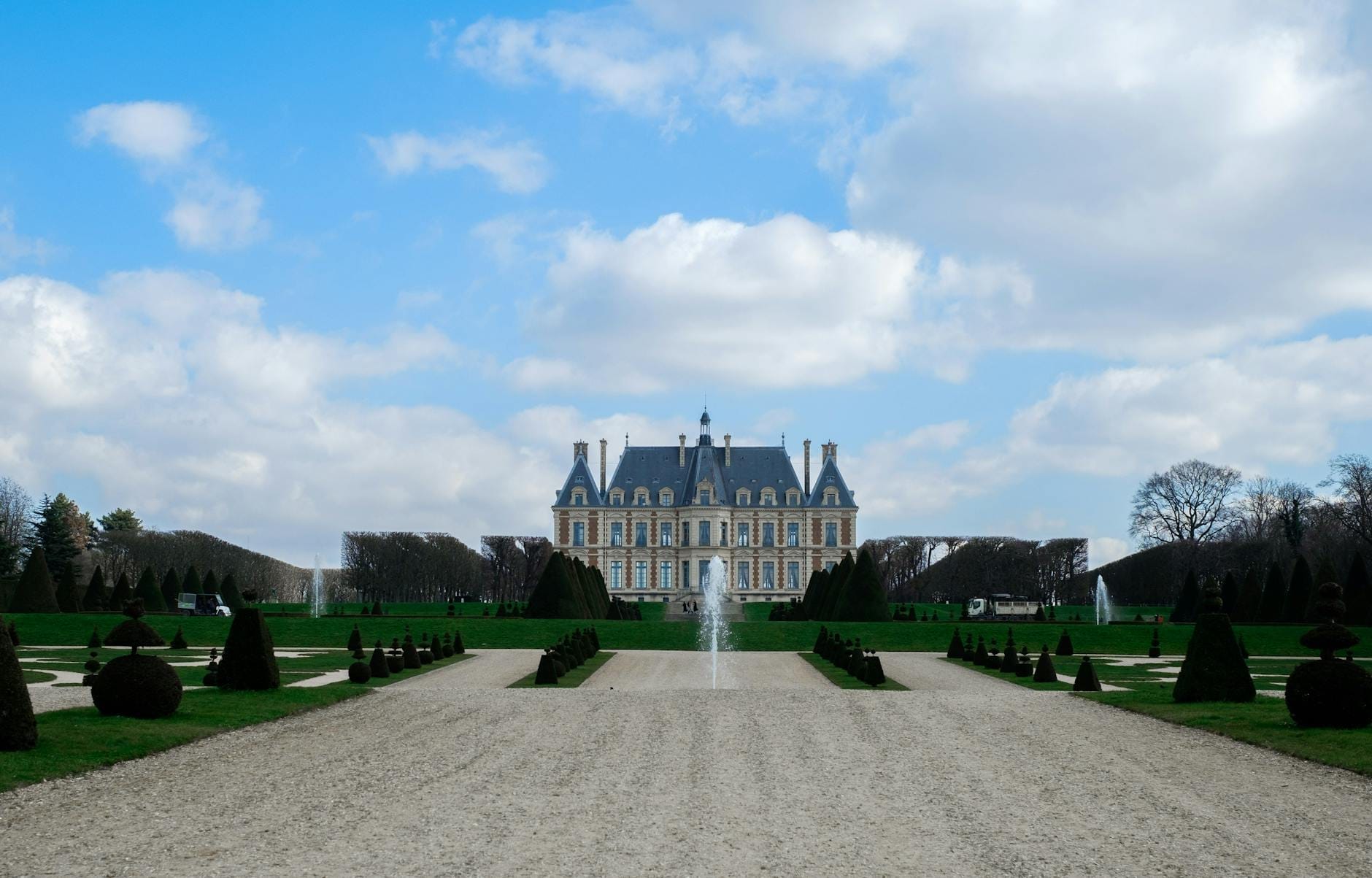
Parc de Sceaux — officially the Parc départemental de Sceaux — is a 181-hectare formal French garden designed in the late 17th century by André Le Nôtre, the same landscape architect behind the gardens of Versailles and the Tuileries. Located in the commune of Sceaux in the Hauts-de-Seine department, about 10 kilometres south of the Paris city limits, the park is one of the most complete surviving examples of classical French garden design in the entire Île-de-France region.
At its centre stands a 19th-century château that now houses the Musée du Domaine Départemental de Sceaux, whose collections trace French decorative arts from Louis XIV to Napoléon III. Radiating outward from the château: clipped parterres, a grand canal flanked by lawns broad enough to seem like open countryside, wooded allées, fountains, and an orangerie built under Louis XIV. The park spans two communes — 121 hectares in Sceaux, 60 in neighbouring Antony.
💡 Local tip
The park opens at 7:30 a.m. and admission is always free. The château museum keeps separate hours (roughly 1 p.m.–5 p.m. Nov–Feb, 2 p.m.–6:30 p.m. Mar–Oct, Tuesday–Sunday). Verify specific hours on the official site before you visit, as seasonal schedules shift.
A Garden Shaped by Power: The History
The story of Sceaux begins in the 1670s and 1680s, when Jean-Baptiste Colbert — Louis XIV's powerful finance minister — commissioned Le Nôtre to transform a modest country property into a garden worthy of the court. When Colbert died in 1683, the estate passed to his son, then was purchased by the Duke of Maine, one of Louis XIV's legitimised sons, who expanded it considerably. The duke brought in the architect Jules Hardouin-Mansart to redesign the buildings and continued developing the gardens through the early 18th century.
The Revolution brought neglect and partial demolition. The original château was destroyed; the gardens fell into disarray. The estate changed hands again in the 19th century, and the current château — a handsome Louis XIII-style building — was constructed in 1856 for the Duke of Treviso. It was opened as a museum in 1973 and today belongs to the Hauts-de-Seine department, which maintains the entire domain.
This layered history matters for how you read the landscape. The bones of the garden — the grand axes, the canal, the parterre geometry — are Le Nôtre's. But the château itself is Victorian-era, not ancient. If you are tracking the full sweep of royal French garden design, Parc de Sceaux fits naturally into an Île-de-France itinerary alongside the Palace of Versailles and the Jardin des Tuileries.
Tickets & tours
Hand-picked options from our booking partner. Prices are indicative; availability and final rates are confirmed when you complete your booking.
Parc Asterix Ticket with round-trip transport from Paris
From 112 €Instant confirmationFree cancellationRound-trip transportation from Paris to Parc Asterix
From 52 €Instant confirmationFree cancellationRound-trip transportation from Paris to Parc Asterix
From 52 €Instant confirmationFree cancellationParc Asterix ticket with round-trip transport from Paris
From 112 €Instant confirmationFree cancellation
The Experience: Walking the Garden
Enter from the main gate on Avenue Alphonse Cherrier and the garden's formal grammar announces itself immediately: gravel paths wide enough for horse-drawn carriages, tight hornbeam hedges clipped into green walls, and a long visual corridor pulling your eye toward the canal. Everything in a Le Nôtre garden is about controlled perspective, and Sceaux demonstrates the principle with unusual clarity because it is less crowded than Versailles and easier to read.
The grand canal, running roughly north to south for nearly a kilometre, is the spatial spine of the garden. On calm mornings, its surface is a near-perfect mirror for the sky, and joggers trace its edges with the quiet regularity of a daily ritual. By midday on weekends, families spread picnics on the long lawns that flank it — this is very much a living park, not a museum piece under glass.
The octagonal basin in the upper garden is surrounded by flower parterres and is the most photogenic formal element. In summer, the central fountain runs on scheduled intervals. The orangerie, dating to the reign of Louis XIV, sits to one side of the château and is occasionally used for temporary exhibitions and concerts. Walk behind the château and the garden loses its formality slightly, transitioning into looser woodland where the light filters through mature plane and chestnut trees.
💡 Local tip
Photography tip: The grand canal axis shoots best in early morning when the light is low and there are almost no visitors. Position yourself at the canal's southern end looking north toward the château for a clean, symmetrical composition.
Cherry Blossom Season: Why April Transforms the Park
Parc de Sceaux has earned a reputation as the best place in the Paris region to see cherry blossoms, a distinction that draws significant crowds each spring. The cherry trees — mostly concentrated in the eastern sections of the park — typically peak between late March and mid-April, depending on the year's weather. The effect is striking: rows of trees in full bloom framed by the park's rigid geometry create a contrast that feels almost theatrical.
In recent years, the cherry blossom season here has attracted informal hanami-style gatherings, drawing visitors from across the Paris metropolitan area for picnics beneath the canopy. If you visit during peak bloom, expect the park to be markedly busier than usual, particularly on weekends between 11 a.m. and 3 p.m. Arriving before 9 a.m. on a weekday gives you the blossoms in relative quiet, with morning light angling through the petals.
⚠️ What to skip
Cherry blossom timing varies by 2–3 weeks depending on the season. There is no guaranteed date: a cold March can push peak bloom to mid-April; a warm February can advance it to late March. Check local reports in the two weeks before you plan to visit.
The Château Museum: What's Inside
The Musée du Domaine Départemental de Sceaux, housed inside the 19th-century château, focuses on the history of the estate and on French decorative arts spanning Louis XIV through Napoléon III. Its permanent collection includes period furniture, painted silks and tapestries, porcelain, and portraits that map the political and cultural circles that once revolved around this estate. The museum is modest in scale — a serious afternoon visit takes about an hour — and digital interpretation materials are available for both adults and children.
Permanent collections are free for visitors under 12; €6 for adults (school groups pay €1 per person). The museum is open Tuesday through Sunday. Like many French departmental museums, it operates with fewer resources than its Parisian counterparts, so expect a quieter, more personal experience than you would get at a major city institution. Temporary exhibitions are staged in the orangerie and occasionally command a separate entry fee.
If your main interest is French decorative arts and painting, complement a visit to Sceaux with the Musée Jacquemart-André or the Musée Carnavalet in Paris itself, which together provide deeper context for the aristocratic world these collections reflect.
How to Get There and When to Go
Take the RER B from any central Paris station (Châtelet-Les Halles, Luxembourg, Denfert-Rochereau) toward Saint-Rémy-lès-Chevreuse or Robinson. Alight at Parc de Sceaux station for the closest entrance, or at Bourg-la-Reine or Robinson if you want to approach from a different angle. Journey time from central Paris is typically 25–35 minutes. The station at Parc de Sceaux is accessible by request to staff for travellers with reduced mobility.
The park gates open at 7:30 a.m. daily and closing times shift seasonally: around 7 p.m. in shoulder months, later in midsummer (up to 9 p.m.), and as early as 5 p.m. in January. The full seasonal schedule is published on the official domain website. There is a car park for those arriving by road, but given the direct RER B connection, driving adds complication without meaningful benefit.
The park is enjoyable year-round, but the clearest season hierarchy is: spring (cherry blossoms and fresh foliage), autumn (amber leaf colour and lower visitor numbers), summer (long evenings and occasional concerts in the orangerie), and winter (the bones of the garden geometry are exposed and austere, which has its own appeal). For a broader seasonal overview, see the best time to visit Paris guide.
Practical Notes for Your Visit
Wear shoes suited to gravel and grass — the paths are immaculate but long. The park has no entry fee, but bring cash or card if you plan to buy anything at the small café near the orangerie or attend a ticketed event. Picnicking is explicitly welcomed on the lawns, and it is how many local families use the park on weekends. Bring your own food and a blanket.
The park is large enough that a full circuit including the canal, the parterres, the château exterior, and the woodland sections takes around 90 minutes at a relaxed pace. Budget two to three hours if you include the museum. The terrain is mostly flat and easy to navigate with a pushchair or wheelchair on the main paths, though some of the woodland sections involve uneven ground.
Worth knowing: Parc de Sceaux is considerably less visited than Paris's inner-ring parks. If your priority is a genuinely uncrowded green space with real historical substance, it outperforms Jardin du Luxembourg on quiet and scale, though Luxembourg wins on convenience. For those who want to understand Paris's parks more broadly, the best parks and gardens in Paris guide covers the full range.
ℹ️ Good to know
The park occasionally hosts classical music concerts in and around the orangerie during summer. Programmes are published on the official domain website and tickets sell out quickly for popular dates. Worth checking if you are visiting between June and August.
Insider Tips
- The RER B stop is literally named 'Parc de Sceaux' — take the exit directly toward the main gate and you are at the entrance in under five minutes. No navigation needed.
- The grand canal lawn on a Tuesday or Wednesday afternoon is almost empty, even in spring. Weekend mornings fill quickly after 10 a.m., especially during blossom season.
- The small café near the orangerie has seating that looks directly onto the parterre — a far better vantage point for a break than any bench along the main canal path.
- In winter, the hornbeam hedges are skeletal but the frozen geometry of the garden becomes surprisingly striking. Visit on a frosty morning when the frost holds on the gravel and the canal steams slightly.
- If you are combining the visit with a day trip south of Paris, the RER B continues to Gif-sur-Yvette and the Chevreuse Valley — a logical extension for those who want countryside beyond the park.
Who Is Parc de Sceaux For?
- Picnickers and families wanting a formal green space beyond the crowded inner-Paris parks
- Photography enthusiasts targeting the grand canal and spring blossom canopy
- History and architecture fans interested in French classical garden design and decorative arts
- Travellers on a budget who want a full half-day experience with no entry cost
- Visitors returning to Paris who have already covered the obvious landmarks and want something genuinely different
Nearby Attractions
Combine your visit with:
- Bois de Vincennes
Covering nearly 1,000 hectares on the eastern edge of Paris, the Bois de Vincennes is the city's largest green space, combining ancient woodland, three lakes, a botanical garden, a world-class zoo, and a medieval royal castle. It rewards both casual afternoon strollers and full-day explorers.
- Château de Fontainebleau
Older than Versailles and used by more French monarchs, the Château de Fontainebleau is a UNESCO World Heritage palace 55 km southeast of Paris. With over 1,900 rooms, free formal gardens, and a manageable crowd count compared to other royal sites, it rewards visitors who make the 40-minute train trip from Paris.
- Château de Vaux-le-Vicomte
Built between 1656 and 1661 for finance minister Nicolas Fouquet, Château de Vaux-le-Vicomte is the largest privately owned château in France. Its formal gardens, gilded state rooms, and extraordinary backstory make it one of the most rewarding half-day trips from Paris.
- Château de Vincennes
Rising at the eastern edge of Paris, Château de Vincennes is one of the most complete medieval royal fortresses in Europe. Home to France's tallest medieval keep and a stunning Gothic chapel, it rewards visitors who venture beyond the tourist centre with centuries of largely undisturbed royal history.