Oxford Street: London's Great Shopping Mile
Stretching 1.2 miles through the heart of the West End, Oxford Street is London's most iconic retail thoroughfare, drawing hundreds of thousands of visitors each day. From flagship department stores to high-street chains, it covers an enormous range of budgets and tastes. This guide helps you decide whether it's worth your time and how to get the most from it.
Quick Facts
- Location
- City of Westminster, London W1 – between Marble Arch (west) and Tottenham Court Road (east)
- Getting There
- Oxford Circus (Central, Bakerloo, Victoria lines) – 1 min walk to the central section; also Marble Arch, Bond Street, Tottenham Court Road
- Time Needed
- 1–3 hours for browsing; a full end-to-end walk takes around 25 minutes
- Cost
- Free to visit; individual shops from budget to luxury
- Best for
- Shoppers, first-time visitors, department store enthusiasts, Christmas light-seekers
- Official website
- www.oxfordstreet.co.uk
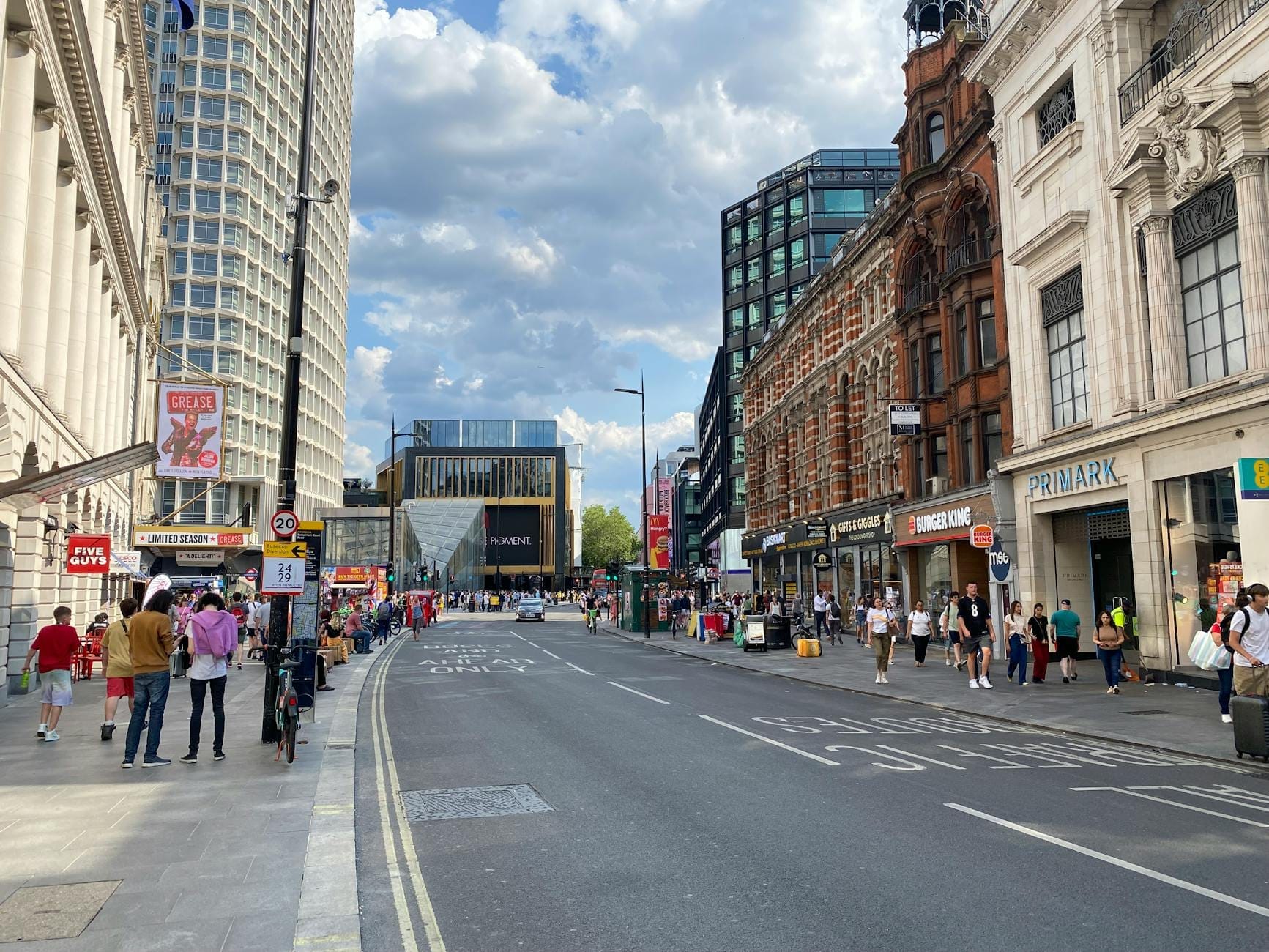
What Oxford Street Actually Is
Oxford Street is a 1.2-mile (1.9 km) public road running east to west through the City of Westminster, forming one of the clearest dividing lines in central London: Mayfair and Soho sit to the south, Marylebone and Fitzrovia to the north. It forms part of the historic A40 route and has been a commercial artery since at least the 18th century, when it transitioned from a residential road into the retail corridor it remains today. It is consistently one of the busiest shopping streets in Europe.
The street itself is always open as a public thoroughfare. Motor traffic is restricted largely to buses and licensed taxis, which means pedestrians dominate the pavements, especially near Oxford Circus. Individual stores generally open Monday to Saturday around 09:00 and close around 21:00, with Sunday hours typically shortened to around 12:00 to 18:00. Always check specific retailers before making a special trip, particularly around public holidays.
💡 Local tip
Oxford Circus station puts you right at the midpoint of the street. If you want to shop west to east, start at Marble Arch and finish at Tottenham Court Road, then continue south into Soho or east toward Covent Garden.
The Street at Different Times of Day
Oxford Street in the early morning, before 10:00, is a different place entirely. Delivery lorries occupy the bus lanes, staff roll clothing rails along the pavement, and the few pedestrians you encounter walk with purpose rather than wandering. If you need to orient yourself, buy a SIM card, or pick up essentials, this is the window to do it without being swept along by a crowd.
Between roughly 11:00 and 18:00, especially on Saturdays, the pavements near Oxford Circus become compressed. The density of people at the four-way crossing outside the station is something first-time visitors often find unexpectedly intense. Street performers, charity collectors, and promotional staff compete for attention outside the main stores. This is not a leisurely stroll situation.
Weekday evenings, roughly 17:30 to 19:30, bring a different kind of congestion: commuters, office workers cutting through from the Tube, and shoppers doing post-work errands. After about 20:00, the street quiets noticeably. The physical street stays open, but most shops are closing or closed, and the atmosphere shifts to something that feels more like a wide, brightly lit corridor than a destination.
⚠️ What to skip
Saturday afternoons between Oxford Circus and Bond Street are among the most crowded public spaces in London. Pickpocketing incidents are reported in this area. Keep bags zipped, avoid holding your phone while walking, and stay aware of your surroundings.
Tickets & tours
Hand-picked options from our booking partner. Prices are indicative; availability and final rates are confirmed when you complete your booking.
Warner Bros. Studio Tour London - The Making of Harry Potter and Oxford guided tour
From 157 €Instant confirmationFree cancellationOxford and Blenheim Palace private group car tour from London
From 761 €Instant confirmationFree cancellationOxford, Stratford-upon-Avon and Cotswolds day trip from London
From 139 €Instant confirmationFree cancellationTour of Warwick Castle, Stratford-upon-Avon and Oxford
From 340 €Instant confirmation
What to Actually Shop For
The street's anchor stores are what make it worth a deliberate visit rather than just a transit route. Selfridges, near the Marble Arch end, is the most architecturally substantial of the lot, its Grade II listed facade featuring 130 Ionic columns and a central clock that has become something of an unofficial landmark. The food hall, beauty floors, and designer departments inside are considered by many regulars to be among the best-edited retail spaces in London. Even if you have no intention of buying anything, the ground floor is worth seeing.
Marks and Spencer has its flagship store here, along with John Lewis at the Oxford Street location, both of which offer a good cross-section of British retail at mid-range prices. The street also contains outposts of virtually every major international high-street chain. For those exploring the wider West End, it's worth knowing that more specialist shopping sits nearby: Carnaby Street to the south for independent boutiques, and Regent Street for higher-end flagships running north-south just one block west.
What you will not find in abundance on Oxford Street is independent retail, unusual food, or much local character. The store mix skews heavily toward international brands and mainstream chains. If that is not what you are looking for, the street is better treated as a connection point than a destination.
Historical and Urban Context
The road predates modern London in a meaningful sense. It was originally the route travelers would take out of London toward Oxford and beyond, known simply as Tyburn Road before the 18th century saw its gradual renaming and commercial transformation. For much of the 18th and early 19th centuries, it was also notorious as the route along which condemned prisoners were transported from Newgate Prison to the gallows at Tyburn, near what is now Marble Arch.
The shift to retail happened steadily through the Victorian era. Department stores began appearing in the late 19th century, and by the early 20th century, Oxford Street had consolidated its identity as London's primary shopping district. The architectural fabric is not especially coherent: much of what stands today dates from the post-war reconstruction period, with a handful of Edwardian facades surviving intact. Selfridges, built from 1909, is by some distance the most impressive piece of architecture on the street.
Oxford Street sits at the heart of what is broadly called the West End, London's primary entertainment and retail zone. Understanding that context helps: the street is a hub, not an isolated experience, and what happens around it in Soho, Mayfair, and Marylebone is often more interesting than the street itself.
Getting There and Getting Around
Oxford Circus station serves the Central, Bakerloo, and Victoria lines and drops you directly onto the pavement at the midpoint of the street, at the junction with Regent Street. It is one of the busiest Tube stations in London; during peak hours, TfL occasionally implements crowd-flow controls that prevent entry or require queuing outside. Factor in a few extra minutes during busy weekends.
Bond Street station, served by the Central, Jubilee and Elizabeth lines, is about a seven-minute walk from the western section of the street and gives you access to Bond Street itself, running south into Mayfair. Marble Arch (Central line) and Tottenham Court Road (Central, Northern and Elizabeth lines) mark the two ends of the street. The Elizabeth line connections at Bond Street and Tottenham Court Road make the street particularly easy to reach from Heathrow, Paddington, or Canary Wharf.
If you are planning a longer day in this part of London, the guide to getting around London explains Oyster card setup, contactless payment options, and how Tube fare zones affect your cost.
ℹ️ Good to know
Buses along Oxford Street run frequently and offer a street-level view of the full length. Routes 10, 55, 98, and others serve the corridor. This is a useful option if the Tube is disrupted or you want to see the street without walking the entire length.
Seasonal Highlights and When to Visit
The Christmas lighting on Oxford Street runs from late November through early January and is impressive at night. The lights are switched on at an annual ceremony typically in early November, and the illuminated stretch from Marble Arch to Tottenham Court Road is one of London's more photogenic winter scenes, best viewed after dark on a weekday when the crowds are slightly thinner than weekends. If you are visiting London in December specifically, Oxford Street at night deserves at least a short walk.
July and August bring the highest tourist volumes and longest queues inside major stores. Spring, particularly March through May, tends to offer more manageable crowds alongside comfortable walking temperatures. For a broader read on what the city is like across different months, the best time to visit London guide covers seasonal factors in detail.
Oxford Street is one of the few London destinations that is equally viable in rain as in sunshine. The street is mostly outdoors, but the sheer density of large stores means you spend comparatively little time exposed to the weather. Waterproof footwear is more useful than an umbrella given the pavements and Tube stairs.
Worth Knowing: Who Will Enjoy It and Who Won't
Oxford Street delivers what it promises: concentrated, high-volume retail in a central location with excellent transport links. If you want to cover a lot of mainstream shopping ground efficiently, it is well-suited to that goal. First-time visitors to London often want to see it simply because they have heard of it, and the walk from Marble Arch to Oxford Circus is a reasonable way to experience the commercial pulse of central London.
It is not, however, a destination for atmosphere, history, or food. The street offers almost nothing in the way of independent restaurants, characterful pubs, or architectural drama outside of Selfridges. Visitors hoping for a window into London's culture or personality will be better served by spending time in Soho, the South Bank, or further east. Families with young children may find the Saturday crowds stressful, and anyone with mobility difficulties should be aware that the pavement compression near Oxford Circus is relentless.
Shoppers looking for more interesting retail experiences might consider Portobello Road Market in Notting Hill or Carnaby Street nearby, both of which offer a more varied and less chain-dominated mix.
Insider Tips
- Selfridges' food hall on the lower ground floor is worth entering even if you have no shopping agenda. It stocks a wider and better-curated selection of British produce than most London food markets and is far less congested than Borough Market on weekends.
- The service lanes that run parallel to Oxford Street on both sides, like Wigmore Street to the north and Brook Street to the south, offer a quieter walking alternative if you need to cover the length of the street without being in the crowd. They also have better cafes.
- If you are visiting specifically for John Lewis or Selfridges, Tuesday to Thursday mornings offer the best combination of full stock and thin crowds. Saturday mornings before 11:00 are also workable.
- The Christmas lights are best photographed from street level between Oxford Circus and Bond Street, facing west just after sunset when the sky holds a deep blue that contrasts with the warm lighting. This window lasts roughly 20 minutes.
- Oxford Circus station has four street exits, one at each corner of the intersection. The northeast exit (toward Regent Street northbound) is typically the least congested at peak times. Check the exit diagram inside the station before ascending.
Who Is Oxford Street For?
- First-time visitors who want to see London's most famous shopping street
- Shoppers covering multiple major retailers in a single trip
- Winter visitors seeking the Christmas lights display
- Anyone using Bond Street or Tottenham Court Road as a transit hub and wanting to combine transit with a browse
- Department store enthusiasts, particularly for a Selfridges visit
Nearby Attractions
Other things to see while in West End:
- British Library
The British Library holds over 170 million items spanning thousands of years of human thought, from the Magna Carta to Beatles lyrics. Entry to the building and permanent collection galleries is free, making it one of the most rewarding stops in central London for curious travellers.
- British Museum
The British Museum holds one of the world's great collections of human history and culture, spanning two million years across more than 60 free galleries. Entry to the permanent collection is free, but knowing how to navigate the scale of it makes the difference between a rewarding visit and an overwhelming one.
- Carnaby Street
Carnaby Street is the pedestrianised shopping district in Soho that defined the look of 1960s London and continues to draw fashion lovers, food hunters, and curious walkers today. Free to explore and five minutes from Oxford Circus, it rewards those who slow down and wander its connecting lanes.
- Coal Drops Yard
Coal Drops Yard is a redeveloped Victorian industrial estate in King's Cross, now home to independent retailers, restaurants, and bars set beneath strikingly restored brick vaults. The public outdoor spaces are free to enter and a short walk from King's Cross St Pancras station.