Orto Botanico di Palermo: Palermo's Remarkable Botanical Garden
Founded in 1789 and opened in 1795, the Orto Botanico di Palermo is one of Europe's most significant university botanical gardens, covering about 27 acres near Palermo Centrale station with over 12,000 plant species. This guide covers what to expect, when to visit, and how to make the most of your time inside.
Quick Facts
- Location
- Via Lincoln 2, 90133 Palermo – roughly 600 m from Palermo Centrale station
- Getting There
- Walk from Palermo Centrale (10 min), or AMAT bus lines 231 and 107
- Time Needed
- 1.5 to 2.5 hours for a thorough visit
- Cost
- €7 full price; €4 reduced (ages 6–25, over 70, teachers and affiliated groups); €15 family ticket (2 adults + up to 3 children); other family options and concessions available; check the official site for current details
- Best for
- Plant enthusiasts, families seeking shade and calm, architecture lovers, and anyone needing a quiet break from Palermo's streets
- Official website
- www.ortobotanico.unipa.it
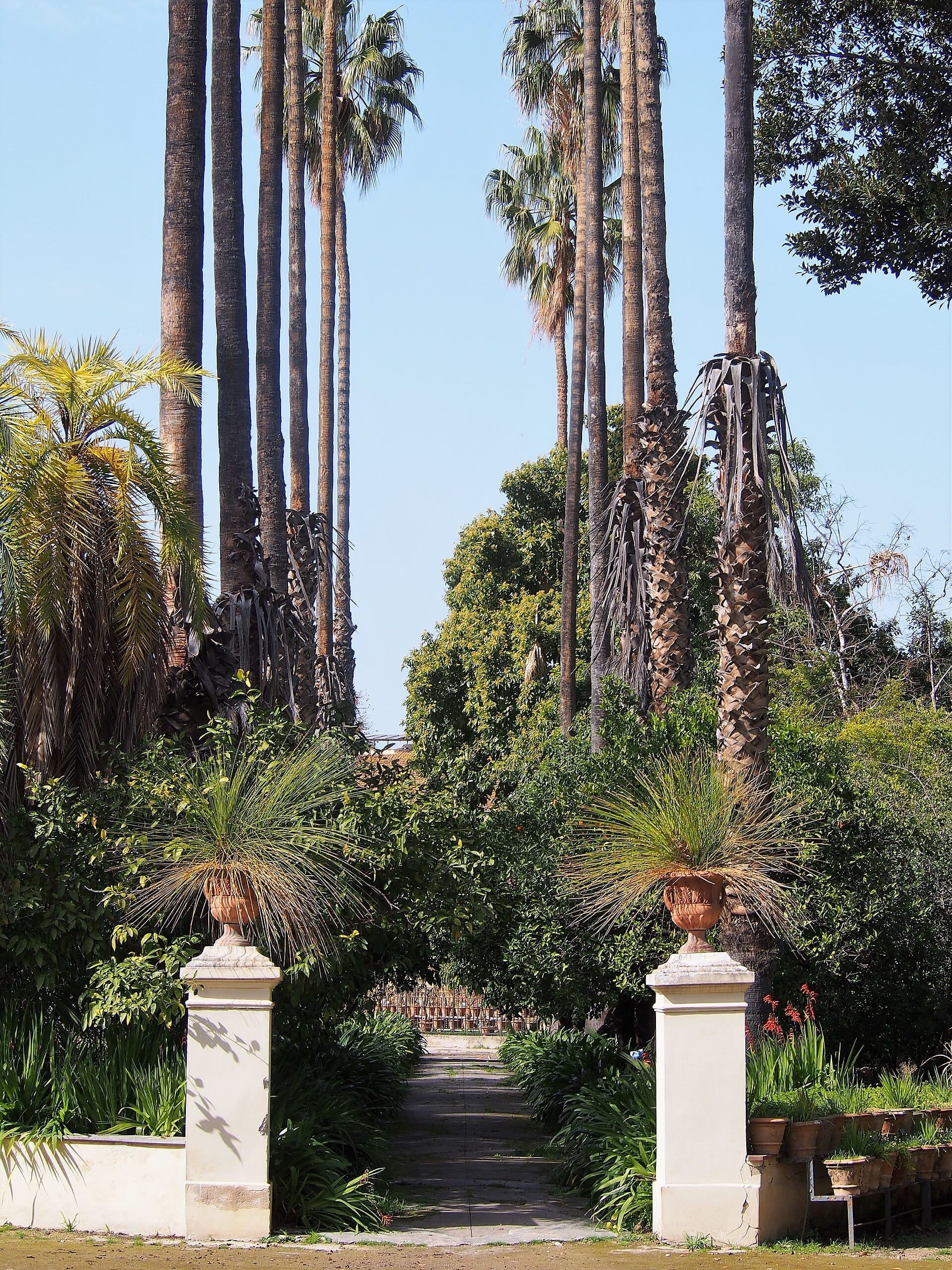
What Is the Orto Botanico di Palermo?
The Orto Botanico di Palermo (officially the Orto Botanico dell'Università degli Studi di Palermo) is a working scientific institution as much as a public attraction. Established in 1789 under the University of Palermo and formally opened on 9 December 1795, it ranks among the most important botanical gardens in Italy and in the Mediterranean as a whole. It covers roughly 27 acres (0.11–0.12 km²) and holds a documented collection of more than 12,000 plant species, spanning tropical and subtropical trees, cacti and succulents, aquatic plants, palms, and Mediterranean flora.
The garden sits at the southeastern edge of Palermo's historic centre, within easy walking distance of the central railway station. That location matters: this is not a manicured park on the outskirts of the city designed for weekend picnics. It is a dense, layered, occasionally overwhelming space where a 200-year-old Ficus macrophylla stretches its aerial roots across an area the size of a small piazza, and where the contrast between the garden's interior silence and the noise of Via Lincoln just outside the walls is surprisingly sharp.
💡 Local tip
The garden is at its most atmospheric in the morning, when the light filters low through the canopy and temperatures are cooler. Arrive at opening time (09:00 Monday–Saturday, or 10:00 on Sundays) to have the largest trees and the glasshouses largely to yourself.
The Garden's Layout and What to Look For
The Orto Botanico is organized into several distinct areas, each with a different character. The formal entrance axis leads through a neoclassical complex designed by the French architect Léon Dufourny in the late 18th century: the Gymnasium (library and study space), the Calidarium (a warm greenhouse), and the Tepidarium and Pisciarium complete this ensemble. The architecture is understated but precise, and it frames the garden's first views in a way that feels considered rather than incidental.
Beyond the formal structures, the garden fans out into loosely themed zones. The aquatic garden contains lotus, papyrus, and water lilies growing in stone basins. The palm collection is extensive, with specimens from across the Mediterranean, Africa, and the Americas. The succulent and cactus section occupies a sunny corner that feels almost theatrical in the brightness of a Sicilian afternoon. A collection of Mediterranean herbs runs along one perimeter, where the smell of rosemary and lemon thyme is detectable well before you arrive at the plants themselves.
The most photographed element of the garden, and the one that justifies a visit on its own terms, is the Ficus macrophylla, a Moreton Bay fig planted in 1845. Its trunk is roughly four metres in diameter and its canopy extends over an enormous footprint, with descending aerial roots that have merged into secondary trunks over the decades. Standing beneath it, the scale is genuinely disorienting. This is not a tree you observe from a distance; you walk into it.
ℹ️ Good to know
Photography is generally permitted for personal use throughout the garden. The Ficus macrophylla photographs best in the morning when sunlight enters from the east and the aerial roots catch the light. Avoid midday, when the contrast between sunlit patches and deep shadow becomes difficult to expose correctly.
Tickets & tours
Hand-picked options from our booking partner. Prices are indicative; availability and final rates are confirmed when you complete your booking.
Palermo and Cefalu guided tour from Taormina
From 75 €Instant confirmationFree cancellationMonreale day trip from Palermo
From 20 €Instant confirmationFree cancellation3-hour bike tour of Palermo with streetfood tasting
From 10 €Instant confirmationFree cancellationPalermo traditional food tour
From 69 €Instant confirmationFree cancellation
How the Experience Changes by Time of Day and Season
Morning visits, particularly on weekdays, offer conditions that are significantly different from afternoons or weekend midday. The garden opens at 09:00 Monday–Saturday and at 10:00 on Sundays, and for the first hour or so the atmosphere is genuinely quiet. School groups tend to arrive mid-morning; by 11:00 on popular days the glasshouses and the Ficus area can feel crowded. If you have flexibility, a weekday opening-time visit is noticeably more relaxed.
Seasonally, spring (April and May) is the strongest period: the garden is in full growth, flowering plants are at their peak, and temperatures are comfortable enough to walk slowly without needing to seek shade every ten minutes. Summer visits are possible but demanding. In July and August, temperatures in Palermo regularly exceed 30°C, and the garden, despite its tree cover, is not consistently shaded. The succulent section in particular is brutally exposed in the afternoon. If visiting in summer, go early and expect to finish by 11:00. In some years the garden stays open until 20:00 from May through August, and a late-afternoon visit starting around 17:30 is another viable option as the heat eases.
Autumn brings a second, quieter flowering period for many Mediterranean and subtropical species, and October in particular offers comfortable temperatures and thin crowds. Winter is calm and green but less spectacular for tropical plants; the glasshouses become more relevant in these months, as species from warmer climates retreat inside.
For a broader sense of when to time a Palermo trip around weather and crowds, the best time to visit Sicily guide covers seasonal conditions across the island in detail.
Historical and Scientific Significance
The Orto Botanico was founded at a moment when systematic botanical science was expanding rapidly across Europe. The late 18th century saw botanical gardens in Paris, Kew, and Pavia becoming centres of taxonomic research and colonial plant exchange. Palermo's garden was conceived along similar lines: as an institution for studying, classifying, and propagating plants from across the known world. Its location in Sicily, at the crossroads of Mediterranean, African, and European trade routes, made it particularly well-positioned for receiving exotic specimens.
The neoclassical buildings designed by Léon Dufourny, a French architect working in Palermo in the 1790s, were built with scientific function in mind. The Calidarium maintained tropical temperatures for heat-sensitive specimens. The Gymnasium housed the herbarium and library. This combination of infrastructure and collection made the garden a reference point for Mediterranean botanical research throughout the 19th century, and it has continued as an active research institution under the University of Palermo ever since.
The garden's history fits into the broader cultural richness of Palermo, a city shaped by layers of Arab, Norman, Spanish, and Baroque influence. If you plan to explore beyond the garden, Arab-Norman Sicily provides context for the historic monuments within walking distance of Via Lincoln.
Getting There and Practical Logistics
The garden's address is Via Lincoln 2, and the entrance is on the right side of Via Lincoln as you walk south from Palermo Centrale station. The walk takes around 10 minutes on flat ground and is straightforward. AMAT bus lines 231 and 107 also serve the area if you are arriving from a different part of the city.
Opening hours may follow a seasonal schedule, but currently the official site lists Monday to Saturday 09:00 to 18:00 and Sunday 10:00 to 18:00, with the institution advising visitors to check for any seasonal extensions or changes before visiting. The garden is generally closed on major holidays such as 25 December and 1 January, but visitors should confirm current holiday closures in advance. Last entry is 30 to 60 minutes before closing, depending on the season, so plan accordingly.
Admission is €7 at full price and €4 for reduced categories including visitors aged 6 to 25, visitors over 70, teachers and certain affiliated entities; family tickets start at €15 for two adults and up to three children, with other combinations available; groups of more than ten people pay €5 per person. Disabled visitors and one accompanying person may benefit from specific concessions, and an annual pass is offered; check the official channels for the latest details and prices.
⚠️ What to skip
No animals are permitted inside the garden. Smoking is prohibited throughout. The entrance area is largely flat and accessible, but some internal paths in less formal zones can be uneven; visitors with mobility concerns should stay on the main paved routes.
Who Will Enjoy This, and Who Might Not
The Orto Botanico works well for a specific kind of traveler: one who moves slowly, notices detail, and does not need stimulation on every corner. It rewards patience. If you spend 20 minutes in front of the Ficus macrophylla, or sit by the aquatic garden watching dragonflies above the lotus leaves, the visit delivers something that Palermo's more visited monuments cannot. For families with children who are at a curious rather than impatient stage, the scale of the large trees and the textures of the succulent collection tend to hold attention well.
Travelers expecting a formal, manicured garden with clearly labelled English signage throughout will need to adjust expectations. The garden is a working scientific institution, and some sections are more informally maintained than others. Labelling is present but inconsistent in places, and the English-language information available on-site is less comprehensive than at some other Italian botanical gardens. This is not a flaw so much as a character note: it is a place that rewards curiosity rather than guided interpretation.
Anyone who finds botany genuinely dull and prefers denser cultural programming would probably be better served by Palermo's architectural and historical sites. The garden shares its neighborhood with the Villa Giulia public park directly adjacent, and combining the two makes for a good half-day if you want more green space rather than museum interiors.
The garden is a short walk from several of Palermo's most significant monuments. The Norman Palace and Palatine Chapel and the Monreale Cathedral are the two obvious architectural counterweights if you want to balance a morning in the garden with afternoon history.
Combining the Orto Botanico with a Broader Palermo Day
Via Lincoln places the garden on the southern edge of the historic city, which makes it a natural endpoint for a walk that starts further north in the historic centre. A logical sequence: begin the morning at the Quattro Canti and work south through the historic markets before arriving at the garden in the late morning after the first rush of school groups has cleared. Alternatively, visit the garden first thing when it opens, then move north on foot to explore the city as it warms up.
Palermo's historic markets are within easy reach of the garden. The Ballarò market operates through the morning and is roughly 20 minutes on foot north of Via Lincoln, making it a natural pairing for a half-day that combines the city's noisiest and its most tranquil spaces. For a fuller picture of what Palermo offers beyond the garden, see the Palermo destination guide.
Insider Tips
- The Ficus macrophylla is impressive from multiple angles, but the most striking view is from directly underneath, looking up through the canopy. Move around the base rather than photographing from a fixed distance.
- The glasshouses (Calidarium and associated structures) are included in the ticket price and house tropical species rarely seen elsewhere in Sicily. They are less visited than the open garden and worth a deliberate stop.
- If you visit in summer, the northern and eastern sections of the garden receive more shade from the large tree canopy and are significantly cooler than the succulent zone in the south. Plan your route accordingly.
- The garden shares a wall with the Villa Giulia public park, which is free to enter and has benches and water fountains. If you need a break after the Orto Botanico, Villa Giulia is directly accessible and comfortable in the morning.
- Annual passes are available and can represent good value for anyone spending a week or more in Palermo; check current pricing before you go. Even two visits make the per-entry cost lower than the standard ticket, and return visits in different light conditions show the garden's collection quite differently.
Who Is Orto Botanico di Palermo For?
- Botanists and plant enthusiasts looking for a serious Mediterranean and tropical collection
- Families with children in the 6 to 12 age range who will respond to the scale of the large trees
- Travelers wanting a quiet, shaded break from the noise and heat of Palermo's centro storico
- Architecture buffs interested in late 18th-century neoclassical institutional design
- Photographers working with natural light and interested in texture, scale, and botanical subjects
Nearby Attractions
Other things to see while in Palermo:
- Ballarò Market
Stretching through the Albergheria district from Piazza Ballarò to Corso Tukory, the Mercato di Ballarò is Palermo's oldest continuously operating street market, with roots tracing back over a thousand years to Arab rule. It is free to enter, open daily, and unlike anything else in Sicily for raw atmosphere, local produce, and street food.
- Catacombs of the Capuchins
Below a quiet convent on the western edge of Palermo's historic centre, the Catacombs of the Capuchins hold one of the most extraordinary collections of preserved human remains anywhere in the world. Around 2,000 mummified bodies and skeletons line stone corridors carved from tuff rock, dressed in period clothing and arranged by profession, gender, and social status. It is an intimate, unsettling, and genuinely thought-provoking encounter with how a Mediterranean culture once confronted death.
- Church of the Martorana
Built in 1143 by a Norman admiral and decorated by craftsmen from Constantinople, the Church of the Martorana contains some of the most important Byzantine mosaics in the western Mediterranean. It sits on Piazza Bellini in Palermo's historic center, part of a UNESCO World Heritage site, and rewards visitors who arrive early and look up.
- La Kalsa
La Kalsa is Palermo's oldest neighborhood, founded by Arab rulers in the 9th century as the city's administrative heart. Today it is a layered district of crumbling palazzi, Baroque churches, art-filled piazzas, and some of Palermo's most atmospheric street life. Free to explore and walkable in half a day, it rewards those who slow down.