Old Melbourne Gaol: Inside Australia's Most Notorious Prison
Built from 1845 and home to over 100 executions, Old Melbourne Gaol is a genuinely unsettling window into colonial-era justice. From the cramped bluestone cells to Ned Kelly's death mask, the museum is dense with history — and the night tours are something else entirely.
Quick Facts
- Location
- 377 Russell Street, Melbourne CBD (between Victoria and La Trobe Streets)
- Getting There
- Within the Free Tram Zone; trams on Swanston Street (stops 3–4 min walk). Melbourne Central Station is a 2-min walk.
- Time Needed
- 1.5 to 2.5 hours for the day museum; night tours run approximately 90 minutes
- Cost
- Adult A$38 | Concession/Student A$30 | Child (5–15) A$22 | Family A$70–A$90. Booking fees apply.
- Best for
- History buffs, true crime enthusiasts, curious adults, and older teens
- Official website
- www.oldmelbournegaol.com.au
What Old Melbourne Gaol Actually Is
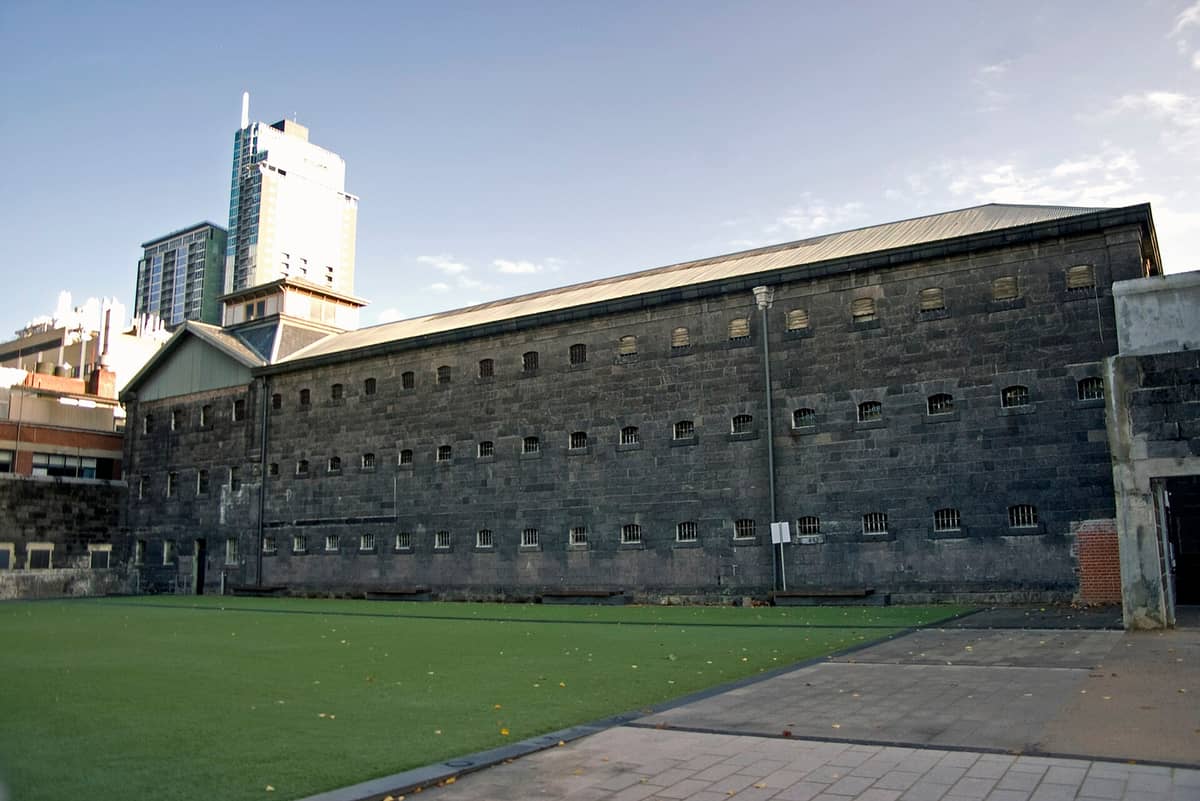
Old Melbourne Gaol is a heritage-listed prison museum on Russell Street in the Melbourne CBD, managed by the National Trust of Australia (Victoria). The surviving bluestone cell block dates to 1851–1853, though the first cell on the site opened in 1845. The gaol operated as a working prison until 1924, during which time over 130 people were executed within its walls. Today it functions as one of Australia's most visited heritage museums, with daytime guided and self-guided tours, an attached police watch house, and heavily attended after-dark programs.
The structure is not a reconstruction or a theme park approximation of a historic gaol. It is the actual building: the same bluestone walls, the same tiered galleries of cell doors, the same gallows platform. That distinction matters to how you experience it. There is weight here that purpose-built museum exhibits rarely produce.
ℹ️ Good to know
Opening hours: daily 10 am to 5 pm. Closed Good Friday and Christmas Day. Ticket prices updated January 2026 — confirm current rates at oldmelbournegaol.com.au before visiting, as booking fees apply.
The Building and Its History
The bluestone used in the gaol's construction came from quarries around Melbourne and was shaped partly by convict labor. The design followed a Pentonville-style panopticon principle, intended to allow surveillance while enforcing solitary confinement. Walking the three tiers of gallery cells now, with their metal grates underfoot and overlapping walkways above, the geometry of control is immediately legible. You understand the architecture before you read a single panel.
Executions at the gaol began in 1842 at an earlier structure on the site, and the practice continued until 1924. The most famous execution was that of bushranger Ned Kelly on 11 November 1880. Kelly's story is central to the museum's narrative — his death mask is one of the most requested exhibits — but the gaol's history extends far beyond one famous prisoner. Women, children, debtors, and the mentally ill were all held here under conditions that reflected 19th-century attitudes to poverty and crime as much as to justice.
For context on how this fits into Melbourne's colonial-era civic development, the Royal Exhibition Building and the surrounding Carlton area were being developed during the same era — a reminder of how quickly the colonial city was constructing both its symbols of aspiration and its infrastructure of punishment.
Tickets & tours
Live prices and dates from our booking partner. If you book, we may earn a commission at no extra cost to you.
Great Ocean Road reverse itinerary tour from Melbourne
From 77 €Instant confirmationFree cancellationHidden bars of Melbourne guided tour
From 115 €Instant confirmationFree cancellationSecrets of Melbourne guided tour
From 60 €Instant confirmationFree cancellationPenguin Parade Express Guided Tour from Melbourne
From 95 €Instant confirmationFree cancellation
What You'll See on the Day Visit
The ground floor holds the bulk of the interpretive museum content. Exhibits cover the history of colonial crime and punishment, individual prisoner stories told through records and personal effects, and displays on the development of Australian policing. The presentation is serious and well-researched rather than sensationalized. The death masks on display — plaster casts made of executed prisoners by the phrenologist William Lodewyk Becker — are arresting: dozens of them, in rows, each with a name and a conviction recorded beneath.
Ned Kelly's death mask is displayed prominently, along with his armor. The armor itself is more compact than you expect from photographs. Kelly was not a large man, and seeing the dented iron at close range — with its roughly improvised construction visible — changes the scale of the story in an oddly humanizing way.
The upper gallery tiers are accessible via steep metal stairs. Individual cells are open for inspection, and several have been fitted with interpretive materials covering specific prisoners or themes. The cells are small: roughly 1.8 by 2.7 metres, with stone floors and minimal light. Standing inside one with the door pulled shut is one of those experiences that requires no further explanation.
💡 Local tip
Photography tip: The tiered gallery structure photographs best from the ground floor, looking upward. Natural light drops off sharply above the first level, so a camera that handles low light well will serve you better than a phone camera for the upper tiers.
Time of Day and Crowd Patterns
The gaol opens at 10 am, and the first hour tends to be the quietest, particularly on weekdays outside school holiday periods. By late morning, school groups often arrive, which changes the atmosphere considerably. If you are visiting without children and want space to absorb the museum at your own pace, the 10 to 11 am window is your best option.
Afternoons are generally busier, with the 12 pm to 2 pm window carrying the peak of day-trippers and CBD visitors fitting the gaol into a longer itinerary. By 3:30 pm, the crowd thins again as families leave, and the reduced natural light inside the building begins to create a noticeably different atmosphere — more subdued, more apt for the subject matter, if occasionally harder to read display panels.
Night tours operate separately from the day visit and require a separate ticket. These tours use period costuming and theatrical staging, which some visitors love and others find excessive. If you prefer a factual rather than performative engagement with the history, the day visit is more appropriate. If you are visiting with a group looking for a shared experience with some tension to it, the night program works very well.
Getting There and Practical Logistics
Old Melbourne Gaol sits on Russell Street between Victoria and La Trobe Streets, in the northern section of the Melbourne CBD. If you are using public transport, the Free Tram Zone covers the entire central city grid, meaning trams on Swanston Street are free to board without a Myki card. From Swanston Street, the gaol is a three to four minute walk east. Melbourne Central train station is approximately two minutes on foot via the A'Beckett or La Trobe Street exit.
There is no on-site parking. Three disability-permit spaces are available on La Trobe Street. Paid car parks are available in the surrounding blocks. If you are planning a broader CBD day, it makes sense to combine this visit with nearby attractions: State Library Victoria is less than five minutes' walk to the south, and its reading room is free to enter.
⚠️ What to skip
Accessibility: The gaol is only partially wheelchair accessible. The building has three levels with no lifts or ramps, and some cell doors have narrow openings. Around 80% of museum content is on the ground floor. Contact the gaol directly before visiting if accessibility is a concern.
The site is not especially weather-dependent for the day visit, as the tour is indoors. However, the building is not climate-controlled in the way a modern museum would be. In summer, the upper gallery tiers can become warm during the afternoon. A light layer is worth having in winter, when the stone walls retain the cold.
Who Gets the Most From This Visit
The gaol rewards visitors who come with some curiosity about Australian colonial history, the history of punishment and criminal justice, or the bushranger period specifically. If those subjects already interest you, it will likely exceed your expectations. If your interest in Melbourne's history extends further, the Immigration Museum covers the colonial-era settlement story from a different and complementary angle.
Older teenagers tend to engage well with the site — the subject matter is handled seriously rather than in a way that talks down to younger audiences. Young children below around eight or nine may find the content distressing or simply too abstract to engage with. The gaol does not sanitize what happened here, which is exactly right for the history, but not every family will want that level of directness for very young kids.
Visitors who find the premise of heritage prison tourism uncomfortable, or who prefer visually rich or interactive museum formats, will likely find the experience flat. The gaol's power is in its materiality and its records, not in sophisticated digital presentation. That is not a criticism of the museum's choices, but it is worth knowing before you book.
If you are building a broader itinerary around Melbourne's cultural institutions, the Melbourne Museum in Carlton and the Ian Potter Centre: NGV Australia at Federation Square offer very different but complementary perspectives on the city's history and culture.
One Thing Worth Knowing Before You Go
The gaol is frequently used in Melbourne tourism marketing for its Ned Kelly associations, which can make it feel like the visit will be primarily about one famous outlaw. In practice, the exhibition is broader and more rigorous than the marketing suggests. The Kelly story is present and well-documented, but the sections on ordinary prisoners — the debtors, the repeat offenders, the women imprisoned for poverty-related crimes — are often more affecting. Give those panels time. They are where the museum earns its heritage classification.
Old Melbourne Gaol is located in the Melbourne CBD, making it straightforward to combine with a walking itinerary through the central city. The Melbourne walking tours guide covers several self-guided routes that pass within a few blocks of the gaol if you want to structure your day around it.
Insider Tips
- Book online in advance, particularly for weekend visits and school holiday periods — the gaol sells out for popular timeslots, and booking fees are the same regardless of when you buy.
- The ground floor contains around 80% of the interpretive content, so if you have limited time or limited mobility, do not rush through it to reach the upper tiers. The cells upstairs add atmosphere but the information is denser below.
- The gift shop stocks genuine National Trust publications on the gaol's history that go well beyond the exhibition panels. If you want to follow up on specific prisoner histories, these are a better starting point than general internet searches.
- Night tour tickets sell faster than day tickets. If you have a specific date in mind, check availability several weeks in advance rather than trying to book on arrival.
- The block between the gaol and Melbourne Central station passes some of Melbourne's older surviving streetscapes. Walk rather than taking a tram if you have 10 minutes — the architecture in this section of Russell Street is underappreciated.
Who Is Old Melbourne Gaol For?
- History enthusiasts interested in colonial Australia and criminal justice
- True crime and forensic history readers looking for primary material
- Older teenagers and adults who can engage with confronting historical content
- Visitors wanting a substantive indoor experience that is not weather-dependent
- Groups looking for a shared after-dark experience via the night tour program
Nearby Attractions
Other things to see while in Melbourne CBD:
- AC/DC Lane
Renamed in 2004 to honour one of Australia's most iconic rock bands, AC/DC Lane is a compact CBD laneway lined with street art, live music venues, and a raw energy that sets it apart from Melbourne's more polished laneways. Free to visit at any hour, it rewards those who show up after dark.
- Australian Centre for the Moving Image (ACMI)
The Australian Centre for the Moving Image (ACMI) sits at the heart of Federation Square and traces the full arc of screen culture, from silent cinema to interactive digital art. General entry and the permanent exhibition are free, making it one of the most rewarding stops in the Melbourne CBD regardless of your budget or the weather outside.
- Birrarung Marr
Birrarung Marr is a free, open-access riverside park on the northern bank of the Yarra River, a short walk from Flinders Street Station. Built on a former railway yard and opened in 2002, it offers terraced lawns, Indigenous cultural context, city skyline views, and a calendar of public events that transforms the space throughout the year.
- The Block Arcade
Built between 1892 and 1893, The Block Arcade is Melbourne's finest Victorian-era shopping arcade, a covered gallery of mosaic tile floors, ornate plasterwork, and a soaring glazed roof on Collins Street. Free to enter and open daily, it rewards slow exploration and offers one of the CBD's most atmospheric pauses from street-level traffic.
Planning a trip? Discover personalized activities with the Nomado app.