Museum of Contemporary Art Tokyo (MOT): What to Expect Before You Go
The Museum of Contemporary Art Tokyo is the city's largest dedicated space for post-war and contemporary art, set inside Kiba Park in Koto Ward. With a strong permanent collection, ambitious special exhibitions, and architecture worth examining in its own right, MOT rewards visitors who arrive with a little preparation.
Quick Facts
- Location
- 4-1-1 Miyoshi, Koto-ku, Tokyo 135-0022
- Getting There
- Kiyosumi-Shirakawa Station (Exit B2), approx. 9 min walk; Kiba Station (Exit 3), approx. 15 min walk
- Time Needed
- 2 to 3 hours for collection + one special exhibition; half a day if exhibitions are large
- Cost
- Permanent collection: Adults ¥500, University / college students ¥400, High school students / Seniors 65+ ¥250, Junior high students and younger free. Special exhibitions priced separately.
- Best for
- Contemporary art enthusiasts, architecture fans, quieter museum days away from tourist crowds
- Official website
- www.mot-art-museum.jp/en
What the Museum of Contemporary Art Tokyo Actually Is
Opened in March 1995 inside Kiba Park, the Museum of Contemporary Art Tokyo (officially 東京都現代美術館) is the Tokyo Metropolitan Government's principal institution for art made after World War II. It is not a compact gallery you can sprint through in forty minutes. The building occupies a substantial footprint, with a long skylit corridor connecting the main galleries, and the permanent collection alone spans several floors covering painting, sculpture, video, installation, graphic design, and architecture-related works from the 1950s onward.
MOT sits in Koto Ward, east of central Tokyo, in a part of the city that most short-stay visitors never reach. That geographical distance from Shinjuku or Shibuya is actually an advantage: crowds here are manageable, and the museum atmosphere on a weekday feels genuinely calm compared to institutions closer to major tourist hubs.
💡 Local tip
Ticket sales close 30 minutes before the museum does. The standard closing time is 18:00, and the museum sometimes extends hours on specific dates or for particular exhibitions. Confirm the current schedule on the official site before planning a late visit.
The Building and Its Surroundings
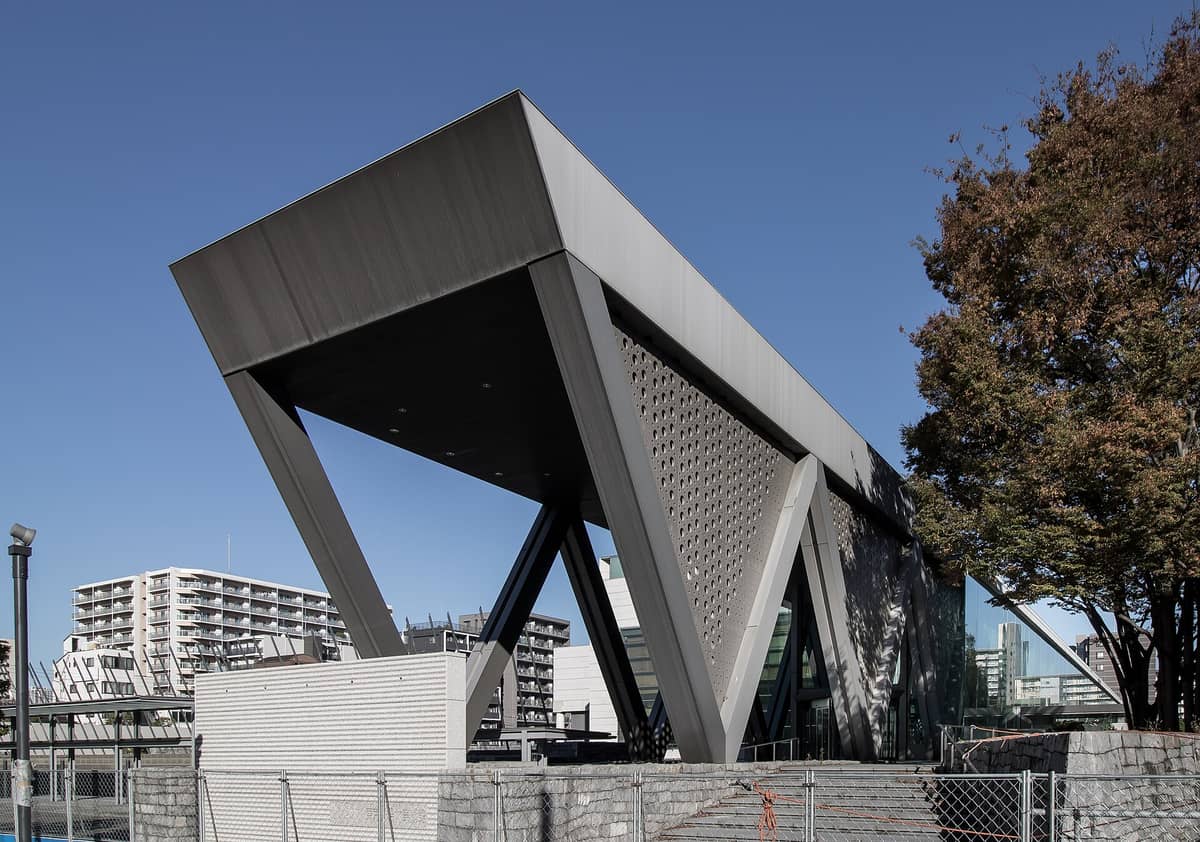
The architecture, designed by Takahiko Yanagisawa and completed in the early 1990s, is institutional modernism executed at scale. The exterior reads as deliberately understated: pale stone cladding, geometric massing, a long horizontal profile that sits low against the park greenery. It does not announce itself the way more theatrical cultural buildings do, and that restraint is part of the point. Walking toward it from Kiyosumi-Shirakawa Station, you pass through the edge of Kiba Park, where cherry trees line the paths in spring and the ground cover turns ochre and rust in late October.
Inside, the most immediately striking element is the central atrium corridor: a long, high-ceilinged passage flooded with natural light from a glass roof. The quality of light shifts noticeably depending on the time of day and season. On a clear morning, the atrium is bright and almost airy; on overcast days or in winter, it takes on a quieter, more contemplative tone that actually suits the art well. The spatial logic of the museum, with wings branching off this main spine, means you can navigate methodically or loop back without retracing the same path.
The park setting is worth factoring into your visit. If you are combining MOT with a walk through a traditional garden, Kiyosumi Garden is only about ten minutes away on foot, a compact Meiji-era strolling garden that provides a useful counterpoint to the museum's contemporary atmosphere.
Tickets & tours
Hand-picked options from our booking partner. Prices are indicative; availability and final rates are confirmed when you complete your booking.
Tokyo Dining Bar Experience with Darts Throwing Plan
From 8 €Instant confirmationFree cancellationTokyo Dining Darts Bar Experience with Unlimited Darts Plan
From 8 €Instant confirmationFree cancellationManga Art Workshop in a Traditional Tokyo House
From 88 €Instant confirmationFree cancellationTour to Mt. Fuji Area, Oshino Hakkai and Kawaguchi Lake from Tokyo
From 57 €Instant confirmationFree cancellation
The Permanent Collection: What You Will Find
MOT's permanent collection runs to several thousand works. The displayed selection rotates, so there is no guarantee any specific piece will be on view during your visit. What remains consistent is the breadth: Japanese artists dominate, naturally, but the collection places them in deliberate dialogue with international contemporaries. Postwar abstraction, Mono-ha (the Japanese movement concerned with raw materials and perception), Fluxus-related work, graphic design from mid-century Japan, and more recent video and installation art all appear across the galleries.
The permanent galleries occupy multiple levels, and the curatorial approach tends toward thematic groupings rather than strict chronological display. This can be rewarding if you engage with the logic of the arrangement, or slightly disorienting if you are hoping for a linear narrative of post-war art history. Reading the room labels carefully pays off here, as the museum provides contextual text in both Japanese and English.
For visitors building a broader understanding of Tokyo's museum landscape, it is worth noting how MOT differs from the more encyclopedic Tokyo National Museum in Ueno, which covers centuries of Japanese art history, or from the National Museum of Modern Art Tokyo near the Imperial Palace, which focuses on early twentieth-century modernism. MOT's territory is specifically the post-war contemporary period.
Special Exhibitions: The Main Draw for Most Visitors
The permanent collection is genuinely worth seeing, but MOT's special exhibitions are what generate real conversation. The museum has a track record of ambitious, large-scale shows, including retrospectives of major Japanese and international artists, design and architecture exhibitions, and collaborative projects with cultural institutions abroad. These exhibitions occupy the dedicated special exhibition galleries on the ground floor and are priced separately from the permanent collection admission.
Special exhibition tickets can sell out for popular shows, particularly on weekends and during school holiday periods. Checking the museum website before you travel and, where available, booking in advance is practical advice, not just precautionary boilerplate. On quieter weekdays, especially Tuesday through Thursday outside of peak tourist seasons, you can often walk up without issue.
⚠️ What to skip
The museum is closed on Mondays. If Monday falls on a public holiday, the museum opens that day and closes the following Tuesday instead. Always check the official calendar, as this catches visitors out more often than it should.
How the Experience Changes by Time of Day
Morning visits, from opening at 10:00 until around noon, tend to be the least crowded. The permanent collection galleries in particular can feel almost private during this window. Natural light in the atrium is at its most useful for viewing sculpture and large-format works without harsh contrast. If you are arriving from central Tokyo, the walk from Kiyosumi-Shirakawa Station cuts through a residential neighborhood of low-rise housing, small workshops, and the occasional tofu or confectionery shop, which is worth doing at a relaxed pace.
Midday on weekends brings school groups and families, particularly when the special exhibition is family-accessible. The museum has spaces designed with children in mind, and this is genuinely positive for some visitors and a reason for others to plan around it. Afternoons from around 14:00 tend to see a second wave of visitors. Late afternoon, especially in the two hours before closing, can be surprisingly quiet again, and the light in the atrium shifts to a warmer tone. If you are visiting during November Fridays, the 20:00 closing allows for a proper unhurried evening visit after the working day.
Getting There and Practical Logistics
The most direct public transit approach is the Tokyo Metro Hanzomon Line or Toei Oedo Line to Kiyosumi-Shirakawa Station. Exit B2 puts you on a straightforward nine-minute walk to the museum entrance. The walk is flat and well-signposted, passing through the park edge. Kiba Station on the Toei Tozai Line is the alternative, roughly fifteen minutes on foot from Exit 3, and the route is slightly more interesting if you want to see a bit more of the surrounding neighborhood.
The area around Kiyosumi-Shirakawa has developed considerably in the past decade into one of Tokyo's more interesting coffee neighborhoods, with specialty roasters concentrated near the station. It is a practical reason to budget extra time in the area. For a sense of how this part of eastern Tokyo fits into the broader city, the Tokyo neighborhoods guide provides useful orientation.
The museum is fully accessible by wheelchair. There are elevators serving all gallery levels, and the main entrance has step-free access from the park paths. The official visitor information page covers accessibility services in more detail, and it is worth consulting directly if you have specific requirements.
💡 Local tip
The museum's library and archive, focused on contemporary art research, is accessible to the public. It is not a browsing library, but it is a notable resource if you have a specific research interest in a Japanese or international contemporary artist.
Photography, the Museum Shop, and the Restaurant
Photography rules vary by exhibition. In the permanent collection galleries, photography is often permitted without flash for personal, non-commercial use, but individual works may be excluded and signage makes this clear. Special exhibitions more commonly restrict photography entirely or limit it to designated zones. Do not assume based on what was permitted during a previous visit, as rules change with each show.
The museum shop is worth fifteen minutes on its own terms. It stocks a well-curated selection of art books, exhibition catalogues, design objects, and prints, including items produced in connection with current and past MOT shows. The on-site restaurant offers a straightforward lunch menu with some seasonal variations. It is a reasonable option for a mid-visit break without leaving the building, though it is not a dining destination in itself.
If you are spending a full day in the area and want to extend into the evening, the Kiyosumi-Shirakawa and Monzen-Nakacho neighborhoods both offer good options. Monzen-Nakacho in particular has a concentration of izakayas and small restaurants along and behind its main shopping street, about ten to fifteen minutes by foot or one subway stop from Kiyosumi-Shirakawa.
Is MOT Worth the Trip from Central Tokyo?
For anyone with a genuine interest in contemporary art, the answer is straightforwardly yes. The museum is undervisited relative to its quality, which is its main practical advantage. The permanent collection holds substantial work, the special exhibitions are often ambitious, and the building provides a decent environment for engaging with large-scale and installation-based work.
For visitors on a tight itinerary whose interest in contemporary art is moderate rather than deep, the distance from central Tokyo is a real consideration. If your visit is primarily a check-the-box exercise rather than sustained engagement with the work, there are closer options that are easier to combine with other sights. The Mori Art Museum in Roppongi, for example, is more accessible from multiple neighborhoods and pairs naturally with the area's other cultural offerings. MOT, by contrast, rewards the visitor who comes specifically for it.
For visitors planning a day focused on Tokyo's art institutions, combining MOT with Kiyosumi Garden and the Kiyosumi-Shirakawa coffee district makes for a coherent day in eastern Tokyo without requiring much backtracking. You can find more options in the guide to Tokyo's best museums.
Insider Tips
- The nine-minute walk from Kiyosumi-Shirakawa Station (Exit B2) passes through the park rather than along a main road. Take a moment at the park entrance: the low-rise greenery and relative quiet is a sharp contrast to the station area and a good transition into museum-going headspace.
- If you are visiting a popular special exhibition, go straight to the special exhibition hall first when the museum opens at 10:00, before the main crowd arrives from midday. The permanent collection can be saved for a quieter afternoon slot when crowds redistribute.
- The permanent collection admission (¥500 for adults) is one of the better value tickets in Tokyo's museum scene. If the special exhibition is not relevant to your interests, the permanent collection alone justifies the visit without the additional ticket cost.
- November Friday evening visits take advantage of the extended 20:00 closing, which is genuinely rare for Tokyo museums of this caliber. The crowd thins significantly after 17:00, and the atrium light at dusk is worth experiencing.
- The museum's exterior courtyard and surrounding park paths can be walked freely without entering the museum. If you are in the area for Kiba Park or Kiyosumi Garden, a walk past the building's facade costs nothing and gives a sense of the architecture before deciding whether to go in.
Who Is Museum of Contemporary Art Tokyo (MOT) For?
- Contemporary art enthusiasts looking for a serious institution away from the tourist circuit
- Architecture-minded visitors interested in large-scale Japanese institutional design from the early 1990s
- Travelers combining cultural visits with the Kiyosumi-Shirakawa specialty coffee scene
- Families with children during exhibitions specifically designed with younger visitors in mind
- Repeat Tokyo visitors who have already covered the main Ueno museum cluster and want to go deeper
Nearby Attractions
Combine your visit with:
- Akasaka Palace (State Guest House)
The State Guest House, Akasaka Palace is Japan's principal diplomatic residence and one of the few Western-style palaces in Asia open to the public. Built in neo-baroque style for the Crown Prince in the early 20th century, it now receives heads of state and, on select days, ordinary visitors. The combination of ornate gilded interiors, formal French gardens, and a Japanese-style annex makes it one of the most architecturally unusual stops in Tokyo.
- Edo-Tokyo Open Air Architectural Museum
Spread across the grounds of Koganei Park, the Edo-Tokyo Open-Air Architectural Museum rescues and reassembles more than 30 historic structures spanning the Edo period through the early 20th century. From a dismantled farmhouse to a reconstruction of a Showa-era Tokyo streetscape, it is one of the most thoughtful and undervisited cultural sites in the metropolitan area.
- Enoshima
A small island off the Shonan coast of Kanagawa Prefecture, Enoshima packs a surprising amount into a short walk: a three-part Shinto shrine, ancient sea caves, a hilltop botanical garden, a lighthouse observation tower, and seafood stalls lining a stone-paved shopping street. It works as a half-day excursion or a full day if you combine it with nearby Kamakura.
- Gotokuji Temple
Gotokuji Temple in Setagaya is a working Soto Zen Buddhist temple that happens to be one of the claimed birthplaces of the maneki-neko, Japan's iconic beckoning cat. Hundreds of white ceramic cats line the shelves of a dedicated shrine, creating one of Tokyo's most quietly striking visual spectacles. Entry is free, crowds are manageable, and the surrounding grounds offer genuine calm.