Kiyosumi Garden: Tokyo's Quiet Masterpiece of Edo Garden Design
Kiyosumi Garden (清澄庭園) in Koto-ku is one of Tokyo's finest classical Japanese stroll gardens. Built around a large central pond and lined with carefully placed stepping stones, it offers a rare pocket of genuine calm in one of the world's largest cities, all for ¥150 entry.
Quick Facts
- Location
- 3-3-9 Kiyosumi, Koto-ku, Tokyo 135-0024
- Getting There
- Kiyosumi-shirakawa Station (Tokyo Metro Hanzomon Line / Toei Oedo Line), Exit A3 — 3-5 min walk
- Time Needed
- 45–90 minutes
- Cost
- ¥150 adults / ¥70 seniors 65+ / Free for children (primary school and under); junior high students living or studying in Tokyo also free
- Best for
- Garden lovers, photographers, travellers seeking quiet between sightseeing
- Official website
- www.tokyo-park.or.jp/teien/en/kiyosumi/index.html
What Kiyosumi Garden Actually Is
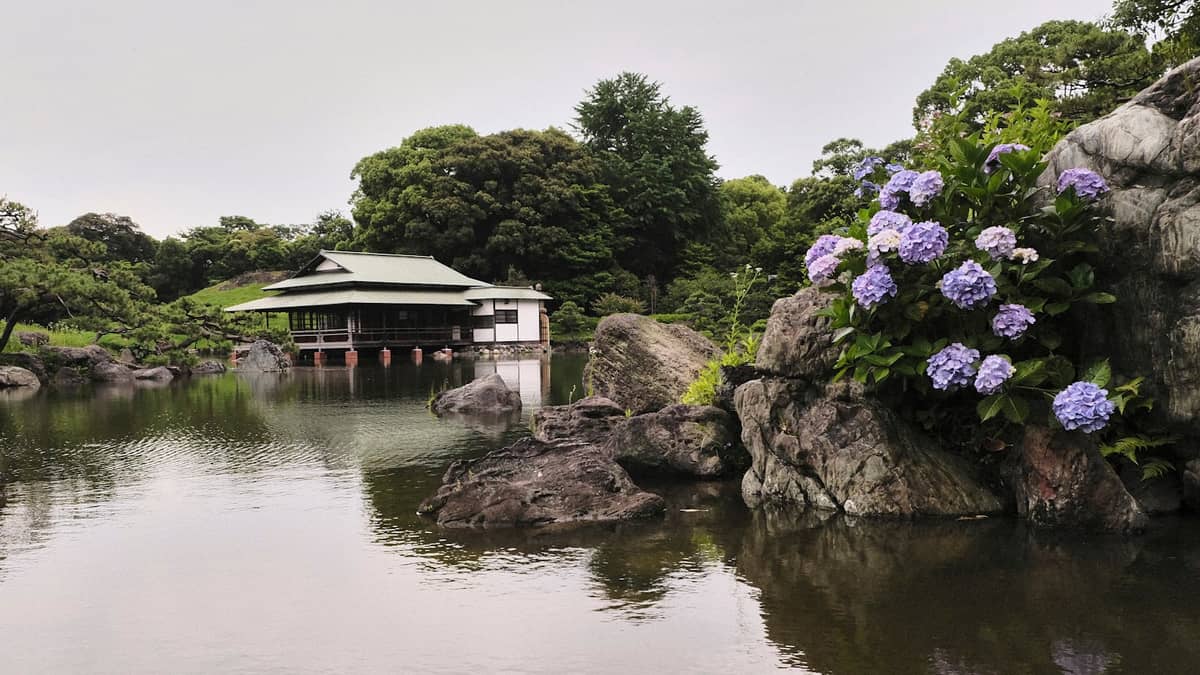
Kiyosumi Garden, known in Japanese as 清澄庭園 (Kiyosumi Teien), is a classical Japanese stroll garden in Koto Ward, on the east side of Tokyo. It is built around a broad central pond called Ozawa, and the entire circuit of the garden is designed to be experienced on foot, with the pond as a constant visual anchor. Unlike flat, symmetrical parks, every turn here reveals a composed scene: a mossy stone lantern framing a willow, a cluster of koi breaking the water's surface, or a distant pine silhouetted against an open sky.
The garden is managed by the Tokyo Metropolitan Park Association and designated as a Tokyo Metropolitan Scenic Site. Admission is ¥150 for adults, which makes it one of the most underpriced cultural experiences the city offers. Hours run from 9:00 to 17:00 daily (last entry 16:30), with closure during year-end holidays from December 29 through January 1.
💡 Local tip
Use Exit A3 at Kiyosumi-shirakawa Station for the most direct approach. The garden entrance is a 3–5 minute walk, and the ticket gate is immediately to your right after passing through the main stone entrance arch.
The Layout: Pond, Stones, and Carefully Composed Views
The defining feature of Kiyosumi Garden is its circuit path around Ozawa Pond. The route is roughly oval, lined at intervals with large, flat stepping stones that extend out over the water's edge. These isowatari, as they are called, are a signature element of certain Edo-period gardens: wide, roughly surfaced stones set at irregular heights, requiring you to slow your pace, watch your footing, and look down at the water just below. The sound changes here too: the ambient noise of the city disappears, replaced by the soft lap of water and occasional carp surfacing.
The stones themselves were apparently brought from various provinces across Japan, a reflection of the considerable resources invested in the garden's construction. Walking over them puts you physically closer to the pond surface than a conventional gravel path would, which creates an intimacy with the water that photos rarely capture well. On clear mornings, the reflections are near-perfect. By midday, the light hardens and detail flattens; late afternoon in autumn brings warm, directional light that is by far the most photogenic window.
At the center of the pond sits a small island connected by a simple wooden bridge. Turtles are regularly spotted on the rocks along the island's edge, and great blue herons occasionally stand motionless at the water's margin. The garden also includes a teahouse pavilion (Ryotei) that sits over the water at the northwest edge of the pond, though access to the interior varies.
Tickets & tours
Hand-picked options from our booking partner. Prices are indicative; availability and final rates are confirmed when you complete your booking.
Tsukiji Fish Market Walking Food Tour
From 40 €Instant confirmationFree cancellationMt.Fuji,Owakudani, Hakone Cruise & Ropeway, Oshino Hakkai 1-Day Trip
From 54 €Instant confirmationFree cancellationTour to Mt. Fuji Area, Oshino Hakkai and Kawaguchi Lake from Tokyo
From 57 €Instant confirmationFree cancellationNikko UNESCO Shrine and Nature View 1-Day Tour from Tokyo
From 78 €Instant confirmationFree cancellation
Historical and Cultural Context
The site has layered history. The area was originally developed as the residence and garden of the chief retainer of the Shimabara domain during the Edo period and later came into the possession of Iwasaki Yataro, the founder of the Mitsubishi zaibatsu. Iwasaki is credited with transforming the land into a proper garden retreat in the Meiji era, importing stones from across Japan and constructing the teahouse and other structures. The garden was subsequently donated to Tokyo City and opened to the public in 1932. It survived World War II largely intact, which is itself significant given how much of the surrounding low-city (shitamachi) district was destroyed.
This Meiji-era ambition to create a comprehensive, scenically varied garden in the Edo stroll tradition links Kiyosumi to other surviving examples across Tokyo. If you find the composition here compelling, the Koishikawa Korakuen Garden in Bunkyo offers a similar but larger experience with deeper historical documentation. For something lighter in tone, the gardens at Hamarikyu Gardens near Shiodome include a seawater tidal pond, a contrast that reveals how differently Tokyo's historic gardens were designed for their specific landscapes.
How the Garden Changes Through the Day
Arriving at opening time (9:00) is the clearest advantage a visitor can have here. The light is soft and low, mist sometimes sits over the water in cooler months, and the garden is genuinely quiet. By 10:30 on weekdays, local residents begin arriving for morning walks. On weekends, the garden sees more visitors by mid-morning, though it rarely becomes crowded in the way that famous Shinjuku or Hamarikyu gardens do on cherry blossom peak days.
Midday from roughly 11:30 to 13:30 brings the most people, and the stepping stones over the pond become popular spots for photographs, sometimes creating brief queues at narrow sections. The atmosphere is still calm by Tokyo standards, but if solitude is what you came for, this is the window to avoid. Late afternoon, especially in the hour before the 16:30 last entry, the visitor count drops noticeably, the low sun cuts across the pond at a sharp angle, and the garden settles into a quieter rhythm.
Seasonal Considerations
Autumn is widely regarded as the most rewarding season at Kiyosumi Garden. From late October through November, the maple, ginkgo, and zelkova trees around the pond turn progressively from green to yellow, orange, and deep red. The reflections in the pond during peak color days are exceptional. The garden does not hold dedicated autumn foliage illumination events, so it remains less visited than comparable gardens that do, which keeps the experience calm even at peak season.
Spring brings cherry blossoms along the pond edges, though Kiyosumi is not one of Tokyo's most famous cherry blossom destinations. Crowds are present but manageable. For a fuller picture of how and when Tokyo's seasonal gardens perform, the Tokyo gardens guide covers timing and comparisons across the city's best green spaces.
Summer (June to August) is the least comfortable season here. Tokyo's heat and humidity are real, and the garden provides limited shade on the open sections of the pond circuit. The lotus plants that grow at the southern end of the pond bloom in July and August, which is a legitimate reason to visit in summer, but plan for early morning arrival and bring water. Winter visits offer bare branches, still water, and a skeletal clarity that has its own appeal, particularly for photographers willing to dress warmly.
ℹ️ Good to know
The garden is closed December 29 through January 1. Last entry is at 16:30, though the gate closes at 17:00. Arriving after 16:00 still gives enough time for the full circuit at a steady pace.
Practical Walkthrough: Getting There and Around
The garden sits in Koto-ku, east of central Tokyo. The most straightforward approach is via Kiyosumi-shirakawa Station, served by both the Tokyo Metro Hanzomon Line and the Toei Oedo Line. Use Exit A3 and walk straight; the main entrance is visible within three to five minutes. The station itself has become well-known over the past decade as the hub of Tokyo's specialty coffee scene, with several notable roasters operating within a short radius. Arriving early and stopping for coffee before the garden opens is a natural pairing.
For visitors combining Kiyosumi with a broader east-side itinerary, the garden pairs naturally with Monzen-nakacho, a traditional shitamachi neighborhood with good izakayas and a historic shrine, reachable in about 15 minutes by foot or one stop on the Oedo Line. Ryogoku, home to the Edo-Tokyo Museum and sumo stadium, is also accessible from the same general area.
The garden circuit path is mostly flat and paved with gravel or compacted stone. Wheelchair access covers roughly half of the garden, including a substantial portion of the pond circuit, though the stepping stone sections over the water are not accessible by wheelchair. Visitors with limited mobility can still see the pond, the central island, and the teahouse pavilion from accessible sections. The terrain does not require any special footwear, though flat-soled shoes with grip are more comfortable on the irregular stepping stones than sandals or heels.
⚠️ What to skip
The isowatari stepping stones over the pond can be slippery after rain. Take your time on them regardless of weather, as the stones are set at varying heights and the edges are irregular.
Photography at Kiyosumi Garden
The garden is photographically rich but requires patience. The best single composition is from the small wooden bridge to the central island looking back toward the teahouse pavilion with the pond in the foreground. Early morning in autumn provides the cleanest version of this shot. The stepping stones themselves are photogenic from a low angle looking across the water surface. A wide-angle lens or a phone camera in portrait mode handles the spatial compression of the garden well; telephoto is less useful here than at open landscape gardens.
Tripods are permitted in the garden but cause congestion on the narrow stepping stone sections during busy periods. Filters are rarely necessary given how the pond softens and diffuses light naturally. The garden does not have any strongly artificial or ornamental elements, so the photography rewards restraint and attention to light rather than composition tricks.
Insider Tips
- The garden is less than 10 minutes' walk from several of Tokyo's best specialty coffee roasters clustered around Kiyosumi-shirakawa Station. The combination of a morning coffee ritual followed by a quiet garden circuit is one of the more civilized ways to start a Tokyo day.
- The turtles near the central island are most active in morning sunlight from spring through early autumn. If you want to photograph them, position yourself on the island bridge around 9:30–10:00 and wait quietly.
- Autumn foliage here peaks noticeably later than at gardens in the city's western hills. Check foliage reports: while Mount Takao and western Tokyo may peak in late October, Kiyosumi's east-side location often peaks in early to mid-November.
- There is a simple rest pavilion (not a full cafe) near the entrance where you can sit after your circuit. Bring your own food and drinks if you want to linger; vending machines are available inside the garden.
- Combining Kiyosumi with a visit to the nearby Fukagawa Fudoson temple and Tomioka Hachimangu shrine makes for a half-day shitamachi east-Tokyo itinerary that most first-time visitors overlook entirely.
Who Is Kiyosumi Garden For?
- Garden and landscape photography enthusiasts looking for reflections and seasonal foliage
- Travellers wanting genuine quiet and green space without large crowds
- Visitors combining a Koto-ku itinerary covering coffee culture, traditional shitamachi neighborhoods, and classical gardens
- Autumn foliage seekers who want an alternative to the city's more tourist-heavy garden venues
- Anyone on a tight budget: at ¥150, it is one of the best-value cultural experiences in central Tokyo
Nearby Attractions
Combine your visit with:
- Akasaka Palace (State Guest House)
The State Guest House, Akasaka Palace is Japan's principal diplomatic residence and one of the few Western-style palaces in Asia open to the public. Built in neo-baroque style for the Crown Prince in the early 20th century, it now receives heads of state and, on select days, ordinary visitors. The combination of ornate gilded interiors, formal French gardens, and a Japanese-style annex makes it one of the most architecturally unusual stops in Tokyo.
- Edo-Tokyo Open Air Architectural Museum
Spread across the grounds of Koganei Park, the Edo-Tokyo Open-Air Architectural Museum rescues and reassembles more than 30 historic structures spanning the Edo period through the early 20th century. From a dismantled farmhouse to a reconstruction of a Showa-era Tokyo streetscape, it is one of the most thoughtful and undervisited cultural sites in the metropolitan area.
- Enoshima
A small island off the Shonan coast of Kanagawa Prefecture, Enoshima packs a surprising amount into a short walk: a three-part Shinto shrine, ancient sea caves, a hilltop botanical garden, a lighthouse observation tower, and seafood stalls lining a stone-paved shopping street. It works as a half-day excursion or a full day if you combine it with nearby Kamakura.
- Gotokuji Temple
Gotokuji Temple in Setagaya is a working Soto Zen Buddhist temple that happens to be one of the claimed birthplaces of the maneki-neko, Japan's iconic beckoning cat. Hundreds of white ceramic cats line the shelves of a dedicated shrine, creating one of Tokyo's most quietly striking visual spectacles. Entry is free, crowds are manageable, and the surrounding grounds offer genuine calm.