Monzen-Nakacho: Tokyo's Shitamachi Neighborhood Done Right
Monzen-Nakacho sits in Koto City on Tokyo's east side, where Edo-period temple culture and a thriving izakaya scene exist side by side. It's one of the few parts of the city that feels genuinely local, without a tourist attraction anchoring it artificially.
Quick Facts
- Location
- Koto City (Koto-ku), Tokyo — east of the Sumida River
- Getting There
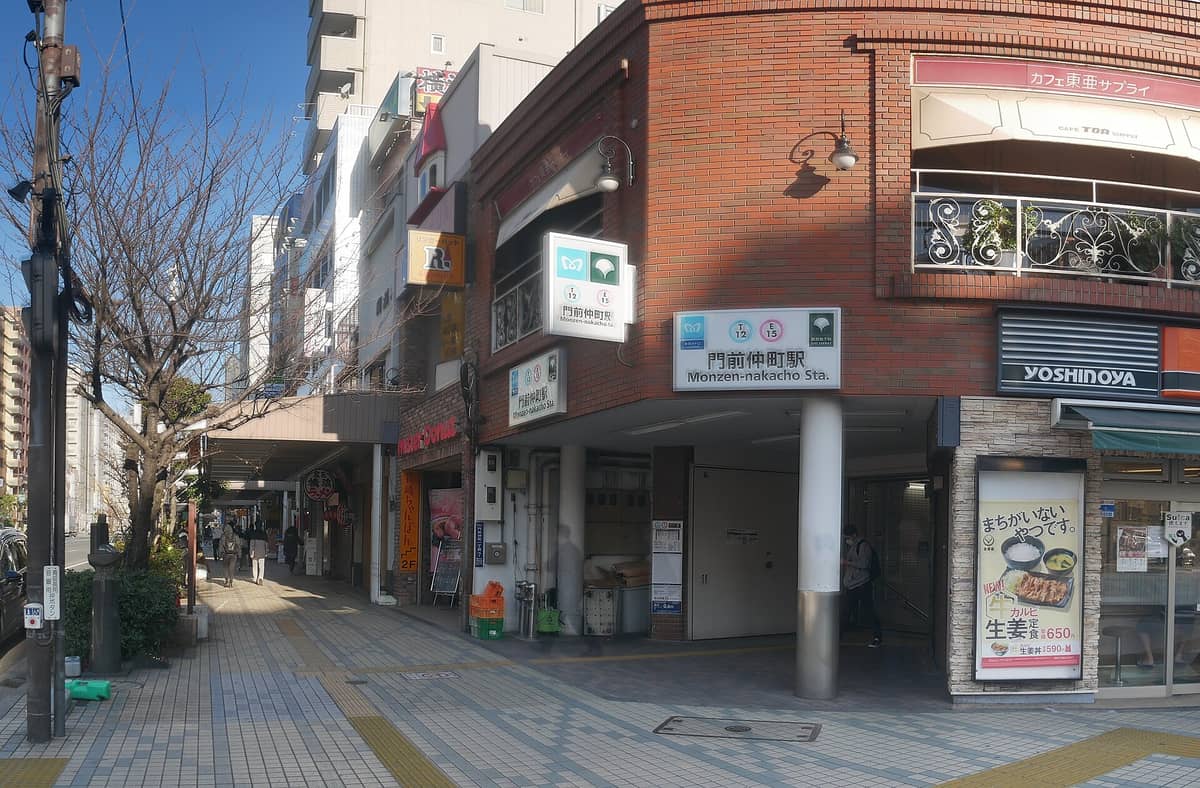
- Monzen-nakacho Station: Tokyo Metro Tozai Line (T-12) and Toei Oedo Line (E-15)
- Time Needed
- 2–4 hours for a daytime walk; add an evening if you plan to eat and drink
- Cost
- Free to explore; shrine and temple grounds free; individual izakaya bills vary
- Best for
- Travelers wanting authentic Tokyo without the crowds
What Monzen-Nakacho Actually Is
Monzen-Nakacho (門前仲町) is a neighborhood and station area in Koto City, on the eastern side of Tokyo near the Sumida River. It is not a single ticketed site. There is no entrance gate, no queuing system, and no souvenir shop at the exit. What exists instead is a dense urban pocket that has managed, against considerable odds, to retain the feel of old Tokyo shitamachi — the low-rise, merchant-class downtown culture of the Edo period (1603–1868).
The neighborhood developed around two major religious institutions: Tomioka Hachiman Shrine and Fukagawa Fudo-do Temple. Both are still active, still central, and still shape the rhythm of the streets around them. Pilgrims, locals picking up offerings, and curious visitors all share the same stone pathways without much friction. That mix is the point.
Most travelers pass through Monzen-Nakacho as part of a broader east Tokyo circuit. It pairs well with a visit to Kiyosumi Garden a short walk to the north, or can serve as a quieter counterpoint after a morning at Tsukiji Outer Market via the Oedo Line.
The Two Anchors: Shrine and Temple
Tomioka Hachiman Shrine is the larger and older of the two sites, founded in 1627. It is widely credited as the birthplace of professional sumo in Japan — the first official sumo tournaments were held on its grounds during the Edo period. Stone markers near the main precinct commemorate famous wrestlers. The shrine's main torii and broad approach path set the architectural tone for the entire neighborhood, with traditional lanterns and wooden signage that would not look out of place in a period film.
Fukagawa Fudo-do Temple sits just a short walk from the shrine and operates as a branch of the Naritasan Shinshoji Temple in Chiba. It is an esoteric Buddhist temple known for its goma fire rituals, which are performed multiple times daily (typically five times a day at set hours). If you time your visit correctly — the schedule is posted at the entrance — you can watch priests chant and feed a large ritual fire in an interior hall ringed with candles and heavy incense. The smell of cedar smoke and incense clings to the courtyard long after the ceremony ends. Both sites have free access to their main grounds, though specific interior areas or exhibitions may carry separate fees.
💡 Local tip
Goma fire rituals at Fukagawa Fudo-do run several times throughout the day. Check the posted schedule near the temple entrance on arrival — if one is 20–30 minutes away, it's worth waiting.
Tickets & tours
Hand-picked options from our booking partner. Prices are indicative; availability and final rates are confirmed when you complete your booking.
Tsukiji Fish Market Walking Food Tour
From 40 €Instant confirmationFree cancellationMt.Fuji,Owakudani, Hakone Cruise & Ropeway, Oshino Hakkai 1-Day Trip
From 54 €Instant confirmationFree cancellationTour to Mt. Fuji Area, Oshino Hakkai and Kawaguchi Lake from Tokyo
From 57 €Instant confirmationFree cancellationNikko UNESCO Shrine and Nature View 1-Day Tour from Tokyo
From 78 €Instant confirmationFree cancellation
How the Neighborhood Feels at Different Times of Day
Morning in Monzen-Nakacho is one of Tokyo's quieter pleasures. The shopping arcade — a covered shotengai that extends from near the station exit — is still sleepy, metal shutters half-raised, the smell of coffee and fresh tofu drifting from small shops that have been opening at the same hour for decades. Elderly residents do their daily errands. A few joggers pass through the temple approach. There is no performance of tradition here; it simply operates this way.
By midday, the shrine and temple see more foot traffic, and the handful of traditional restaurants along the main approach start filling with neighborhood workers on lunch breaks. This is a good time to walk the narrow backstreets that branch off the main arcade. Many of these lanes are still lined with wooden houses and small gardens, an architectural texture almost entirely absent from western or central Tokyo.
The most well-known version of Monzen-Nakacho belongs to the evening. After 6pm on weekdays, the izakaya bars that line the streets near the station exit begin to fill with office workers traveling in from nearby business districts. Unlike the curated nightlife of Shinjuku or Shibuya, the bars here are small, often decades old, with handwritten menus and no English translation. The sound is clinking glasses, the rapid-fire cadence of after-work Japanese conversation, and occasionally live shamisen from a bar that has been running jazz or traditional music nights since the 1980s. Weekday evenings often have a more authentic atmosphere than weekends, when the neighborhood draws a broader mix of visitors.
Getting There and Getting Around
Access is straightforward. Monzen-nakacho Station is served by two lines: the Tokyo Metro Tozai Line (station code T-12) and the Toei Oedo Line (station code E-15). The Tozai Line connects directly to major hubs including Nihonbashi and Otemachi to the west, and Nishi-Funabashi to the east. The Oedo Line loops through Roppongi, Shinjuku, and Ueno, making Monzen-Nakacho reachable from most parts of the city without transfers.
From the station exit, the neighborhood unfolds almost immediately. The main street leading to Tomioka Hachiman Shrine begins within two minutes on foot. The covered shopping arcade runs parallel. The entire core area — shrine, temple, main shopping street, and river embankment — can be covered comfortably in under 30 minutes at a slow pace, or explored thoroughly in two to three hours.
Both the Tokyo Metro and Toei stations have barrier-free access. The Tozai Line entrance includes wheelchair-accessible escalators and accessible toilets inside the gate. The Oedo Line station lists eight escalators, two elevators, and a multipurpose accessible toilet. For transit planning across the city, see the guide to getting around Tokyo.
ℹ️ Good to know
Monzen-Nakacho station address (Oedo Line): 2-5-2-saki, Monzennaka-cho, Koto-ku, Tokyo. Show this to a taxi driver if needed.
The Shitamachi Context: Why This Place Matters
Shitamachi — literally 'low city' — referred originally to the low-lying merchant and artisan districts of Edo that sat east and northeast of the shogun's castle. Monzen-Nakacho was firmly part of this world. While much of old shitamachi was destroyed in the 1923 Great Kanto Earthquake and again by wartime bombing in the 1940s, pockets of the east bank survived or were rebuilt in ways that preserved the spatial logic of Edo urban life: dense, walkable, organized around religious sites, with small specialty shops occupying specific roles in the community.
This history gives the neighborhood a different texture from places like Asakusa, which was rebuilt more self-consciously as a tourism district. Monzen-Nakacho never fully pivoted toward visitors, which is part of what makes it interesting. The pickled vegetable shops, the sake wholesalers, the narrow sushi counters with no English menus — these exist for locals, not for documentation.
If the historical and cultural dimensions of Tokyo's eastern districts interest you, the Edo-Tokyo Museum in Ryogoku provides the broader context, and the two areas can be combined into a half-day east Tokyo itinerary.
Practical Details: What to Wear, Bring, and Photograph
Comfortable walking shoes are sufficient. The terrain is entirely flat — Koto City sits on low coastal plain, close to sea level — and the distances are short. Dress modestly if you plan to enter the inner halls of either religious site. This does not mean formal attire; neat casual clothing is fine.
Photography is generally permitted in the shrine and temple grounds, though restrictions apply inside certain halls, particularly during the goma rituals. Look for signage or ask at the front desk before pointing a camera at ceremony participants. The shopping arcade and street scenes are freely photographable, and the area rewards patient, slow photography more than wide-angle crowd shots. Early morning, when the light is angled and the streets are empty, produces the most evocative images.
Bring cash. The izakaya bars, traditional food stalls, and smaller shops in this neighborhood frequently do not accept credit cards or IC transit cards as payment. There is an ATM inside a convenience store near the station exit if you need to withdraw yen.
⚠️ What to skip
Many Monzen-Nakacho izakaya do not have English menus or staff who speak English. If you are not comfortable ordering by pointing or using a translation app, choose one of the restaurants along the main shrine approach, where English menus are more common.
When to Visit and What Weather Does to the Experience
Spring and autumn are the most comfortable seasons to walk the neighborhood. October and November bring cool, dry air and the early stages of autumn color in the shrine grounds. Late March to May, when temperatures range from around 13°C to 23°C, is ideal for extended outdoor exploration. Summer — July through August — is hot and humid in this part of Tokyo, with temperatures regularly reaching around 31°C, and the low-lying coastal terrain offers little shade outside the covered arcade.
The Fukagawa Hachiman Matsuri, associated with Tomioka Hachiman Shrine, is one of the three great festivals of Edo and takes place in August every year, with its grand hon-matsuri edition held every three years. During the main festival, portable shrines are carried through the streets and participants are doused with water — a tradition specific to this festival. It is genuinely spectacular and worth timing a visit around if your travel dates align, but expect the neighborhood to be packed and accommodation nearby to fill weeks in advance.
For climate guidance and seasonal planning across the city, the best time to visit Tokyo guide covers all seasons with specific temperature ranges and event calendars.
Who Might Want to Skip This
Monzen-Nakacho does not offer the kind of structured experience that rewards a short or unfocused visit. If you have limited time in Tokyo and need every hour to count in terms of headline attractions, there are higher-density itinerary options in other parts of the city. The neighborhood rewards wandering and slowness. Travelers who need clear signage, English menus, or a defined route through a site may find it disorienting.
It is also not an area that works well in isolation for first-time Tokyo visitors. Those new to the city would benefit from reading a broader orientation first — the first-time visitor guide to Tokyo covers logistics and context that make a neighborhood like this easier to navigate.
Insider Tips
- The izakaya density is highest in the small alleys directly behind the station exit, not on the main shrine approach street. Look for the narrow lanes running perpendicular to the arcade — this is where the older, less tourist-facing bars operate.
- Tomioka Hachiman Shrine holds a popular antique market on the first and second Sunday of each month (with additional dates in some months), attracting antique dealers alongside standard flea market vendors and making it worth arriving early.
- The embankment along the old Onagi River, a few minutes' walk from the shrine, is almost completely unknown to visitors and offers a quiet stretch of water and low bridges that photographs like a different century.
- Several of the neighborhood's izakaya open for lunch, not just dinner. A lunchtime visit gives you access to the food without the evening crowds and noise levels — useful if you are traveling with people who prefer quieter meals.
- If you arrive by the Tozai Line, exit 1 deposits you almost directly at the start of the shrine approach. The Oedo Line exits emerge closer to the shopping arcade. Both are correct depending on what you want to see first.
Who Is Monzen-Nakacho For?
- Repeat Tokyo visitors ready to explore beyond the standard circuit
- Travelers interested in Edo-period history and living shitamachi culture
- Food and drink explorers seeking authentic izakaya without tourist-facing menus
- Photographers looking for unhurried street and temple scenes
- Anyone combining east Tokyo sites into a half-day or full-day itinerary
Nearby Attractions
Combine your visit with:
- Akasaka Palace (State Guest House)
The State Guest House, Akasaka Palace is Japan's principal diplomatic residence and one of the few Western-style palaces in Asia open to the public. Built in neo-baroque style for the Crown Prince in the early 20th century, it now receives heads of state and, on select days, ordinary visitors. The combination of ornate gilded interiors, formal French gardens, and a Japanese-style annex makes it one of the most architecturally unusual stops in Tokyo.
- Edo-Tokyo Open Air Architectural Museum
Spread across the grounds of Koganei Park, the Edo-Tokyo Open-Air Architectural Museum rescues and reassembles more than 30 historic structures spanning the Edo period through the early 20th century. From a dismantled farmhouse to a reconstruction of a Showa-era Tokyo streetscape, it is one of the most thoughtful and undervisited cultural sites in the metropolitan area.
- Enoshima
A small island off the Shonan coast of Kanagawa Prefecture, Enoshima packs a surprising amount into a short walk: a three-part Shinto shrine, ancient sea caves, a hilltop botanical garden, a lighthouse observation tower, and seafood stalls lining a stone-paved shopping street. It works as a half-day excursion or a full day if you combine it with nearby Kamakura.
- Gotokuji Temple
Gotokuji Temple in Setagaya is a working Soto Zen Buddhist temple that happens to be one of the claimed birthplaces of the maneki-neko, Japan's iconic beckoning cat. Hundreds of white ceramic cats line the shelves of a dedicated shrine, creating one of Tokyo's most quietly striking visual spectacles. Entry is free, crowds are manageable, and the surrounding grounds offer genuine calm.