Museum of Applied Arts Cologne (MAKK): What to Know Before You Go
The Museum für Angewandte Kunst Köln, known as the MAKK, is one of Germany's leading applied arts museums, tracing craft and design from medieval Europe to the present. Located a short walk from Cologne Cathedral in the Altstadt, it offers an accessible, unhurried alternative to the city's larger art institutions.
Quick Facts
- Location
- An der Rechtschule 7, 50667 Köln (Altstadt-Nord)
- Getting There
- Dom/Hauptbahnhof (U-Bahn/Bus), then approx. 10-min walk; or ~5 min on foot from Köln Hauptbahnhof
- Time Needed
- 1.5 to 2.5 hours for permanent collection; add 45 min for a special exhibition
- Cost
- Permanent exhibition €6 (concessions €3.50); combined ticket €12 (concessions €6.50). Free for under-18s and ColognePass holders. Verify prices before visiting.
- Best for
- Design enthusiasts, craft and jewellery lovers, visitors seeking a quieter alternative to Cologne's flagship museums
- Official website
- makk.de
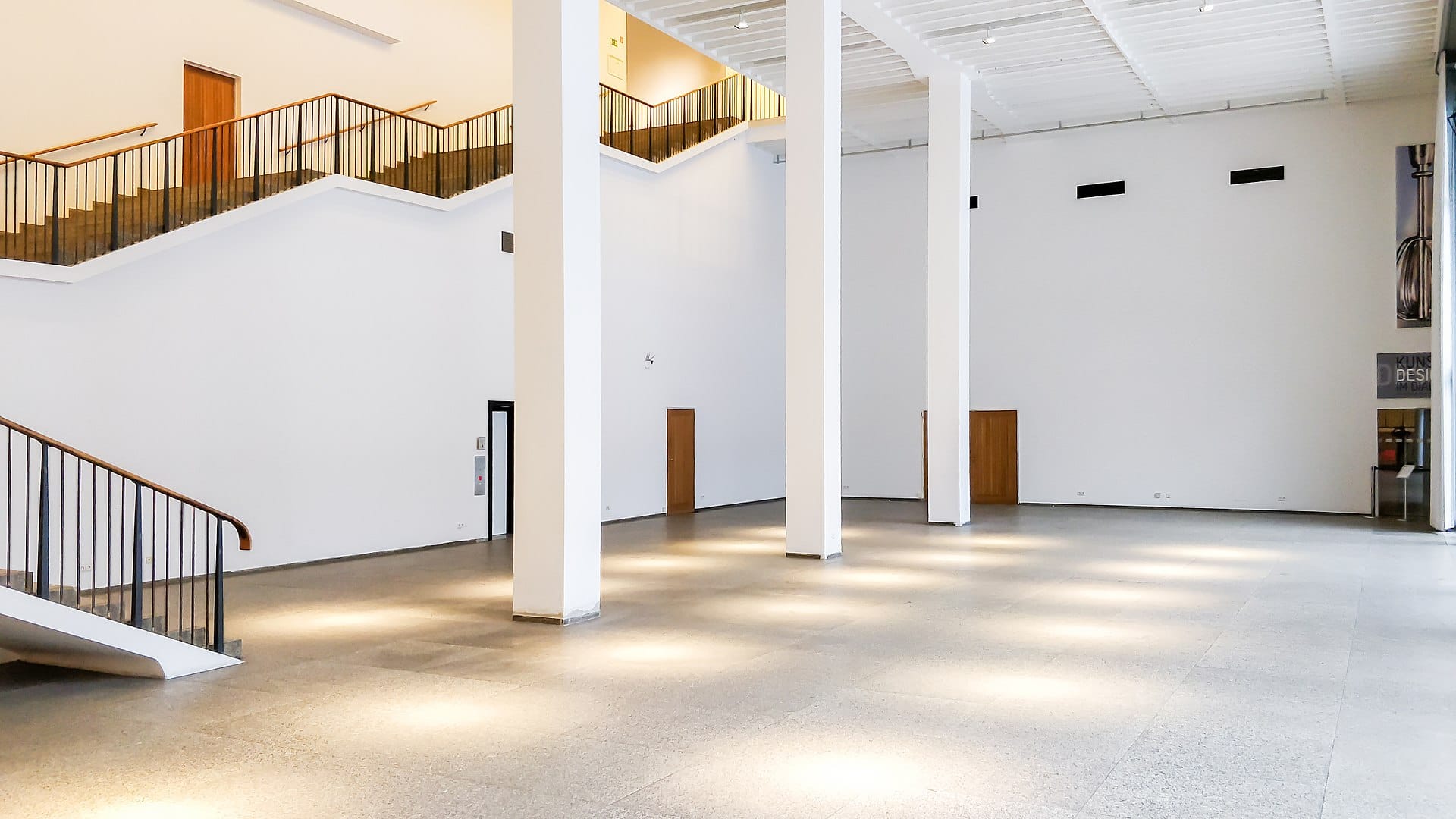
What the MAKK Actually Is
The Museum für Angewandte Kunst Köln, universally shortened to MAKK, is Cologne's museum of applied arts and design. Founded in 1888 as the Kunstgewerbemuseum through a civic initiative, it is one of the city's older museums. Its collection spans from the Middle Ages to the present, and in its jewellery holdings, reaches back some 5,000 years. That range, from ancient ornament to contemporary product design, is what makes the MAKK genuinely unusual among German regional museums.
Since 1989 the collection has been housed in a purpose-built museum building by architects Rudolf Schwarz and Josef Bernhard, set immediately south of Cologne Cathedral. The building itself is restrained and functional, prioritising clear sightlines and natural light rather than architectural showmanship. This suits the objects inside well: applied arts benefit from being seen in calm, well-lit conditions rather than dramatic theatrical staging.
ℹ️ Good to know
Opening hours: Tuesday to Sunday, 10:00–18:00. Closed Mondays and on Christmas Eve, Christmas Day, New Year's Eve, and New Year's Day. On the first Thursday of each month (excluding public holidays), the museum opens until 22:00.
The Collection: What You Will Actually See
The permanent collection is organised thematically and chronologically across multiple floors. Medieval and early modern European decorative arts form its historical foundation: furniture, textiles, ceramics, metalwork, and religious objects whose craftsmanship represents centuries of guild tradition. These rooms tend to be quiet and unhurried, which allows close inspection of the objects in a way that busier museums rarely permit.
The jewellery collection is the MAKK's most distinctive holding. Covering roughly 5,000 years of human ornament, it moves from ancient pieces through Renaissance goldsmithery to modernist and contemporary jewellery design. The transition from historical pieces to work by 20th- and 21st-century designers is handled thoughtfully rather than abruptly, allowing visitors to trace how ideas about adornment and material have shifted across cultures and centuries.
The 20th-century design rooms cover furniture, industrial design, and applied objects from the Arts and Crafts era through to post-war and contemporary German design. If your interest lies in how everyday objects were conceived and crafted, these galleries reward slow looking. Labels are in German and English throughout, which matters for international visitors.
💡 Local tip
On the first Thursday of each month, the MAKK stays open until 22:00. Evening visits are noticeably quieter, and the artificial lighting gives certain metalwork and glass pieces a different quality than daylight viewing. Worth planning around if you are in Cologne mid-week.
Tickets & tours
Live prices and dates from our booking partner. If you book, we may earn a commission at no extra cost to you.
Cologne haunted places and ghost stories: interactive city game
From 8 €Instant confirmationFree cancellationFood Tour Cologne Sudstadt
From 44 €Instant confirmationFree cancellationCologne brewery tour including 3 Kolsch beer
From 28 €Instant confirmation2-hour afternoon cruise in Cologne at Christmastime
From 25 €Instant confirmationFree cancellation
How the Experience Changes by Time of Day
Morning visits, especially on weekdays between 10:00 and 12:00, are the quietest. The building fills slowly, and you can spend ten minutes in front of a single cabinet without another visitor nearby. This is the best time for photography, since gallery lighting is supplemented by natural light from above without the harsh glare that can occur on bright summer afternoons.
Midday on weekends sees a modest increase in visitors, though the MAKK never approaches the crowd levels of the nearby Museum Ludwig or Wallraf-Richartz. School groups occasionally move through the lower floors on weekday mornings; if you prefer silence, wait until they have cleared before visiting those sections. Afternoons are generally calm again by 14:00.
Visiting on the late-opening Thursday evening is genuinely different. The cathedral district outside empties of daytime tourists, the light inside shifts to a warmer artificial tone, and the museum takes on a contemplative quality that suits the craftsmanship on display. If your Cologne itinerary already includes evening plans in the Altstadt, the MAKK on a Thursday is an easy add. For more on planning your time in this part of the city, see the Cologne walking tour guide.
Getting There and Finding It
The museum's address is An der Rechtschule 7, a narrow street in the Altstadt-Nord district. From Köln Hauptbahnhof, the walk takes roughly five minutes south through the cathedral precinct. From the Dom/Hauptbahnhof U-Bahn and bus stop, allow closer to ten minutes on foot. The museum entrance is easy to miss if you are walking quickly: it sits between the cathedral complex and the Rhine promenade, not directly on a major pedestrian route.
If you are arriving by car, nearby parking garages include Dom, Brückenstraße, and Opern Passagen. Driving into this part of the Altstadt is impractical during peak hours, and parking fees in central Cologne can be high. Public transport or walking from the Hauptbahnhof is a more reliable option.
The MAKK's location makes it easy to combine with other nearby attractions. The Wallraf-Richartz Museum is a short walk away, as is the Cologne City Hall. If you have a full day in the Altstadt, the combination of the MAKK with one of these larger institutions is manageable without fatigue.
Tickets, Concessions, and Free Entry
Entry to the permanent exhibition costs €6, with concessions at €3.50. A special exhibition ticket is €7 (€4 concessions), and a combined ticket covering both is €12 (€6.50 concessions). These prices are accurate at time of writing but should be verified directly with the museum before visiting, as they are subject to change.
Free admission applies to a wide range of visitors: children under six, children and young people under 18 who are residents of Cologne, schoolchildren worldwide with up to two accompanying adults per class, ColognePass holders, and refugees from Ukraine. Reduced admission applies to students, trainees, holders of the Ehrenamtskarte, federal volunteers, and severely disabled persons. One accompanying person enters free if the disability card carries a 'B' notation.
Cologne residents receive free admission to both permanent and special exhibitions on KölnTag, the city's periodic free-entry promotion day. If you hold a CologneCard or are planning an extended stay, check whether KölnTag falls during your visit. The Cologne on a budget guide covers these and other free or reduced-price museum options across the city.
Accessibility, Practical Notes, and What to Bring
The MAKK building is wheelchair accessible throughout. Severely disabled visitors receive reduced admission, and as noted above, an accompanying person may enter free with the relevant notation on the disability card. The calm layout and absence of large crowds makes this museum notably easier to navigate than Cologne's busier institutions.
Photography is generally permitted in the permanent collection without flash; always check for restrictions in temporary exhibition spaces, where third-party loan agreements sometimes apply. The display cases housing jewellery and metalwork produce reflections if you shoot at the wrong angle: a slight diagonal approach to the glass eliminates most glare. A phone camera is sufficient for most pieces, but a dedicated camera with manual focus helps with small objects behind thick glass.
The museum does not have a large café, so if you plan a longer visit, eat beforehand or plan a break in the surrounding Altstadt-Nord neighbourhood. The area around the cathedral and the Old Town has no shortage of options, ranging from traditional Cologne brewing-house food to lighter alternatives. For context on the neighbourhood itself, the Altstadt Cologne guide covers the full area.
Who Will Love It and Who May Not
The MAKK rewards visitors with a genuine interest in craft, design history, or decorative arts. If you approach it with those interests, the collection offers more depth than its relatively modest entry fee suggests. The jewellery holdings in particular justify the visit on their own for anyone with any interest in the history of adornment.
Visitors expecting the scale and spectacle of the Museum Ludwig or the medieval intensity of the Museum Schnütgen will find the MAKK more restrained. It does not trade in dramatic installations or landmark works. Its strength is accumulation and range rather than individual showpieces.
Children under about ten are likely to find the permanent collection slow-moving, though temporary exhibitions sometimes include more interactive elements. Visitors who prioritise contemporary art over craft and design history may find better use of their time at the Museum Ludwig a few hundred metres away. That said, as a half-day museum in a convenient central location, the MAKK offers more than its low profile in international guidebooks suggests.
Insider Tips
- The first-Thursday late opening (until 22:00) is the best-kept practical advantage the MAKK offers. Evening crowds are thin, and the shift to artificial light transforms the metalwork and glass displays in ways worth experiencing separately from a daytime visit.
- The jewellery collection is spread across more than one floor and is easy to miss if you follow the main collection flow without backtracking. Ask at the front desk for the current collection map to make sure you cover it.
- KölnTag offers free entry on the first Thursday of the month. If you are spending three or more days in Cologne, the MuseumsCard or the KölnCard bundle often pays for itself across multiple museums, including the MAKK.
- The building's exterior courtyard, accessible from the entrance foyer, offers an unexpectedly calm resting point in a part of the Altstadt that can feel crowded in summer. It is easy to overlook but worth a few minutes.
- Temporary exhibitions at the MAKK tend to focus on contemporary design and applied art from international makers. They are frequently stronger than the museum's low international profile would suggest. Check the schedule on makk.de before your visit, since a well-chosen special exhibition can significantly shape whether the combined ticket is worth buying.
Who Is Museum of Applied Arts (MAKK) For?
- Design and craft enthusiasts who want depth over spectacle
- Jewellery history lovers, from ancient origins to contemporary goldsmithery
- Visitors seeking a quieter, less crowded alternative to Cologne's major art museums
- Budget travellers using a ColognePass or visiting during KölnTag
- Travellers with limited time who want a focused, manageable museum experience close to the cathedral
Nearby Attractions
Other things to see while in Altstadt (Old Town):
- 4711 House (Dufthaus 4711 / Haus Mülhens)
The 4711 House on Glockengasse is the home of the 4711 Original Eau de Cologne, the famous citrus fragrance developed by Wilhelm Mülhens from 1792 (the earlier Farina fragrance from 1709 is generally considered the original 'eau de Cologne'). Part flagship store, part fragrance museum, and part architectural curiosity, it offers a compact but interesting stop in Cologne's Altstadt-Nord for anyone curious about the city's most famous exports.
- Cologne City Museum (Kölnisches Stadtmuseum)
The Kölnisches Stadtmuseum traces Cologne's extraordinary 2,000-year arc from Roman outpost to Rhine metropolis. Reopened in a striking new home on Minoritenstraße in March 2024, it offers an affordable and intellectually rewarding afternoon in the city's Altstadt.
- Cologne Cathedral (Kölner Dom)
Cologne Cathedral, officially the Hohe Domkirche Sankt Petrus, is Germany's most visited landmark and one of the great Gothic structures on earth. This guide covers tourist ticketing, tower access, the Treasury, and how to make the most of your time there.
- Cologne City Hall (Kölner Rathaus)
The Kölner Rathaus is Germany's oldest city hall, a layered architectural landmark in Cologne's Old Town that spans Gothic, Renaissance, and modern styles.
Planning a trip? Discover personalized activities with the Nomado app.