Museo Kaluz: Three Centuries of Mexican Art in an 18th-Century Masterpiece
Housed in a meticulously restored Augustinian hospice on Avenida Hidalgo, Museo Kaluz presents a sweeping private collection of Mexican art spanning the 18th to 21st centuries. The building alone, with its stone courtyard and colonial archways, earns the detour from the Zócalo.
Quick Facts
- Location
- Av. Hidalgo 85, Centro Histórico, CDMX — facing Alameda Central
- Getting There
- Metro Hidalgo (Lines 2 and 3), short walk
- Time Needed
- 1.5 to 2.5 hours
- Cost
- Paid admission; verify current MXN prices at the ticket office or official site
- Best for
- Mexican art enthusiasts, architecture lovers, rainy-day culture seekers
- Official website
- museokaluz.org/indexEnglish.html
What Is Museo Kaluz?
Museo Kaluz is a private art museum in Mexico City's Centro Histórico dedicated to Mexican art from the 18th century through the present day. It occupies a beautifully restored 18th-century viceregal building at Avenida Hidalgo 85, directly facing the Alameda Central park, and within a few minutes' walk of the Palacio de Bellas Artes. For anyone serious about understanding the full arc of Mexican visual culture — from colonial religious painting to 20th-century modernism — this museum offers one of the most focused collections in the city.
The museum is relatively new to the cultural scene, having opened in 2020, which means it hasn't yet saturated the tourist circuit the way the Museo Nacional de Antropología or the Palacio de Bellas Artes have. Crowd levels tend to be manageable even on weekends, making it a calmer experience than many comparable institutions in the historic center.
ℹ️ Good to know
Museo Kaluz is closed on Tuesdays. On all other days it opens at 10:00 and closes at 18:00. Ticket prices and categories are listed on the official website, but they can change, so verify current MXN amounts online or at the ticket desk before your visit.
The Building: From Augustinian Hospice to Hotel to Museum
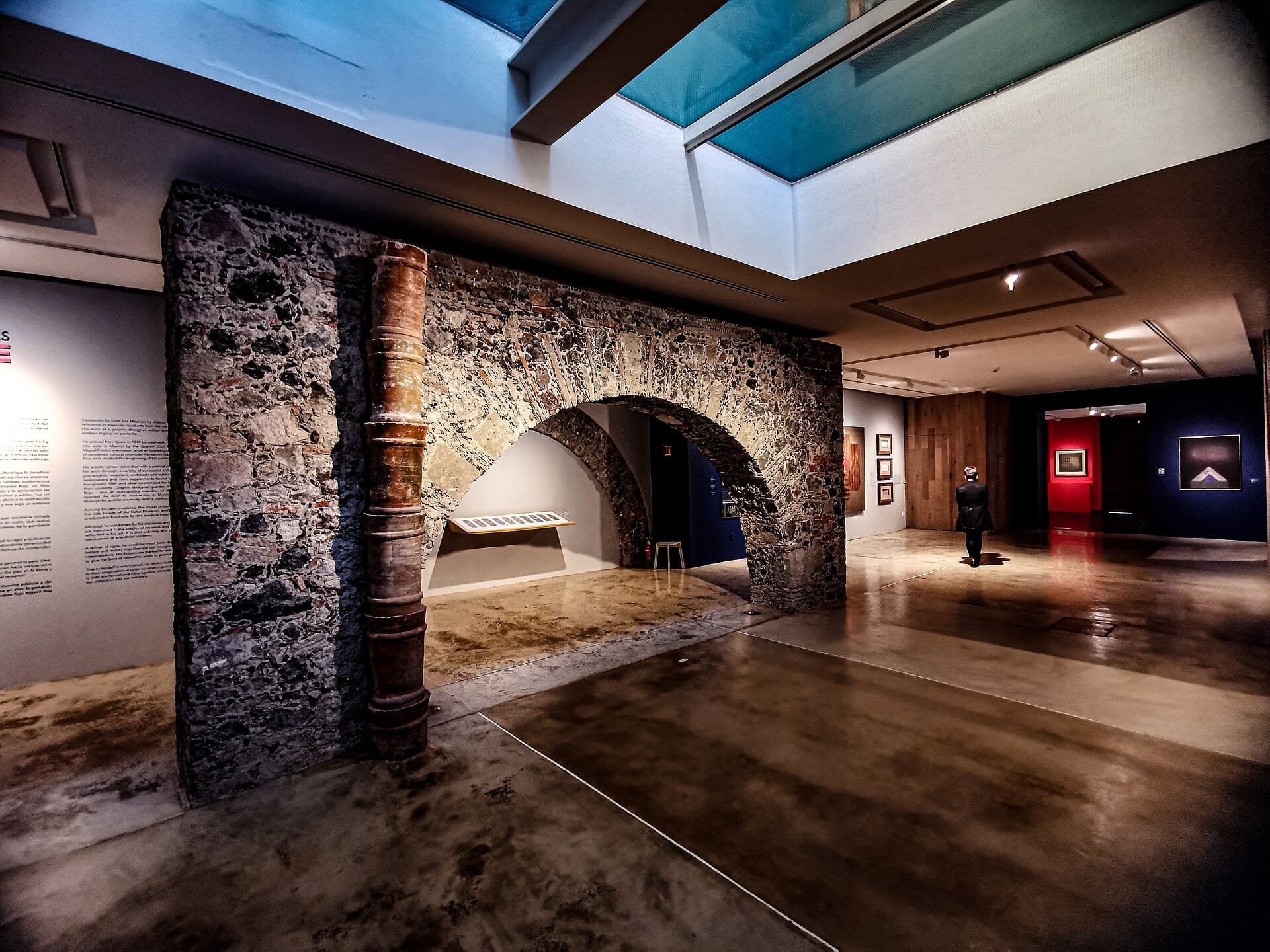
The structure that houses Museo Kaluz has lived several lives. Built as the Augustinian hospice of Santo Tomás de Villanueva, it served as a waystation for Augustinian friars traveling between Spain and the Philippines, a route that passed through Mexico City at its colonial peak. The building's proportions, its stone facade, and the proportioned central courtyard surrounded by arched corridors all reflect the institutional architecture of New Spain — solid, ordered, and quietly impressive without the theatrical ornament of a church facade.
After the colonial era, the building passed into commercial and residential use, and eventually became the Hotel de Cortés, operating as a hotel until 2016. The conversion into a museum involved significant restoration work, and it shows: the interior feels looked-after rather than retrofitted. Exposed stonework, original archways, and the central patio have been preserved while gallery spaces are cleanly lit and climate-controlled. The tension between the old bones of the building and the contemporary art it sometimes houses is one of the more interesting aspects of the visit.
This area of the historic center is architecturally dense. The museum sits within walking distance of the Alameda Central, Mexico City's oldest public park, and a short stroll from the Museo Franz Mayer. Visitors interested in colonial-era decorative arts will find that the Kaluz collection and the Franz Mayer collection complement each other well, and both can be visited in a single half-day.
Tickets & tours
Live prices and dates from our booking partner. If you book, we may earn a commission at no extra cost to you.
Xochimilco, Coyoacan and Frida Kahlo Museum with skip-the-line tickets
From 63 €Instant confirmationFree cancellationFrida Kahlo and Diego Rivera legacy visit to three museums with skip-the-line tickets
From 67 €Instant confirmationFree cancellationSix Flags Amusement Park tickets and transportation
From 87 €Instant confirmationFree cancellationMexico City National Museum of Anthropology guided tour
From 57 €Instant confirmationFree cancellation
The Collection: Mexican Art Across Three Centuries
The permanent collection at Museo Kaluz traces Mexican art from the 18th century through the 21st, presenting works that span colonial religious painting, 19th-century academic art, the muralist and modernist generations, and contemporary practice. It is, at its core, a private collection made public — assembled with a specific curatorial vision rather than the encyclopedic ambition of a national museum.
The colonial and viceregal section carries particular weight given the building's own history. Large-format religious canvases and devotional objects sit naturally in rooms that would have been familiar to the friars who once passed through. As the collection moves forward in time, the tone shifts: 19th-century portraits and landscapes give way to the charged, politically saturated imagery of the post-Revolution period. Mexican muralism and its ideological context are well-represented, and the 20th-century rooms tend to draw visitors who linger longest.
The museum also hosts temporary exhibitions, which vary in scale and subject. These can run concurrently with the permanent galleries, so it's worth checking the current program on the official website before your visit. On occasion, a strong temporary show will add a full extra hour to a visit that might otherwise take ninety minutes.
Visiting the Museum: What the Experience Actually Feels Like
Enter from Avenida Hidalgo and you pass almost immediately into the colonial courtyard, which is the spatial heart of the building. On clear mornings, light angles down through the open roof of the patio and hits the stone floor in a way that makes the building feel more alive than the galleries themselves. This is a good spot to pause before diving into the collection. The air is cool and faintly musty in the older corridors — not unpleasant, just the smell of old stone and humidity that attaches itself to 18th-century buildings in central Mexico City.
The gallery layout follows a roughly chronological path, though the building's architecture means you'll pass between rooms at different levels and orientations. Navigation is intuitive enough that most visitors won't need a map, but English-language wall text is present, making the collection accessible to non-Spanish speakers. Audio guides may be available; verify current offerings directly with the museum.
Weekday mornings between opening and around noon tend to be the quietest. Weekend afternoons, particularly Saturdays, bring more visitors, especially families and school groups. The intimate scale of many rooms means that a group of twelve people can make a gallery feel crowded, so earlier visits reward those who prefer to take their time in front of individual works.
💡 Local tip
Arrive at opening time on a Wednesday or Thursday for the quietest experience. The morning light in the courtyard is worth the early start, and you'll have many of the colonial galleries to yourself.
Getting There and Practical Logistics
The most convenient transit option is Metro Hidalgo, served by Lines 2 and 3. From the station exit, the museum is a short walk along Avenida Hidalgo toward Alameda Central. The walk itself passes through one of the more pleasant stretches of the historic center, with the park on one side and a series of colonial facades on the other.
If you're arriving from the Zócalo area — perhaps after visiting the Templo Mayor or the National Palace — Museo Kaluz is about a 15-minute walk west along Avenida Madero and then through the Alameda. This is a logical pairing for a full day in the historic center focused on Mexican history and art.
Street-level parking in this part of the Centro Histórico is limited and not recommended. Ride-hailing apps (Uber, DiDi, Cabify) are a practical alternative if you're not using public transit. Drop-off on Avenida Hidalgo is straightforward.
Visitors with specific mobility or accessibility needs should contact the museum directly before visiting, as detailed accessibility specifications are not published on the official site. The courtyard and some gallery areas involve uneven historic stone surfaces.
Photography, What to Wear, and Important Caveats
Photography policies inside the galleries can vary by exhibition. The courtyard, as a shared architectural space, is generally photographable, and the stone arches and proportioned facade make for strong architectural images in morning light. For interior gallery photography, check with staff at the entrance, as temporary exhibitions sometimes carry restrictions.
The museum is well-insulated from the noise of Avenida Hidalgo, but the street outside can be congested, particularly on weekend mornings when the Alameda draws crowds. Dress is casual, though the cool interior means a light layer is useful — the building's thick stone walls keep temperatures noticeably lower than outside, which in the warm months (March through May) is a relief.
An note on expectations: Museo Kaluz is not a blockbuster institution. Its collection, while coherent and especially interesting, is relatively compact. Visitors hoping for the sheer scale of the Museo Nacional de Arte or the anthropological depth of the national collections may find it leaves them wanting more. Where it excels is in the quality of its curation, the exceptional setting, and the sense of intimacy that larger institutions rarely offer.
⚠️ What to skip
The museum is closed every Tuesday. Ticket prices are not listed online — check the current admission fee at the door or contact the museum before planning a budget-sensitive visit.
Insider Tips
- Spend time in the central patio before entering the galleries. The proportions of the courtyard, the carved stone details on the arches, and the morning light make it one of the better architectural spaces in the historic center.
- The museum's location directly across from Alameda Central makes it easy to combine with a walk through the park and a visit to the nearby Museo Mural Diego Rivera, which houses the famous 'Dream of a Sunday Afternoon in Alameda Park' — a work that references many of the same historical threads as the Kaluz collection.
- Check the official website for the current temporary exhibition before your visit. The quality and scale of temporary shows varies, and a strong one can transform a 90-minute visit into a half-day.
- If you're visiting multiple Centro Histórico museums in one day, start at Museo Kaluz when it opens and work your way east toward the Zócalo. This lets you avoid the mid-afternoon crowds that build up near the major monuments.
- The museum's gift shop, if stocked with exhibition catalogues, is worth a look for anyone interested in Mexican art publishing — catalogues from the Kaluz collection are not widely available outside the museum.
Who Is Museo Kaluz For?
- Art lovers seeking a focused, chronological survey of Mexican painting without the crowds of national institutions
- Architecture enthusiasts drawn to well-preserved colonial civic buildings
- Travelers combining a full historic center itinerary across a single day
- Visitors looking for a quieter, air-cooled retreat during the hot dry season (March to May)
- Anyone interested in how colonial religious art connects to Mexico's post-Revolution modernist tradition
Nearby Attractions
Other things to see while in Centro Histórico:
- Alameda Central
Founded in 1592, Alameda Central is the oldest public park in the Americas and the green centerpiece of Mexico City's historic center. Flanked by the Palacio de Bellas Artes and a ring of colonial-era institutions, it offers free entry, shaded walkways, and a front-row seat to everyday city life.
- Calle Madero
Avenida Francisco I. Madero connects the Zócalo to the Torre Latinoamericana along one of the oldest streets in the Americas. Free to walk at any hour, it layers colonial architecture, street performance, and everyday city life into a single corridor that doubles as an open-air history lesson.
- Casa de los Azulejos
Casa de los Azulejos is one of the most photographed facades in Mexico City, its exterior wrapped in blue-and-white Talavera tiles from Puebla. With documented origins in the 16th century and operating as a Sanborns restaurant since 1919, it offers free entry and a rare chance to step inside a baroque palace that has survived centuries of history.
- La Ciudadela Artisan Market
The Mercado de Artesanías de La Ciudadela is one of Mexico City's largest and best-known handicraft markets, with more than 350 vendors selling handmade goods from across 22 states. Entry is free, quality ranges from tourist trinkets to serious collector pieces, and knowing how to navigate the stalls makes all the difference.
Planning a trip? Discover personalized activities with the Nomado app.