Museo Deleddiano: Inside the Birthplace of Sardinia's Nobel Laureate
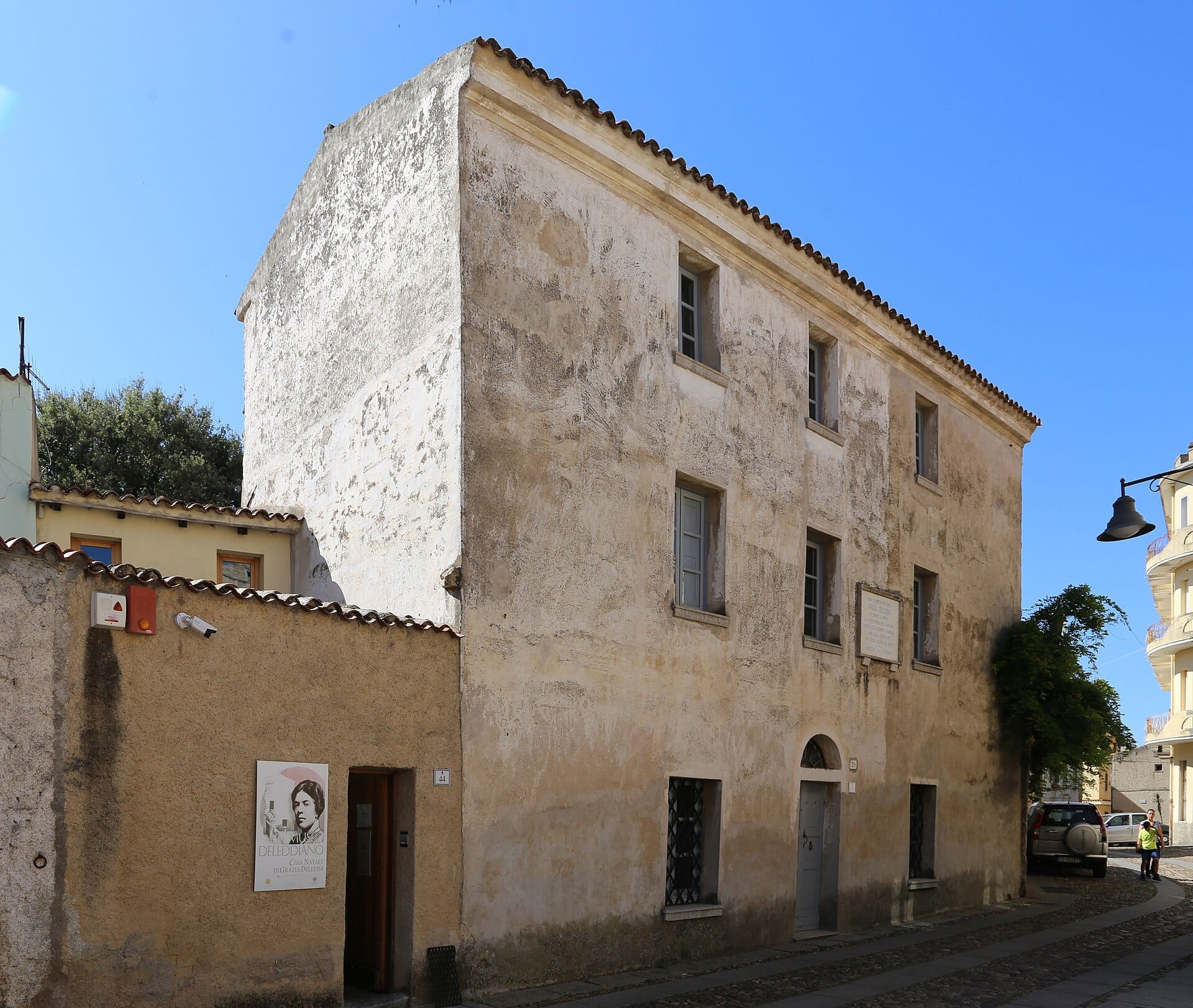
The Museo Deleddiano in Nuoro preserves the actual house where Grazia Deledda was born in 1871 and raised until her marriage in 1900. The three-floor, ten-room bourgeois residence in the historic Santu Pedru district offers an intimate window into the world that produced Sardinia's only Nobel Prize winner in Literature. Small in scale but dense with meaning, it rewards slow visitors who come prepared.
Quick Facts
- Location
- Via Grazia Deledda 42, Santu Pedru district, Nuoro, Sardinia
- Getting There
- City buses and taxis from central Nuoro; reachable by car on tarmac road
- Time Needed
- 45–90 minutes
- Cost
- €5 standard, €3 reduced (under 18). Free on first Sunday of each month. Closed on Mondays.
- Best for
- Literature lovers, cultural travelers, and anyone wanting to understand inner Sardinia beyond the coast
- Official website
- www.isresardegna.it
What the Museo Deleddiano Actually Is
The Museo Deleddiano is not a conventional literary museum filled with glass cases and laminated panels. It is the childhood home of Grazia Deledda, born here on 27 September 1871, and it has been preserved and presented as a house-museum since it was inaugurated on 5 March 1983. You are walking through the rooms she grew up in, looking out at the courtyard she would have crossed as a child, touching the same thick stone walls that surrounded her while she taught herself to write in a town that offered women almost no formal education.
Deledda went on to win the Nobel Prize in Literature in 1926, the only Sardinian ever to do so, cited by the Swedish Academy for her 'inspired writings which with plastic clarity picture the life on her native island and with depth and sympathy deal with human problems in general.' The house at Via Grazia Deledda 42 is where that life took shape. The Municipality of Nuoro purchased it in 1968, the regional cultural institution ISRE (Istituto Superiore Regionale Etnografico) took it over in 1979, and it opened to the public in 1983.
ℹ️ Good to know
Opening hours listed on tourism platforms indicate daily 09:00–20:00, but multiple sources confirm the museum is closed on Mondays. Always verify current hours directly with ISRE before visiting: +39 0784 242900 or isresardegna@isresardegna.org.
The Building and Its Rooms
The house dates from the second half of the nineteenth century and is a typical bourgeois residence of provincial Sardinia from that era: solid, practical, slightly austere, with internal courtyards that regulate light and temperature rather than show off wealth. Three floors, roughly ten rooms open to the public, connected by stone stairs worn smooth with use. The ceilings are lower than modern rooms and the windows face inward as much as outward, which gives the interior a quality of self-containment that feels appropriate for a writer who drew so intensely from her own memory.
The rooms are arranged to follow Deledda's biography. Ground-floor spaces establish family context and the social world of Nuoro at the turn of the 20th century. Upper rooms move into her literary career, the years in Rome after her marriage to Palmiro Madesani in 1900, and the international recognition that followed. The family sold the house in 1913; many of the objects and furnishings are reconstructed from period sources and donations rather than original family pieces throughout, though certain items with direct provenance are clearly noted.
The internal courtyards are worth pausing in, even briefly. Stone floors, a well or cistern structure, the sounds of the surrounding Santu Pedru neighborhood filtering over the walls. In warm months, these outdoor spaces are quiet in the morning and slightly cooler than the street outside. In winter, they can feel exposed, and the interior rooms, though not actively heated to a high temperature, feel more sheltered.
Tickets & tours
Hand-picked options from our booking partner. Prices are indicative; availability and final rates are confirmed when you complete your booking.
Visit to an Oil Mill with Oil Tasting in Nuoro
From 78 €Instant confirmationFree cancellationCagliari's historic centre tour with National Archaeological Museum
From 66 €Instant confirmationFree cancellationBread Workshop and Visit to the Bread Museum in Orgosolo
From 84 €Instant confirmationFree cancellationAlghero Porto Conte Park Eco-Museum Tickets
From 15 €Instant confirmationFree cancellation
Who Was Grazia Deledda and Why Does This Place Matter
Deledda is a significant figure not just in Italian literature but in the specific tradition of regional European realism. She began writing as a teenager, largely self-educated, in a society where women from respectable families were expected to manage households rather than publish fiction. Her first short stories appeared in the early 1890s in mainland Italian magazines, which was an almost improbable achievement from a town like Nuoro. To understand the weight of that context, it helps to walk through the Barbagia and Nuoro region more broadly, where the landscape of granite mountains, remote villages, and an oral culture of storytelling still feels present today.
Her novels, particularly Elias Portolu (1903), Canne al Vento (1913), and La Madre (1920), deal with guilt, tradition, community pressure, and the particular moral weight that Sardinian pastoral society placed on individuals. These are not romantic depictions of island life. They are often harsh, sometimes tragic, always precisely observed. The museum communicates this through documents, first-edition covers, correspondence, and period photographs, though visitors who have read at least one of her novels will find the displays considerably more resonant.
💡 Local tip
Read at least 50 pages of Canne al Vento or Elias Portolu before you visit. The museum's displays assume some familiarity with her work, and without it the rooms remain pleasant but the emotional charge of the place does not fully land.
The Santu Pedru District and Getting to the Museum
The museum sits in the Santu Pedru quarter, one of the oldest residential districts of Nuoro along with Seuna. These are not tourist neighborhoods in any conventional sense. There are no souvenir shops on Via Grazia Deledda, no cafes angling for museum visitors. The streets are narrow, paved in a mix of stone and asphalt, lined with houses that share the same solid provincial character as the museum itself. Walking from central Nuoro takes around 15 minutes on foot, depending on your starting point.
The approach by foot is actually recommended over arriving by car, because the surrounding streets give context that parking-lot arrivals miss. You pass residential Nuoro at its ordinary pace: older residents in doorways in the morning, school-age children in the afternoon, the smell of woodsmoke in winter and baked stone in summer. Nuoro sits at roughly 550 meters elevation in the shadow of Monte Ortobene, and even in July the mornings carry a quality of mountain air that distinguishes it from the coast.
Local city buses connect central Nuoro to the Via Grazia Deledda area, and taxis are available from the town center. For visitors who have hired a car, which remains the most practical way to explore this part of Sardinia given limited public transport coverage, the museum has street access. If you are combining this with a broader Nuoro visit, the Museo del Costume di Nuoro is the other major cultural institution in town and complements the Deleddiano well: one focuses on the literary witness to Sardinian tradition, the other on the material culture itself.
When to Go and What to Expect at Different Times
The Museo Deleddiano is a small, indoor attraction and functions well year-round regardless of weather. That said, the visit experience changes meaningfully by season. In July and August, Nuoro sees more domestic Italian tourism and some international visitors who combine an inland cultural day with coastal stays elsewhere. The museum remains calm relative to beach destinations, but mornings before 11:00 are noticeably quieter than afternoons.
September and October are arguably the best months to visit Nuoro and the broader Barbagia region. Temperatures ease from summer peaks, the light in the mountains takes on a lower, sharper quality, and the town functions at its own natural rhythm rather than adjusting to visitor traffic. If you are considering timing your trip around shoulder season, the guide to visiting Sardinia in September covers the broader regional picture.
Winter visits are quieter still. The museum is open, but Nuoro in January or February is a working town in full winter mode, cold enough for a coat at altitude, with few other visitors around. For travelers who want the interior Sardinia to themselves, this is an honest option, though check hours carefully as seasonal adjustments to museum schedules do occur.
⚠️ What to skip
The museum is closed on Mondays. If your itinerary only allows one day in Nuoro and that day falls on a Monday, plan around it. The first Sunday of each month offers free entry, which can draw local families and groups.
Practical Walkthrough and Photography
The admission fee is €5 standard, with a reduced rate of €3 for visitors under 18. Free admission applies to the first Sunday of every month, students on educational visits with accompanying teachers, people with disabilities plus one family member or caregiver, professional and tourist guides, ICOM members, and journalists with press credentials. The museum has been made accessible for visitors with disabilities, and free admission extends to one accompanying person. For the most current access details, contact ISRE directly before visiting.
The ten rooms across three floors can be covered in 45 minutes if you move through without stopping, but that approach misses the point of a house-museum. Plan 75 to 90 minutes if you intend to read the interpretive materials. The displays include some text in English, though Italian predominates. Visitors without Italian will still extract significant value from the objects, photographs, and room layouts, but those who can read Italian will get considerably more from the documentary sections.
Photography is generally permitted in house-museums of this type without flash, but confirm on entry as policies can differ by room or exhibit. The internal courtyards photograph well in morning light. The stone textures, wooden furniture, and document cases in the upper rooms work best with natural window light rather than artificial supplementation. Avoid the middle of the afternoon for interior shots if you have any flexibility, as the light through small windows becomes harsh and flat.
What the Museum Does Well — and Where It Falls Short
The Museo Deleddiano delivers on its core promise: it is a genuine, carefully maintained house-museum that preserves the physical setting of a significant literary life. The building itself is the main attraction, and it is in good condition. The interpretive narrative is coherent and avoids the institutional tendency to over-claim or over-romanticize.
Where it falls short is in the density of engagement for visitors unfamiliar with Deledda's work. The displays reward prior knowledge disproportionately. Someone arriving without any background may find the rooms pleasant but slightly inert. The museum does not, at least in its current form, fill that knowledge gap as dynamically as larger literary museums in Italian cities. There is no audioguide in English verified as currently available, and the bilingual labeling is uneven.
It is also worth being clear about the geographic context. Nuoro is an inland city with a compact but rewarding cultural offer. Getting here requires planning, particularly without a car. If you are building a broader Sardinia itinerary, the guide to Sardinia's Nuragic sites can help you combine this stop with other inland destinations that are otherwise hard to reach without dedicated transport.
Insider Tips
- Visit on a weekday morning for the quietest experience. The museum sees its most traffic on weekend afternoons, when local families and day visitors from the coast pass through Nuoro.
- The first Sunday of every month is free, which is useful for budget travelers but means the museum can be more crowded than usual. Weigh that against the €5 entry cost and decide accordingly.
- Pair the Museo Deleddiano with the Museo del Costume di Nuoro on the same day. The two institutions are thematically linked and together give a much fuller picture of the world Deledda documented in her fiction than either does alone.
- If you read Italian, pick up a copy of Canne al Vento or La Madre from a bookshop in Nuoro before visiting. The local bookshops carry Deledda's works prominently, and reading a few chapters after the museum visit, in a nearby cafe, is a legitimate way to extend the experience.
- The street outside the museum, Via Grazia Deledda, runs through a residential neighborhood that sees very little foot traffic. Walk the surrounding blocks of Santu Pedru before or after your visit to understand the physical scale of the world she grew up in: it is small, close-knit, and geographically self-contained in ways that her novels make vivid.
Who Is Museo Deleddiano (Nuoro) For?
- Readers of European literature, particularly those familiar with Italian or Sardinian literary traditions
- Travelers interested in women's history and the specific obstacles facing intellectual women in late 19th-century provincial society
- Cultural tourists combining Nuoro's museum cluster into a half-day or full-day inland itinerary
- Visitors who want to understand Sardinia's interior identity beyond the coastal resorts
- Anyone with a particular interest in how landscape and place shape literary imagination
Nearby Attractions
Other things to see while in Barbagia & Nuoro:
- Giara di Gesturi
Rising to around 550 metres above central Sardinia, the Giara di Gesturi is a 45-square-kilometre basalt plateau formed by Oligocene volcanic activity. Cork oak forests, seasonal wetlands, and an extraordinary population of small wild horses make it one of the most ecologically singular landscapes on the island.
- Gola di Su Gorropu
Gola di Su Gorropu is a karst canyon in Sardinia's Supramonte massif with walls rising over 500 metres and passages as narrow as 4 metres across. It's a serious hiking destination that rewards physical effort with one of the most dramatic landscapes in the Mediterranean.
- Monte Ortobene
Reaching a maximum elevation of 955 metres above sea level near the inland city of Nuoro, Monte Ortobene is a forested mountain with panoramic views across central Sardinia, a landmark bronze statue of Cristo Redentore, and walking paths through fragrant Mediterranean scrubland. Access is free, the road reaches the summit, and the atmosphere is unlike anything on the coast.
- Murales di Orgosolo
Orgosolo, a small hill town in the Barbagia region of central Sardinia, has covered its streets in around 150 murals since the late 1960s. Free to visit at any hour, the Murales di Orgosolo form one of the most politically charged and visually striking open-air art experiences in Italy.