Museo del Costume Nuoro: The Heart of Sardinian Folk Tradition
Perched on the Sant'Onofrio hill above Nuoro, the Museo della Vita e delle Tradizioni Popolari Sarde holds one of the most significant ethnographic collections in Italy. With around 8,000 objects spanning ceremonial dress, silverwork, masks, and weaving tools, it offers a serious, rewarding portrait of the culture that shaped inland Sardinia.
Quick Facts
- Location
- Via Antonio Mereu 56, Sant'Onofrio hill, Nuoro, Sardinia
- Getting There
- Nuoro urban bus or taxi from city centre; museum is on the hill edge of town, about 1.5 km from Piazza Vittorio Emanuele II
- Time Needed
- 1.5 to 2.5 hours for a thorough visit
- Cost
- €5 standard; €3 reduced (under 18, over 65, groups 5+); free first Sunday of the month
- Best for
- Cultural travellers, textile and craft enthusiasts, anyone curious about Sardinian identity beyond the beach
- Official website
- www.isresardegna.it/index.php?xsl=565&s=16&v=9&c=4093&nodesc=1
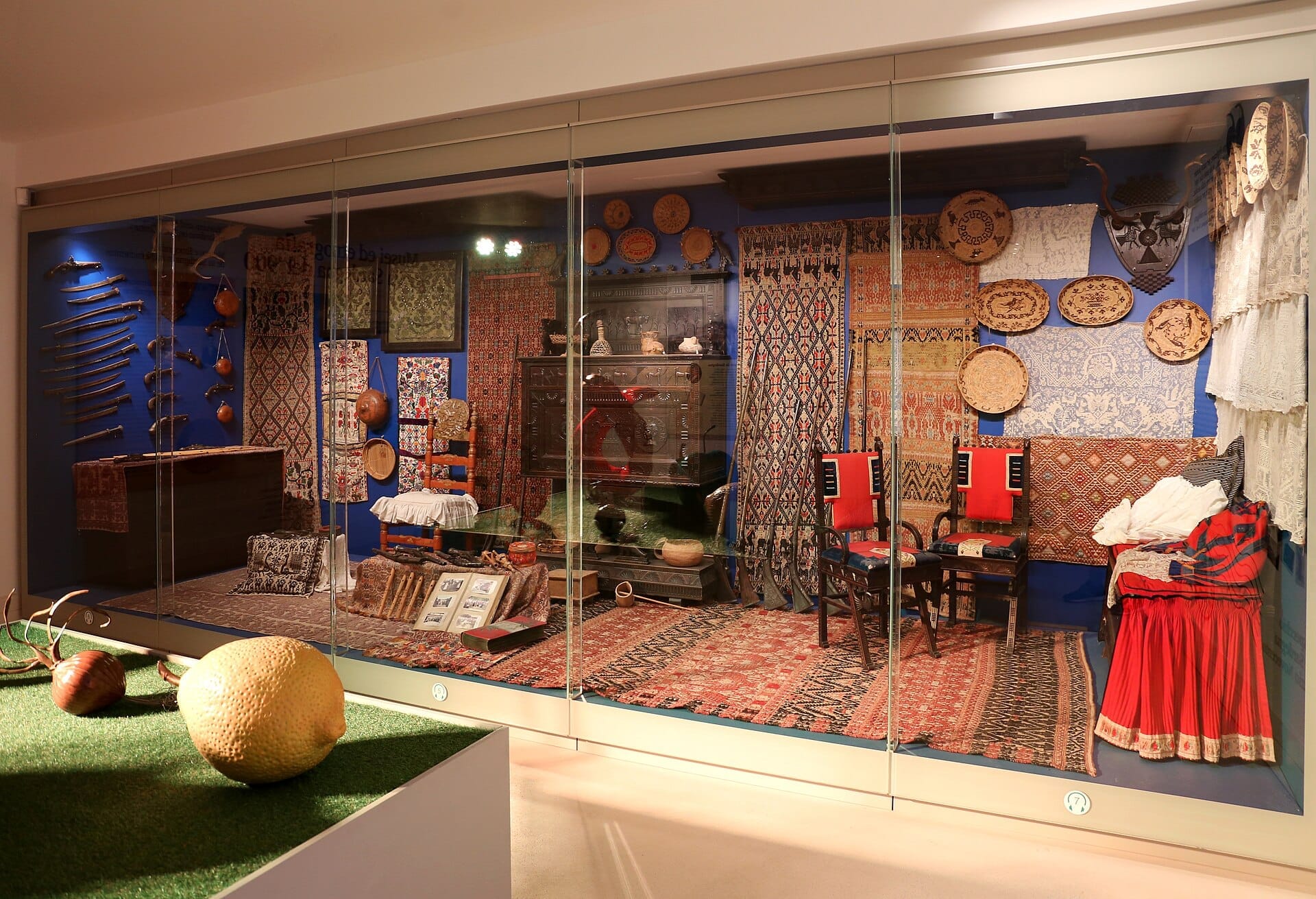
What the Museo del Costume Actually Is
The full official name is the Museo della Vita e delle Tradizioni Popolari Sarde, commonly shortened to Museo del Costume. It is managed by ISRE, the Istituto Superiore Regionale Etnografico, the regional body responsible for documenting Sardinian folk culture. The institution is not a decorative costume parade or a tourist-facing folklore show. It is a rigorous ethnographic collection, and one of the most important of its kind in southern Europe.
The museum was conceived by architect Antonio Simon Mossa in the early 1970s, opened in 1976, and underwent a major structural expansion and thematic reorganisation before reopening on 19 December 2015. Today the permanent collection holds around 8,000 artifacts distributed across thematic rooms: traditional dress, jewellery, weaving tools, wooden domestic objects, ceremonial masks, bread-making implements, musical instruments, agricultural tools, and more. The layout follows the logic of an ethnographic village, with separate buildings devoted to different aspects of traditional Sardinian life.
💡 Local tip
A cumulative ticket (€10) covers the Museo del Costume, the Casa Museo Grazia Deledda, and the Museo della Ceramica — three institutions on the Nuoro cultural circuit. If you're spending a day in the city, this combination is the most efficient use of your entry budget.
The Collection: What You Will Actually See
The costume rooms are the anchor of the visit. Sardinia's traditional dress is among the most regionally differentiated in Italy: each village historically had its own colour palette, weave pattern, and ceremonial variation, and the museum documents this with precision. You will see women's bodices in deep crimson and black silk from the Barbagia interior, the layered linen skirts of the Campidano plain near Cagliari, and the distinctive striped aprons from the Ogliastra coast. The differences between villages can feel subtle at first, but after twenty minutes in this room they become legible and fascinating.
The silverwork and jewellery section deserves particular attention. Sardinian filigree work, especially the large circular brooches called 'spille' and the elaborate necklaces strung with coral and silver coins, represents a craft tradition that dates back centuries. The museum pieces are original objects, not reproductions, and the craftsmanship is extraordinary. This section tends to be quiet and uncrowded even when the entrance rooms are busy.
The mask collection offers a different register entirely. The grotesque wooden masks used in the Mamuthones and Issohadores processions of Mamoiada, just a short drive from Nuoro, are among the most dramatic objects in the building. They smell faintly of old wood and lanolin, and seeing them stripped of their carnival context gives them an almost unsettling weight. The accompanying explanatory panels are clear and well translated into English.
Other rooms address bread-making (Sardinian ceremonial bread and its ornamental variants are intricate art forms in their own right), weaving looms and textile production, and the tools of pastoral and agricultural life. Visitors with an interest in the broader context of Sardinian food and craft culture will find connections to the island's culinary traditions throughout the permanent exhibition.
Tickets & tours
Hand-picked options from our booking partner. Prices are indicative; availability and final rates are confirmed when you complete your booking.
Guided Tasting of Sardinian Food and Drink Delicacies
From 48 €Instant confirmationFree cancellationVisit to an Oil Mill with Oil Tasting in Nuoro
From 78 €Instant confirmationFree cancellationSanta Teresa di Gallura hiking tour of Valle della Luna
From 30 €Instant confirmationFree cancellationCala Goloritze, Mariolu, Gabbiani, Biriala, Grotta del Fico boat tour
From 69 €Instant confirmationFree cancellation
The Setting: Sant'Onofrio Hill
The museum sits on the Sant'Onofrio hill on the edge of Nuoro, and the building complex was designed to integrate with the landscape rather than dominate it. From the entrance area and some of the outdoor circulation paths between buildings, there are open views toward Monte Ortobene to the east, the forested ridge that defines Nuoro's eastern skyline. In the morning, when the light comes from that direction, the stonework of the museum buildings takes on a warm ochre tone that photographs well without any effort.
The hillside setting means a short uphill walk from the road. The path between buildings is paved but includes some gradients; visitors with significant mobility limitations should check directly with the museum about step-free access routes, as the ethnographic village layout is not completely flat. The museum does offer free admission for visitors with disabilities and one accompanying person. For those who want to extend the afternoon, Monte Ortobene is visible from the site and reachable in under 15 minutes by car.
Opening Hours and Ticket Prices
Hours change seasonally, so check before you travel. The key schedules as last updated by the museum are as follows:
- 12 August – 30 September: daily 10:00–20:00
- 1 – 31 October: daily 10:00–19:00
- 1 November – 15 March: 10:00–13:00 and 15:00–19:00, closed Monday
- 16 March – 11 August: 10:00–13:00 and 15:00–20:00, closed Monday
- Open on major public holidays including Christmas, New Year's Day, Easter, Easter Monday, 25 April, 1 May, 15 August, and Sa Die de sa Sardigna
Standard admission is €5. Reduced tickets at €3 apply to visitors under 18 or over 65; families and groups of more than five people also receive reduced pricing. Free entry applies on the first Sunday of each month, for school groups with teachers, for people with disabilities plus one accompanying person, licensed guides, ICOM members, and accredited journalists. The cumulative ticket covering this museum plus the Casa Museo Grazia Deledda and the Museo della Ceramica costs €10; any two of the three can be combined for €8.
⚠️ What to skip
The museum is closed on Mondays during the winter and spring seasons (November through mid-August). Arriving on a Monday without checking in advance is the most common reason visitors find the gates locked. Always verify current hours directly with ISRE before planning your day around this visit.
When to Visit and How the Experience Changes
The museum is at its least crowded in the morning on weekday visits outside of August. During peak summer weeks, school and tour groups tend to arrive between 10:30 and 11:30, so arriving at opening time or after 15:00 on a summer afternoon gives you quieter rooms and more time to linger at the jewellery cases without jostling for position.
Nuoro's interior climate is noticeably cooler than the coast in summer. On days when the coast is 33–35°C, the hill above Nuoro typically sits 4–6 degrees lower, and the museum's stone buildings retain cool air well into the afternoon. This makes a summer visit here comfortable in a way that an outdoor archaeological site would not be. In contrast, the November to March period sees the museum operating on the shorter split-hour schedule, and the natural light in the exhibition rooms is softer and flatter. Artificial lighting is good throughout, so this is not a serious problem.
If you are visiting Nuoro during the Sagra del Redentore festival in late August, or any of Barbagia's autumn 'Cortes Apertas' open-village weekends, pairing those events with a visit to this museum adds significant context to what you will witness on the streets. The costumes and objects you see here are not historical relics — many of the textile and silverwork traditions represented are still actively practiced in surrounding villages. You can find a broader overview of the regional festival calendar in the Sardinia festivals and events guide.
Nuoro as a Cultural Destination
Nuoro is the provincial capital of the province of Nuoro, in the mountainous interior of Sardinia, often associated with the Barbagia region. It is also the birthplace of Grazia Deledda, who won the Nobel Prize in Literature in 1926 and whose work is inseparable from the landscape and social fabric you encounter in this museum. The city does not have the immediate visual drama of a coastal Sardinian town, but for travellers interested in culture rather than scenery, it offers more concentrated substance per square kilometre than almost anywhere else on the island.
The Museo del Costume sits within a small cluster of cultural institutions that can all be visited in a single day without rush. The Casa Museo Grazia Deledda is the most obvious complement, and the Museo della Ceramica occupies a separate but nearby building. Taken together, the three form a coherent introduction to Nuoro's intellectual and artistic identity. The cumulative ticket makes the combination logical rather than extravagant.
Nuoro is also a practical base for exploring the official Sardinia tourism site wider Barbagia interior. The murals of Orgosolo, the Gennargentu national park, and the nuragic and archaeological sites of the surrounding region are all within day-trip range. Travellers who are spending time here as part of a longer Sardinian itinerary will find the guide to Sardinia's nuragic heritage a useful companion for planning days outside the city.
Who Should Reconsider
The Museo del Costume is a serious ethnographic institution, and visitors looking for a quick, photogenic stop between beach days are likely to leave underwhelmed. The displays are detailed and context-dependent: without some interest in Sardinian cultural history, the rooms of agricultural tools and weaving implements can feel dense. The audio guides and panel texts in English are helpful, but this is not a museum designed around entertainment — it is designed around documentation. Children under 10 will generally find it difficult to engage with.
Travellers with significant mobility difficulties should contact the museum directly before visiting. The ethnographic village format means movement between sections involves outdoor paths with some uneven terrain and gentle slopes. The museum's accessibility commitment is reflected in its free admission policy for disabled visitors, but the physical layout requires clarification on a case-by-case basis.
Insider Tips
- Visit on the first Sunday of the month for free entry — this is confirmed museum policy, not a seasonal promotion, and applies year-round.
- If you are visiting in late summer, the 10:00 opening on a weekday gives you at least 90 minutes before tour groups typically arrive. The mask and jewellery rooms in particular are worth experiencing in quiet.
- The cumulative €10 ticket covering this museum, the Casa Museo Grazia Deledda, and the Museo della Ceramica represents a full day of cultural content in Nuoro. Buy it at whichever institution you visit first.
- The museum shop carries regional publications on Sardinian textile traditions and folk art — including specialist volumes on filigree silverwork and weaving patterns that are not widely available outside Sardinia.
- Nuoro's interior position means summers here are cooler than the coast. If you are visiting Sardinia in July or August and want a day away from the beach heat, the museum combined with a drive up to Monte Ortobene makes for one of the most comfortable days of a coastal holiday.
Who Is Museo del Costume e della Tradizione Sarda (Nuoro) For?
- Cultural travellers who want to understand Sardinian identity beyond its beaches and coastline
- Textile, jewellery, and craft enthusiasts with an interest in regional European folk traditions
- Travellers who have attended a Sardinian festival and want context for the costumes and rituals they witnessed
- Literature lovers visiting Nuoro in connection with Grazia Deledda and her Nobel Prize-winning fiction
- Anyone building a broader itinerary through the Barbagia interior looking for a grounding cultural reference point
Nearby Attractions
Other things to see while in Barbagia & Nuoro:
- Giara di Gesturi
Rising to around 550 metres above central Sardinia, the Giara di Gesturi is a 45-square-kilometre basalt plateau formed by Oligocene volcanic activity. Cork oak forests, seasonal wetlands, and an extraordinary population of small wild horses make it one of the most ecologically singular landscapes on the island.
- Gola di Su Gorropu
Gola di Su Gorropu is a karst canyon in Sardinia's Supramonte massif with walls rising over 500 metres and passages as narrow as 4 metres across. It's a serious hiking destination that rewards physical effort with one of the most dramatic landscapes in the Mediterranean.
- Monte Ortobene
Reaching a maximum elevation of 955 metres above sea level near the inland city of Nuoro, Monte Ortobene is a forested mountain with panoramic views across central Sardinia, a landmark bronze statue of Cristo Redentore, and walking paths through fragrant Mediterranean scrubland. Access is free, the road reaches the summit, and the atmosphere is unlike anything on the coast.
- Murales di Orgosolo
Orgosolo, a small hill town in the Barbagia region of central Sardinia, has covered its streets in around 150 murals since the late 1960s. Free to visit at any hour, the Murales di Orgosolo form one of the most politically charged and visually striking open-air art experiences in Italy.