Museo del Gaucho y de la Moneda: Uruguay's Soul in Silver and Coin
Housed inside the grand Casa Central del Banco República, the Museo del Gaucho y de la Moneda brings together two defining threads of Uruguayan identity: the rugged gaucho tradition and the country's monetary history. Admission is free, the location is central, and the collections reward genuine curiosity.
Quick Facts
- Location
- Cerrito 351, Casa Central BROU, Montevideo (Ciudad Vieja)
- Getting There
- Walk from Plaza Independencia (~8–10 min); multiple bus lines along Av. 18 de Julio
- Time Needed
- 1 to 1.5 hours
- Cost
- Free admission (verify on arrival; donations accepted)
- Best for
- History lovers, numismatists, anyone curious about gaucho culture
- Official website
- museo.fundacionbrou.com.uy
What the Museum Actually Is
The Museo del Gaucho y de la Moneda is a free cultural museum operated by Fundación Banco República (BROU), Uruguay's state bank. It brings together two distinct but complementary collections: one dedicated to gaucho material culture, and another tracing the history of currency in Uruguay. As of October 2024, the museum relocated from its long-time home at Palacio Heber Jackson on Avenida 18 de Julio to the historic Casa Central del Banco República at Cerrito 351, a move that gave the collections a more prominent and architecturally significant setting.
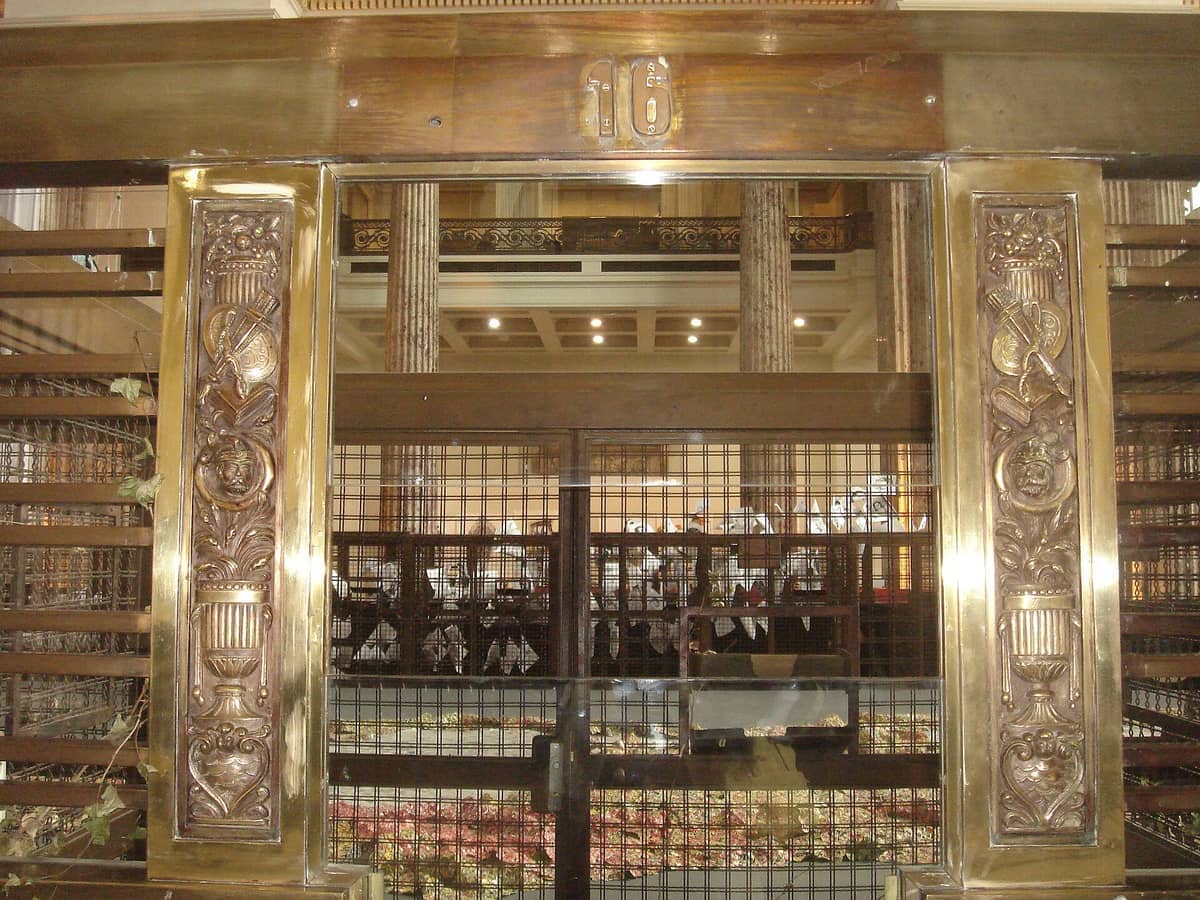
The building itself is worth noting. The Casa Central BROU is one of the more imposing bank headquarters in Montevideo's downtown, and the museum occupies a dedicated space within it. The integration of a gaucho ethnographic collection inside a banking institution is not as contradictory as it sounds: the gaucho was, in many ways, the original economic agent of the Uruguayan interior, and cattle culture underpinned the national economy for centuries. The coin collection makes that economic history visible in a different register.
💡 Local tip
Hours can vary. As of 2026, the museum is open Monday to Saturday, 10:00–18:00, and closed Sunday. Always check the official site at museo.fundacionbrou.com.uy before visiting, as schedules have shifted in the past.
The Gaucho Collection: More Than a Costume
The word 'gaucho' tends to conjure a romanticized image: wide-brimmed hat, bombachas, a mate gourd in hand. The museum pushes past that postcard version. The gaucho collection is anchored in functional objects: the recados (saddle assemblies), facones (large knives), boleadoras (weighted throwing weapons used to bring down livestock), and intricate silverwork that adorned everything from bridles to belt buckles. These were not decorative objects. They were tools and status markers, reflecting a highly specific social world that existed on the open grasslands of the Río de la Plata region from the 17th century onward.
The silverwork is where most visitors linger. Platería gauchesca, the silversmithing tradition associated with gaucho equipment, reached a high point in the 18th and 19th centuries, and the museum holds pieces that demonstrate real craft: repoussé work on stirrups, engraved knife handles, chased silver spurs. The level of detail in some pieces is remarkable given that many were produced by anonymous rural artisans rather than city workshops. If you have any interest in metalwork or material culture, this is the section to take your time with.
There is also clothing and textile material, including the layered poncho and chiripa garments that predate the iconic bombacha trousers adopted in the late 19th century. For visitors unfamiliar with gaucho history, brief contextual panels help, though the collection's depth rewards those who come with at least some background knowledge.
Tickets & tours
Live prices and dates from our booking partner. If you book, we may earn a commission at no extra cost to you.
Punta del Este full-day guided tour from Montevideo
From 47 €Instant confirmationFree cancellationGuided Tour with Wine Tasting Experience at Bouza Winery
From 68 €Instant confirmationFree cancellationAirport to Hotel or Hotel to Airport Transfer in Montevideo
From 47 €Instant confirmationFree cancellationTasting and Lunch at Bodega Pizzorno in Montevideo
From 115 €Instant confirmationFree cancellation
The Currency Collection: Coins, Notes, and Economic Memory
Uruguay has had a complicated monetary history: colonial Spanish reales, early republican coinage, periods of monetary instability, and eventually the modern peso uruguayo (UYU). The museum's currency collection documents this arc, with coins and banknotes spanning several centuries. The collection is particularly strong on 19th-century Uruguayan and regional coins, including pieces from the chaotic period when multiple currencies circulated simultaneously in the Río de la Plata region.
Numismatists will find material here that is rarely assembled in one place. But even for general visitors, the banknote display offers something accessible: the iconography of Uruguayan currency is a compressed history of national identity, with images cycling through indigenous figures, early heroes, agricultural scenes, and eventually abstract or civic imagery. It is a surprisingly readable archive.
ℹ️ Good to know
The currency collection is managed in connection with BROU's institutional history. Uruguay's Banco República was founded in 1896 and remains one of the country's most significant financial institutions, so the coin collection sits within a living institutional context, not just a neutral archive.
Visiting in Practice: What to Expect Hour by Hour
The museum occupies a contained space, and the visit is not physically demanding. There are no multi-floor climbs, no sprawling outdoor sections. You move through the galleries at your own pace. Weekday mornings tend to be quieter; school groups occasionally visit in the late morning, which can make certain areas crowded for 20 to 30 minutes before dispersing. Saturday afternoons draw a more mixed crowd, including families and tourists doing a loop of downtown attractions.
The building's interior is climate-controlled, which matters in Montevideo's humid summers (December to February) when temperatures outside regularly reach 26–28°C. It is a legitimate mid-day refuge as well as a cultural stop. In winter (June to August), when the city sits around 14°C during the day, the indoor setting is equally comfortable. Lighting in the galleries is adequate for reading labels; serious photography of reflective silverwork can be tricky without a lens hood.
The museum sits at the edge of Ciudad Vieja, Montevideo's historic old town, and is within easy walking distance of several other significant cultural stops. Plan the museum as part of a wider downtown circuit rather than a standalone trip.
Getting There and Accessibility
The address is Cerrito 351, and the museum is walkable from Plaza Independencia in under five minutes. Avenida 18 de Julio, Montevideo's main downtown artery, runs nearby and is served by a dense network of urban buses. Ride-hailing apps including Uber operate in Montevideo and can drop you directly at the building entrance.
Accessibility is reported as good. The museum is at ground level within a bank headquarters that maintains modern public access standards. Visitors with reduced mobility should have no significant obstacles. Strollers are manageable given the layout.
⚠️ What to skip
The Casa Central BROU is an active bank. Security checks at the building entrance are normal. Carry identification, and be prepared for bag inspection before entering.
Honest Assessment: Strengths and Limits
This museum is not trying to be a major international institution, and it does not need to be. Its gaucho silverwork collection is genuinely strong, and the coin collection is one of the more thorough domestic currency archives in Uruguay. For visitors with a specific interest in either subject, it is worth more than a casual hour. For visitors who want sensory spectacle or interactive displays, it delivers less. The exhibit design is traditional: objects in cases, explanatory panels, limited multimedia.
Spanish-language labels dominate. English interpretation is limited, which is worth knowing in advance. Visitors who read Spanish will get significantly more from the visit. If language is a barrier, pairing the museum stop with a walking tour of Ciudad Vieja that includes a guide can provide helpful context for the broader gaucho and colonial history.
Who should skip it: travelers on a very short schedule who are not drawn to ethnographic or numismatic material will find better use of their time at other attractions. The museum rewards the curious, not the obligation-driven tourist trying to tick boxes.
Placing It in the Wider City
The museum fits naturally into a half-day loop of downtown Montevideo. Start at Puerta de la Ciudadela and walk through Ciudad Vieja, stop at the Museo del Gaucho y de la Moneda mid-morning, then continue toward the Mercado del Puerto for lunch. This sequence covers roughly two kilometers on foot and links three very different kinds of Uruguayan cultural experience: colonial heritage, material culture, and the ritual of the Sunday grill.
If your interest leans toward Uruguay's broader artistic and cultural production, consider pairing this visit with the Museo Torres García, also in Ciudad Vieja, which houses the collection of Uruguay's most internationally recognized modern artist. The two museums together give a rounded picture of how Uruguay understands its own identity, from the rural grassland tradition to early 20th-century avant-garde art.
For context on what you are seeing in the gaucho collection, the deep culture around the asado and livestock tradition connects directly to the world these objects came from. The gaucho was not only a cultural figure; he was the labor force behind Uruguay's cattle economy, and that economy shaped everything from the country's architecture to its legal institutions.
Insider Tips
- The silverwork section rewards slow looking. Get close to the bridle and spur pieces: the level of engraving detail is visible only up close, and the small scale of some elements is not obvious from a standing distance.
- Arrive before 11:00 on weekdays to avoid school group overlap. The gaucho gallery in particular can feel cramped with a class of thirty children.
- Photography of the silver pieces works best with the flash disabled. The cases have some reflective glare, and a slight angle adjustment usually eliminates the worst of it without special equipment.
- The building entrance involves a security check typical of a bank. Leave sharp objects in your bag or hotel; small penknives or similar items in pockets can slow the entry process.
- If you read Spanish, pick up any free printed material at the entrance. The Fundación BROU has produced informational pamphlets on both collections that provide more depth than the wall panels alone.
Who Is Museo del Gaucho y de la Moneda For?
- Travelers interested in South American rural history and gaucho culture
- Numismatists or anyone curious about the evolution of Uruguayan and regional currency
- Architecture-watchers who want to see the interior of one of Montevideo's significant bank buildings
- Visitors on a budget: free admission makes this a zero-cost cultural stop in a central location
- Anyone building a half-day walking itinerary through Ciudad Vieja and Centro
Nearby Attractions
Other things to see while in Ciudad Vieja:
- Catedral Metropolitana de Montevideo
The Catedral Metropolitana de Montevideo, also known as Iglesia Matriz, is the mother church of the Archdiocese of Montevideo and the spiritual anchor of the city's oldest square. A neoclassical basilica with three naves, a transept, and a dome on a cylindrical drum, it stands opposite the Cabildo on Plaza de la Constitución and is free to enter.
- Mercado del Puerto
Mercado del Puerto is the gastronomic heart of Montevideo's Ciudad Vieja, a 19th-century iron-and-glass market hall packed with traditional parrillas, smoke-filled air, and the kind of asado culture that defines Uruguay. Entry is free, the food is serious, and the atmosphere is unlike anything else in the city.
- Museo Andes 1972
Museo Andes 1972 is a compact but deeply affecting memorial museum in Montevideo's historic Ciudad Vieja, dedicated to Uruguayan Air Force Flight 571 and the extraordinary survival story that followed the 1972 Andes crash. Across three levels and 400 square metres, original artifacts, audiovisual material, and survivor accounts transform one of the twentieth century's most gripping human dramas into something quiet, personal, and hard to forget.
- Museo de Arte Precolombino e Indígena (MAPI)
Tucked into a colonial street in Ciudad Vieja, the Museo de Arte Precolombino e Indígena (MAPI) presents thousands of years of indigenous American art with clarity and care. It is compact, thoughtfully curated, and free on Monday mornings — making it one of the most rewarding cultural stops in Montevideo for travelers who want substance over spectacle.
Planning a trip? Discover personalized activities with the Nomado app.