Museo Archeologico di Olbia: Ancient Ships, Phoenician Roots, and a Free Ticket
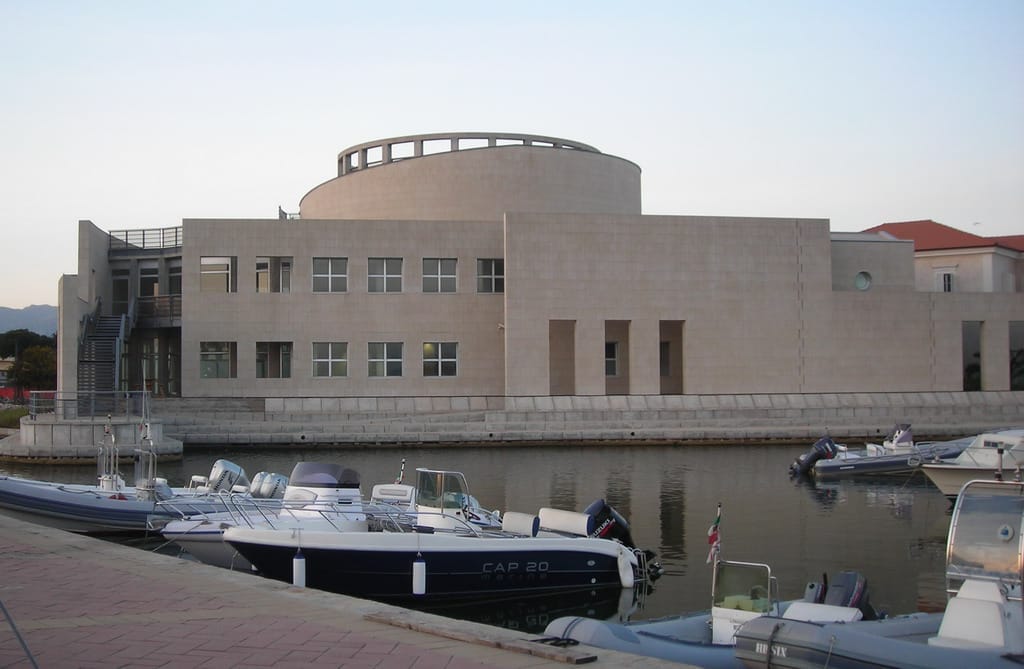
Housed in a building designed to resemble a ship moored at the old port, the Museo Archeologico di Olbia holds several preserved ancient vessels, unique Roman ship components, and artefacts spanning prehistory to the 19th century. Admission is free, and the location on Isola Peddona makes it easy to combine with a walk around Olbia's waterfront.
Quick Facts
- Location
- Piazzale Benedetto Brin 1, Isola Peddona (Porto Vecchio), Olbia, Gallura, Sardinia
- Getting There
- ASPO urban bus line 9 to the town hall stop, then a short walk to Molo Brin. Free parking at Molo Brin for drivers.
- Time Needed
- 1 to 1.5 hours for a thorough visit
- Cost
- Free admission. Groups over 30 should book in advance by phone.
- Best for
- History enthusiasts, families with older children, travellers with a rainy half-day in Olbia
- Official website
- www.olbiaturismo.it
Why This Museum Earns Its Time
The Museo Archeologico di Olbia does something that most provincial museums fail to do: it builds a compelling argument for why this particular city matters. Olbia has been a working port for roughly 2,500 years, passing through Phoenician, Greek, Punic, Roman, Byzantine, medieval, and modern hands. Most of that layered history would be invisible on a walk around the modern city. Inside this museum, in a building specifically shaped to echo a vessel moored at the quay, you stand beside three of the ancient ships that were buried under that very harbour.
💡 Local tip
Admission is free year-round, and the museum is open Tuesday through Sunday from 08:00 to 13:00 and again from 16:00 to 19:00. It is closed on Mondays. No booking is required for individual visitors.
The building sits on Isola Peddona, a small harbour island connected to the mainland at Porto Vecchio, Olbia's old port district. From the outside, the structure reads as contemporary and nautical: its low, elongated form with angled glass panels directly references the silhouette of a ship moored in port. It is not subtle, but it works. The context is immediate. You are standing at the edge of the same anchorage where Roman grain ships once loaded and unloaded, and where, during excavation of a harbour tunnel in the 1990s, workers uncovered one of the most unexpected maritime archaeology finds in the Mediterranean.
The Shipwrecks: The Reason Most People Come
During the late 1990s harbour tunnel excavations, archaeologists discovered the remains of over twenty ancient shipwrecks embedded in the silted seabed of Olbia's old port. Several of those vessels are now preserved and displayed inside the museum. Two are Roman-era ships; one is a smaller medieval craft. The scale and condition of the Roman finds are what make this collection internationally significant.
The display includes Roman ship masts and rudders that are, according to Italy's Ministry of Culture (Idese), the only Roman-era masts and rudders on public view in any museum in the world. That is not marketing language. There is simply no other place where you can walk up to original Roman shipbuilding timber of this kind, at eye level, without glass between you and the wood. The tactile proximity is unusual, and the conservation work required to get these waterlogged timbers stable and displayable was considerable.
Contextual panels explain the circumstances of the find, the excavation methodology, and what the wrecks tell us about Olbia's role as a commercial port. The Roman ships appear to date from a period when Olbia functioned as a significant node in Mediterranean trade, exporting Sardinian grain, salt, and minerals toward the Italian peninsula. Understanding that context makes the preserved wood feel less like a curiosity and more like physical evidence of an economic relationship that shaped the island for centuries.
ℹ️ Good to know
The three displayed ships represent only a fraction of the 24 wrecks found. The rest remain in situ or in storage. Researchers continue to study the finds, which date across a broad chronological range.
Tickets & tours
Hand-picked options from our booking partner. Prices are indicative; availability and final rates are confirmed when you complete your booking.
Guided winery tour and tasting in Olbia
From 31 €Instant confirmationFree cancellationDinghy tour with snorkeling to Tavolara Island from Olbia
From 64 €Instant confirmationFree cancellationCatamaran tour from Olbia to Tavolara Marine Protected Area
From 142 €Instant confirmationFree cancellationDolphin watching by dinghy to Figarolo island from Olbia
From 64 €Instant confirmationFree cancellation
The Collection Beyond the Ships
The museum's chronological scope runs from prehistoric Sardinia through to the 19th century, with particular depth in the Phoenician, Punic, and Roman periods. This span reflects Olbia's own biography. The city was probably founded by Greek settlers, traditionally linked to Phocaea or Massalia, around the 6th century BC, then absorbed into the Punic sphere of Carthage, before becoming a Roman municipium. Each of those phases left objects: ceramics, amphorae, funerary goods, coins, votive deposits, and architectural fragments.
The Punic section deserves more attention than visitors typically give it. Carthaginian influence in northeastern Sardinia is often overshadowed in popular coverage by the island's better-known Nuragic culture, but the material evidence in Olbia's collection is substantive. Votive offerings from a tophet, fine imported pottery, and everyday domestic objects sketch a picture of a Punic colonial town that was cosmopolitan and commercially active.
The Roman sequence builds naturally from there, with amphorae stamped with production marks, portrait busts, inscriptions, and a readable array of everyday objects. If Olbia's Roman layers intrigue you, the broader Nuragic and prehistoric context of Sardinia comes alive at sites like Su Nuraxi di Barumini or at the dedicated collections in Museo Nazionale Sanna in Sassari, both of which complement what Olbia's museum covers.
What a Visit Actually Feels Like
The museum interior is quiet and controlled in temperature, a genuine relief during summer when Olbia's streets are hot and airless. Lighting is calibrated low around the shipwreck hall, giving that section a slightly dramatic atmosphere that suits the material. The overall layout is logical and linear, moving roughly from prehistoric through Roman phases, with the shipwreck hall as a spatial centrepiece.
Morning visits (opening at 08:00) are reliably uncrowded. By late morning, school groups and organised coach tours begin to arrive, particularly in April, May, and October when educational visits peak. If you are visiting with a group of more than 30 people, the museum specifically requests advance telephone booking to manage capacity in the shipwreck hall.
The afternoon session (16:00 to 19:00) tends to attract individual travellers and local visitors. The light through the harbour-facing windows shifts to a warmer tone in late afternoon, and the surrounding Porto Vecchio area is noticeably more relaxed than at midday. Combining an afternoon museum visit with a walk along Molo Brin as the sun drops is a reasonable way to spend two to three hours.
⚠️ What to skip
The museum is closed on Mondays. This catches visitors off guard, particularly those who have just arrived by ferry or via Olbia Costa Smeralda Airport and assume the attraction is accessible any day. Plan accordingly.
Getting Here and Practical Details
The museum's address is Piazzale Benedetto Brin 1, on Isola Peddona at Porto Vecchio. If you are staying in central Olbia, the waterfront is walkable from most accommodation in 10 to 20 minutes. The old port area is distinct from the main shopping streets, so allow time to orient yourself; the museum building is visible from Molo Brin and recognisable by its ship-like profile.
By public bus, ASPO urban line 9 stops near the town hall (Municipio); from there the waterfront and museum are a short flat walk. Drivers can use the parking area at Molo Brin directly beside the building, which is currently free of charge according to municipal information. Olbia Costa Smeralda Airport (IATA: OLB) is approximately 4 km from the city centre, making this feasible even on a short layover. The Olbia guide covers airport connections and city orientation in more detail.
Accessibility is well-considered for a building of this type. The municipality documents a wheelchair-accessible entrance, lift access to all floors, adapted toilets, dedicated accessible parking, and assistive listening devices. This makes the museum one of the more inclusive cultural stops in the Gallura region.
Where This Fits in a Wider Sardinia Itinerary
Olbia is primarily used as a transit hub for northeast Sardinia, and many visitors move straight to the coast or inland without engaging with the city at all. That is understandable given the region's beaches and natural parks, but it means the museum is consistently less visited than its quality warrants. It works particularly well as a grounding visit before exploring the wider Gallura region. The archaeology of Gallura extends far beyond the port, and the museum gives useful context for Nuragic and pre-Nuragic sites in the surrounding countryside.
If your trip continues south or west, the museum pairs well with the archaeological sites of northern Sardinia more broadly. Nuraghe Santu Antine in the Sassari province is among the most impressive Nuragic towers on the island and sits within a few hours' drive. The Sardinia Nuragic sites guide maps out that layer of the island's history for those who want to go deeper.
For travellers planning time around Olbia specifically, the nearby Basilica di San Simplicio is the most significant early Christian monument in Sardinia and is a ten-minute walk from the city centre. It makes a natural complement to the museum's pre-medieval focus.
Limitations Worth Knowing
The interpretive panels are primarily in Italian, with some English summaries. The English translations, where they exist, are adequate but not comprehensive. Visitors without Italian will still find the visual displays and the physical presence of the shipwrecks fully engaging, but some of the finer contextual detail in the ceramic and numismatic cases requires language access to appreciate fully.
The museum is not large. A focused visitor can move through the entire collection in 45 minutes. The recommended 1 to 1.5 hours assumes you engage with the shipwreck hall seriously and read the contextual material. Do not expect a day-long institution on the scale of Cagliari's national museum. What this is, instead, is a tightly focused collection with one world-class centrepiece and a coherent local story around it.
Travellers who find Roman maritime archaeology dry, who want beaches rather than artefacts, or who are travelling with very young children may find the visit unrewarding. The shipwreck hall is atmospheric but not interactive, and there is no dedicated children's area or handling collection.
Insider Tips
- The 08:00 opening time is genuine and the museum is almost empty for the first hour on weekdays. If you are catching a morning ferry from Olbia and want something to do beforehand, this works well.
- The Roman mast and rudder display is in the central hall. Do not rush past the smaller cases near the entrance: the Punic votive objects and stamped amphorae handles are small but carry significant information about trade networks and are often overlooked.
- Parking at Molo Brin is free and directly beside the museum, which is unusual in any Italian city centre. Drivers should use this rather than searching for street parking in the old town.
- If you are visiting Olbia in summer, the museum's air conditioning makes it a practical refuge during the hottest part of the day (roughly 12:00 to 16:00), though note the midday closure from 13:00 to 16:00 means timing matters.
- Photography is generally permitted in the permanent collection, but check with staff regarding flash use around the organic shipwreck materials, where conservators may have specific restrictions in place.
Who Is Museo Archeologico di Olbia For?
- Archaeology enthusiasts and Roman history readers who want context beyond ruins
- Travellers with a layover in Olbia who want more than a coffee before their ferry or flight
- Families with children aged 10 and older who can engage with the shipwreck narrative
- Visitors on a budget, since free admission makes this one of the best value-for-time stops in northeast Sardinia
- Anyone visiting the Gallura region who wants to understand why Olbia matters historically, not just geographically
Nearby Attractions
Other things to see while in Gallura:
- Basilica di San Simplicio (Olbia)
The Basilica di San Simplicio is the oldest surviving building in Olbia and one of the finest Romanesque churches in Sardinia. Built between the late 11th and mid-12th centuries on a site with origins in a Roman necropolis and a Palaeo-Christian church, it offers a rare, unhurried encounter with pre-medieval Gallura — around ten minutes' walk from the ferry port crowds.
- Capo Testa
Capo Testa is a rugged granite promontory jutting into the Strait of Bonifacio near Santa Teresa Gallura, in Sardinia's far north. The headland is free to visit and rewards exploration with wind-sculpted rock formations, secluded sea pools, and the eerily beautiful Valle della Luna. It is one of northern Sardinia's most distinctive natural landscapes.
- Coddu Vecchiu Giants' Tomb (Arzachena)
The Giants' Tomb of Coddu Vecchiu is one of Sardinia's best-preserved Nuragic funerary monuments, featuring a roughly 4-metre granite entrance stele that has stood in the Gallura countryside for roughly 4,000 years. Located about 10 km from the Gulf of Arzachena, it offers a absorbing encounter with the island's prehistoric past in under an hour.
- Costa Paradiso
Costa Paradiso is a striking stretch of northern Sardinian coastline where ancient red and orange granite cliffs drop into transparent turquoise water. Largely a seasonal holiday settlement with under 200 year-round residents, it offers raw scenery, natural rock pools, and sheltered coves without the infrastructure of larger resorts.