Basilica di San Simplicio: Olbia's Oldest and Most Significant Monument
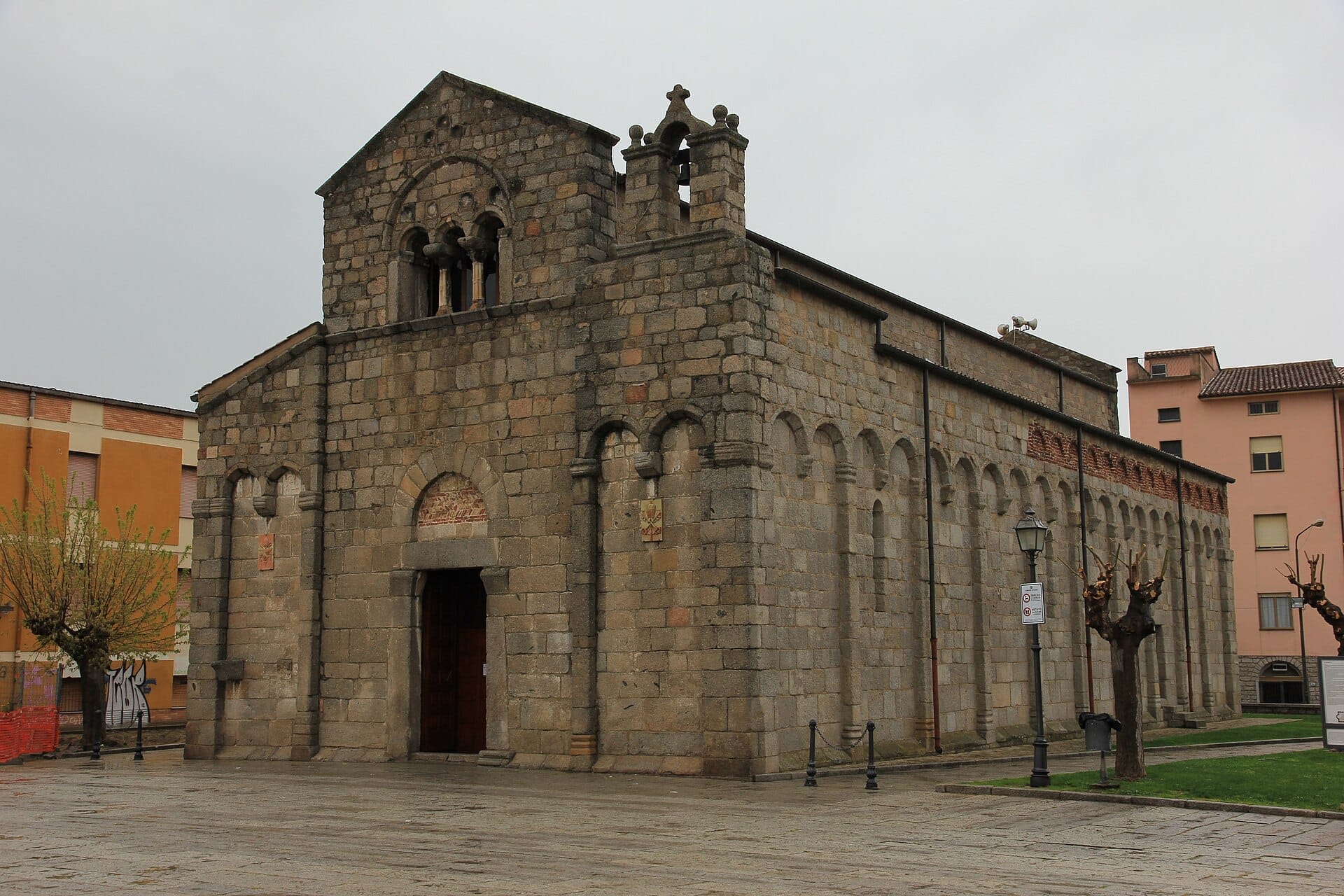
The Basilica di San Simplicio is the oldest surviving building in Olbia and one of the finest Romanesque churches in Sardinia. Built between the late 11th and mid-12th centuries on a site with origins in a Roman necropolis and a Palaeo-Christian church, it offers a rare, unhurried encounter with pre-medieval Gallura — around ten minutes' walk from the ferry port crowds.
Quick Facts
- Location
- Piazza San Simplicio, 07026 Olbia (SS), Sardinia — a short walk from Corso Umberto and the railway station
- Getting There
- Walk north from Corso Umberto past Olbia railway station, then right onto Via San Simplicio; roughly 10 minutes on foot from the port area
- Time Needed
- 30–60 minutes for the church and piazza; add 30–45 minutes if visiting the adjacent Museum Civitatense
- Cost
- Entrance to the basilica itself is free (a place of active worship); the Museum Civitatense charges a separate fee — verify current prices directly with the museum before visiting
- Best for
- Architecture enthusiasts, history travelers, anyone with a layover in Olbia seeking something old and calm
- Official website
- www.comune.olbia.ot.it/it/vivere/basilica-di-san-simplicio-106
Why This Church Is Worth Your Time
Olbia is a transit city. Most visitors pass through its port or airport on the way to the Costa Smeralda beaches and never stop. That is exactly why the Basilica di San Simplicio feels like such a discovery: it sits on a quiet, sun-bleached piazza about ten minutes from the ferry terminal, and it is arguably the most historically layered monument in all of Gallura.
This is not a baroque showpiece or a heavily restored tourist church. The basilica is austere, rooted, and old — the kind of building that makes you recalibrate your sense of Mediterranean history. It was granted the title of minor basilica by Pope John Paul II in 1993, but its roots go back far further than its Romanesque walls suggest.
💡 Local tip
Opening hours are not reliably published online. Before visiting, confirm current times through the Comune di Olbia website or by contacting the parish directly via the Santuaritaliani listing.
Two Thousand Years of History on One Piazza
The ground beneath the Basilica di San Simplicio has been sacred for a very long time. The site corresponds to an ancient western Roman necropolis, with burials here dating to the Roman period. In the Christian era, a Palaeo-Christian church was likely built on this spot sometime between about 594 and 611 AD, placing it in the era of Pope Gregory the Great — a period when early Christian communities across the Mediterranean were consolidating their presence on older sacred ground.
The Romanesque structure visitors see today was built in several phases between the end of the 11th century and the early 13th century, with the façade and roof completed in the 13th century. This places its construction in the era of the Giudicati, the four independent kingdoms that governed Sardinia during the medieval period, when Pisan and Lombard‑influenced Romanesque architecture was spreading across the island and Romanesque architecture was spreading rapidly from the Italian mainland.
The church served as a cathedral until 1839 — more than six centuries — before losing that status when the diocese was reorganized. It was reclassified as a parish church in 1955, and elevated to minor basilica in 1993. That layered institutional history is part of what makes it interesting: it has been the spiritual centre of Olbia across radically different eras of Sardinian life.
For context on how this basilica fits within Sardinia's wider medieval and early Christian heritage, the guide to Sardinia's ancient and archaeological sites covers the broader sweep of the island's pre-medieval monuments.
Tickets & tours
Hand-picked options from our booking partner. Prices are indicative; availability and final rates are confirmed when you complete your booking.
Guided winery tour and tasting in Olbia
From 31 €Instant confirmationFree cancellationDinghy tour with snorkeling to Tavolara Island from Olbia
From 64 €Instant confirmationFree cancellationCatamaran tour from Olbia to Tavolara Marine Protected Area
From 142 €Instant confirmationFree cancellationDolphin watching by dinghy to Figarolo island from Olbia
From 64 €Instant confirmationFree cancellation
The Architecture: What You Are Actually Looking At
The basilica is built in the Sardinian Romanesque style, using pale granite quarried locally — a material that weathers slowly and gives the walls their distinctive silvery-grey texture in direct sunlight. The façade is clean and almost severe: a triangular gable above a blind arcade of small arches, with minimal ornamental carving. There are no brightly painted surfaces, no gilded altarpieces visible from outside. What you see is essentially what 12th-century masons intended.
Inside, the plan is three naves divided by arcades of pillars and columns, approximately 33 metres long, 13 metres wide, and about 12 metres high. The columns are not uniform — some are clearly repurposed from Roman-era buildings, a common practice in early medieval Sardinian church construction. Look at the capitals: several are recycled Roman pieces, smooth from centuries of use, placed here not for decoration but for structural pragmatism. This kind of architectural recycling tells you something important about the resources available to builders in 11th-century Olbia.
The interior is dim and cool, even in summer. The small windows admit narrow columns of light that shift during the day, catching the texture of the granite blocks in ways that photographs rarely capture. Early morning, before any groups arrive, the silence inside is near-complete — only the occasional sound of pigeons on the roof, and the distant rumble of port traffic that reminds you of Olbia beyond the walls.
ℹ️ Good to know
The recycled Roman columns inside the basilica are among the most tangible physical evidence of Olbia's importance in the Roman period. The ancient city of Olbia (later known as Terranova Pausania in modern-era documents) was a significant Roman port, and its dismantled buildings provided raw material for generations of later construction.
The Piazza and the Surrounding Area
Piazza San Simplicio is one of the few quiet corners of central Olbia. A few stone benches face the façade, shaded by trees in the warmer months. Local residents use it as a shortcut and a place to sit in the late afternoon — it has not been aggressively touristified, which is either its main appeal or its main limitation depending on what you are looking for.
In mid-May, the piazza hosts the Festa di San Simplicio, Olbia's main religious festival dedicated to the city's patron saint. The multi-day event draws locals from across the Gallura region and involves processions, traditional costumes, and outdoor gatherings around the basilica. If your visit coincides with it, the contrast between the empty piazza on an ordinary Tuesday and the same space filled with hundreds of people in Sardinian dress is striking.
Sardinia's calendar of religious and cultural festivals is rich year-round. The guide to Sardinia's festivals and events has details on timing and what to expect if you want to plan around the Festa di San Simplicio or similar events elsewhere on the island.
The Museum Civitatense: The Archaeological Layer
Adjacent to the basilica is the Museum Civitatense, which houses archaeological material excavated from the site and the wider Olbia area. The collection spans Roman and early Christian periods and provides essential context for understanding why this particular hill has been significant for over two millennia. For visitors with an interest in archaeology, this adds considerable depth to the visit.
Current ticket prices for the museum are not reliably published online and should be verified directly before visiting. The museum is separate from the basilica itself, which remains free to enter as an active place of worship.
⚠️ What to skip
Do not assume the museum is open on the same days and hours as the basilica. Opening times for both the church and the museum vary by season and are not consistently updated on official tourism sites. A quick call or email to the municipality before your visit will save frustration.
Practical Walkthrough: Getting There and Making the Most of It
From the port or the central Corso Umberto, follow the road past Olbia's railway station and turn right onto Via San Simplicio. The walk takes about ten minutes and passes through an ordinary residential neighbourhood — there are no tourist signage chains guiding you here, which is part of its character. The church is unmistakable when you reach it: the pale granite façade sits at the top of a low rise, with the piazza opening out in front.
The best light on the exterior façade falls in the morning, when the sun is low and east-facing. By midday in summer, the granite can look washed out and flat in photographs. Late afternoon brings warmer tones but the sun is behind the building from the piazza side. For photography, aim for before 10am or after 5pm.
Dress appropriately for a place of worship: shoulders and knees should be covered. The interior is noticeably cooler than outside in summer, which is useful to know if you are visiting in July or August and need a brief respite from the heat. There are no cafés or facilities directly on the piazza, but Corso Umberto is a short walk away with the full range of bars and restaurants.
If you are spending more than a few hours in Olbia, the Olbia travel guide covers the city's other points of interest, practical transport details, and how to use it as a base for exploring the wider Gallura region.
Is It Worth Stopping For?
If your definition of a worthwhile attraction involves spectacle, this will disappoint. There are no dramatic frescoes, no gold mosaics, no audio guides in five languages. The basilica is quiet, scholarly, and most rewarding to people who find meaning in the physical presence of very old buildings and the accumulation of history they represent.
For that audience — and for anyone who has a few hours to kill in Olbia before a ferry — it is one of the most rewarding stops in the northeast of Sardinia. It is also completely uncrowded compared to the region's beach attractions, which makes it especially appealing in July and August when everywhere else is packed.
Travelers who want to pair a cultural stop with time outdoors near Olbia can combine the basilica with a wider exploration of the Gallura region, which includes granite landscapes, coastal villages, and the northern shores near Santa Teresa di Gallura.
Insider Tips
- The piazza is at its most atmospheric during early morning before 9am, when it is almost completely empty and the light on the granite façade is at its most photogenic. By 11am, tour groups from the port area sometimes pass through briefly.
- Look carefully at the columns inside the nave. Several are clearly Roman-era spolia — repurposed from much older structures. The variation in column diameter and capital style is not a restoration error; it is original 12th-century pragmatism.
- The Festa di San Simplicio takes place over three days in mid-May and transforms the piazza entirely. If you want to see the basilica in its civic context, rather than as an isolated monument, this is the time to visit.
- The Museum Civitatense next door is easy to skip by accident. Its entrance is separate from the basilica and not obviously marked from the main piazza. Ask at the basilica if you cannot locate the museum entrance.
- Olbia's summer heat can be intense from late June through August. The basilica interior provides genuine relief — the granite walls retain cool air effectively — making a midday visit more comfortable than most outdoor alternatives.
Who Is Basilica di San Simplicio (Olbia) For?
- Architecture and Romanesque history enthusiasts who want more than beaches
- Travelers with a layover in Olbia between ferry and onward transport
- Anyone interested in early Christian and pre-medieval Sardinian heritage
- Photographers seeking unhurried, uncrowded subjects in morning light
- Cultural travelers visiting during the Festa di San Simplicio in mid-May
Nearby Attractions
Other things to see while in Gallura:
- Capo Testa
Capo Testa is a rugged granite promontory jutting into the Strait of Bonifacio near Santa Teresa Gallura, in Sardinia's far north. The headland is free to visit and rewards exploration with wind-sculpted rock formations, secluded sea pools, and the eerily beautiful Valle della Luna. It is one of northern Sardinia's most distinctive natural landscapes.
- Coddu Vecchiu Giants' Tomb (Arzachena)
The Giants' Tomb of Coddu Vecchiu is one of Sardinia's best-preserved Nuragic funerary monuments, featuring a roughly 4-metre granite entrance stele that has stood in the Gallura countryside for roughly 4,000 years. Located about 10 km from the Gulf of Arzachena, it offers a absorbing encounter with the island's prehistoric past in under an hour.
- Costa Paradiso
Costa Paradiso is a striking stretch of northern Sardinian coastline where ancient red and orange granite cliffs drop into transparent turquoise water. Largely a seasonal holiday settlement with under 200 year-round residents, it offers raw scenery, natural rock pools, and sheltered coves without the infrastructure of larger resorts.
- La Cinta Beach (San Teodoro)
La Cinta is one of the longest beaches in northeast Sardinia, a 3.2 km arc of fine white sand backed by a brackish lagoon where flamingos wade year-round. Shallow, calm water and flat access from San Teodoro town make it one of Gallura's most approachable stretches of coast, though its reputation means peak-summer crowds are real and worth planning around.