Capo Testa: Sardinia's Wild Granite Headland and Its Surreal Moon Valley
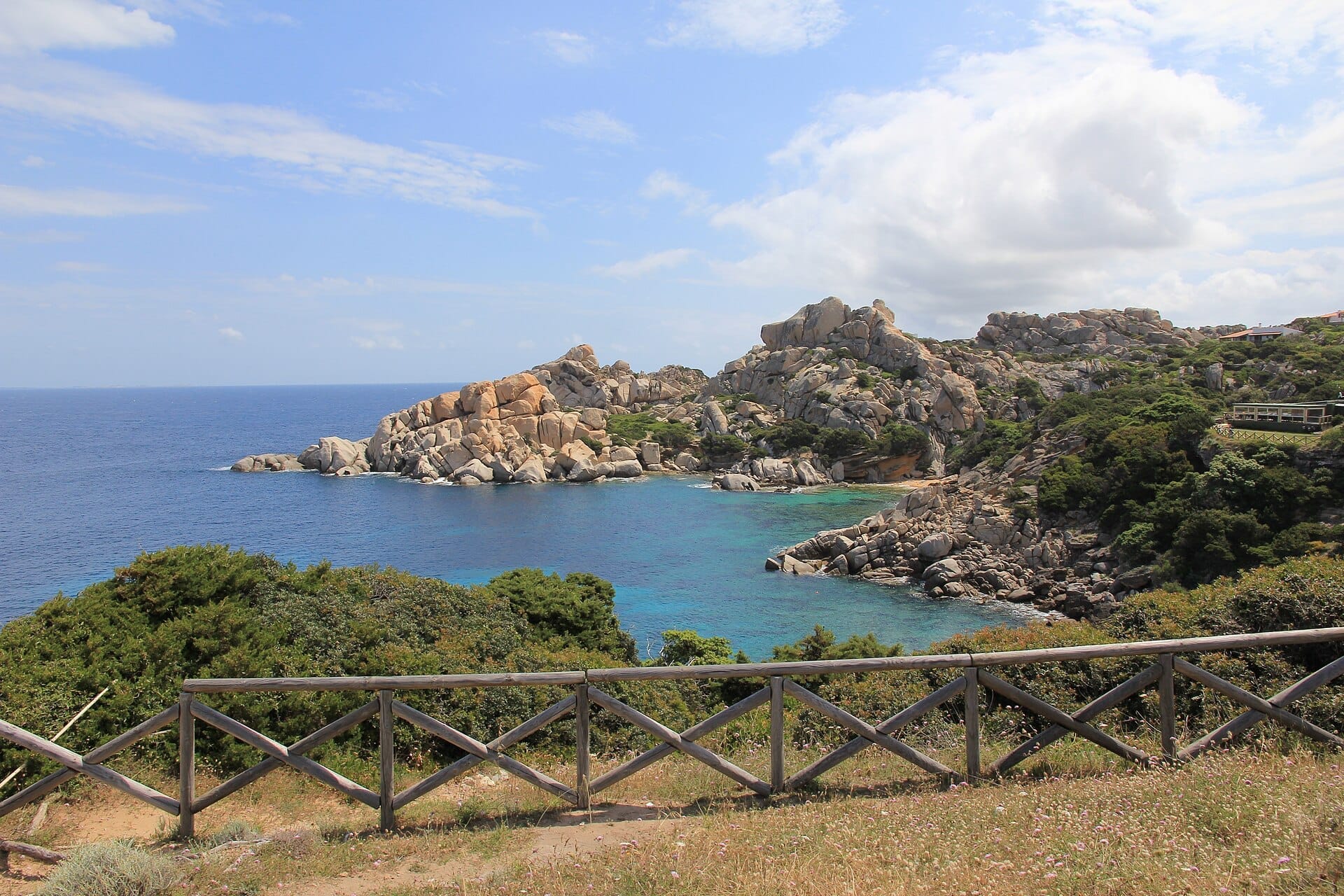
Capo Testa is a rugged granite promontory jutting into the Strait of Bonifacio near Santa Teresa Gallura, in Sardinia's far north. The headland is free to visit and rewards exploration with wind-sculpted rock formations, secluded sea pools, and the eerily beautiful Valle della Luna. It is one of northern Sardinia's most distinctive natural landscapes.
Quick Facts
- Location
- Capo Testa, Santa Teresa Gallura, Gallura, Sardinia (SS)
- Getting There
- By car from Santa Teresa Gallura (approx. 3–5 km west, depending on starting point); no regular public bus to the headland. Parking available near the lighthouse road.
- Time Needed
- 2 to 4 hours for a thorough walk; half a day if you plan to swim
- Cost
- Free entry to the natural area
- Best for
- Landscape photography, coastal walking, wild swimming, geology enthusiasts
What Is Capo Testa?
Capo Testa is a granite headland connected to the Sardinian mainland by a narrow sandy isthmus, sitting at the far northern tip of Sardinia, roughly 3 to 5 kilometres west of Santa Teresa Gallura. The promontory faces the Strait of Bonifacio, the often-turbulent channel that separates Sardinia from Corsica. On clear days, the Corsican coastline is visible across the water, close enough to feel almost reachable.
The headland has no admission fee and no formal opening hours: it is a free outdoor landscape that anyone can walk into. What draws visitors is not a single monument or curated attraction but the raw geology itself. The granite here has been worked by millennia of wind, salt air, and sea spray into forms that look less like rock and more like melted, stacked, or compressed material. Boulders balance improbably on each other. Smooth rounded domes give way to sharp fractures. The effect is strange, and it earns its reputation as one of the most visually unusual places in northern Sardinia.
💡 Local tip
Wear proper footwear. The granite terrain across the headland is uneven, sometimes slippery when wet, and several of the best viewpoints involve short scrambles over bare rock. Flip-flops are practical at the beach but not across the wider headland.
Valle della Luna: The Moon Valley
The most celebrated feature of Capo Testa is the Valle della Luna (Valley of the Moon), a labyrinth of enormous granite formations hollowed by erosion into curved walls, natural corridors, and sheltered clearings. The name is accurate: the landscape resembles something extraterrestrial, particularly at dusk when the low sun turns the pale granite gold and then deep amber. Shadows collect in the crevices between boulders while the exposed surfaces continue to glow.
Valle della Luna is only accessible on foot. There is no paved path, and the route winds through raw terrain that shifts depending on which direction you wander. Most visitors approach from the road that leads toward the lighthouse, following informal trails that cut between boulders toward the western shoreline. Budget at least 45 minutes to an hour just for this section if you want to explore properly rather than pass through.
The valley has long attracted a seasonal camping community, and in summer you are likely to encounter people who have settled into the rocky clearings with tents, hammocks, and campfires. This gives the place an unconventional, layered social atmosphere that is quite different from a standard beach or park visit. Some find this adds character; others find it incongruous with the landscape. Either way, it is part of what makes Capo Testa distinct from other Sardinian headlands.
Tickets & tours
Hand-picked options from our booking partner. Prices are indicative; availability and final rates are confirmed when you complete your booking.
Dolphin watching RIB tour to Capo Figari from Olbia
From 72 €Instant confirmationFree cancellationVineyard Guided Tour and 7 Wine Tasting in Palau
From 84 €Instant confirmationFree cancellationFull-Day Sailboat Tour in La Maddalena Archipelago from Cannigione
From 112 €Instant confirmationFree cancellationHiking excursion to the Devil's Saddle
From 35 €Instant confirmationFree cancellation
The Granite Coastline and Swimming Spots
Beyond Valle della Luna, the headland is ringed by small coves and natural granite pools where the sea pushes in between rock shelves. The water around Capo Testa is clear and ranges from turquoise to deep blue depending on depth. Because the promontory faces different directions, there is almost always a sheltered spot regardless of wind direction, which makes it more reliably swimmable than exposed beaches to the east or west.
Cala Spinosa, on the northeastern flank of the headland, is one of the more accessible small beaches and can be reached on foot from the main parking area. It is a narrow inlet with sand and pebbles, framed by granite on both sides. In July and August it gets crowded by mid-morning; arriving before 9am or after 5pm makes a significant difference. The water here stays clear even when beaches elsewhere in Gallura are murky after stormy weather.
For context on swimming conditions across northern Sardinia's season, the guide to Sardinia's best beaches covers what to expect from the sea between May and October across the island.
⚠️ What to skip
The Strait of Bonifacio is one of the windiest sea channels in the Mediterranean. When the Mistral or Tramontane wind blows, conditions at Capo Testa can shift quickly from calm to rough. Check weather and sea conditions before planning a long coastal walk or an open-water swim on the western side of the headland.
The Lighthouse and Its History
At the tip of the promontory stands the Faro di Capo Testa, a lighthouse that has guided ships through the Strait of Bonifacio since the mid-19th century. It is a solid, functional structure rather than an architectural showpiece, but its position, perched at the edge of the granite mass with open sea on three sides, makes it one of the most photographed points on the headland. The lighthouse is not open to the public as an attraction, but the path leading to it passes through some of the best rock formations on the cape.
The granite of Capo Testa was quarried in Roman times and used for columns that were shipped across the empire. Archaeological sources indicate this was a significant supply point for building material, with quarry evidence still visible in the rock faces on the headland. Looking closely at some of the flat granite surfaces, you can identify straight-cut lines that are not natural fractures but the work of ancient tools. This gives the landscape an additional layer: it is not simply a nature area but a place that was industrially exploited two thousand years ago, then abandoned to the elements.
How the Experience Changes Through the Day
Capo Testa reads differently depending on when you arrive. Early morning, before 9am, the headland is quiet enough that you can hear the sea against the rocks and the wind moving through the granite corridors without any competing sound. The light at that hour is soft and directional, ideal for photography. The parking area near the lighthouse road is largely empty, and you will have the coves to yourself.
Between 11am and 4pm in July and August, the atmosphere shifts entirely. Families and beach-goers fill Cala Spinosa. The path to Valle della Luna sees regular foot traffic. Parking becomes difficult and the temperature on the exposed granite can be intense, radiating heat upward from the rock surface. If your priority is landscape exploration rather than swimming, this is the window to avoid.
Late afternoon is the most rewarding time for the Valle della Luna specifically. From around 5pm onward, the light drops to a warm angle that transforms the pale rock into something closer to orange. The crowd on the beaches has thinned. The informal community of campers in the valley begins to light fires, and the smell of woodsmoke drifts between the boulders. The Corsican mountains across the strait take on a silhouette quality at this hour. It is one of the more atmospheric places in Gallura at sunset.
If you are basing yourself nearby, Gallura offers a range of accommodation options from Santa Teresa Gallura into the interior, and the headland is well-positioned as a half-day trip from most of them.
Practical Logistics: Getting There, Parking, and What to Bring
Capo Testa sits about 5 kilometres west of Santa Teresa Gallura along a road that ends near the lighthouse. The most practical way to reach it is by car or scooter. There is a parking area near the lighthouse road approach, but it fills quickly in peak summer. There is no regular public bus service directly to the headland. If you are staying in Santa Teresa Gallura, the headland is reachable by bicycle, though the road has some undulation.
Santa Teresa Gallura itself is the nearest town and serves as the main service point for food, water, and supplies before you head to the headland. For a broader look at what to do in the area, the day trips guide covers northern Sardinia routes if you are travelling from the south.
Bring more water than you think you need. There are no facilities, no cafes, and no shade infrastructure on the headland itself. In summer, the granite amplifies the heat considerably. Sun protection is essential, and a light layer is worth carrying for the late afternoon when the Tramontane can pick up sharply. For swimming, water shoes are useful given the rocky entry points at most of the coves.
ℹ️ Good to know
Accessibility note: Valle della Luna and most of the coastal walking at Capo Testa requires navigating uneven, rocky terrain without paved paths. Visitors with limited mobility will find the main overlook near the parking area accessible, but the deeper parts of the headland are not wheelchair or pushchair friendly.
Who Should Consider Skipping Capo Testa
Capo Testa is an outdoor landscape, not a curated visitor attraction. If your primary interest is a long sandy beach with consistent facilities, the headland will disappoint: the coves are small, the entry points are rocky, and there are no sunbeds or beach bars. Travellers who need consistent shade, flat terrain, or facilities throughout the day should look elsewhere.
Families with very young children will find the rocky terrain demanding and the lack of facilities limiting during a full day visit. Beach alternatives such as Spiaggia La Pelosa offer shallow, calm water with easier access for small children. Similarly, travellers who arrived in Sardinia primarily for its long sandy coastlines may find the headland landscape interesting but secondary to beaches further south.
In peak July and August, if you cannot arrive early or late in the day, the experience at Capo Testa can be diminished significantly by heat and crowds on the small accessible beaches. It is not a place that handles high summer midday traffic particularly well.
Insider Tips
- The western flank of the headland, away from Cala Spinosa, sees far fewer visitors even in high season. If you follow the informal paths past Valle della Luna toward the open sea side, you will find granite ledges above the water that function as natural platforms for swimming, with no one around.
- The Roman quarry cuts in the granite are most visible on the southern face of the headland. Look for long, unnaturally straight grooves and channels in otherwise rough rock faces: these are the marks left by tools used to extract column sections roughly two thousand years ago.
- For the best light in Valle della Luna, aim to arrive around 90 minutes before sunset. The combination of warm light, cooling temperature, and thinning crowds makes it a completely different experience from the midday visit.
- The isthmus connecting the headland to the mainland has a small sandy beach on each side, and in calm weather both are swimmable. These are often overlooked because visitors drive straight through to the headland, but they can be excellent in the morning with flat light and no wind.
- If the Tramontane wind is blowing from the northwest, the eastern coves like Cala Spinosa are sheltered and swimmable even when the open western side is rough. On calm days, the western granite ledges offer better swimming depth and more dramatic scenery.
Who Is Capo Testa For?
- Photographers and landscape enthusiasts who want Sardinia's most unusual rock formations in natural light
- Hikers and walkers looking for a short but wild coastal route without organised trails
- Travellers seeking free, uncrowded swimming in clear water outside peak morning hours
- Geology and history crossovers: the Roman quarry evidence adds an archaeological layer to a natural walk
- Couples and solo travellers comfortable with unstructured, self-directed exploration
Nearby Attractions
Other things to see while in Gallura:
- Basilica di San Simplicio (Olbia)
The Basilica di San Simplicio is the oldest surviving building in Olbia and one of the finest Romanesque churches in Sardinia. Built between the late 11th and mid-12th centuries on a site with origins in a Roman necropolis and a Palaeo-Christian church, it offers a rare, unhurried encounter with pre-medieval Gallura — around ten minutes' walk from the ferry port crowds.
- Coddu Vecchiu Giants' Tomb (Arzachena)
The Giants' Tomb of Coddu Vecchiu is one of Sardinia's best-preserved Nuragic funerary monuments, featuring a roughly 4-metre granite entrance stele that has stood in the Gallura countryside for roughly 4,000 years. Located about 10 km from the Gulf of Arzachena, it offers a absorbing encounter with the island's prehistoric past in under an hour.
- Costa Paradiso
Costa Paradiso is a striking stretch of northern Sardinian coastline where ancient red and orange granite cliffs drop into transparent turquoise water. Largely a seasonal holiday settlement with under 200 year-round residents, it offers raw scenery, natural rock pools, and sheltered coves without the infrastructure of larger resorts.
- La Cinta Beach (San Teodoro)
La Cinta is one of the longest beaches in northeast Sardinia, a 3.2 km arc of fine white sand backed by a brackish lagoon where flamingos wade year-round. Shallow, calm water and flat access from San Teodoro town make it one of Gallura's most approachable stretches of coast, though its reputation means peak-summer crowds are real and worth planning around.