Spiaggia La Pelosa: Sardinia's Most Photographed Beach (And How to Actually Enjoy It)
La Pelosa, just north of Stintino on Sardinia's northwest coast, is the kind of beach that photographers frame and families remember for decades. Shallow turquoise water, white sand, and a Spanish watchtower on the waterline make it visually extraordinary. But it's also one of the most regulated beaches in Italy, with strict daily caps and mandatory reservations from 15 May to 15 October.
Quick Facts
- Location
- Stintino, Sassari Province, northwest Sardinia — approx. 2 km north of Stintino village
- Getting There
- By car via E25 then SP57/SP34; shuttle bus from Stintino in summer; no direct public transit from Sassari to the beach itself
- Time Needed
- Half day minimum; most visitors stay 3–5 hours
- Cost
- €3.50 per person (controlled season: 15 May–15 October); children under 12 free; booking mandatory via the official site during this period
- Best for
- Families with young children, photographers, snorkellers, and anyone who wants Sardinia's most iconic shoreline without the chaos of unregulated beaches
- Official website
- spiaggialapelosa.it/en
What Makes La Pelosa Stand Apart
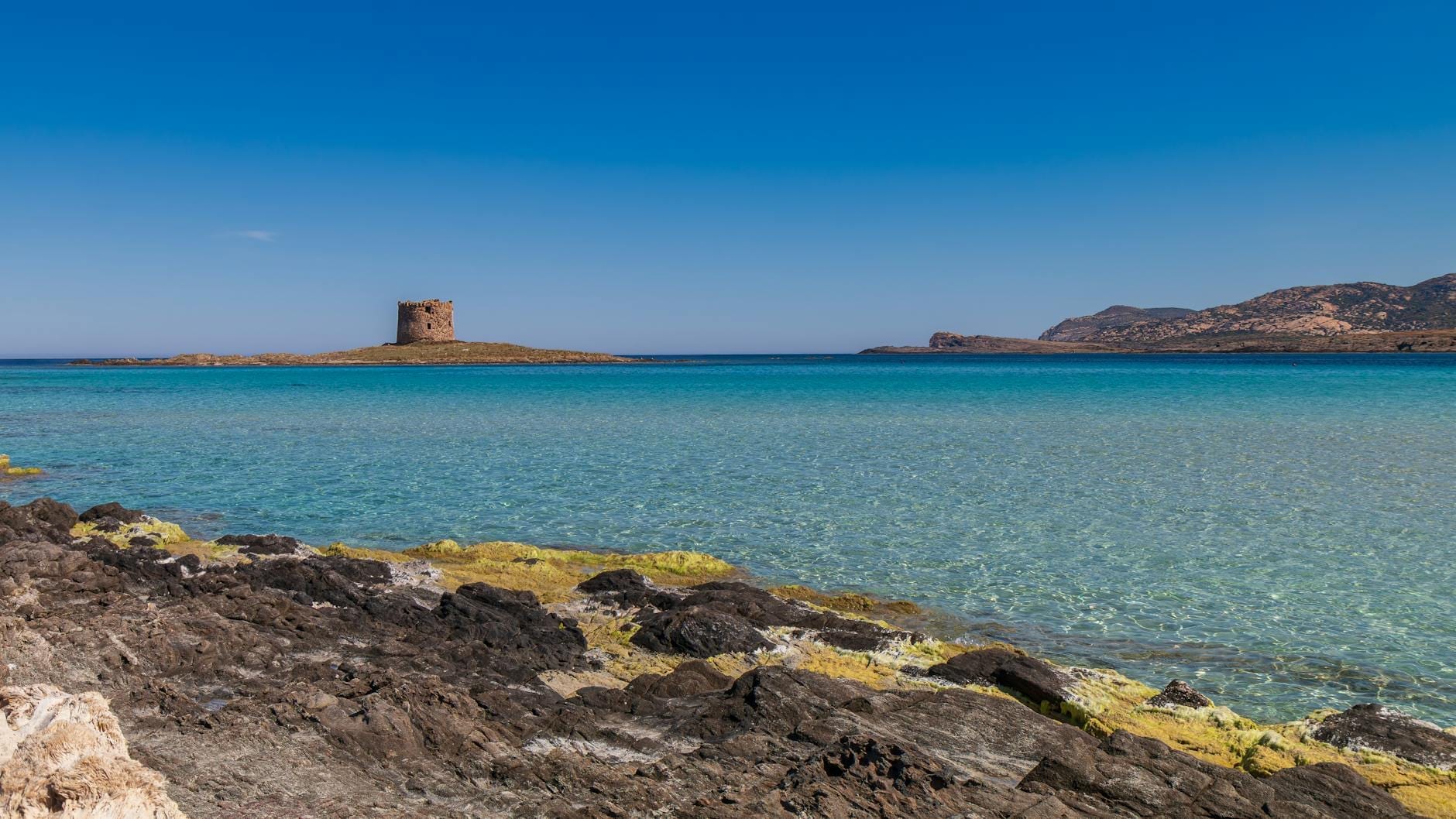
Spiaggia La Pelosa sits at the far northwestern tip of Sardinia, where the land tapers to a point below Capo Falcone and the sea loses almost all its depth before it reaches the natural barriers of Piana Island and Asinara beyond. The result is water that reads as almost impossibly shallow and clear: pale turquoise fading to a deeper cobalt at the edges, with a sandy bottom visible at two or three metres. On calm days, the surface is glassy. On breezy afternoons, small ripples catch the light without building into waves.
The beach itself is relatively compact, roughly crescent-shaped, backed by low dunes and coarse Mediterranean scrub rather than any built-up promenade. Standing in the shallows and looking back toward shore, the Torre della Pelosa rises from a small rocky outcrop to your right: a circular coastal watchtower built during the 16th-century Spanish period to guard the narrow strait between Sardinia and Asinara. It is not open to visitors but it is photogenic from every angle, and it gives the landscape a historical texture that pure nature alone does not.
ℹ️ Good to know
Between 15 May and 15 October, access is capped at 1,500 visitors per day, A reservation and QR code are required and checked at the beach entrance. Book only through the official site: spiaggialapelosa.it — it is the authorized booking platform.
The Beach Through the Day: How the Experience Shifts
Arrive as close to 08:00 as possible. In the first two hours, the low sun angles across the water from the east and the colours are at their most saturated: deep copper light over pale sand, shadow still pooling around the watchtower rocks. The beach holds an unusual quiet at this hour — a few early families spreading towels, the faint creak of a boat in the distance. The smell is salt and dry scrub, with occasional whiffs of sunscreen as the day gathers.
By mid-morning, the 1,500-person limit begins to assert itself. Towels fill in, the water fills with swimmers and children wading, and the soundscape shifts from serene to cheerful chaos. This is when the shallows show their best quality for families: even twenty metres from shore the water rarely reaches an adult's waist, and the sandy bottom is smooth enough for toddlers. The lack of strong currents, sheltered as the bay is by Asinara to the northwest, makes it one of the safest swimming beaches in Sardinia.
Afternoon light in July and August is brutal. The sand radiates heat, shade is nearly non-existent, and the water temperature by mid-afternoon can feel almost bath-like. If you are sensitive to strong sun, a mid-morning departure is wiser than pushing through to late afternoon. Toward 17:00, the crowd thins as families pack up, and the quality of light improves again for photography — long shadows, warm tones, fewer people in frame.
Tickets & tours
Hand-picked options from our booking partner. Prices are indicative; availability and final rates are confirmed when you complete your booking.
Aperitif on a sailing ship to La Pelosa from Stintino
From 75 €Instant confirmationFree cancellationVineyard Guided Tour and 7 Wine Tasting in Palau
From 84 €Instant confirmationFree cancellationFull-Day Sailboat Tour in La Maddalena Archipelago from Cannigione
From 112 €Instant confirmationFree cancellationHiking excursion to the Devil's Saddle
From 35 €Instant confirmationFree cancellation
Getting There and the Access System
La Pelosa is roughly 60 km northwest of Sassari by road. The most direct route takes the E25 north, then cuts west on the SP57 toward Stintino and continues north on the SP34 to the beach parking area. From Alghero, the approach uses the coastal road via Porto Torres before joining the Stintino road. There is no direct public bus from Sassari to the beach itself; the nearest town served by regional buses is Stintino, from which the beach is about 2 km. A seasonal shuttle operates between Stintino and La Pelosa during summer — check with local operators before your trip, as schedules are revised annually.
Parking near the beach is limited and fills early on summer weekends, sometimes before 09:00. If you plan to drive, arriving immediately at opening is strongly recommended. Scooter or bicycle rental from Stintino is a practical alternative: the coastal road north is flat and the distance is manageable.
⚠️ What to skip
Do not attempt to arrive without a prior reservation during the controlled season (15 May–15 October). The daily cap of 1,500 visitors is enforced, and walk-ups are turned away once capacity is reached. Book at spiaggialapelosa.it/en and bring your QR code, either printed or on your phone.
Rules, Regulations, and What to Bring
La Pelosa operates under one of the most detailed beach protection regimes in Sardinia, and the rules are enforced rather than posted-and-ignored. The €3.50 per-person fee covers the controlled period from 15 May to 15 October, with the access window running 08:00 to 18:00 each day. Children under 12 do not require a reservation and enter free.
All visitors must place a dedicated beach mat under their towel. Foot-washing at the designated showers before leaving the beach area is compulsory. Smoking is prohibited on the beach. Collecting sand, shells, or stones is banned. These rules exist because La Pelosa showed measurable erosion from unmanaged tourism before the current system was introduced.
- Bring a dedicated beach mat (not just a towel) — required to lay on the sand
- Sunscreen is essential; there is almost no natural shade on the beach
- Drinking water: bring your own; facilities near the beach are limited
- Cash or card for the €3.50 fee if not pre-booked online
- Waterproof phone case or dedicated underwater camera for photography in the shallows
- Footwear for the rocky approach paths near the watchtower area
💡 Local tip
Accessibility note: Official sources do not document wheelchair ramps or adapted beach access at La Pelosa. Visitors with mobility requirements should contact the Stintino municipal authority or local accommodation before travelling, as conditions are not verified.
The Torre della Pelosa and the Wider Landscape
The Torre della Pelosa is not a footnote — it is central to understanding the place. Built during the Spanish administration of Sardinia in the 16th century, the tower was one of a network of coastal watchtowers designed to warn coastal communities against seaborne raids. Sardinia's northwest coast, close to the shipping lanes between the western Mediterranean and the Tyrrhenian Sea, required surveillance, and the position at Capo Falcone commanded clear sightlines across the strait toward Asinara.
The tower stands on a small rocky islet that appears almost connected to the beach at low tide. It is not accessible to visitors but its cylindrical form and pale stone read beautifully against the water in photographs, particularly in early morning and late afternoon light. The surrounding rocks are worth exploring at the edges of the beach: sea grass and small fish are visible through the clear water, making this area worthwhile for snorkellers.
The larger backdrop of Parco Nazionale dell'Asinara visible across the water adds context to the visit. Asinara, now a protected national park, spent much of the 20th century closed to the public as a penal colony. Day trips to the island operate from Stintino — combining La Pelosa in the morning with an afternoon Asinara excursion makes for a full and varied day on this stretch of coast.
When to Visit: Season and Timing Advice
The controlled season runs from 15 May to 15 October. Outside these dates, the access management system does not apply, but the beach can be cold, windswept, and largely deserted — which some visitors find appealing in itself. The sea is swimmable from roughly late May onward; water temperatures in June average around 20–22°C, reaching 25–26°C in August before cooling again in September and October.
June and September offer the most balanced experience: the sea is warm enough to swim comfortably, the light is excellent, and the beach operates below peak capacity most days. July and August bring reliable heat but also maximum visitor numbers, and while the 1,500-person daily cap prevents the overcrowding that plagued La Pelosa before regulations were introduced, the beach still feels busy at peak hours. For more context on planning around the island's weather patterns, the best time to visit Sardinia guide covers regional variations in detail.
Northwest Sardinia is exposed to the Mistral wind, which can arrive with force and dramatically change conditions at La Pelosa. A calm, mirror-like day can shift to choppy, sand-blowing conditions within hours when the Mistral picks up from the northwest. Check wind forecasts before travelling, particularly in spring and autumn.
Who Should Think Twice
La Pelosa is not the right beach for everyone. If you value spontaneity — turning up to a beach on a whim with no advance planning — this is not your place during summer. The booking requirement is real and the turn-away policy is enforced. If you prefer a beach with shade structures, restaurants directly on the sand, or a wider range of facilities, the more developed beaches near Alghero or the Costa Smeralda may suit you better.
If the beaches of Capo Falcone and nearby coves around Stintinomain draw is dramatic coastal scenery rather than swimming, the Capo Caccia cliffs south of Alghero offer a more rugged and less crowded experience that does not require advance registration. Travellers looking for beaches without tourist infrastructure at all might find Sardinia's lesser-known northwest coastline more rewarding once they move beyond the La Pelosa postcard.
Those visiting for the first time without a car should plan logistics carefully. Sardinia's public transport is limited in rural areas, and the road to La Pelosa is not well-served outside the main Stintino stop. The broader guide to getting around Sardinia explains transport options clearly, including their limitations.
Insider Tips
- Book your reservation the moment you commit to a date — slots for weekends in July and August sell out quickly. The official site (spiaggialapelosa.it/en) releases slots on a rolling basis, so check back if your first date is full.
- The beach faces roughly west-northwest, which means the best photography light is in the first two hours after opening (08:00–10:00). By midday, the light is flat and harsh. Return to your photo spots in the final hour before 18:00 for warm late-afternoon colour.
- Snorkelling near the rocks at the base of the watchtower islet rewards patience: the sea grass beds shelter wrasse, small sea bream, and occasionally octopus. The area directly in front of the main beach is heavily trafficked and less interesting underwater.
- Stintino village, 2 km south, has several restaurants serving fresh seafood at prices considerably lower than anything near the beach. Plan your lunch there rather than at the limited beach-side options — the village is worth the short walk or drive regardless.
- Outside the controlled season (before 15 May and after 15 October), La Pelosa is free to access and completely uncrowded. Late October and early November can bring warm, clear days with sea temperatures still around 20°C and almost no other visitors — an entirely different, and for some people much better, experience.
Who Is Spiaggia La Pelosa For?
- Families with young children: the exceptional shallows and absence of currents make this one of the safest swimming beaches in Sardinia
- Photographers seeking Sardinia's most iconic coastal composition, particularly in early morning light
- Snorkellers wanting clear, calm water with accessible rocky areas near the shore
- Travellers combining a beach day with an afternoon excursion to Asinara National Park, departing from Stintino
- Anyone visiting northwest Sardinia who wants to understand why this corner of the island became famous in the first place
Nearby Attractions
Other things to see while in Sassari:
- Basilica di San Gavino (Porto Torres)
Standing on Monte Agellu in Porto Torres, the Basilica dei Santi Gavino, Proto e Gianuario is the largest Romanesque church in Sardinia and one of the most architecturally singular in Italy. Built in the first half of the 11th century, it is the only Romanesque monument in the country originally designed with two opposing apses. For anyone tracing the island's medieval history, this is as significant as it gets.
- Bosa
Bosa sits on the north bank of the Temo River in western Sardinia, its medieval quarter tumbling down a hillside in layers of terracotta, ochre, and faded pink. It is the only town in Sardinia built along a navigable river, and that distinction shapes everything about it: the old tanneries along the water, the boat-lined banks, the slow pace that has little to do with the island's summer beach circus.
- Castello dei Doria (Castelsardo)
Perched on a volcanic promontory above the Gulf of Asinara, Castello dei Doria is a 12th-century Ligurian fortress that has shaped northern Sardinia for nearly a thousand years. Today it houses the Museo dell'Intreccio Mediterraneo, dedicated to Mediterranean basketry, while its ramparts offer some of the most commanding coastal views on the island.
- Castello Malaspina (Bosa)
Perched 81 metres above the Temo river on Serravalle hill, Castello Malaspina is the medieval landmark that defines Bosa's skyline. Inside its walls stands the Romanesque Church of Nostra Signora de Sos Regnos Altos, sheltering rare 14th-century frescoes. The climb is steep, but the views over terracotta rooftops, vineyards, and coastline are exceptional.