Parco Nazionale dell'Asinara: Where Italy's Most Notorious Prison Became a Wildlife Sanctuary
Asinara is one of Sardinia's most singular destinations: a car-free island off the northwest coast that served as a maximum-security prison until 1997 and is now a national park protecting rare wildlife, turquoise coves, and the ruins of a strange, layered history. Getting here requires a boat, a plan, and a sense of adventure.
Quick Facts
- Location
- Isola dell'Asinara, municipality of Porto Torres, Province of Sassari, northwest Sardinia
- Getting There
- Boat only: ferries from Stintino (to Fornelli) or Porto Torres (to Cala Reale); no private vehicles permitted on the island
- Time Needed
- Half day (guided excursion) to a full day; multi-day stays possible via authorized accommodation
- Cost
- Ferry and excursion prices vary by operator, season, and route type (on foot, bicycle, or off-road vehicle); check directly with operators or the Park Authority
- Best for
- Wildlife spotting, unspoiled beaches, dark history, photography, and escaping summer crowds
- Official website
- www.parcoasinara.org
What Asinara Actually Is
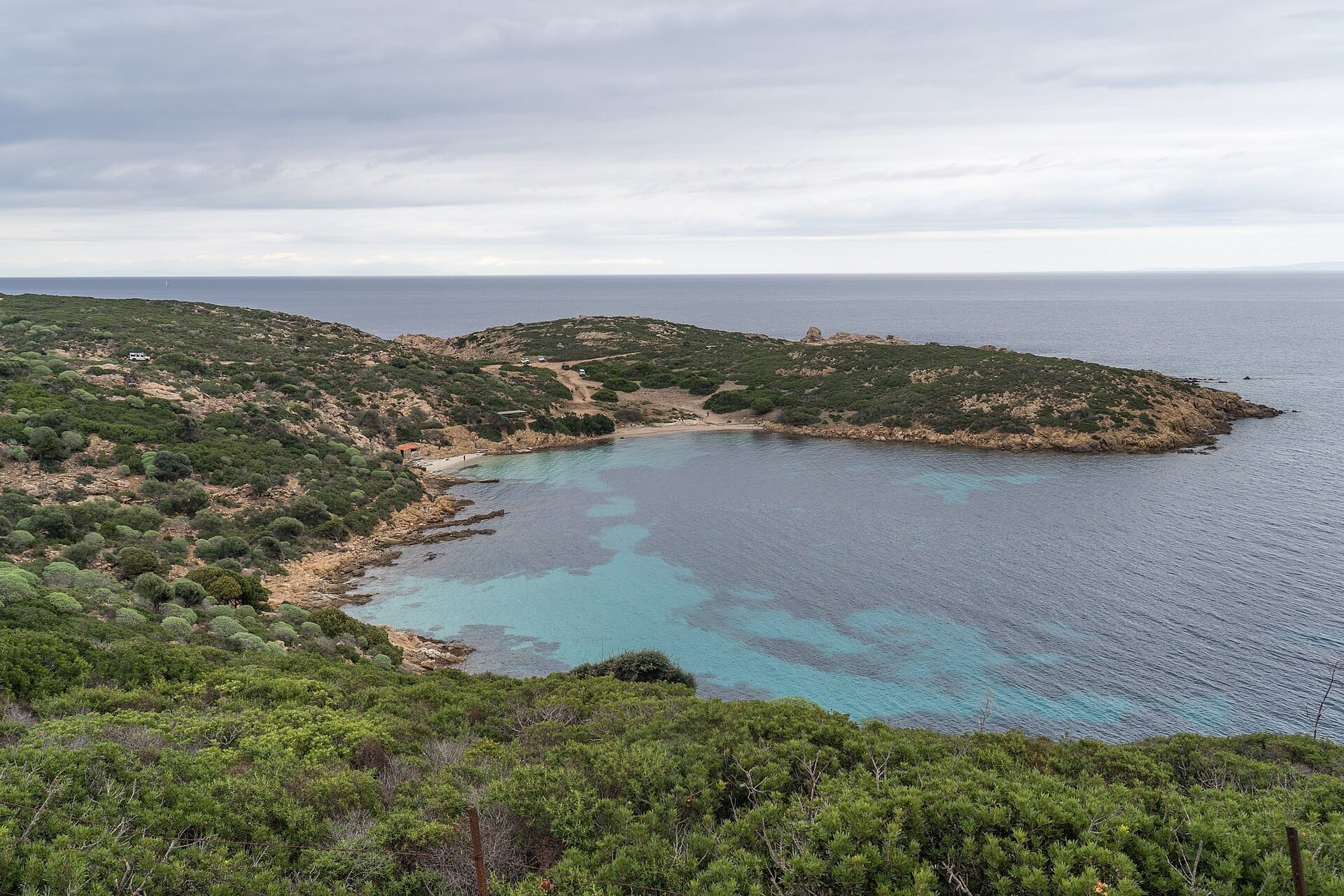
The Parco Nazionale dell'Asinara occupies the entire island of Asinara, 51.22 square kilometres of granite, maquis scrub, and crystalline sea positioned off the northwestern tip of Sardinia. The island has no permanent civilian population and no privately owned cars. What it does have is a colony of albino donkeys, the ruins of five small villages, a network of prison buildings now partially converted for visitor use, and some of the least disturbed coastline in the western Mediterranean.
The park was established by decree on 28 November 1997, and the prison that had operated on the island since 1885 formally closed in 1997. The transition from one of Italy's most isolated penal institutions to a protected natural area happened almost overnight. The result is a place with a strange double identity: pristine in ecological terms, yet layered with the physical remnants of over a century of forced confinement.
ℹ️ Good to know
Access to Asinara is exclusively by authorized boat services. There is no bridge, no regular passenger ferry in the conventional sense, and no way to arrive independently by sea without complying with park regulations. Book your crossing and excursion together through the same operator, or contact the Ente Parco Nazionale dell'Asinara directly for current authorized providers.
Getting There: The Logistics of Reaching a Former Maximum-Security Island
Two main embarkation points serve the island. From Stintino, a small fishing village about 30 kilometres northwest of Sassari, boats cross to Fornelli at the island's eastern side. From Porto Torres, a port city north of Sassari with ferry connections to mainland Italy, services operate to Cala Reale on the island's central-western coast. The two entry points offer different starting experiences: Fornelli puts you near the more rugged southern terrain, while Cala Reale delivers you to the administrative heart of the former prison complex.
Stintino itself is worth knowing about if you are approaching from the north. It sits near the Spiaggia La Pelosa, one of Sardinia's most photographed beaches, and works well as a base the night before an Asinara excursion. From Sassari, the provincial capital, both Stintino and Porto Torres are reachable by ARST regional buses or by car in under an hour.
Once on the island, authorized transport options include off-road minibuses operated by licensed guides, bicycle hire, or walking. There are no private vehicles. Distances are significant: the island is roughly 17 kilometres long. If you want to see more than the landing zone and immediate surroundings, a guided vehicle excursion is the practical choice for a single-day visit.
⚠️ What to skip
Crossing times and service frequency change significantly between seasons. Many operators run daily services from April through October but reduce sharply or suspend entirely in winter. Always confirm current schedules before travel at www.parcoasinara.org or directly with ferry operators.
Tickets & tours
Hand-picked options from our booking partner. Prices are indicative; availability and final rates are confirmed when you complete your booking.
Asinara island e-bike rental from Porto Torres
From 48 €Instant confirmationFree cancellationMinivan day tour to Asinara National Park from Stintino
From 82 €Instant confirmationFree cancellationVintage sailboat Asinara Island tour with lunch from Stintino
From 105 €Instant confirmationFree cancellationAsinara full day sailboat excursion from Stintino
From 105 €Instant confirmationFree cancellation
The History You Will See Everywhere
Asinara became a penal colony in 1885, when the Italian state converted the island into a controlled territory. The colony expanded over subsequent decades, and by the 1970s and 1980s Asinara had become a maximum-security facility housing high-profile prisoners including members of the Red Brigades and Mafia bosses undergoing pentiti proceedings. The island's isolation made it ideal for the state's purposes. It also made it ecologically intact.
What visitors see today at Cala Reale is a complex of whitewashed administrative buildings, a former hospital, a small church, and the governor's residence, all kept in various states of preservation. Some have been converted into basic visitor accommodation and a museum. Walking through the compound, particularly in the flatter midday light, the architecture reads as institutional Mediterranean: functional, low-slung, bleached by decades of sun. There is no attempt to dramatize the space for tourism. It simply exists, slightly too quiet, slightly too orderly for a place that has been empty for over two decades.
Further inland and toward the north, the scattered hamlets of Tumbarino, Fornelli, and Campu Perdu contain more ruins and old agricultural infrastructure from the prison-farm era. These are accessible on guided excursions and provide context for how self-sufficient the island's captive community was expected to be.
Wildlife: The Albino Donkeys and What Else Lives Here
The albino donkeys are the animal most associated with Asinara, and they are unusual. The population descended from a small herd brought to the island during the prison era, and the trait became established in the isolated population. They roam freely across the island, including the roads and landing areas, and show little fear of visitors. Their pale coloration and pink eyes are striking against the scrub and rock, and they appear without warning at all hours, including clustered near the boat landing at Fornelli in the early morning.
The broader wildlife picture is significant. The absence of hunting, the closed period under the prison administration, and the decades since civilian habitation have allowed populations of mouflon, wild boar, fallow deer, and griffon vultures to establish or recover. The surrounding marine area is a protected zone where Posidonia oceanica meadows shelter fish populations rarely seen at comparable density near inhabited coastlines. Boat trips around the island's perimeter pass coastal cliffs where Audouin's gulls nest, and the water clarity is exceptional.
💡 Local tip
Morning arrivals via the Stintino crossing tend to encounter albino donkeys near the Fornelli landing before the heat pushes them into shade. Bring a telephoto lens if wildlife photography is a priority: the animals are approachable but not tame, and close approach should be avoided.
The Landscape at Different Hours
The island's interior in the morning is cool and surprisingly quiet. Wind from the northwest, the Maestrale that defines this corner of Sardinia, moves through the maquis and keeps temperatures manageable even in July. The light at that hour falls at a low angle across the granite outcrops, throwing shadows that make the rock formations more dramatic than they appear at noon. The sea on the western coast catches the early sun in a way that makes the bottom visible in extraordinary detail.
By midday in summer, the island becomes significantly hotter. The lack of shade on the interior tracks is genuine discomfort for anyone walking. This is not an exaggeration: temperatures on the exposed plateaus can feel 4 to 5 degrees warmer than at the coast, and there are no cafes or water points outside of the main visitor facilities at Cala Reale. Guided excursions are timed with this in mind, often scheduling the beach stops and coastal walks for mid-morning and the historic buildings for when shade is available.
Late afternoon, as day visitors prepare to return on the last boats, the island quietens perceptibly. Those staying overnight at the park's authorized accommodation report a different quality to the experience: the donkeys return to the paths, the light goes gold over the water, and the absence of any light pollution makes the night sky extraordinary. This is when Asinara reveals how complete its separation from the mainland actually is.
Practical Walkthrough: What a Day Visit Looks Like
A typical guided day excursion departs from either Stintino or Porto Torres in the morning and returns by late afternoon. After landing, visitors are grouped by their chosen transport mode: off-road vehicle tours cover the most ground and typically visit multiple historic sites and viewpoints; cycling tours follow a more limited circuit but offer more freedom to stop; walking tours focus on shorter circuits near the landing zone.
The Cala Reale complex is usually included in most itineraries. From there, excursions typically move north toward the lighthouse at Punta Scorno or south toward the Fornelli area and its associated prison infrastructure. Beaches are part of the experience: Cala Sant'Andrea, Cala Sabina, and the stretch near Fornelli offer swimming stops with water that reads as clear. Packed lunch and plenty of water are essential regardless of which tour you book, as on-island food options are limited.
Photography works best in the first two hours after landing and in the last hour before departure. The midday flat light flattens texture and washes out the sea colour that makes Asinara's coves so striking in images. For context on what else northwest Sardinia offers, the Parco Naturale di Porto Conte and the caves at Grotte di Nettuno near Alghero are within reach for a multi-day itinerary in the region.
Who Should Think Carefully Before Going
Asinara is not a polished tourist attraction with clear signage, air-conditioned rest stops, and a gift shop. Visitors with limited mobility face genuine challenges: the terrain is uneven, authorized vehicles are not necessarily wheelchair-adapted, and the infrastructure at historic buildings is inconsistent. Those with specific needs should contact the Park Authority before booking.
Travelers expecting a beach holiday with amenities will be disappointed. There are no beach bars, no sun loungers for hire, no restaurants on site outside of the limited facilities at the main visitor complex. If your priority is a comfortable beach day, La Pelosa near Stintino or the beaches of the Sassari coast offer easier access. Asinara rewards curiosity and preparedness, not passive relaxation.
The boat crossing itself can be rough when the Maestrale is blowing. This is not a calm-water ferry route on exposed days. Those who are sensitive to motion sickness should take precautions or choose crossings in the morning, when wind is typically less strong than in the afternoon.
Insider Tips
- Book ferry and excursion together, ideally in April or May when operators open their season schedules. The most popular guided vehicle tours sell out in July and August, sometimes weeks in advance.
- Bring at least two litres of water per person regardless of season. The island has no reliable public water sources along excursion routes, and dehydration risk in summer is real.
- If you can stay overnight at the park's authorized accommodation in Cala Reale, do so. The island after the last day-tripper boat departs is a completely different experience: quieter, more atmospheric, and the only time you can have a beach to yourself.
- The northern tip of the island near Punta Scorno tends to be windier and cooler even in summer, making it a sensible retreat during peak afternoon heat. The lighthouse there also provides a useful orientation point for the island's geography.
- Ask your guide specifically about the Agriturismo Elighe Mannu area in the island's interior, where the prison-farm infrastructure is most intact. Many standard day itineraries skip it in favour of coastal stops.
Who Is Parco Nazionale dell'Asinara For?
- Wildlife and nature photographers looking for undisturbed habitat and unusual subjects, including the albino donkey colony
- History-minded travelers interested in Italy's penal system, twentieth-century island isolation, and adaptive reuse of institutional spaces
- Snorkelers and divers seeking marine protected areas with exceptional water clarity and Posidonia meadows
- Hikers and cyclists wanting a full-day route across car-free terrain with dramatic coastal views
- Travelers already in the Sassari or Alghero area who want a distinct excursion day that differs entirely from the region's beach circuit
Nearby Attractions
Other things to see while in Sassari:
- Basilica di San Gavino (Porto Torres)
Standing on Monte Agellu in Porto Torres, the Basilica dei Santi Gavino, Proto e Gianuario is the largest Romanesque church in Sardinia and one of the most architecturally singular in Italy. Built in the first half of the 11th century, it is the only Romanesque monument in the country originally designed with two opposing apses. For anyone tracing the island's medieval history, this is as significant as it gets.
- Bosa
Bosa sits on the north bank of the Temo River in western Sardinia, its medieval quarter tumbling down a hillside in layers of terracotta, ochre, and faded pink. It is the only town in Sardinia built along a navigable river, and that distinction shapes everything about it: the old tanneries along the water, the boat-lined banks, the slow pace that has little to do with the island's summer beach circus.
- Castello dei Doria (Castelsardo)
Perched on a volcanic promontory above the Gulf of Asinara, Castello dei Doria is a 12th-century Ligurian fortress that has shaped northern Sardinia for nearly a thousand years. Today it houses the Museo dell'Intreccio Mediterraneo, dedicated to Mediterranean basketry, while its ramparts offer some of the most commanding coastal views on the island.
- Castello Malaspina (Bosa)
Perched 81 metres above the Temo river on Serravalle hill, Castello Malaspina is the medieval landmark that defines Bosa's skyline. Inside its walls stands the Romanesque Church of Nostra Signora de Sos Regnos Altos, sheltering rare 14th-century frescoes. The climb is steep, but the views over terracotta rooftops, vineyards, and coastline are exceptional.