Basilica di San Gavino: Sardinia's Greatest Romanesque Church
Standing on Monte Agellu in Porto Torres, the Basilica dei Santi Gavino, Proto e Gianuario is the largest Romanesque church in Sardinia and one of the most architecturally singular in Italy. Built in the first half of the 11th century, it is the only Romanesque monument in the country originally designed with two opposing apses. For anyone tracing the island's medieval history, this is as significant as it gets.
Quick Facts
- Location
- Piazza Martiri Turritani, Porto Torres (SS), Sassari province
- Getting There
- Walkable from Porto Torres port and train station; Porto Torres is served by Trenitalia from Sassari (approx. 20 min)
- Time Needed
- 45–90 minutes, including the crypt
- Cost
- Entrance is usually subject to a small fee managed via Turris Bisleonis (which may include basilica and crypt together) — verify current prices at basilicasangavino.it
- Best for
- Architecture enthusiasts, history travellers, medieval art, quiet cultural stops
- Official website
- www.basilicasangavino.it
Why This Church Matters
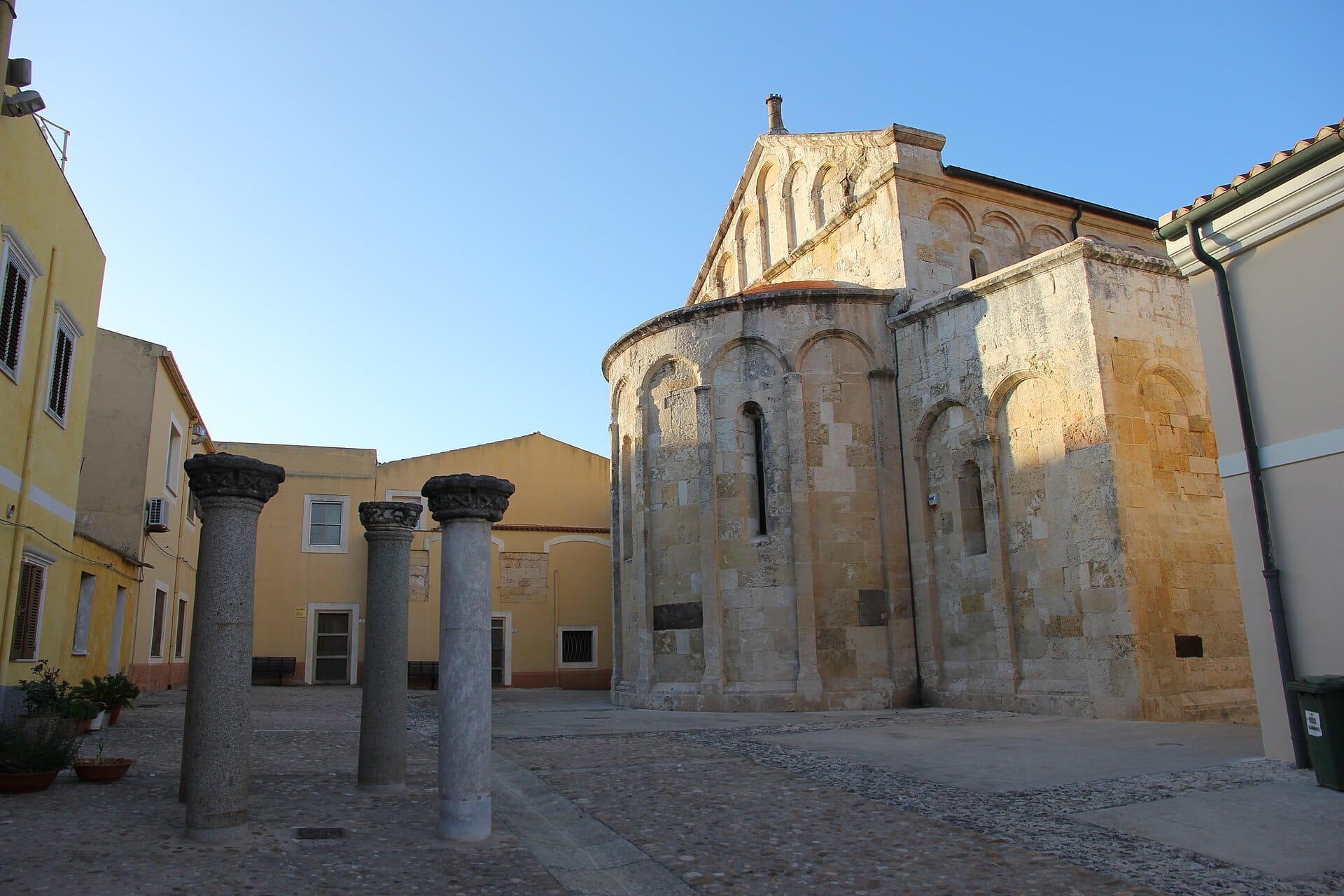
The Basilica di San Gavino is not a typical church stop. Constructed in the first half of the 11th century, it is the largest Romanesque church in Sardinia and one of the most architecturally distinctive in the entire country. Its defining feature is structural: two fully developed opposing apses, one at each end of the nave. No other Romanesque monument in Italy was originally designed this way. That single fact alone positions it as a serious object of architectural study, not just regional pride.
The church is dedicated to three Christian martyrs, Gavino, Proto, and Gianuario, who were executed in Roman Turris Libisonis, the ancient settlement that became Porto Torres. Their veneration gave rise to one of the earliest and most important pilgrimage sites in Sardinia. For centuries, this basilica served as the cathedral of the Diocese of Torres, retaining that status until 1441, when the episcopal seat transferred to Sassari. That historical weight is still tangible when you walk through the doors.
ℹ️ Good to know
The basilica is managed for visits by the local association Turris Bisleonis. Opening hours change seasonally. Check current times at basilicasangavino.it before travelling, especially outside summer months.
The Architecture: What to Look For
The exterior is immediately striking, even from a distance. The building sits on Monte Agellu, a low rise at the edge of Porto Torres's historic centre, and its long limestone flank faces the approach road with an almost austere confidence. At roughly 58 metres in length, and approximately three times longer than it is wide, the proportions feel monumental without being overbearing. The stone is pale and warm, and in the late afternoon light it takes on a golden tone that makes photography rewarding.
The twin-apse arrangement is the first thing a trained eye notices, and it rewards attention. Each apse is articulated with blind arcading and pilaster strips in the Lombard Romanesque manner. The interplay between the two ends creates an unusual spatial reading from outside: which end is the entrance? In practice, the principal entrance is typically on the south side, a lateral portal rather than an axial one, which itself signals the building's archaic character. Inside, three naves are separated by columns, some of them clearly reused from the Roman settlement below, a common practice in early medieval Sardinia.
Look carefully at the capitals and shafts. Several columns are unmistakably antique spoils, taken from the Roman town of Turris Libisonis whose ruins lie beneath and around Porto Torres. This layering of Roman material within an 11th-century Christian structure is one of the clearest physical expressions of continuity between ancient and medieval Sardinia.
💡 Local tip
Bring a small torch or use your phone light in the crypt. Lighting conditions there can be dim, and the sarcophagi and architectural details reward close inspection.
Tickets & tours
Hand-picked options from our booking partner. Prices are indicative; availability and final rates are confirmed when you complete your booking.
Balai Bay snorkeling experience from Porto Torres
From 42 €Instant confirmationFree cancellationAsinara island e-bike rental from Porto Torres
From 48 €Instant confirmationFree cancellationGuided Kayaking Excursion in Porto Torres
From 49 €Instant confirmationFree cancellationBoat Tour of Porto Cervo's beaches from Porto Rotondo
From 84 €Instant confirmationFree cancellation
The Crypt: The Real Centrepiece
For most visitors, the crypt is the emotional and historical core of the visit. Accessed by descending stairs beneath one of the apses, it houses the remains of the three martyr saints, preserved in early Christian sarcophagi. The space is low-vaulted, cool regardless of the season outside, and largely unmodified in its essential structure. The atmosphere is sober and concentrated in a way the upper church, with its later additions, is not.
The crypt also contains Roman-era architectural fragments that were incorporated into the structure during construction, reinforcing the sense of stratigraphy you get from the columns above. In summer, the contrast between the warm exterior and the cool, slightly damp air underground is pronounced. The stone smells faintly mineral, the kind of smell that belongs to very old, very still spaces.
Guided visits organized by Turris Bisleonis typically include the crypt and provide contextual explanation in Italian, with some English-language options. If you visit independently, the upper basilica is generally accessible during opening hours, but the crypt may require a guide or ticketed access. Verify arrangements before arrival.
Visiting in Practice: Times, Crowds, and Conditions
Porto Torres is not a major tourist destination in the conventional sense. It is a working port town, the main ferry terminal for connections from Genoa and Barcelona to northern Sardinia, and most travellers pass through without stopping. That means the basilica sees fewer visitors than its historical importance arguably warrants. On a weekday morning outside July and August, you may have the interior almost entirely to yourself.
Morning visits, particularly between 9am and 11am, offer the best natural light inside the nave. The stone walls are pale enough to reflect light effectively, and the lateral windows create a gentle, raking illumination across the columns. By midday in summer, heat builds quickly outside, and the thick walls make the interior noticeably cooler, which is a practical benefit as much as an atmospheric one.
The area around the basilica is quiet residential and historic Porto Torres, not a tourist strip. There are no souvenir stalls at the door and no queues. The piazza in front is simple and unfussy. If you arrive by ferry and have a few hours before your bus or train connection, this is one of the better ways to spend that time in northern Sardinia.
⚠️ What to skip
As with all active churches in Italy, visits may be restricted or interrupted during religious services. Shoulders and knees should be covered. Carry a scarf or light layer if visiting in summer.
Getting There and Combining with Nearby Sites
Porto Torres is straightforward to reach from Sassari by Trenitalia regional train, a journey of roughly 20 minutes. Trains run regularly, and the station is within easy walking distance of the basilica. If you are based in Sassari, this makes a very manageable half-day excursion. From the Alghero direction, buses connect via Sassari. Drivers will find parking near the historic centre without difficulty outside peak summer.
Porto Torres also contains the ruins of Turris Libisonis, the Roman town, including thermae and other remains visible in the urban fabric. The combination of Roman ruins and the basilica built partly from their materials makes for a coherent half-day on Sardinian continuity and historical layering. If you want to extend your trip through northern Sardinia's archaeological landscape, Monte d'Accoddi, a unique Mesopotamian-style prehistoric altar just south of Porto Torres, is only a short drive away and pairs well with the basilica.
For a longer day in the region, consider continuing toward Nuraghe Palmavera or the coast near Alghero. Sardinia's Romanesque churches are often best understood alongside the nuragic and prehistoric sites that precede them, because together they trace the island's exceptionally long sequence of monumental building. The nuragic sites guide provides a useful framework for planning that broader itinerary.
Photography Notes and What to Realistically Expect
The exterior photographs best in the hour before sunset when the limestone glows warmest, or early morning when the light is clean and soft. The south-facing lateral facade catches direct sun through most of the day, so midday shots can be harshly overexposed. The west end, with its apse, is often in shadow in the morning and better in the afternoon.
Inside, the light is low even in summer. A camera that handles available light reasonably well will serve you better than a flash, which flattens the stone texture and is typically discouraged. The crypt is dark and a wide-aperture lens or phone night mode makes a significant difference.
One honest note about expectations: the basilica has undergone restoration work over the centuries, and some interior furnishings are later additions that do not match the austerity of the Romanesque shell. Visitors hoping for a pristine, unaltered medieval interior should temper those expectations slightly. What is authentic and extraordinary is the structural fabric itself, the columns, the apses, the crypt, and the proportions. Focus there and the visit will not disappoint.
Who This Attraction Suits, and Who Might Skip It
The basilica is not for everyone. Visitors whose primary interest is beaches, scenery, or food will find little to hold their attention here beyond a brief photographic stop. Children may engage with the crypt if they are interested in old spaces and stories, but there is no interactive element and the visit is essentially a slow, attentive walk. Those with significant mobility limitations should check accessibility conditions in advance, as the crypt involves stairs and the overall site reflects an 11th-century construction with no obligation to modern access standards.
For architecture specialists, historians of medieval Europe, and anyone who already has a sense of Sardinia's layered past, including its Nuragic Bronze Age cultures and Roman occupation, this is a significant site. It belongs on any serious cultural itinerary of the island. If your interest in Sardinian history is developing, the things to do in Sardinia guide offers context for where the basilica fits into a wider trip.
Insider Tips
- If you arrive by ferry from Genoa or Barcelona and have a long layover before your onward connection, the basilica is less than 15 minutes on foot from the ferry terminal. Most passengers pass straight through Porto Torres; the basilica rewards those who don't.
- The Turris Bisleonis association occasionally organises special evening visits and cultural events at the basilica, particularly around the feast of the martyr saints in late October. Check their website for upcoming events if your travel dates are flexible.
- The columns inside the nave repay individual inspection: some are clearly Roman spolia, with proportions and carving styles that predate the building by centuries. Matching the variety of shafts and capitals to their likely origins is an absorbing exercise if you have a background in classical architecture.
- For the crypt visit, note that the air temperature drops noticeably even in July and August. If you are visiting on a hot day and have shed layers, retrieving them before descending is worth the small inconvenience.
- The surrounding streets of historic Porto Torres contain fragments of Roman paving and the remains of ancient thermal baths. Allow 20–30 minutes after the basilica to walk the immediate neighbourhood before heading back to the station or port.
Who Is Basilica di San Gavino (Porto Torres) For?
- Architecture and medieval history enthusiasts
- Travellers with a Sassari day-trip itinerary looking for depth over scenery
- Ferry passengers with a layover in Porto Torres
- Anyone building a Romanesque Sardinia circuit alongside Saccargia and other northern churches
- Photographers interested in Romanesque stone and natural light conditions
Nearby Attractions
Other things to see while in Sassari:
- Bosa
Bosa sits on the north bank of the Temo River in western Sardinia, its medieval quarter tumbling down a hillside in layers of terracotta, ochre, and faded pink. It is the only town in Sardinia built along a navigable river, and that distinction shapes everything about it: the old tanneries along the water, the boat-lined banks, the slow pace that has little to do with the island's summer beach circus.
- Castello dei Doria (Castelsardo)
Perched on a volcanic promontory above the Gulf of Asinara, Castello dei Doria is a 12th-century Ligurian fortress that has shaped northern Sardinia for nearly a thousand years. Today it houses the Museo dell'Intreccio Mediterraneo, dedicated to Mediterranean basketry, while its ramparts offer some of the most commanding coastal views on the island.
- Castello Malaspina (Bosa)
Perched 81 metres above the Temo river on Serravalle hill, Castello Malaspina is the medieval landmark that defines Bosa's skyline. Inside its walls stands the Romanesque Church of Nostra Signora de Sos Regnos Altos, sheltering rare 14th-century frescoes. The climb is steep, but the views over terracotta rooftops, vineyards, and coastline are exceptional.
- Castelsardo
Perched on a basalt promontory above the Gulf of Asinara, Castelsardo is one of the most visually striking towns in Sardinia. Its labyrinthine medieval streets, Doria family fortress, and panoramic coastal views make it a compelling half-day stop in the northwest of the island.