Castelsardo: The Medieval Clifftop Town That Earns Its Drama
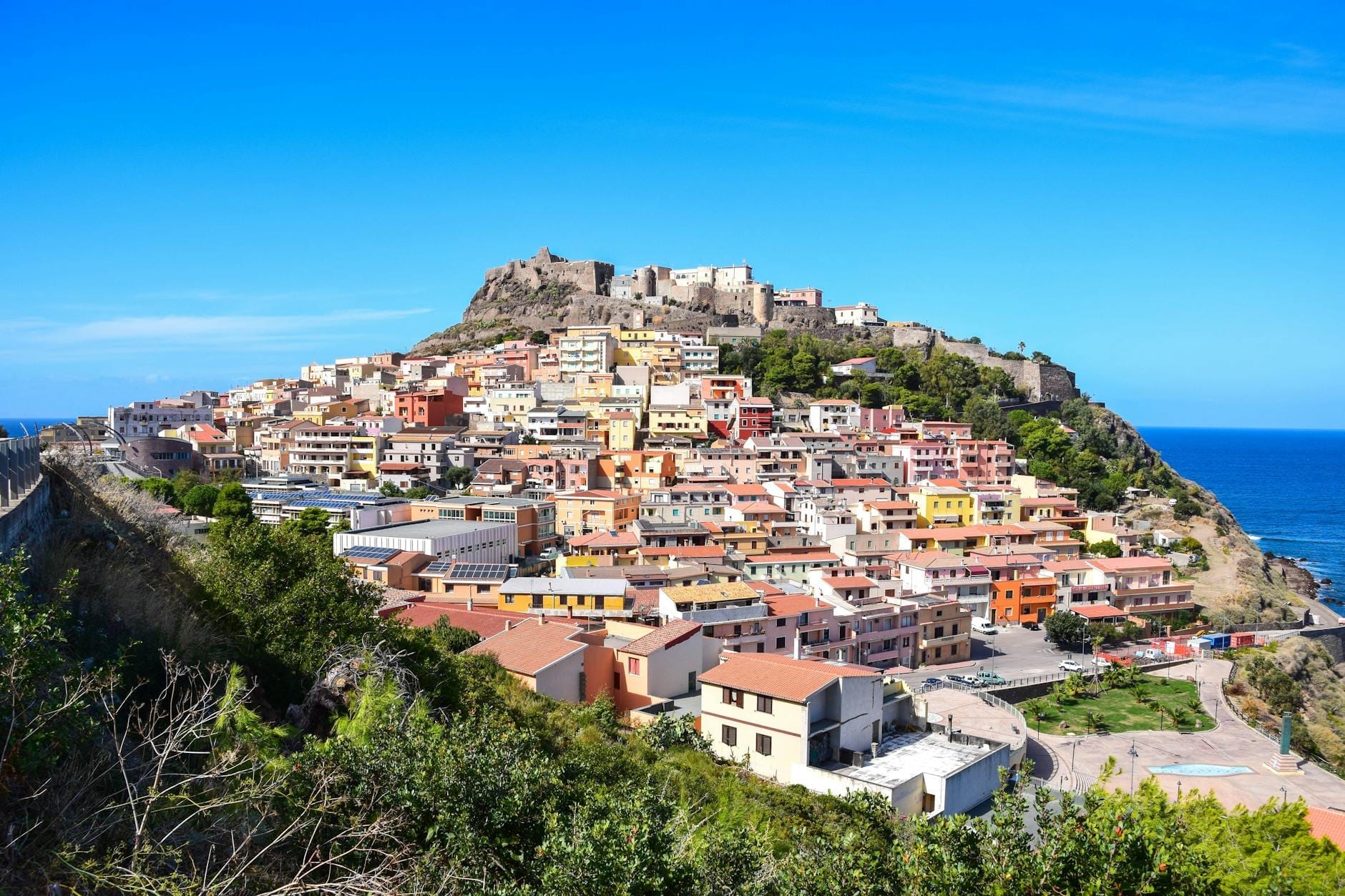
Perched on a basalt promontory above the Gulf of Asinara, Castelsardo is one of the most visually striking towns in Sardinia. Its labyrinthine medieval streets, Doria family fortress, and panoramic coastal views make it a compelling half-day stop in the northwest of the island.
Quick Facts
- Location
- Northwest Sardinia, Metropolitan City of Sassari, Gulf of Asinara
- Getting There
- ARST buses connect Castelsardo with Sassari (approx. 30 km northwest); by car via SS134 or SS200. No train station.
- Time Needed
- 2 to 4 hours for the old town; half-day if you include the castle museum and a meal
- Cost
- Free to enter the town; small admission fee applies to the Castello dei Doria museum (verify current price)
- Best for
- History lovers, photographers, architecture enthusiasts, day-trippers from Alghero or Sassari
- Official website
- http://www.mimcastelsardo.it/en
What Castelsardo Actually Is
Castelsardo is a medieval town built on a steep volcanic promontory at the eastern edge of the Gulf of Asinara in northwest Sardinia. It rises so abruptly from the coastline that from a distance the whole place looks like it is growing out of the rock itself: stacked stone houses, a cathedral bell tower, and the angular outline of the Castello dei Doria at the very summit. The town belongs to the Metropolitan City of Sassari and sits roughly 30 kilometres north of Sassari city.
Despite appearing in countless Sardinian tourism photos, Castelsardo remains a functioning town with a permanent population, not a museum piece. The lower modern district handles everyday commerce, while the upper borgo storico operates on a slower rhythm. Visitors who only photograph it from the coastal road miss the real experience, which happens on foot, winding through the alleys of the historic centre on the way to the top.
💡 Local tip
Park in the lower part of town near the port and walk up. The streets inside the old town are extremely narrow and parking on the promontory is limited and stressful, especially in summer.
History: The Doria Family and a Town With Three Names
Castelsardo's story begins with the Doria family, a powerful Genoese dynasty that founded the settlement and gave it its original name, Castelgenovese, reflecting its Ligurian origins. Depending on the source, the fortress dates to somewhere between the early twelfth century and the late thirteenth century, which tells you something useful: the historical record here is contested, and visitors should treat confident date claims with some skepticism. What is clear is that the Doria clan used this promontory as a strategic base for controlling the northern Sardinian coastline.
After the Aragonese took control of Sardinia in the fourteenth century, the town was renamed Castellaragonese. It only received the name Castelsardo, meaning Sardinian Castle, in the 18th century under Savoyard rule (some sources give 1776 rather than 1769). This history of name changes reflects the island's broader trajectory: it passed through Genoese, Aragonese-Catalan, and finally Savoyard hands before becoming part of unified Italy. In the town's local languages, it still carries different names: Castheddu in Sassarese, Calteddu in the local Castellanese dialect, and Casteddu Sardu in Sardinian.
For deeper context on Sardinia's long arc of outside rulers and what they left behind, the guide to Sardinia's ancient and historic sites covers the island's layered past from the Nuragic period onward.
Tickets & tours
Hand-picked options from our booking partner. Prices are indicative; availability and final rates are confirmed when you complete your booking.
Vineyard with Wine Tasting at Sunset from Castelsardo
From 43 €Instant confirmationFree cancellationCity tour of the medieval village of Castelsardo with tasting
From 35 €Instant confirmationFree cancellationCastelsardo Tandem Paragliding Flight in Littigheddu
From 143 €Instant confirmationFree cancellationVineyard Guided Tour and 7 Wine Tasting in Palau
From 84 €Instant confirmationFree cancellation
The Castello dei Doria: What You Actually See at the Top
The fortress at the summit of the promontory is the structural anchor of the whole town. From the outside it reads as a compact, well-preserved medieval castle with thick stone walls and a single surviving tower. Inside, it houses the Museo dell'Intreccio Mediterraneo (MIM), a museum dedicated to the art of weaving and basket-making, for which Castelsardo is locally famous. The collection includes baskets, textiles, and woven objects from Sardinia and across the Mediterranean, with pieces that demonstrate how the craft traditions here connect to broader regional cultures.
The views from the castle terraces are the other reason to climb all the way up. On a clear morning, the Gulf of Asinara stretches out to the west in multiple shades of blue-green, and on particularly clear days the outline of Corsica is visible to the north. The quality of light in early morning, before haze builds, makes this one of the better elevated viewpoints in the north of the island. The walls and parapets are original medieval stonework, rough-textured and worn, with none of the restoration polish that flattens the atmosphere at some historical sites.
ℹ️ Good to know
The museum inside the Castello dei Doria charges an admission fee. Hours vary by season. Verify current times and prices at mimcastelsardo.it before visiting, especially outside of summer.
Walking the Old Town: What to Expect on the Ground
The historic centre is compact and almost entirely pedestrian in practice, though technically some lanes are open to local traffic. The main walking route through the borgo follows a series of stepped alleys that zigzag up the promontory toward the castle. The stone underfoot is worn smooth and can be slippery when wet. Walls press close on both sides, occasionally broken by a doorway with a hanging basket of herbs or a terrace garden spilling over the edge of a retaining wall.
The Cathedral of Sant'Antonio Abate sits partway up the hill, worth a brief stop for its carved stone portal and the painting attributed to the Maestro di Castelsardo, a fifteenth-century anonymous painter whose identity has been debated by art historians for decades. The interior is modest, cool even in summer, and often quiet in the mid-morning hours before tour groups arrive.
Weaving workshops and craft shops are embedded throughout the upper lanes. Local artisans produce baskets from dwarf palm leaves (Chamaerops humilis), a tradition that is specific to this part of Sardinia. The quality varies considerably from shop to shop. The most straightforward indicator of handmade local work is price: authentic pieces are not cheap, and anything priced very low is likely mass-produced. The smell of freshly worked palm leaves is unmistakable in the better workshops, slightly green and fibrous.
If you are pairing Castelsardo with the rest of the area, the Castello dei Doria has its own dedicated page with more detail on the museum collection and entry logistics.
Time of Day and Seasonal Considerations
Early morning, particularly between 7:30 and 9:30, is the best window in summer. The alleys are cool, the light falls at a low angle across the stone facades, and the café at the base of the old town is already open. By 11:00, the parking area below fills and organized coach tours begin arriving. The atmosphere during peak summer afternoons (July and August) is noticeably more crowded, with queues forming at the narrow passages between buildings.
In the shoulder months, May, June, September, and October, Castelsardo is pleasant at almost any hour. The coastal temperature is milder than inland Sardinia, and the Gulf of Asinara catches a reliable afternoon breeze. Winter visits are possible and atmospheric in a different way: the town is quiet, some shops are closed, and the light on grey days gives the dark stone a completely different mood. Rain makes the stepped alleys slippery and the views can disappear entirely in low cloud, so check the forecast.
⚠️ What to skip
The old town streets are steep, uneven, and in places quite narrow. Castelsardo is not easily navigable for wheelchair users or visitors with limited mobility. Strollers are difficult to manage on the upper sections.
Around Castelsardo: What Else Is Nearby
About four kilometres east of town, just off the coastal road toward Santa Teresa Gallura, is Elephant Rock (La Roccia dell'Elefante), a natural trachyte formation eroded into the shape of an elephant's head. It is roadside, free to visit, and contains Domus de Janas, pre-Nuragic tomb chambers carved into the rock that date back several thousand years. The stop takes about twenty minutes and requires no planning or payment.
The coastal road northwest of Castelsardo passes through Costa Paradiso, a dramatically rocky stretch of coastline with red granite formations and small coves. It is worth the detour if you have a car and time to spare in the afternoon.
Castelsardo makes a logical stop on a circuit that includes Sassari to the south and the coastal area around Stintino and the Parco Nazionale dell'Asinara to the west. See the day trips from Cagliari guide if you are basing yourself in the south and considering a northern loop.
Getting There and Getting Around
By car, Castelsardo is reached via the SS134 or the coastal SS200 from Sassari (around 30 kilometres), and from Alghero it is roughly 90 kilometres via the SS291 and connecting roads. The drive along the northern coast is scenic and relatively straightforward. ARST regional buses connect Castelsardo with Sassari, though schedules are limited and not ideal for day trips without a car. There is no train station in or near Castelsardo.
If you are planning to visit multiple towns across the north of Sardinia, renting a car is by far the most practical approach. The guide to getting around Sardinia covers car hire, bus networks, and what to know about driving on the island.
The nearest commercial airport is Alghero-Fertilia (IATA: AHO), approximately 65 kilometres to the southwest, which handles flights from several European cities. Olbia Costa Smeralda Airport (IATA: OLB) to the east is a larger hub but somewhat farther. From either airport, a hire car is the most realistic option for reaching Castelsardo without significant logistical effort.
Insider Tips
- The best photograph of Castelsardo is taken from the eastern approach road, specifically the layby about 1.5 kilometres before town where the entire promontory is visible against the sea. Morning light hits the castle tower directly from this angle.
- If you want to buy a genuine locally-made basket, look for workshops where a person is actually working on-site. The artisans who are weaving as you browse are almost always selling their own pieces, and they will usually show you the materials and technique if you show genuine interest.
- The lower port area has a small fish market on most mornings, which is worth a walk through even if you are not buying. The catch is largely local, and the conversation between fishermen and vendors is part of the atmosphere.
- Mass tourism crowds are almost entirely concentrated in the July-August peak. If you visit in late September or October, you will share the old town with a fraction of the summer numbers and often have the castle terraces nearly to yourself.
- Elephant Rock is easy to miss because it is smaller than photos suggest. Watch for the roadside parking area on the left when driving east from Castelsardo toward Valledoria; the rock appears at the edge of the road rather than set back from it.
Who Is Castelsardo For?
- Travellers interested in medieval architecture and Sardinian history who want context beyond beaches
- Photographers looking for a clifftop town with genuine visual drama and good morning light
- Day-trippers based in Alghero or Sassari with a car who want a half-day excursion with historical substance
- Anyone interested in traditional Sardinian crafts, particularly weaving and basketwork
- Families with older children who can manage the steep streets and will engage with the castle museum
Nearby Attractions
Other things to see while in Sassari:
- Basilica di San Gavino (Porto Torres)
Standing on Monte Agellu in Porto Torres, the Basilica dei Santi Gavino, Proto e Gianuario is the largest Romanesque church in Sardinia and one of the most architecturally singular in Italy. Built in the first half of the 11th century, it is the only Romanesque monument in the country originally designed with two opposing apses. For anyone tracing the island's medieval history, this is as significant as it gets.
- Bosa
Bosa sits on the north bank of the Temo River in western Sardinia, its medieval quarter tumbling down a hillside in layers of terracotta, ochre, and faded pink. It is the only town in Sardinia built along a navigable river, and that distinction shapes everything about it: the old tanneries along the water, the boat-lined banks, the slow pace that has little to do with the island's summer beach circus.
- Castello dei Doria (Castelsardo)
Perched on a volcanic promontory above the Gulf of Asinara, Castello dei Doria is a 12th-century Ligurian fortress that has shaped northern Sardinia for nearly a thousand years. Today it houses the Museo dell'Intreccio Mediterraneo, dedicated to Mediterranean basketry, while its ramparts offer some of the most commanding coastal views on the island.
- Castello Malaspina (Bosa)
Perched 81 metres above the Temo river on Serravalle hill, Castello Malaspina is the medieval landmark that defines Bosa's skyline. Inside its walls stands the Romanesque Church of Nostra Signora de Sos Regnos Altos, sheltering rare 14th-century frescoes. The climb is steep, but the views over terracotta rooftops, vineyards, and coastline are exceptional.