Castello dei Doria, Castelsardo: The Medieval Fortress Above the Gulf of Asinara
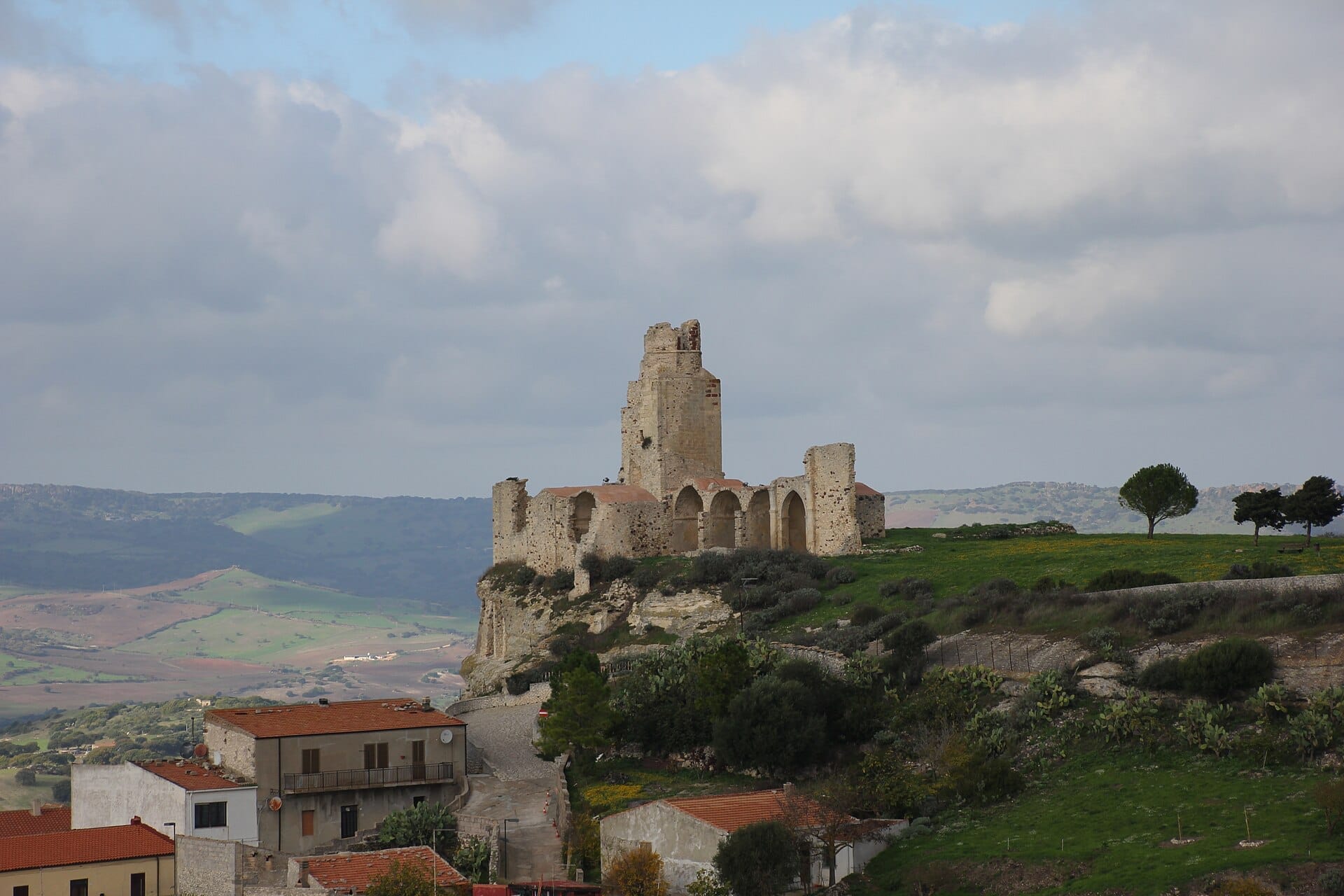
Perched on a volcanic promontory above the Gulf of Asinara, Castello dei Doria is a 12th-century Ligurian fortress that has shaped northern Sardinia for nearly a thousand years. Today it houses the Museo dell'Intreccio Mediterraneo, dedicated to Mediterranean basketry, while its ramparts offer some of the most commanding coastal views on the island.
Quick Facts
- Location
- Via Guglielmo Marconi s.n.c., Castelsardo (SS), approx. 32 km northwest of Sassari
- Getting There
- ARST buses connect Sassari to Castelsardo; the castle is reached on foot through the medieval centre. No direct train. Car or bus from Sassari recommended.
- Time Needed
- 1.5 to 2.5 hours for castle, museum, and rampart walk; half-day if exploring the full historic centre
- Cost
- Museum: €5 full / €4 reduced (children 6–16, groups 20+) / Free under 6, Castelsardo residents, certified disabled companion
- Best for
- History lovers, photography, coastal panoramas, cultural immersion
- Official website
- http://www.mimcastelsardo.it/en/index.html
What Is Castello dei Doria?
Castello dei Doria is a medieval fortress rising from a basalt promontory at the northernmost edge of Castelsardo's old town, in the Sassari province of northern Sardinia. The site and perhaps an initial fortification date to around 1102, while the castle as such was built in the 13th century by the Doria family, a powerful Ligurian dynasty from Genoa, who used it as the anchor point for their strategic grip on the northwestern coast of Sardinia. It is first documented in written records in a 1272 letter from Charles I of Anjou to the municipality of Genoa, which gives some sense of how central this stronghold was to medieval Mediterranean power politics.
The town that grew beneath its walls was originally called Castelgenovese, reflecting its Genoese founders. Only in the 18th century, under the House of Savoy, did it take the name Castelsardo, in 1769. The castle itself survived centuries of dynastic struggle and coastal raid, and today it functions as the seat of the Museo dell'Intreccio Mediterraneo (Museum of Mediterranean Weaving), which documents the ancient craft traditions of basketry still practiced in the region.
💡 Local tip
If you plan to visit in summer, note that the museum stays open until midnight in July and 1:00 AM in August, with opening from 9:00 every day in those months, — unusually late hours that make an evening visit with a cooler breeze and golden coastal light a good option.
The Approach: Walking Up Through the Medieval Town
There is no shortcut to Castello dei Doria. Visitors park in the lower town and walk upward through a tight network of medieval lanes, many of them stone-paved and steep enough to require proper footwear. The ascent takes roughly 10 to 20 minutes depending on your pace and how often you stop, which will be often. Local artisan workshops selling woven baskets, rush mats, and wicker objects line the narrower alleys, and the smell of freshly woven reed carries through doorways left ajar. This craft is not incidental to the visit: it is the direct living tradition that the museum inside the castle preserves and explains.
As you climb, the rooftops of Castelsardo drop away below and the Gulf of Asinara opens to the north. On a clear morning, the horizon is so sharp it looks painted. The streets are narrow enough that two people with bags have to turn sideways to pass, and the stone walls radiate heat in summer afternoons, holding the warmth long after the sun has moved. Morning visits, before 10:00 AM, offer cooler conditions and fewer people on the lanes.
⚠️ What to skip
Wear flat, non-slip shoes. The stone lanes are uneven and can be slippery when damp. The climb is moderate but sustained, and is not suitable for strollers. Visitors with limited mobility should contact the museum directly at +39 079 6014769 or direzione.museointreccio@gmail.com to discuss accessibility options before visiting.
Tickets & tours
Hand-picked options from our booking partner. Prices are indicative; availability and final rates are confirmed when you complete your booking.
Castello walking tour
From 28 €Instant confirmationFree cancellationVineyard with Wine Tasting at Sunset from Castelsardo
From 43 €Instant confirmationFree cancellationCity tour of the medieval village of Castelsardo with tasting
From 35 €Instant confirmationFree cancellationCastelsardo Tandem Paragliding Flight in Littigheddu
From 143 €Instant confirmationFree cancellation
Inside the Castle: The Museo dell'Intreccio Mediterraneo
The Museo dell'Intreccio Mediterraneo occupies the interior rooms and towers of the castle. Its focus is the ancient art of Mediterranean weaving and basketry, with particular emphasis on the traditions of Castelsardo and northern Sardinia. Displays include tools, raw materials (reed, dwarf palm, asphodel, olive branch), finished objects of remarkable technical complexity, and documentation of how these crafts connect Sardinia to a broader Mediterranean heritage stretching from North Africa to the Levant.
The collection is smaller than major archaeological museums, which is worth knowing before you arrive with very high expectations. What it does exceptionally well is place a living craft in deep historical context. The rooms are intimate, the labelling adequate in Italian and English, and the objects chosen for their quality rather than sheer quantity. Allow around 45 minutes for the museum itself if you read carefully, less if you move quickly.
If craft traditions and regional identity interest you, this pairs naturally with a visit to the murales of Orgosolo or the Museo del Costume in Nuoro, both of which document other dimensions of Sardinian material culture with comparable seriousness.
The Ramparts and the View
The real climax of a visit to Castello dei Doria is not inside the museum rooms, but outside on the ramparts. From the fortress walls, the view encompasses the Gulf of Asinara to the north, the rocky coastline receding east toward Sassari, and on exceptionally clear days, the outline of Corsica above the waterline. The drop from the promontory is vertiginous in places, and the wind at the top can be strong enough to require holding your hat.
Early evening, roughly one to two hours before sunset, is the single best time for photography. The light turns the Gulf's surface from blue to copper and the castle's dark stone glows amber. Summer evenings also bring a cooler breeze off the sea that makes the ramparts comfortable after a hot afternoon. In winter, the light is lower and more dramatic from earlier in the day, and you will almost certainly have the ramparts to yourself.
Castelsardo sits at the edge of a coastline that extends westward toward Parco Nazionale dell'Asinara, which is visible across the gulf on clear days. That national park makes a logical companion day trip from the Sassari area.
Opening Hours and Ticket Details
The Museo dell'Intreccio Mediterraneo, which manages access to the castle, operates on a seasonal schedule. Winter hours (1 January to 30 March and 2 November to 31 December) run 10:00 to 17:00. Spring and autumn hours extend: 9:00 to 19:30 from 1 April to 1 May and 1 October to 1 November. From 1 May to 30 June and 1 to 30 September, the museum is open 9:00 to 22:00. July hours extend to midnight, and August pushes further to 1:00 AM the following day. The museum is closed on the morning of 25 December.
Admission is €5 for adults. A reduced rate of €4 applies to children aged 6 to 16, school groups, and groups of more than 20. Entry is free for children under 6, residents of Castelsardo, EU-licensed guides accompanying groups, and disabled visitors with a certified companion. Prices are subject to change; verify the current tariff at mimcastelsardo.it before your visit.
ℹ️ Good to know
The museum phone is +39 079 6014769 (also +39 347 1118547). Email: direzione.museointreccio@gmail.com. These contacts are useful for group visits, school bookings, or accessibility enquiries.
Getting There from Sassari and Surrounding Towns
Castelsardo lies approximately 32 km north of Sassari. ARST, Sardinia's regional bus operator, runs services between Sassari and Castelsardo. Journey time varies by route and number of stops, but is typically around 45 to 60 minutes. Timetables change seasonally and should be confirmed at arst.sardegna.it before travel. There is no direct train to Castelsardo.
By car from Sassari, the drive takes roughly 35 to 40 minutes via the SS200 coastal road. Parking is available in the lower town, but spaces fill quickly in July and August. Arriving before 9:00 AM or after 5:00 PM in peak summer generally improves the parking situation significantly. From Alghero, the drive is approximately 60 km and takes around an hour, making Castelsardo a reasonable half-day excursion from either city.
If you are planning a broader circuit of northern Sardinia, combine this with Roccia dell'Elefante near Castelsardo, and the Romanesque Basilica di San Gavino in Porto Torres. All three are within a 30-minute drive of each other and form a coherent cultural day.
How the Experience Changes by Season
In July and August, Castelsardo's medieval lanes are crowded with summer visitors, and the heat trapped between the old stone buildings can feel intense by midday. The extended evening hours (to midnight in July, 1:00 AM in August) exist partly for good reason: visiting after 7:00 PM on a summer evening transforms the experience. The day-trippers have largely left, the light is soft and lateral, and the ramparts catch the sea breeze. The town comes back to life with locals in the early evening, and the lanes feel less like a tourist corridor.
In May, June, September, and October, the crowds thin and the weather remains excellent, with daytime temperatures comfortable for walking and evening temperatures pleasant on the ramparts. These months represent the most balanced version of the visit. Winter visits are quiet to the point of solitude in the castle itself, which suits people who want to study the museum without interruption, though some nearby restaurants and shops may be closed or operating reduced hours.
For a broader picture of when to plan your Sardinia trip around this kind of cultural sightseeing, the best time to visit Sardinia guide covers seasonal tradeoffs across the island in detail.
Insider Tips
- The first Sunday of each month brings reduced admission (€4 instead of €5) — useful if your itinerary has flexibility and you want to shave costs across multiple Sardinian sites.
- The exterior of the castle and the view from the promontory are accessible without paying museum admission; if you are short on time or uninterested in the weaving collection, a walk up through the medieval lanes for the view alone costs nothing and takes under an hour.
- Summer evenings after 19:00 are the quietest window for photography on the ramparts. The day-trip coaches have gone, the light is ideal, and the museum remains open. This specific combination is rare at medieval Italian hilltop sites.
- The woven baskets and rush objects sold by artisans in the lanes below the castle are among the most traditional crafts available in northern Sardinia. Prices are set by the makers and vary; pieces made from dwarf palm leaf are considered the most prized locally.
- Castelsardo is small enough that the entire historic centre, including the cathedral of Sant'Antonio Abate (which holds a significant Byzantine processional cross), can be combined with the castle in a single morning or afternoon without feeling rushed.
Who Is Castello dei Doria (Castelsardo) For?
- Travellers interested in medieval history and Genoese-era Sardinia
- Photographers seeking coastal panoramas and dramatic stone architecture
- Anyone curious about living craft traditions and Mediterranean material culture
- Day-trippers from Sassari or Alghero looking for a half-day with historical depth
- Visitors who prefer cultural immersion over beach-focused itineraries
Nearby Attractions
Other things to see while in Sassari:
- Basilica di San Gavino (Porto Torres)
Standing on Monte Agellu in Porto Torres, the Basilica dei Santi Gavino, Proto e Gianuario is the largest Romanesque church in Sardinia and one of the most architecturally singular in Italy. Built in the first half of the 11th century, it is the only Romanesque monument in the country originally designed with two opposing apses. For anyone tracing the island's medieval history, this is as significant as it gets.
- Bosa
Bosa sits on the north bank of the Temo River in western Sardinia, its medieval quarter tumbling down a hillside in layers of terracotta, ochre, and faded pink. It is the only town in Sardinia built along a navigable river, and that distinction shapes everything about it: the old tanneries along the water, the boat-lined banks, the slow pace that has little to do with the island's summer beach circus.
- Castello Malaspina (Bosa)
Perched 81 metres above the Temo river on Serravalle hill, Castello Malaspina is the medieval landmark that defines Bosa's skyline. Inside its walls stands the Romanesque Church of Nostra Signora de Sos Regnos Altos, sheltering rare 14th-century frescoes. The climb is steep, but the views over terracotta rooftops, vineyards, and coastline are exceptional.
- Castelsardo
Perched on a basalt promontory above the Gulf of Asinara, Castelsardo is one of the most visually striking towns in Sardinia. Its labyrinthine medieval streets, Doria family fortress, and panoramic coastal views make it a compelling half-day stop in the northwest of the island.