Mercat de Santa Catalina: Palma's Oldest Market and the Neighbourhood Around It
Built in 1920 in the working-class Santa Catalina fishermen's quarter, the Mercat de Santa Catalina is Palma's oldest covered market and one of the few places in the city where tourists and locals genuinely shop side by side. Entry is free, the produce is exceptional, and the surrounding streets have quietly become one of Palma's most interesting food and drink districts.
Quick Facts
- Location
- Av. de Francesc Cambó, 16, 08003 Barcelona
- Getting There
- 5-minute walk from Jaume I (L4) metro; 10-minute walk from Barcelona Cathedral
- Time Needed
- 45 minutes inside the market; 2–3 hours if you explore the surrounding neighbourhood
- Cost
- Free entry; budget €5–15 for food and coffee inside
- Best for
- Food lovers, early risers, photographers, locals-first travellers
- Official website
- www.mercatdesantacaterina.com/en/
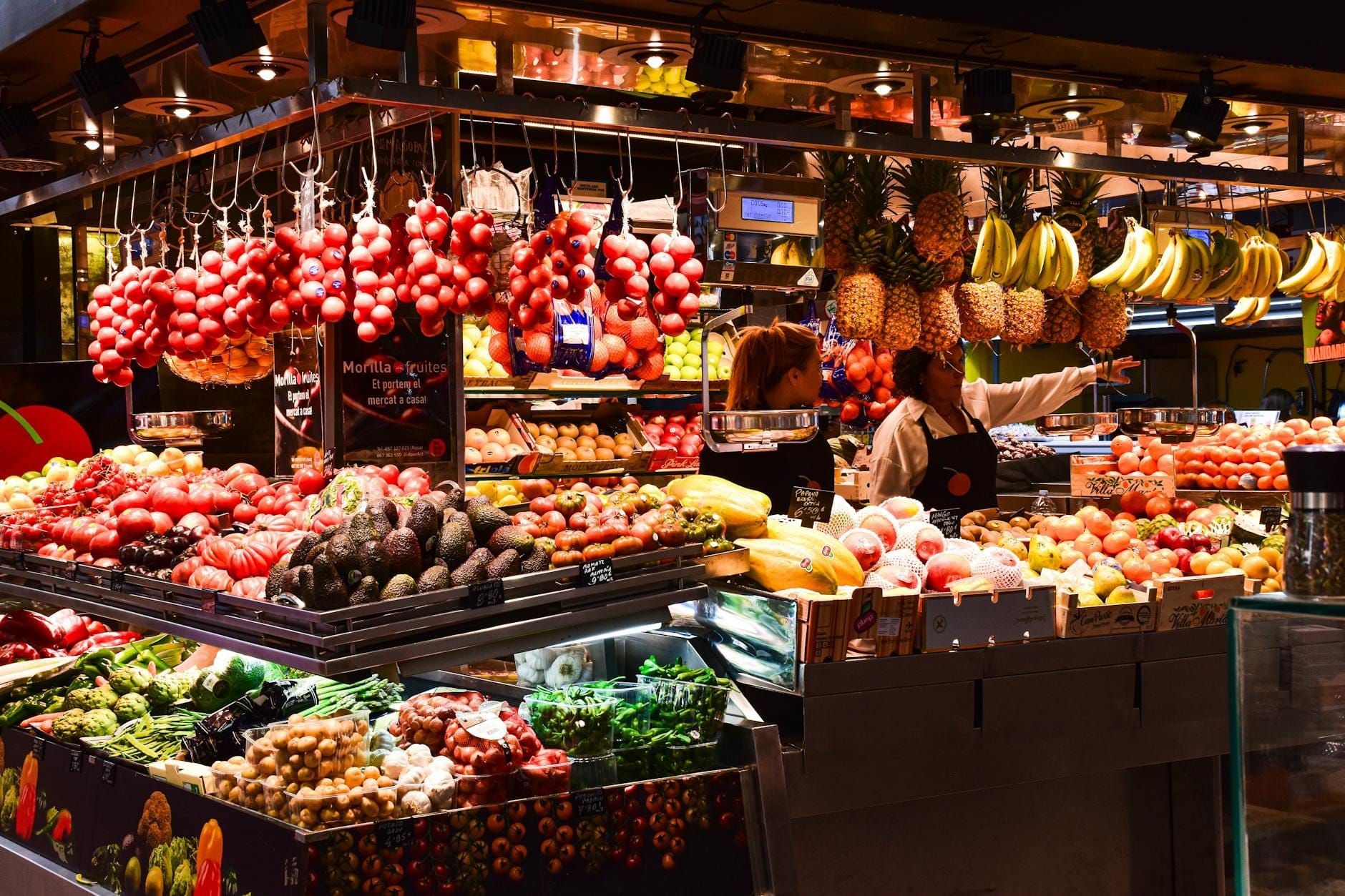
What Is the Mercat de Santa Catalina?
The Mercat de Santa Catalina is Barcelona's first covered market, occupying a building renovated in undulating white tiles of iron columns and warm brick at the edge of the Santa Catalina quarter. It opened in 1848, was renovated between 2004 and 2005, and has managed what many historic markets cannot: staying genuinely useful. Fishmongers, greengrocers, butchers, and cheesemakers have kept their stalls here for generations, and the morning trade is real — not curated for tourists.
The market sits inside one of Barcelona's Ciutat Vella. It sits in the Sant Pere, Santa Caterina i la Ribera neighborhoods near the old city center, and while it has gentrified considerably in the past decade, the streets immediately around the market retain their low-rise, residential texture. The Mercat de Santa Catalina is the anchor of that identity.
💡 Local tip
Arrive before 9:00 AM on any weekday to see the market at full volume. Fish stalls and produce counters are at their freshest, the coffee bar inside is occupied almost entirely by locals, and there is no queue for anything.
The Architecture: Understated and Worth Noticing
The 2005 renovation by Enric Miralles and Benedetta Tagliabue created a striking of the early twentieth century that favoured classical order and craft quality over the flamboyance of Modernisme. The market building reflects this sensibility: arched iron trusses, terracotta brick, and large windows that flood the interior with natural light. It is not showy, but it is well-proportioned and honest in its materials.
The 2005 renovation preserved the original structure while cleaning up the interior layout and adding food-service counters around the perimeter. The result is a market that reads as historic but functions smoothly. Look up at the ironwork when you first walk in — it is the clearest surviving element of the original 1848 structure.
Tickets & tours
Hand-picked options from our booking partner. Prices are indicative; availability and final rates are confirmed when you complete your booking.
2-hour boat cruise from Paguera or Santa Ponsa
From 23 €Instant confirmationFree cancellationBoat trip from Sant Elm to Dragonera Island Natural Park
From 20 €Instant confirmationFree cancellationPanoramic coastal excursion from Sant Elm village with beach stop
From 74 €Instant confirmationFree cancellationCabrera full-day excursion from Colonia Sant Jordi
From 60 €Instant confirmationFree cancellation
What You Will Find Inside
The ground floor is divided between traditional food stalls and a ring of small bars and eateries around the edge. The produce stalls carry seasonal Catalan vegetables, local olives, dried fruits, olives, and herbs. The cheese counters stock local varieties including variants of the island's local cheeses. Butchers carry fuet — the paprika-cured pork sausage that is one of Mallorca's defining products — alongside fresh meats.
The fish section is the most animated part of the market on a busy morning. Whole sea bass, red mullet, squid, and whatever came in that day are laid out on ice, and the vendors know their stock well enough to advise on preparation. Note that fishmongers are closed on Mondays, so if fresh seafood is your priority, plan accordingly.
The food-service counters offer breakfast and lunch: freshly squeezed juice, coffee, bocadillos, and cooked dishes that rotate with the season. Sitting at one of the counters on a bar stool and eating a tortilla or some jamón with bread is one of the more straightforward pleasures available in Palma at almost no cost.
ℹ️ Good to know
Opening hours: Mon 7:30-15:00, Tue-Thu 7:30-15:30, Fri 7:30-20:00, Sat 7:30-15:00 (check official site for updates).
How the Market Changes Through the Day
Before 9:00 AM, the market belongs to the neighbourhood. Retired men drink coffee standing at the bar. Market workers restock displays. Chefs from nearby restaurants are here early, choosing fish and produce before service. The light comes in low and warm through the market's tall windows, and the smells — damp fish, fresh herbs, dark espresso — are at their most concentrated.
By 10:30 AM, tourists begin arriving and the dynamic shifts. The market does not become unpleasant, but it does become busier, and the food counters start filling up for mid-morning coffee. Between 11:00 AM and 1:00 PM is peak hour, and some stalls develop short queues. This is still a perfectly good time to visit, but the quiet intimacy of the early morning is gone.
By 2:00 PM the stalls are winding down. Vendors begin clearing unsold produce, and the energy drops. If you arrive after 2:30 PM expecting a full market, you will find a reduced version. The food-service side stays open until 5:00 PM, so a late lunch is possible, but plan shopping visits for the morning.
The Santa Catalina Neighbourhood
The market is the starting point for exploring a neighbourhood that rewards slow walking. The streets immediately surrounding the Mercat de Santa Catalina — particularly Carrer de Giralt el Pellisser and the adjacent blocks — are lined with independent restaurants, wine bars, and small grocers. The area has become one of Palma's most interesting dining districts without losing its residential character. For context on how Santa Catalina fits into Palma's broader geography, the Palma de Mallorca neighbourhood guide covers the city's districts in more detail.
Evening in Santa Catalina is a different experience from the morning market. The restaurant terraces fill up, the bars extend their tables onto the pavement, and the area takes on the unhurried rhythm of a Palma summer night. The market building itself is closed, but the neighbourhood around it is worth returning to after dark.
💡 Local tip
For a complete morning: arrive at the market by 8:30 AM, have coffee and a pastry at one of the interior counters, buy some local cheese or sobrassada to take away, then walk north into the surrounding streets to find a spot for a longer breakfast before the lunch crowd arrives.
Practical Information for Visitors
Entry to the Mercat de Santa Catalina is free. You pay only for what you eat or buy. The market is compact enough that you do not need a plan — one circuit of the interior takes around fifteen minutes, and you can linger at stalls or counters as long as you like.
The market is roughly a fifteen-minute walk from the Palma Cathedral and close to the city's main marina. From the Passeig del Born, a taxi takes under five minutes. There is no dedicated metro stop, but Barcelona's TMB metro and bus network covers the area — check current route maps at the official EMT Palma website before visiting.
Photography inside the market is generally tolerated, but ask vendors before pointing a camera at their stalls or at the people working them. The fish and produce sections photograph well in the early morning light, when the overhead natural light is at its best angle through the windows. Avoid flash inside — it is intrusive and unnecessary given the ambient light conditions.
Accessibility details for the interior are not confirmed by the official source. The building is single-storey, but the floor surface has some unevenness typical of older market buildings. If mobility is a consideration, contact the market directly via the official website before visiting.
How It Compares to Other Palma Markets
Palma has more than one covered market. The Mercat de l'Olivar is larger, more central, and better known to visitors arriving by tour bus. Santa Catalina is smaller and more neighbourhood-focused — it is the one locals in that part of the city use for their weekly shopping, which gives it a different atmosphere.
Neither market is a tourist trap, but Santa Catalina is less visited, which means less crowding and a slightly more authentic feel on a weekday morning. If you want scale and variety, l'Olivar is the better choice. If you want atmosphere and a sense of neighbourhood life, Santa Catalina is where to go.
⚠️ What to skip
If you are visiting Mallorca primarily for beach days and resort activities, the Mercat de Santa Catalina may not compete strongly for your limited morning time. It is a market, not a spectacle. Those who appreciate food culture, local rhythm, and architectural context will find it worthwhile; those seeking dramatic sights should prioritise accordingly.
Insider Tips
- The coffee bar just inside the main entrance is one of the better places in Palma to drink an espresso standing up, surrounded entirely by locals. Order a cortado and stay for at least ten minutes before you look at anything else.
- Sobrassada quality varies significantly by vendor. Ask to try before you buy — most stalls will offer a small slice. The difference between good and exceptional sobrassada is noticeable, and the price difference is modest.
- The neighbourhood restaurants on the streets immediately north of the market tend to have better value lunch menus than those closer to the waterfront or the old town. Look for handwritten daily menus chalked on boards outside.
- Monday is the quietest day for the market overall and the worst day for fish. If seafood is your focus, arrive Tuesday through Saturday. Thursday and Friday typically have the widest selection at the fish counters.
- If you are staying in Palma for several days, the market is worth visiting twice: once early on a weekday for the full experience, and once on Saturday when the surrounding neighbourhood has a different, slightly more festive energy.
Who Is Mercat de Santa Catalina For?
- Food-focused travellers who want to understand what Mallorca actually eats, not just what it serves to tourists
- Early risers who want to start the day with good coffee and real local atmosphere before the city wakes up
- Self-catering visitors who want to stock up on quality local produce, cheese, and cured meats
- Photographers interested in market life, natural light interiors, and street-level neighbourhood scenes
- Travellers spending multiple days in Palma who want to move beyond the cathedral and the old town
Nearby Attractions
Other things to see while in Palma de Mallorca:
- Arab Baths (Banys Àrabs)
The Banys Àrabs are the only intact remnant of Palma's Islamic past, dating to the 10th or 11th century. Compact but genuinely atmospheric, this ancient hammam in the heart of the old city takes less than an hour to visit and rewards anyone with even a passing interest in history.
- Bellver Castle
Perched on a pine-covered hill 3 km west of Palma's city centre, Bellver Castle is one of Europe's rare circular Gothic fortresses. Built under King Jaume II and completed around 1311, it has served as a royal residence, a prison, and now houses the Palma Municipal History Museum. The views over Palma Bay alone justify the climb.
- Bishop's Garden (Jardí del Bisbe)
Tucked behind the towering walls of Palma Cathedral, the Jardí del Bisbe is a small formal garden on the grounds of the Episcopal Palace. Free to enter and often overlooked by visitors rushing between La Seu and the seafront, it offers citrus groves, herb beds, an ornamental pond, and a rare ground-level view of the cathedral's famous rose window.
- Es Baluard Museum of Modern & Contemporary Art
Es Baluard Museu d'Art Contemporani de Palma occupies a Renaissance bastion on the old city walls, combining 800-plus works of modern and contemporary art with sweeping views over Palma Bay. It is one of the most architecturally striking museum settings in the Balearic Islands, and far less crowded than the cathedral a few minutes' walk away.