Massachusetts State House: Beacon Hill's Golden Dome and Nearly 230 Years of Living History
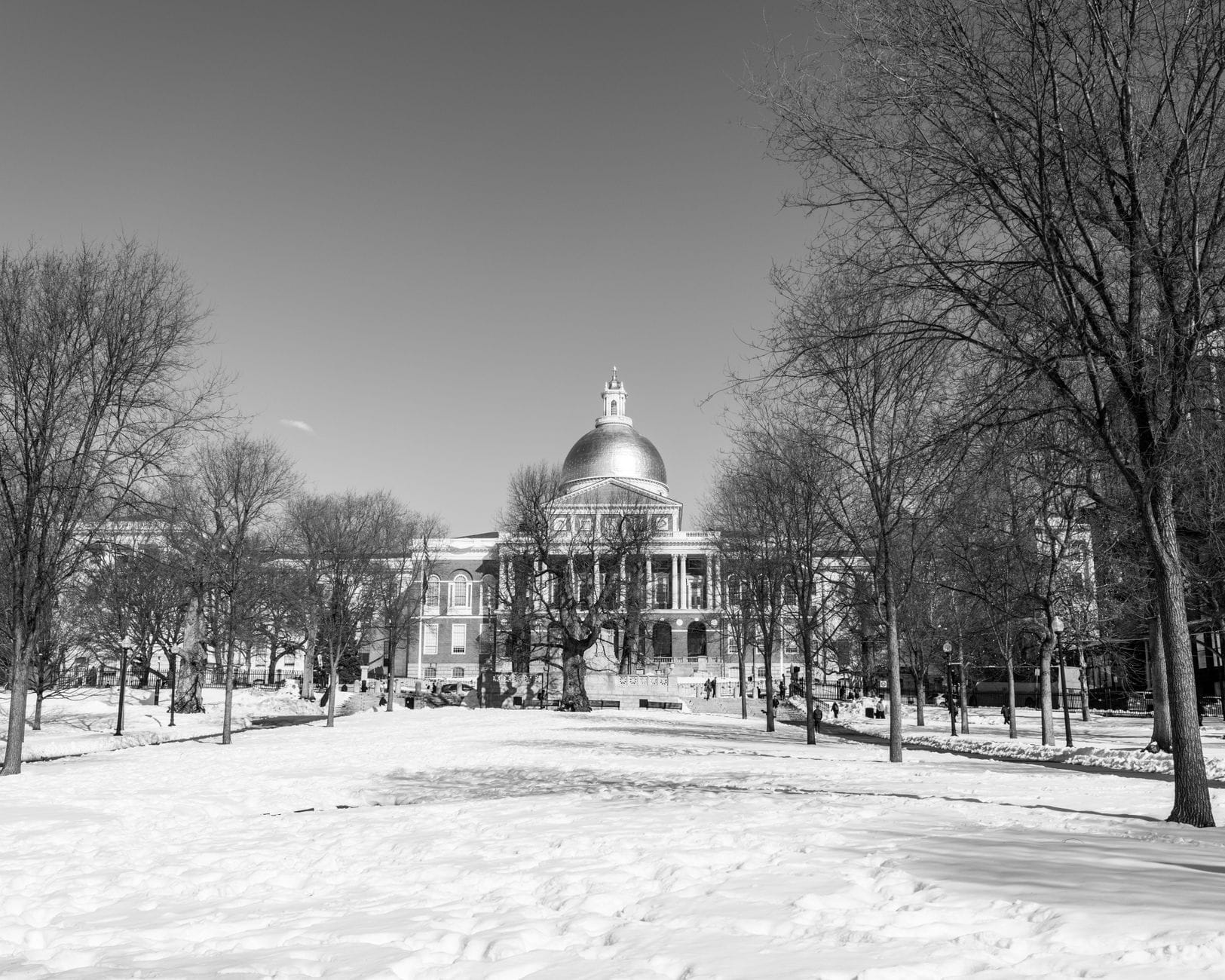
Perched at the crown of Beacon Hill, the Massachusetts State House is one of America's finest examples of Federal architecture. Designed by Charles Bulfinch and opened in 1798, it remains the working seat of Massachusetts government and offers free guided tours on weekdays.
Quick Facts
- Location
- 24 Beacon St., Beacon Hill, Boston, MA 02108
- Getting There
- Park Street Station (Red/Green Line, MBTA) — 5-minute walk up Park St.
- Time Needed
- 45 minutes to 1.5 hours depending on whether you take a guided tour
- Cost
- Free admission; no tickets required
- Best for
- History enthusiasts, architecture lovers, civics-curious visitors, and Freedom Trail walkers
- Official website
- www.mass.gov/locations/massachusetts-state-house
What the Massachusetts State House Actually Is
The Massachusetts State House is the seat of state government for the Commonwealth of Massachusetts, housing the offices of the Governor and the two chambers of the Massachusetts General Court. It is not a museum in the traditional sense, which is exactly what makes it interesting. This is a functioning capitol building where legislation is debated, laws are signed, and state politics play out in real time. Visitors are walking through a living institution, not a preserved artifact.
The building sits at the top of Beacon Hill, directly overlooking the Boston Common. That position is intentional. In 1795, when construction began on a design by architect Charles Bulfinch, placing the new seat of government at the highest visible point in the city was a statement of civic ambition. The original building faces south and east, with the iconic gilded dome oriented to catch morning and afternoon light over the Common and across the city.
ℹ️ Good to know
Opening hours: Monday through Friday, 8:45 am to 5:00 pm. The building is closed on weekends and Massachusetts-observed public holidays. Admission is free. The accessible entrance is at the Ashburton Park Entrance on Bowdoin Street.
The Architecture: What Bulfinch Built and What Came After
Charles Bulfinch completed the original State House design in 1798, making it one of his most celebrated works and one of the earliest surviving examples of Federal-style civic architecture in the United States. The facade is red brick with white Corinthian columns and a central dome that has been gilded since 1874. The dome was originally wood, then copper, and the gold leaf you see today replaced a wartime gray paint job applied during World War II to reduce visibility from the air.
The building has expanded considerably since Bulfinch's time. Two major additions extended the rear of the structure in the late 19th and early 20th centuries. From the front, the original Bulfinch facade remains largely intact and is what most visitors photograph, but the full complex stretches back along the hill in ways that are only apparent from Bowdoin Street on the north side.
Standing on Beacon Street and looking up, the proportions read clearly even from street level: the rusticated granite base, the redbrick upper stories, the white portico with columns, and the drum of the dome rising behind. On sunny afternoons, the gold leaf catches the light in a way that makes the dome visible from well across the Common and from parts of the Charles River Esplanade. Overcast days flatten the effect considerably, so if the dome's visual impact matters to you, aim for clear weather.
Tickets & tours
Hand-picked options from our booking partner. Prices are indicative; availability and final rates are confirmed when you complete your booking.
Massachusetts Self-Guided Bundle tour
From 43 €Instant confirmationFree cancellationBoston Summer Night Trolley Tour and River Cruise
From 27 €Instant confirmationFree cancellationLEGOLAND Discovery Center Boston tickets
From 26 €Instant confirmationFree cancellationGhosts and Gravestones tour of Boston
From 39 €Instant confirmationFree cancellation
Visiting the Interior: What the Guided Tour Covers
Free guided tours are offered on weekdays and cover the building's most significant interior spaces. The Senate Chamber and House Chamber are the centerpieces: both are formal legislative halls with high ceilings, painted portraits, and floor details that reward close attention. The Sacred Cod, a carved wooden fish suspended above the House Chamber floor, is one of the building's most discussed artifacts. It has hung there since the 18th century as a symbol of the fishing industry's importance to the Massachusetts economy, and has been temporarily removed for political reasons on more than one occasion.
The Doric Hall, the grand ceremonial entrance hall at the building's center, contains statues of notable Massachusetts figures including John F. Kennedy, Daniel Webster, and Horace Mann. The marble floors and Doric columns give the space a formality that the rest of the building sometimes lacks. The Hall of Flags displays Civil War-era battle flags carried by Massachusetts regiments, many of them in advanced states of preservation work.
💡 Local tip
Tours fill up and are not always continuous throughout the day. Arrive before 11:00 am to ensure you can join a tour without a long wait. If the legislature is in session, access to certain chambers may be restricted, so call ahead if visiting during formal session periods (typically January through July).
The interior photography situation is generally permissive for personal use, but flash photography in certain spaces is discouraged and tripods are not practical in the tour flow. Bring a phone or compact camera rather than professional gear.
Time of Day and What Changes
Morning visits, especially before 10:00 am, offer the quietest experience. State workers are arriving, the building is not yet busy with tourist traffic, and the Beacon Street steps and front plaza are largely clear. This is the best time for exterior photography: the eastern facade picks up early light, and you can position yourself on the Common side for unobstructed shots of the dome against the sky.
Midday sees the most activity, including school groups, which arrive in organized blocks and can make the interior corridors noticeably louder. If you prefer a quieter interior experience, 9:00 to 10:30 am or after 2:30 pm tend to be calmer. On Fridays, the building often feels less staffed and certain tour availability may be reduced, so mid-week visits are generally more reliable.
The building closes at 5:00 pm on weekdays, and the exterior is accessible and appealing at any hour for those simply passing through on the Freedom Trail, which runs directly past the State House as one of its 16 official sites. Evening visitors will find the dome illuminated, which produces a very different visual impression than daytime.
Getting There and Practical Navigation
The MBTA's Park Street Station, served by both the Red and Green Lines, is the logical starting point. Exit toward the Common and walk up Park Street toward Beacon Street. The State House appears at the intersection, set back behind a short plaza and a low iron fence. The walk takes about five minutes from the station exit and is uphill but not steeply so.
There is no on-site parking. Beacon Hill's streets are narrow and residential parking is tightly restricted, so driving is not practical for most visitors. If you are combining this visit with the Common or the Public Garden, the walk from those attractions is under ten minutes.
For visitors requiring step-free access, the main Beacon Street entrance involves stairs. The accessible entrance is at Ashburton Park on Bowdoin Street, on the building's north side. This entrance provides wheelchair access, and wheelchairs are available for loan on request. Accessible restrooms are available inside the building.
Historical Context: Why This Building Matters
When the State House opened in 1798, it replaced the Old State House on Washington Street, which dates to 1713 and is still standing downtown. Visiting both gives a clear sense of how dramatically the young Commonwealth's ambitions grew in the decades after independence. The Old State House is a 10-minute walk from the current building and makes an excellent companion visit for anyone interested in the arc of Massachusetts political history.
The State House also sits within the broader context of Beacon Hill's history as a center of both political power and social reform. The neighborhood was home to prominent abolitionists, and the Museum of African American History and the Black Heritage Trail are within easy walking distance, offering a fuller picture of Boston's 19th-century history. The Black Heritage Trail begins near the State House and connects to sites across Beacon Hill that trace the history of Boston's free Black community before and during the Civil War.
For broader historical reading on Boston's role in American history, the Boston history guide covers the major periods and sites in context.
Is the State House Worth Your Time?
For travelers with a genuine interest in American political architecture, civic history, or the Federalist period, the answer is clearly yes. The building is free, the guided tour adds real depth, and nothing about the visit feels manufactured or overly commercial. It is one of the few places in Boston where you can stand in a room where consequential decisions are still being made, surrounded by 200 years of accumulated institutional history.
For travelers who are primarily interested in colonial history, the State House sits at the edge of that period rather than at its center. The Freedom Trail sites further along, particularly the Granary Burying Ground and the Old South Meeting House, will feel more directly connected to the Revolutionary era. The State House is Federal-period architecture and post-colonial governance rather than the Revolution itself.
Travelers with very limited time and a long list of attractions might do better to spend 20 minutes taking in the exterior and the view from the front steps rather than committing to the full interior tour. The building reads well from outside, and the view back across the Common from the Beacon Street steps is one of the more underrated vantage points in the city.
Insider Tips
- The view from the front steps of the State House looking south across Boston Common is often overlooked as a photography spot. The Common's tree canopy, the church spires, and the downtown skyline all align from this elevated position in a way that ground-level views on the Common itself don't replicate.
- If the legislature is in active session (typically January through July on weekdays), you may be able to observe proceedings from the public galleries of the Senate or House chambers. Check the General Court calendar on the official Massachusetts legislature website before your visit if this interests you.
- The Granary Burying Ground, one of Boston's oldest cemeteries and the resting place of Paul Revere, Samuel Adams, and the victims of the Boston Massacre, is a three-minute walk from the State House. It is easy to combine both in a single morning without rushing.
- The building's north side on Bowdoin Street gives you a very different architectural reading than the famous Beacon Street facade. The additions from the late 1800s and early 1900s are visible here, and the scale of the full complex is much more apparent. Worth a few minutes to walk around.
- School groups are most common on weekday mornings in spring (April and May). If you want a quieter interior experience during that period, aim for September through November or January through March on a Tuesday or Wednesday.
Who Is Massachusetts State House For?
- Architecture and design travelers who want to see Federal-style civic architecture at its finest
- History enthusiasts tracing Boston's political development from the colonial period to the present
- Freedom Trail walkers for whom the State House is one of the 16 official trail sites
- Civics-interested visitors who want to see a working state legislature in its historic chambers
- Budget travelers, since the visit is entirely free and requires no advance booking
Nearby Attractions
Other things to see while in Beacon Hill:
- Acorn Street
Acorn Street is a short, private cobblestone lane in Beacon Hill that packs more visual history into half a block than most cities manage in an entire district. Developed in the 1820s and lined with Federal-style brick row houses, it offers a rare, unaltered glimpse of 19th-century Boston streetscape. Entry is free, but the experience depends entirely on when you arrive.
- Black Heritage Trail
The Black Heritage Trail is an approximately 1.5-mile National Park Service walking route through Beacon Hill that connects 14 sites tied to Boston's free Black community in the 1800s. Free to walk anytime, with ranger-guided tours available May through September, it offers one of the most historically substantive walks in the city.
- Boston Athenæum
Founded in 1807 and housed in a landmark 1847 building at 10½ Beacon Street, the Boston Athenæum is part library, part art gallery, and part time capsule. Open to the public for a modest admission fee, it offers a rare glimpse into the intellectual life that shaped New England.
- Museum of African American History
Occupying two landmark buildings on Beacon Hill, the Museum of African American History preserves the stories of Black Bostonians through the African Meeting House, built in 1806, and the Abiel Smith School, opened in 1835. Together they form one of the most historically significant cultural sites in New England.