Museum of African American History: Boston's Oldest Black Institution and New England's Oldest Museum Dedicated to African American History
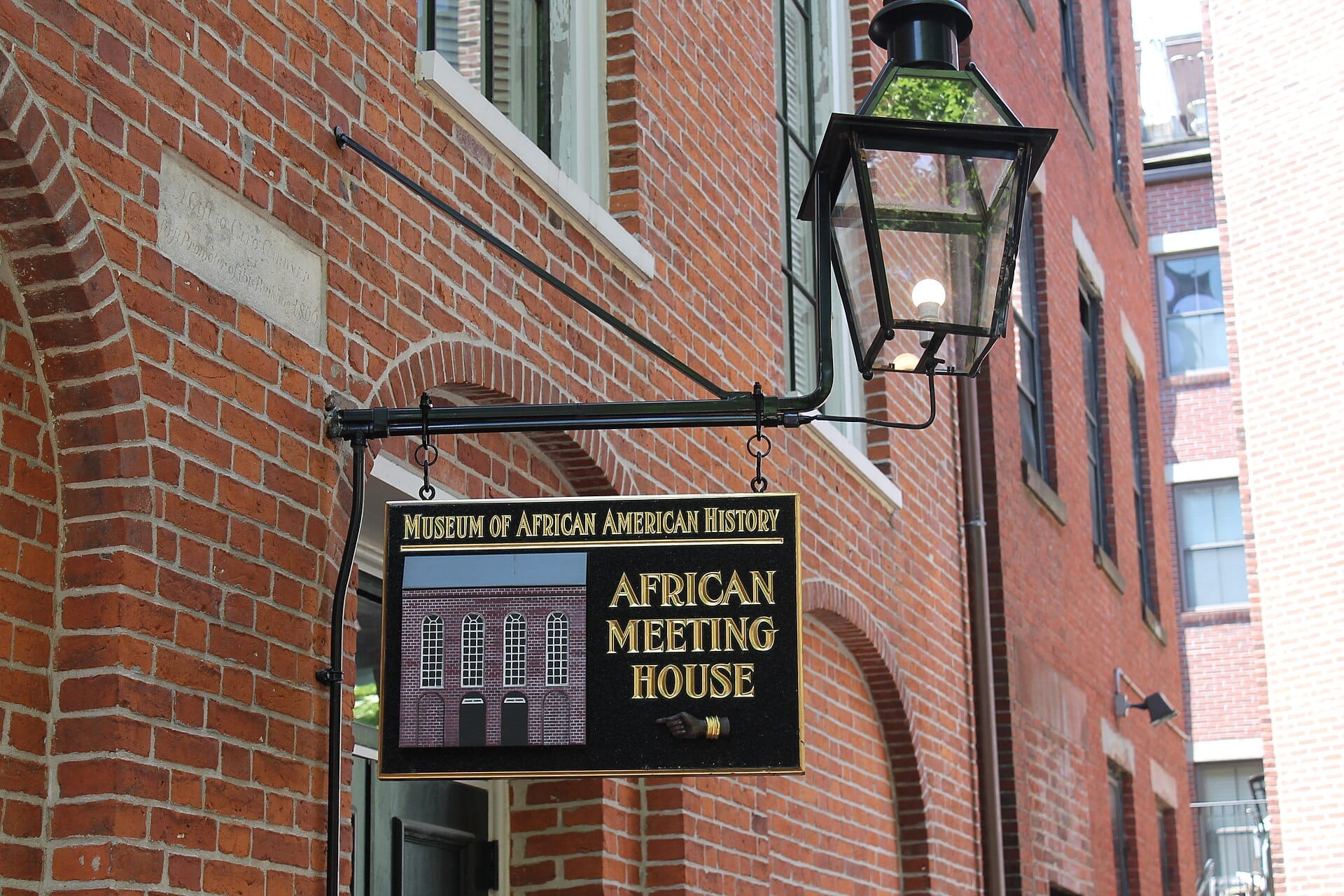
Occupying two landmark buildings on Beacon Hill, the Museum of African American History preserves the stories of Black Bostonians through the African Meeting House, built in 1806, and the Abiel Smith School, opened in 1835. Together they form one of the most historically significant cultural sites in New England.
Quick Facts
- Location
- 46 Joy Street, Beacon Hill, Boston, MA 02114
- Getting There
- Red or Green Line to Park Street, then a short walk up Beacon Street to Joy Street
- Time Needed
- 1.5 to 2.5 hours
- Cost
- Verify current admission on maah.org before visiting; timed ticketing may be required
- Best for
- History enthusiasts, educators, families, Freedom Trail walkers
- Official website
- www.maah.org
What the Museum of African American History Actually Is
The Museum of African American History occupies two adjacent structures on the north slope of Beacon Hill, a neighborhood better known today for its gas lamps and Federal-style townhouses than for its role as a center of antebellum Black life. But that role is real and well-documented, and this museum exists to make sure visitors understand it. The two buildings, the African Meeting House completed in 1806 and the Abiel Smith School opened in 1835, are not reproductions or adaptive re-uses. They are the original structures, still standing on their original sites, which makes the visit feel grounded in a way that many history museums cannot match.
The African Meeting House is the oldest surviving Black church building in the United States, a designation that carries weight when you are standing inside the main hall. It served as a worship space, a community meeting room, and a platform for abolitionists including Frederick Douglass and William Lloyd Garrison, who founded the New England Anti-Slavery Society here in 1832. The Abiel Smith School next door was Boston's first public school built specifically for Black children, operating from 1835 until Boston officially desegregated its schools in 1855, more than a century before the national civil rights movement forced the same change elsewhere.
ℹ️ Good to know
Timed ticketing is required. Reserve your entry slot on maah.org before you arrive, especially on weekends and during summer months when availability fills quickly. Walk-ins may be turned away.
The Buildings: What You Are Actually Looking At
From Joy Street, the African Meeting House presents a restrained Federal-style brick facade, three bays wide, with a modest entrance that gives no external hint of the historical weight inside. The building was constructed primarily by Black craftsmen, which was an intentional statement of community self-sufficiency at a time when Black Bostonians faced legal and economic exclusion from most trades. The interior has been carefully restored to reflect its 19th-century appearance, with plain wood pews, white-painted walls, and tall windows that flood the room with natural light on a clear morning.
The Abiel Smith School is a smaller, plainer structure directly adjacent. It housed Black children who were legally barred from Boston's other public schools. The building's very existence was the result of a legal and civic struggle by the Black community, which had lobbied the city for a dedicated facility for decades. The interior exhibitions here focus on education, civil rights, and the lives of ordinary Black Bostonians across two centuries. Note that accessibility conditions can vary by building; verify current accessibility details on the museum's website before your visit if this affects your planning.
Tickets & tours
Hand-picked options from our booking partner. Prices are indicative; availability and final rates are confirmed when you complete your booking.
Lexington and Concord American Revolution Tour from Boston
From 110 €Instant confirmationFree cancellationHistory and innovation, Cambridge self-guided audio tour
From 15 €Instant confirmationFree cancellationGo City | Boston All-Inclusive Pass
From 67 €Instant confirmationFree cancellationUltimate American Revolution self-guided walking and driving tours
From 26 €Instant confirmationFree cancellation
The Experience by Time of Day
The museum opens at 10:00 AM Tuesday through Sunday and closes at 4:00 PM. Morning arrivals, especially early in the week, tend to encounter smaller groups and a quieter atmosphere inside the Meeting House, where the quality of light through the tall windows is at its best. By midday on weekends, particularly in summer, school groups and tour parties fill the narrow entrance corridor and the main hall becomes harder to absorb at your own pace.
Joy Street itself is a narrow, brick-paved residential lane that feels quieter than the surrounding neighborhood even on busy days. The walk from Park Street Station takes roughly eight to ten minutes through the lower slopes of Beacon Hill, past brick rowhouses and small stoops. It is a pleasant approach that helps calibrate your sense of the neighborhood's scale before you arrive at the museum entrance. In winter, the brick sidewalks can be icy and uneven, so wear appropriate footwear.
The museum is closed on Thanksgiving, Christmas, and New Year's Day. Plan accordingly if you are visiting during the holiday season.
Historical and Cultural Context You Need Before You Visit
Beacon Hill's north slope was home to a thriving free Black community throughout the early 19th century. At its peak, several hundred Black residents lived within a few blocks of the museum, running businesses, attending church, educating their children, and organizing politically. This history is often absent from standard Boston narratives, which tend to center on the colonial and Revolutionary periods documented along the Freedom Trail. The Museum of African American History fills that gap directly, and the Black Heritage Trail, which begins at the museum, extends that story through fourteen sites across the neighborhood.
The African Meeting House served multiple civic functions simultaneously, which was common for free Black institutions in this period that could not rely on separate purpose-built infrastructure. It was a school before the Abiel Smith School was built, a political organizing space, a concert venue, and the spiritual center of the community. Understanding that layered function helps explain why the building became a National Historic Landmark. For a broader grounding in the history that surrounds this site, the Boston history guide provides useful context on the city's abolitionist networks and their legacy.
Exhibitions and What to Expect Inside
The museum's exhibitions rotate periodically, so the specific displays you encounter may differ from what is described in older reviews. The permanent interpretive content focuses on the history of the two buildings and the community that used them, including original documents, photographs, and artifacts. The exhibitions in the Abiel Smith School tend to be more text-heavy and reward visitors who are willing to read carefully rather than move quickly from panel to panel.
The African Meeting House functions as both a historic site and an active space for programming, lectures, and community events. On some days, the main hall may be partially set up for an event, which can slightly limit how you move through the space. Staff and volunteers on site are knowledgeable and willing to answer specific historical questions, which is worth taking advantage of if you have them.
💡 Local tip
The museum's gift shop carries a focused selection of books on African American history, Boston-specific scholarship, and titles for younger readers. If you are traveling with children or teaching a related course, it is worth browsing before you leave.
Getting There and Practical Details
Take the Red or Green Line to Park Street Station, which is the most convenient MBTA stop. From the station exit on Tremont Street, walk along Beacon Street toward the State House, then turn left onto Joy Street. The museum entrance is at number 46. The walk is slightly uphill on brick pavement and takes under ten minutes for most visitors. If you are arriving by car, the museum notes metered parking on Cambridge Street and several nearby parking garages, but parking in Beacon Hill is limited and the walk from the MBTA is straightforward enough that driving adds little advantage. For orientation in the broader neighborhood, the Beacon Hill neighborhood guide covers the surrounding area in detail.
The museum sits at the northern end of the Black Heritage Trail, a 1.6-mile walking route maintained in partnership with the National Park Service that connects fourteen sites of significance to Boston's 19th-century Black community. Combining the museum visit with a self-guided or ranger-led walk of the trail turns a two-hour visit into a half-day itinerary that covers the neighborhood's history more completely than either element does on its own.
Is It Worth Your Time?
For visitors with a genuine interest in American history, civil rights, or the social history of Boston, this is one of the most substantive sites in the city. The buildings are authentic, the history is specific and well-documented, and the experience rewards careful attention. It does not have the scale or the blockbuster exhibitions of larger institutions, and visitors expecting a high-production multimedia experience may find it quieter than expected.
Visitors who tend to spend thirty minutes at any given museum and prefer broad sweeps of history to focused narratives may find the experience brief relative to the planning it requires. Families with children under eight may also find the text-heavy exhibitions in the Abiel Smith School harder to navigate. That said, the African Meeting House itself is immediately legible as a historic space and requires no prior knowledge to appreciate. If you are working through the full arc of Boston's history, this museum addresses a chapter that almost nothing else in the city covers with comparable depth.
Insider Tips
- Reserve tickets online before your visit, even on weekdays. The museum's daily capacity is limited, and slots during summer and school-holiday periods sell out in advance.
- Combine your visit with the Black Heritage Trail. The National Park Service offers free ranger-led tours of the trail; check the NPS Boston website for the current schedule before you go.
- Arrive in the first hour after opening if you want the African Meeting House to yourself. The main hall is small enough that even a single tour group changes the atmosphere considerably.
- The museum is closed Monday as well as on Thanksgiving, Christmas, and New Year's Day. If your Boston itinerary only allows a specific day, double-check the schedule on maah.org.
- The brick sidewalks on Joy Street and the surrounding blocks are uneven and can be slippery when wet or icy. Comfortable, flat-soled footwear is a practical choice year-round.
Who Is Museum of African American History For?
- Travelers with a specific interest in American history, abolitionism, or civil rights
- Educators and students researching Boston's free Black community before the Civil War
- Freedom Trail visitors who want to go beyond the colonial narrative
- Visitors combining a Beacon Hill walk with a focused cultural stop
- Those doing a self-guided or ranger-led Black Heritage Trail itinerary
Nearby Attractions
Other things to see while in Beacon Hill:
- Acorn Street
Acorn Street is a short, private cobblestone lane in Beacon Hill that packs more visual history into half a block than most cities manage in an entire district. Developed in the 1820s and lined with Federal-style brick row houses, it offers a rare, unaltered glimpse of 19th-century Boston streetscape. Entry is free, but the experience depends entirely on when you arrive.
- Black Heritage Trail
The Black Heritage Trail is an approximately 1.5-mile National Park Service walking route through Beacon Hill that connects 14 sites tied to Boston's free Black community in the 1800s. Free to walk anytime, with ranger-guided tours available May through September, it offers one of the most historically substantive walks in the city.
- Boston Athenæum
Founded in 1807 and housed in a landmark 1847 building at 10½ Beacon Street, the Boston Athenæum is part library, part art gallery, and part time capsule. Open to the public for a modest admission fee, it offers a rare glimpse into the intellectual life that shaped New England.
- Massachusetts State House
Perched at the crown of Beacon Hill, the Massachusetts State House is one of America's finest examples of Federal architecture. Designed by Charles Bulfinch and opened in 1798, it remains the working seat of Massachusetts government and offers free guided tours on weekdays.