Kun Iam Statue: Macau's Bronze Goddess of Mercy on the Water
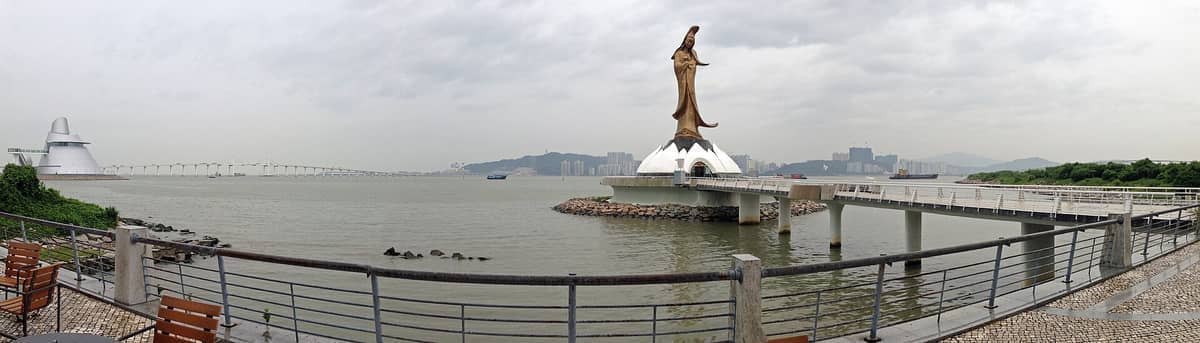
Rising from a lotus-shaped dome on an artificial islet off Avenida Dr. Sun Yat-Sen, the Kun Iam Statue is one of Macau's most distinctive waterfront landmarks. The Kun Iam Ecumenical Centre inside the base is free to enter and offers a rare moment of calm away from the casino corridors. The outdoor park stays open from early morning until late evening, making it one of the few major sights in Macau that rewards visitors at multiple hours of the day.
Quick Facts
- Location
- Artificial islet off Avenida Dr. Sun Yat-Sen, N.A.P.E. area, Macau Peninsula
- Getting There
- Walk from MGM Macau or take a taxi to Av. Dr. Sun Yat-Sen; no dedicated transit stop
- Time Needed
- 30–60 minutes for the outdoor park; add 30 min if visiting the Ecumenical Centre
- Cost
- Free (MOP 0); outdoor park and indoor Ecumenical Centre both free to enter
- Best for
- Sunrise and sunset photography, quiet reflection, cultural sightseeing without crowds
- Official website
- www.icm.gov.mo/en/KunIamEcumenical
What the Kun Iam Statue Actually Is
The Kun Iam Statue, formally part of the Kun Iam Ecumenical Centre, stands on a small artificial islet connected to Macau's N.A.P.E. waterfront by a short causeway. The figure represents Guan Yin (romanised in Macau as Kun Iam), the Buddhist Goddess of Mercy, one of the most widely venerated figures across Chinese religious culture. She is depicted in bronze, arms slightly extended, positioned above a lotus-shaped dome that encloses the Ecumenical Centre below.
This is a modern landmark rather than an ancient temple. The architecture is deliberate and symbolic: the lotus form is central to Buddhist iconography, representing purity and enlightenment emerging from the water. For visitors accustomed to Macau's UNESCO heritage sites and casino towers, the statue offers something different: a contemporary spiritual monument that holds its own visual weight against the city skyline behind it and the Pearl River estuary in front.
ℹ️ Good to know
Opening hours: Outdoor park 07:00–23:00 daily. Indoor Ecumenical Centre 10:00–18:00, closed Tuesdays, open on public holidays. The site closes when Typhoon Signal No. 3 or above is hoisted. Admission is free.
The Walk Out to the Island
The approach is part of the experience. From Avenida Dr. Sun Yat-Sen, a paved causeway leads out over the water to the islet. The walk takes under two minutes, but the transition is noticeable: the road noise from the NAPE district fades, and you are suddenly surrounded on three sides by open water. On calm mornings, the harbour surface reflects the statue's silhouette and the buildings of the Macau Peninsula beyond.
The islet itself is compact. A circular promenade wraps around the base of the lotus dome, and benches are positioned at intervals facing outward toward the water. Local residents use this loop for early morning exercise, and you will often see people walking quiet circuits well before the indoor centre opens. The ground underfoot is flat paving throughout, and the causeway and promenade are accessible to those with limited mobility, though visitors requiring wheelchair access should verify specific interior accessibility in advance.
The N.A.P.E. district is also where you will find the Macau Science Centre, which sits close along the same waterfront stretch. The two make a natural pairing for an afternoon walk along Avenida Dr. Sun Yat-Sen without the need for taxis between stops.
How the Light Changes Through the Day
Few waterfront sites in Macau shift as dramatically between morning and evening as this one. At dawn, the bronze figure catches a warm metallic glow while the water behind it is still dark. The surrounding hotel towers have not yet fully lit up, and the scene is quieter than almost anywhere else on the Peninsula at that hour.
Midday is the least compelling time to visit. Hard overhead light flattens the bronze surface and the harbour looks washed out. If you are coming primarily for photographs, midday is worth avoiding. Afternoon light from the west begins to improve things around 15:00–16:00, and the hour before sunset can be excellent: the sky over the Pearl River estuary turns quickly, and the statue silhouetted against an orange or pink sky is the image that most visitors end up using.
After dark, the dome and statue are lit artificially, and the reflection in the water sharpens considerably when the surface is calm. The outdoor park stays open until 23:00, making an evening visit a legitimate option even after dinner. The atmosphere is calm rather than atmospheric in the dramatic sense, but it is genuinely pleasant and almost completely uncrowded by 21:00.
💡 Local tip
For the best photography, arrive 30 minutes before sunset. The western exposure across the water means the sky colour develops quickly, and the bronze surface of the statue picks up warm tones that midday light cannot produce. A wide-angle lens or phone camera works well from the far end of the promenade loop.
Inside the Ecumenical Centre
The lotus dome houses the Kun Iam Ecumenical Centre, an interior space managed by the Cultural Affairs Bureau of the Macao SAR Government. The name reflects an intention beyond purely Buddhist worship: the centre is designed to acknowledge multiple faith traditions, which is unusual and worth noting. The interior is calm, with subdued lighting and a meditative atmosphere that contrasts sharply with the sensory overload common to other parts of Macau.
The centre is open Tuesday through Sunday, 10:00 to 18:00, and is closed on Tuesdays. The Friday closure catches many visitors off guard, so it is worth checking before you plan your visit around the interior. If the main draw for you is the interior exhibition space rather than the outdoor promenade, confirm the schedule through the Cultural Affairs Bureau before travelling.
Dress modestly if you intend to go inside. The space is used for genuine religious and cultural purposes, and while there is no enforced dress code, clothing that covers shoulders and knees shows appropriate respect for the setting.
Cultural and Contextual Significance
Guan Yin holds deep significance across Chinese Buddhism, Taoism, and popular folk religion. She is understood as a compassionate figure who hears the suffering of the world, and her presence is ubiquitous across Macau's temples, households, and shrines. The waterfront statue at N.A.P.E. brings that devotion into the public civic landscape in a large-scale and explicitly cross-cultural form.
If the religious dimension of Macau interests you, the statue pairs naturally with a broader exploration of the city's temple network. The A-Ma Temple at the southern tip of the Peninsula is Macau's oldest place of worship and takes a completely different form: narrow incense-filled halls tucked into a hillside. Together, the two sites show the range of how religious spaces are conceived and used across different eras in Macau.
For a broader overview of where to visit across the city's temples and shrines, the Macau temples guide covers the major sites with practical visiting details.
Practical Notes for Visiting
The statue is located in the N.A.P.E. district on the Macau Peninsula's eastern waterfront, roughly a 10-minute walk from MGM Macau. Taxis can drop you on Avenida Dr. Sun Yat-Sen directly in front of the causeway. There is no dedicated bus stop serving the islet, but several bus routes run along or near Av. Dr. Sun Yat-Sen; verify current route numbers through the Macau SAR Transport Bureau before your visit, as routes are subject to change.
There is no entrance fee, no queuing, and no ticketing system. The outdoor area can be visited at any time between 07:00 and 23:00 without planning beyond simply showing up. This makes it one of the most low-friction sights on the Peninsula, which is worth something in a city where popular heritage sites can develop queues by mid-morning.
Weather matters here more than at most Macau sights because the location is entirely exposed. In summer (June through September), the open waterfront offers no shade, and humidity combined with direct sun can make a midday visit uncomfortable. If you are visiting during the hotter months, early morning is strongly preferable. Typhoon season also affects this site specifically: it closes when Typhoon Signal No. 3 or above is raised. For more on how seasonal conditions affect sightseeing across the territory, see the best time to visit Macau guide.
⚠️ What to skip
The Ecumenical Centre is closed on Tuesdays. The outdoor park remains open, but if you want to go inside the lotus dome, avoid planning your visit on a Tuesday. Confirm current hours at icm.gov.mo before travel.
Is It Worth Your Time?
The Kun Iam Statue works best as part of a waterfront walk rather than as a standalone destination requiring significant planning. If you are already in the N.A.P.E. area or staying nearby, the 30-minute loop around the islet adds something genuinely different to a Macau itinerary: open air, water on all sides, and a moment away from the interior spaces of hotels and casinos.
Visitors who come expecting the visual drama of a major pilgrimage site may find the surroundings too modern and the scale insufficient to match expectations. The statue is large but not towering; the setting is pleasant but not cinematic in the way some travel imagery suggests. That said, the honest comparison is to similar free waterfront attractions in the region, and on that basis it holds up well, particularly at the hours of day when light and quiet converge.
Travellers on a tight schedule should note that Macau's historic core around the Ruins of St. Paul's and Senado Square contains more densely concentrated sights per walking minute. The Kun Iam Statue sits in a quieter, less walkable part of the Peninsula and involves a separate trip unless you are already nearby. If time is limited, it works better as an early morning or post-dinner add-on than as a primary destination.
For visitors spending more than a day in Macau and looking to see beyond the UNESCO corridor, this site fits naturally into a Macau heritage walk that incorporates the waterfront areas.
Insider Tips
- The promenade loop around the base of the lotus dome is roughly 200 metres in circumference. Walking it twice gives you a complete set of angles on the statue and the surrounding water without backtracking.
- The reflection of the statue and the lit dome in the harbour is sharpest on windless nights between 20:00 and 22:00. Bring a tripod or use a railing to steady your camera for long-exposure shots.
- If the Friday closure of the Ecumenical Centre affects your plans, the outdoor space still rewards a visit. The interior is a secondary attraction; the promenade and waterfront views are the primary draw.
- Nearby hotel concierges at MGM Macau can confirm the current typhoon signal status before you head out. In typhoon season, conditions can change within hours and the site will close with little notice.
- The causeway faces west. Arriving in the final 45 minutes before sunset gives you the best combination of directional light on the bronze and the widest colour range in the sky above the Pearl River estuary.
Who Is Kun Iam Statue (Goddess of Mercy Waterfront Statue) For?
- Photographers looking for a waterfront subject at golden hour or after dark
- Travellers seeking a quiet, free alternative to Macau's crowded heritage sites
- Those interested in Chinese religious culture and contemporary interpretations of Guan Yin
- Early risers who want somewhere open from 07:00 with open-air space and harbour views
- Couples or slow travellers on multi-day visits who have already covered the UNESCO core
Nearby Attractions
Other things to see while in Macau Waterfront & NAPE:
- Grand Prix Museum
The Macao Grand Prix Museum dedicates 16,000 square metres across four floors to the history of one of Asia's oldest and most technically demanding street races. Whether you follow motorsport closely or simply want to understand one of Macau's defining annual events, this is the most focused and well-produced museum on the waterfront.
- Macau Fisherman's Wharf
Macau Fisherman's Wharf is a free-entry, 133,000-square-metre leisure complex on the outer harbour of the Macau Peninsula. Part themed streetscape, part hotel zone, part dining strip, it draws curious walkers and families rather than serious sightseers. Here is what you actually get.
- Macau Museum of Art
The Macao Museum of Art is a major museum in Macau dedicated entirely to the visual arts, with seven exhibition areas across four floors and free admission. Located in the NAPE waterfront district inside the Macao Cultural Centre complex, it offers a genuinely calm alternative to the city's more-trafficked historic sites.
- Macau Science Centre
The Macao Science Center is a modern science museum and planetarium on the Macau Peninsula waterfront, housed in a striking cone-shaped building designed by I.M. Pei Architects. With generally low-cost admission to its 13 themed galleries and ticketed planetarium dome shows, it offers a genuinely worthwhile stop, especially for families and anyone looking for a break from the city's casino-heavy entertainment landscape.