Macao Grand Prix Museum: Motorsport History on the Macau Waterfront
The Macao Grand Prix Museum dedicates 16,000 square metres across four floors to the history of one of Asia's oldest and most technically demanding street races. Whether you follow motorsport closely or simply want to understand one of Macau's defining annual events, this is the most focused and well-produced museum on the waterfront.
Quick Facts
- Location
- Rua de Luís Gonzaga Gomes 431, Macau Peninsula
- Getting There
- Reachable by public bus or taxi from central Macau Peninsula; check official transport page for current route numbers
- Time Needed
- 1.5 to 2.5 hours for a thorough visit
- Cost
- MOP 80 general admission; MOP 40 for Macau residents and non-residents eligible for concession (including children 12 and under and seniors 65+); free for children 3 and under and accompanying carers of eligible visitors with disabilities under specific resident concession schemes
- Best for
- Motorsport fans, families with older children, history enthusiasts, rainy-day visits
- Official website
- mgpm.macaotourism.gov.mo/en
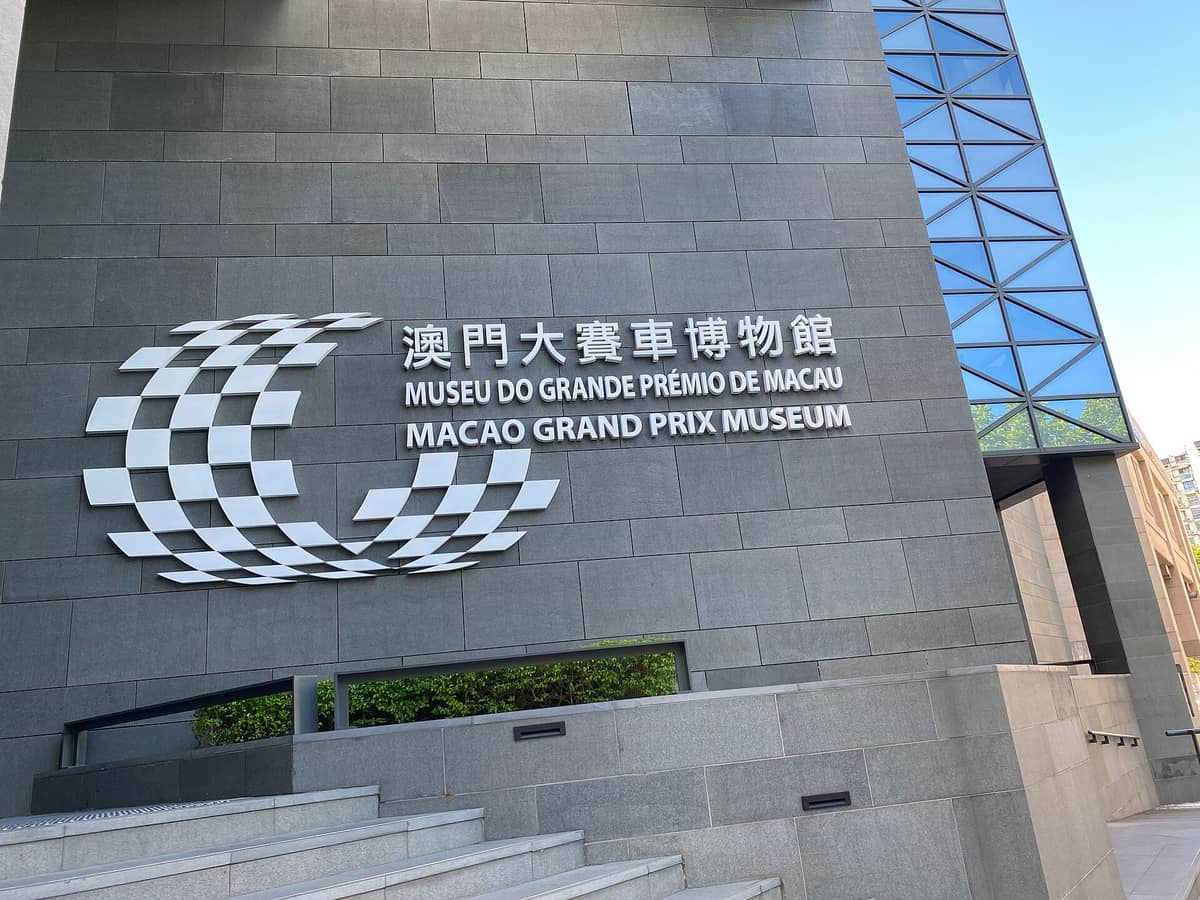
What the Macao Grand Prix Museum Actually Is
The Macao Grand Prix Museum, known in Chinese as 澳門格蘭披治大賽車博物館, is a government-operated motorsport museum dedicated entirely to the history of the Macau Grand Prix. It reopened in its current form on 1 June 2021 after a substantial expansion, growing to approximately 16,000 square metres of floor space across four levels, six-fold larger than the previous iteration. It is managed by the Macao Government Tourism Office and sits on the Macau Peninsula waterfront at Rua de Luís Gonzaga Gomes.
The Macau Grand Prix itself has been running since 1954, making it one of the longest-running motor races in Asia. The circuit uses public streets, which means the race infrastructure is woven directly into the city fabric for most of the year. The museum gives that annual spectacle a permanent physical home, displaying race cars, motorcycles, trophies, archival footage, and interactive exhibits that trace the event's seven decades of history.
ℹ️ Good to know
Opening hours: Monday to Sunday, 10:00 to 18:00 (last admission 17:30). Closed on Tuesdays. Check the official website before visiting, as public holidays can affect schedules.
The Race That Built This Museum
Understanding the museum requires a basic grasp of what the Macau Grand Prix is. The race takes place on the Guia Circuit, a 6.2-kilometre street circuit that winds through narrow, walled sections, elevation changes, and tight chicanes in the middle of an ordinary urban neighbourhood. Drivers describe it as one of the most demanding circuits in the world, combining the raw speed of Formula racing with conditions that offer almost no room for error. Barrier contact at the Lisboa bend and along the Melco hairpin is routine even at elite level.
The event draws Formula 3 competitors as well as touring car and motorcycle classes, and it has historically served as a career milestone for drivers who went on to Formula 1. The museum contextualises all of this with specific hardware and documented race histories rather than generic motorsport content. If you want broader context on the annual event before visiting, the Macau Grand Prix guide covers race dates, ticketing, and circuit access in detail.
Four Floors: What You Will Actually See
The museum's layout across four floors allows each level to focus on a distinct dimension of the race's history. Ground level orients visitors with introductory displays and a timeline of the Grand Prix from its founding years in the 1950s through to recent decades. The scale of the collection becomes apparent quickly: actual race cars are positioned at close range with minimal barriers, allowing you to study body panels, tyre wear markings, and cockpit details that photographs do not capture.
Upper floors move into more technical and interactive territory. Simulator stations let visitors experience the Guia Circuit from a driver's perspective, which is genuinely useful for understanding what makes the layout unusual. Helmet and suit collections, trophy displays, and archival press photography fill other sections. The museum also dedicates space to the motorcycle racing component of the Grand Prix weekend, which is often overshadowed in international coverage but has its own detailed chapter of history.
The build quality of the expanded 2021 facility is noticeably higher than the earlier, smaller version. Lighting is well-calibrated for photography, display text is available in multiple languages including English, and the overall circulation flow is intuitive. This is not a dense archive that requires specialist knowledge to enjoy. Even visitors with limited motorsport background tend to find the scale of the vehicles and the drama of the race footage engaging.
💡 Local tip
Photography tip: The ground floor car displays offer the best natural framing without reflective glass. Visit on a weekday morning when tour groups are less likely to be positioned around key vehicles.
When to Visit and What to Expect at Different Times
Weekday mornings between 10:00 and 12:00 are consistently the quietest window. The museum is climate-controlled throughout, which matters considerably in Macau's summers, when outdoor temperatures regularly reach the high 20s to low 30s Celsius with high humidity. This makes the museum one of the better mid-afternoon shelter options on the waterfront when the heat is at its most oppressive.
During the actual Macau Grand Prix weekend in November, the museum sees significantly higher footfall and often runs special exhibitions or temporary displays tied to that year's event. If you are visiting specifically for the race, factor in extra time or arrive at opening. Outside race period, a visit of 1.5 to 2 hours is sufficient for most visitors. Serious enthusiasts who want to read all panel text and explore archival material should allow 2.5 to 3 hours.
Macau's autumn months, typically October through December, are the most comfortable for the broader peninsula visit that usually accompanies this museum stop. Lower humidity and temperatures in the low 20s Celsius make it easier to combine an indoor visit here with outdoor exploration of the surrounding waterfront area. More seasonal planning context is available in the best time to visit Macau guide.
Practical Walkthrough: Getting There and Navigating the Visit
The museum sits at Rua de Luís Gonzaga Gomes 431 on the Macau Peninsula. Public buses connect the broader waterfront area to central peninsula stops, and the official museum transportation page lists current route numbers. Taxis from the historic centre or ferry terminals take under 10 minutes in ordinary traffic, which tends to be the most straightforward option for visitors not already familiar with Macau's bus system. Casino shuttle buses serve the major integrated resorts rather than waterfront cultural sites, so they are not useful here.
Parking exists nearby for those arriving by private vehicle or hired car, but self-drive is rarely practical for visitors staying in central Macau. The getting around Macau guide covers bus routes, taxi etiquette, and journey time estimates across the peninsula in detail.
Admission is purchased on-site or through the museum's online ticketing system at mgpm.macaotourism.gov.mo. General admission for non-residents aged 13 to 64 is MOP 80. Macau SAR residents in the same age bracket pay MOP 40. Children aged 12 and under, seniors aged 65 and over, international student cardholders, international museum association members, and visitors with disabilities and one accompanying carer pay MOP 40 as non-residents or are admitted free if Macau residents. Children aged 3 and under enter free. Groups of 15 or more from non-profit organisations pay the reduced MOP 40 rate; school groups from Macau or overseas enter free. Prices in MOP can also be paid in Hong Kong dollars, which are widely accepted across Macau at a near-parity rate.
⚠️ What to skip
The museum is closed every Tuesday. If your Macau itinerary is tight, make sure to check the day of the week before building this into your plans. Public holiday closures may also apply; confirm on the official website.
Accessibility and Family Considerations
The post-2021 facility was purpose-designed with modern infrastructure, which generally means lift access between floors and level entry to exhibits. Visitors with disabilities are admitted free along with one accompanying carer, indicating the museum has formally considered accessibility in its operational design. If you have specific mobility or access requirements, contacting the museum directly before your visit is advisable, as the layout of individual display areas may vary.
For families, the museum works best with children aged 8 and older who have some basis for engaging with racing vehicles or competitive sport. Younger children may find the experience less stimulating than the interactive focus of the Macau Science Centre, which is designed more explicitly for younger audiences. That said, the simulator stations and the visual drama of full-sized race cars at close proximity do hold attention across a reasonable age range.
Who Gets the Most From This Museum
The Macao Grand Prix Museum is well-produced and genuinely informative about a racing event that has real historical significance in Asian motorsport. It is not, however, a generalist museum. If you have no prior interest in circuit racing and are visiting purely because it is on the waterfront, you may find the specific focus limiting after the first floor. The interactive elements help, but the core appeal is the depth of the Grand Prix archive, and that depth rewards visitors who arrive with some curiosity about the subject.
Visitors primarily interested in Macau's Portuguese colonial history, temple culture, or UNESCO heritage sites will find those interests better served elsewhere on the peninsula. The Macau Museum at the Monte Fort covers the territory's broader historical and cultural narrative, and the Maritime Museum addresses Macau's seafaring past. Both offer complementary perspectives for visitors on a full peninsula day.
For those who do love motorsport, this is among the better single-circuit museums in Asia. The combination of authentic hardware, archival depth, and modern presentation sets it apart from smaller race museums that rely primarily on photographs and text panels. Pairing a visit here with a walk along the waterfront and a stop at Guia Fortress and Lighthouse, which overlooks part of the circuit route from above, creates a logical and satisfying half-day on the peninsula.
Insider Tips
- Arrive within the first 30 minutes of opening on a weekday to have the ground-floor car displays essentially to yourself. Tour groups typically arrive between 10:30 and 11:30.
- The simulator stations have a limited number of units and can develop queues by mid-morning. Head there early in your visit rather than saving them for last.
- If you are visiting during the Grand Prix weekend in November, the museum often displays additional vehicles and race-specific exhibits not part of the permanent collection. Check the official website for event-specific programming.
- MOP 80 buys noticeably more space and content here than at some other Macau attractions at similar price points. The 16,000 square metre footprint means the visit never feels rushed or cramped.
- The museum's English-language labelling is comprehensive throughout all four floors, which is not always guaranteed at smaller Macau cultural institutions. You do not need a guided tour to follow the narrative.
Who Is Grand Prix Museum For?
- Motorsport fans and Formula racing enthusiasts wanting primary source material on one of Asia's oldest street circuits
- Families with children aged 8 and above who can engage with vehicles, racing history, and simulator experiences
- Visitors spending a full day on the Macau Peninsula looking for a structured indoor activity, particularly during summer heat or rainy-season showers
- Travellers attending the Macau Grand Prix who want deeper historical context beyond the race weekend itself
- Architecture and design-minded visitors curious about how a modern museum facility has been built into an older waterfront building
Nearby Attractions
Other things to see while in Macau Waterfront & NAPE:
- Kun Iam Statue (Goddess of Mercy Waterfront Statue)
Rising from a lotus-shaped dome on an artificial islet off Avenida Dr. Sun Yat-Sen, the Kun Iam Statue is one of Macau's most distinctive waterfront landmarks. The Kun Iam Ecumenical Centre inside the base is free to enter and offers a rare moment of calm away from the casino corridors. The outdoor park stays open from early morning until late evening, making it one of the few major sights in Macau that rewards visitors at multiple hours of the day.
- Macau Fisherman's Wharf
Macau Fisherman's Wharf is a free-entry, 133,000-square-metre leisure complex on the outer harbour of the Macau Peninsula. Part themed streetscape, part hotel zone, part dining strip, it draws curious walkers and families rather than serious sightseers. Here is what you actually get.
- Macau Museum of Art
The Macao Museum of Art is a major museum in Macau dedicated entirely to the visual arts, with seven exhibition areas across four floors and free admission. Located in the NAPE waterfront district inside the Macao Cultural Centre complex, it offers a genuinely calm alternative to the city's more-trafficked historic sites.
- Macau Science Centre
The Macao Science Center is a modern science museum and planetarium on the Macau Peninsula waterfront, housed in a striking cone-shaped building designed by I.M. Pei Architects. With generally low-cost admission to its 13 themed galleries and ticketed planetarium dome shows, it offers a genuinely worthwhile stop, especially for families and anyone looking for a break from the city's casino-heavy entertainment landscape.