Kasai Rinkai Park: Tokyo's Underrated Seaside Escape
Kasai Rinkai Park stretches across 77.9 hectares of reclaimed waterfront in eastern Tokyo, offering free entry, Tokyo Bay views, one of the world's largest tuna tanks, and a dedicated bird sanctuary. It rewards visitors who want open space and genuine nature within the city without the crowds of more central parks.
Quick Facts
- Location
- 6-2-3 Rinkaichō, Edogawa City, Tokyo 134-8587
- Getting There
- Kasai-Rinkai-Kōen Station (JR Keiyō Line), short walk to main entrance
- Time Needed
- 2–4 hours for the park; allow extra time for the aquarium
- Cost
- Park entry free; Tokyo Sea Life Park aquarium ¥700 adults, ¥350 seniors, ¥250 junior high students, free for children (elementary and under)
- Best for
- Families, birdwatchers, picnickers, aquarium lovers, anyone needing open sky in Tokyo
What Kasai Rinkai Park Actually Is
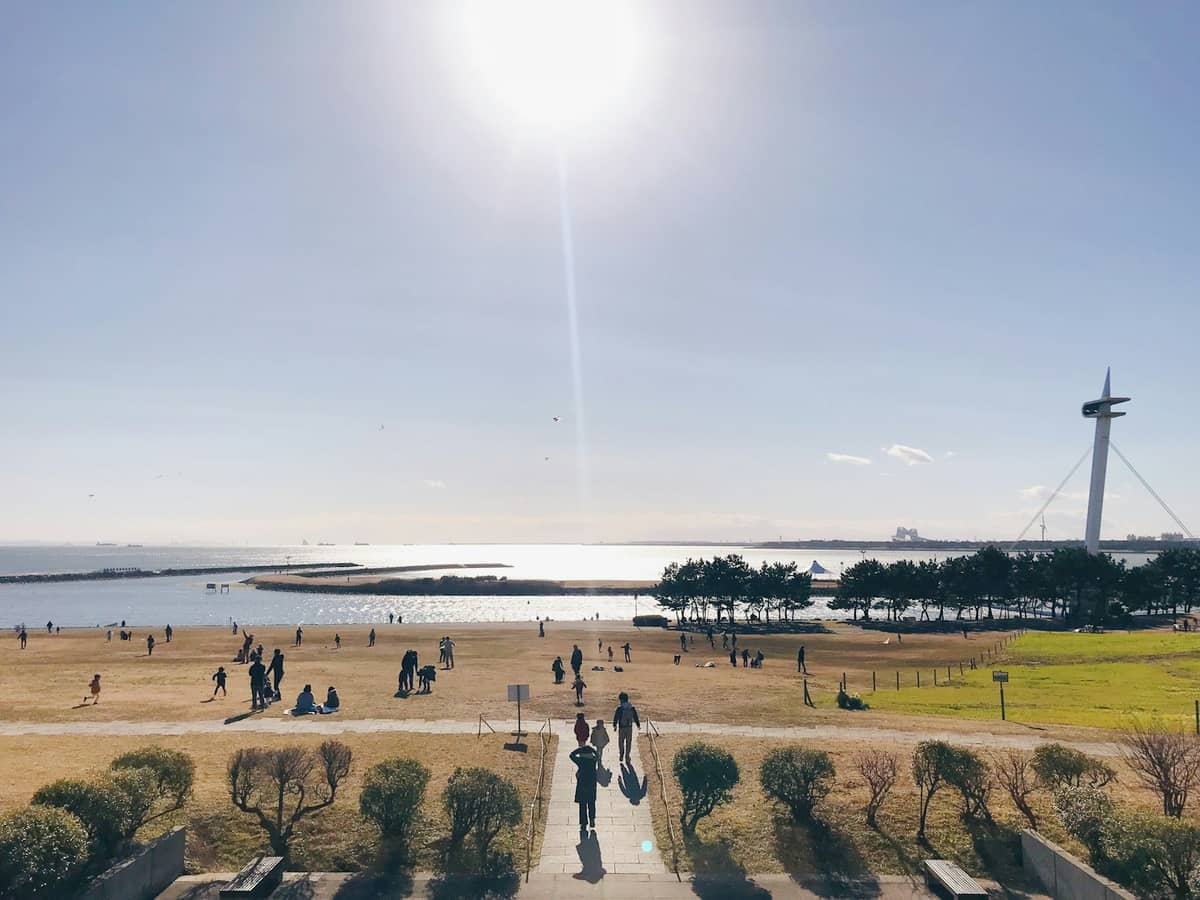
Kasai Rinkai Park, officially the Tokyo Metropolitan Kasai Rinkai Park (葛西臨海公園), sits on reclaimed land at the edge of Tokyo Bay in Edogawa City, about 15 kilometers east of central Tokyo. It is large by any urban standard, covering roughly 77.9 hectares of sea-facing green space, and it manages to feel genuinely open in a way that parks closer to Shinjuku or Shibuya simply cannot. The horizon is visible. There is salt in the air. Cargo ships drift past in the distance.
The park developed through the 1980s on reclaimed waterfront, designed as a metropolitan-scale leisure destination that combined natural habitats with recreational infrastructure. Today it contains Tokyo Sea Life Park, one of Japan's better aquariums, a large bird sanctuary, a crystal-domed observation rest house, open lawns, cycling paths, and direct access to a narrow sandy shoreline. Almost all of it is free, which makes it popular with local families and noticeably quieter than tourist-facing attractions further into the city.
💡 Local tip
The park grounds are open 24 hours year-round. Individual facilities like the aquarium (09:30–17:00, closed Wednesdays) and Bird Park Watching Center (09:15–16:30) have their own hours. Arrive before 10:00 on weekdays for the most peaceful experience.
Tokyo Sea Life Park: The Aquarium Inside the Park
The glass dome of Tokyo Sea Life Park is visible as you approach from the station, its curved surface catching whatever light the sky offers. Inside, the centerpiece is a massive circular tuna tank, one of the largest in the world, where bluefin tuna move in slow continuous circuits at eye level. The scale of the fish and the tank is genuinely arresting, even for visitors who have seen many aquariums.
Beyond tuna, the aquarium organizes its exhibits around ocean zones, from the Tokyo Bay shallows to deep-sea environments. The penguin habitat draws families with children. The deep-sea section is darker and quieter, worth slowing down for. Lighting throughout is low and blue-toned, which makes photography with a phone camera difficult but creates a genuinely immersive atmosphere.
Admission is ¥700 for adults (approximately ages 16–64), ¥350 for seniors 65 and older, ¥250 for junior high school students, and free for elementary-age children and younger. Visitors with disabilities and one accompanying attendant enter free. The aquarium closes on Wednesdays and during the year-end and New Year holiday period. Last entry is around 16:00. These details are worth confirming before your visit, as the closure schedule shifts when Wednesday falls on a public holiday.
If you are planning a broader aquarium day in Tokyo, it helps to compare options beforehand. Our guide to Tokyo with kids covers how Kasai Sea Life Park compares with other family-oriented attractions across the city.
Tickets & tours
Hand-picked options from our booking partner. Prices are indicative; availability and final rates are confirmed when you complete your booking.
Tsukiji Fish Market Walking Food Tour
From 40 €Instant confirmationFree cancellationMt.Fuji,Owakudani, Hakone Cruise & Ropeway, Oshino Hakkai 1-Day Trip
From 54 €Instant confirmationFree cancellationTour to Mt. Fuji Area, Oshino Hakkai and Kawaguchi Lake from Tokyo
From 57 €Instant confirmationFree cancellationNikko UNESCO Shrine and Nature View 1-Day Tour from Tokyo
From 78 €Instant confirmationFree cancellation
The Bird Sanctuary: Tokyo's Quietest Nature Reserve
Separated from the main park by a wooden boardwalk and dense reed beds, the bird sanctuary is one of the most underused corners of the entire park. The Watching Center, open from 09:15 to 16:30, offers elevated views over tidal flats and wetland habitat where migratory and resident waterbirds feed at different times of year. In autumn and winter, shorebirds and waterfowl arrive in significant numbers. In spring, breeding season brings its own rhythm of activity.
Binoculars make the visit considerably more rewarding, but even without them the reed beds alone are worth the short detour: the sound changes entirely once you are past the main lawn. Wind through grasses, occasional bird calls, and a distinct absence of city noise. It is an unusual sensory experience this close to central Tokyo.
ℹ️ Good to know
Serious birdwatchers should visit between October and March, when migratory species pass through or overwinter on the tidal flats adjacent to the park. Early morning, before 09:00, offers the most activity even though the Watching Center does not open until 09:15.
The Waterfront and Crystal View Observatory
The park's southern edge faces directly onto Tokyo Bay, with a narrow sandy shoreline accessible from the main grounds. This is not a swimming beach, but it is a good place to stand and look at the bay. On clear days you can see across the water toward the industrial waterfront of Kawasaki and, further, the outline of the hills beyond Yokohama. Early morning and late afternoon produce the best light for photography here, with the low sun catching the water at an angle the midday hours cannot match.
The Crystal View observation rest house sits at the center of the park on a slight rise, its glass dome framing sky views in any direction. It is open from March to November, 10:00–17:00, and from December to February, 11:00–16:00, with the last admission around 30 minutes before closing. The structure is architecturally distinctive, designed to reference the dome of the aquarium nearby, and worth a brief visit even if the panoramic views from the top are modest by Tokyo standards.
For genuinely elevated views of Tokyo Bay from a different angle, Rainbow Bridge and the Odaiba waterfront offer a complementary perspective, and the two areas work well as a combined day if you are traveling by public transit.
How the Park Changes Through the Day
Early mornings, particularly on weekdays, the park belongs almost entirely to joggers and dog walkers doing circuits of the main lawn. The sea air is at its clearest before the day heats up, and the quality of light on the bay is noticeably different from what you get at noon. If you are here for photography, arrive before 09:00.
Weekday midmornings see school groups arrive for the aquarium, which makes the Sea Life Park louder and more crowded between roughly 10:00 and 13:00. Weekends, particularly in spring cherry blossom season and during summer, bring considerably larger crowds to the open lawns. Families spread out picnic sheets across the grass from mid-morning onward, and the park takes on a genuinely festive character. It is not unpleasant, but it is a different experience from the quiet weekday version.
Late afternoons in spring and autumn are especially pleasant on the waterfront. The temperature drops, light becomes golden, and the number of visitors thins. The park grounds stay open through the night, and the reflections on the bay after sunset are worth seeing if you are in the area, though facilities will have closed.
Spring visits pair naturally with cherry blossom season. For seasonal context and timing, our guide to Tokyo in spring covers bloom forecasts and the best parks across the city.
Getting There and Getting Around the Park
Kasai-Rinkai-Kōen Station on the JR Keiyō Line is the most direct access point. From Tokyo Station, the Keiyō Line takes roughly 13 minutes. From Maihama Station (Tokyo Disney Resort), it is one stop back in the direction of Tokyo, making Kasai Rinkai Park a logical addition to a Disney-area day or a standalone excursion from the city center.
The park is largely flat throughout, with wide paved paths connecting the main areas. This makes it one of the more accessible large parks in Tokyo for wheelchair users and visitors with strollers. Rental wheelchairs and strollers are available at the park service center. There are accessible toilets at multiple points, and the main facilities are step-free. Visitors with significant mobility needs should confirm current equipment availability directly with the park before visiting.
💡 Local tip
Rental bicycles are available within the park, which makes reaching the bird sanctuary and the far southern shoreline considerably faster. The park is large enough that walking the full perimeter takes a good while.
Practical Notes: Weather, Seasons, and What to Bring
The park's coastal position means wind is a constant presence, particularly in winter and spring. What feels mild in central Tokyo can feel noticeably colder near the waterfront. An extra layer is worth having even on days when the city forecast looks warm. In summer, the open lawns offer very little shade, and temperatures in July and August frequently exceed 30°C. Sun protection and water are essential between late June and early September.
Typhoon season runs roughly from late August through October, and the park's exposed waterfront position means conditions deteriorate quickly when systems approach. The park grounds themselves remain technically open, but the experience on the shore during heavy rain or high winds is unpleasant and potentially unsafe. Check weather forecasts before visiting in September and October in particular.
For a full overview of Tokyo's seasonal conditions and how they affect outdoor attractions, the best time to visit Tokyo guide breaks down each month in practical terms.
Who This Park Is For, and Who Should Skip It
Kasai Rinkai Park works best for visitors who want genuine outdoor space, the aquarium is good enough to justify a dedicated trip, and the bird sanctuary offers something few other urban parks in Japan can match. Families with children will find it close to ideal: free entry, open grass, a quality aquarium at a reasonable price, and clean facilities.
Travelers with only two or three days in Tokyo and a packed itinerary will likely find the journey east feels long relative to the payoff. The park is not spectacular in the way that Shinjuku Gyoen or a rooftop observatory is spectacular. It is an expansive, calm, coastal green space that rewards visitors who slow down and spend real time there. If you are looking for dramatic urban scenery or cultural density, this is not the right stop.
For comparison, Shinjuku Gyoen offers more manicured garden variety closer to central Tokyo, while Ueno Park pairs outdoor space with immediate access to major museums and the zoo, making it a denser cultural option for time-pressed visitors.
Insider Tips
- The tuna tank at Tokyo Sea Life Park is most dramatic when the feeding happens. Check the schedule at the entrance on arrival, as it changes and is not always posted online in English.
- The narrow shoreline on the park's southern edge is not a swimming beach, but it is a pleasant spot to reach the waterfront. Walk through the main lawn toward the water and follow the path south past the berm.
- Maihama Station (Tokyo Disneyland and DisneySea) is one stop from Kasai-Rinkai-Kōen Station on the Keiyō Line. If you have a Disney ticket for one day and a free morning the next, Kasai Rinkai Park is the most logical nearby addition without going back into central Tokyo.
- The park holds seasonal events including cherry blossom viewing in late March to early April. These draw large crowds to what is normally a quiet park, so check the Tokyo Metropolitan Parks calendar before visiting on weekends in those periods.
- Free entry days at the aquarium exist on certain Tokyo Metropolitan Parks commemorative days. These are not widely promoted in English but are listed on the official park site. If your visit aligns with one, the saving is modest but worth knowing.
Who Is Kasai Rinkai Park For?
- Families with young children wanting a full day out without high admission costs
- Birdwatchers visiting Tokyo between October and March
- Travelers staying near Maihama or the eastern bay area who want a non-Disney day option
- Anyone wanting coastal open space and sea air without leaving the Tokyo metropolitan area
- Budget travelers who want a quality aquarium experience at a low price point
Nearby Attractions
Combine your visit with:
- Akasaka Palace (State Guest House)
The State Guest House, Akasaka Palace is Japan's principal diplomatic residence and one of the few Western-style palaces in Asia open to the public. Built in neo-baroque style for the Crown Prince in the early 20th century, it now receives heads of state and, on select days, ordinary visitors. The combination of ornate gilded interiors, formal French gardens, and a Japanese-style annex makes it one of the most architecturally unusual stops in Tokyo.
- Edo-Tokyo Open Air Architectural Museum
Spread across the grounds of Koganei Park, the Edo-Tokyo Open-Air Architectural Museum rescues and reassembles more than 30 historic structures spanning the Edo period through the early 20th century. From a dismantled farmhouse to a reconstruction of a Showa-era Tokyo streetscape, it is one of the most thoughtful and undervisited cultural sites in the metropolitan area.
- Enoshima
A small island off the Shonan coast of Kanagawa Prefecture, Enoshima packs a surprising amount into a short walk: a three-part Shinto shrine, ancient sea caves, a hilltop botanical garden, a lighthouse observation tower, and seafood stalls lining a stone-paved shopping street. It works as a half-day excursion or a full day if you combine it with nearby Kamakura.
- Gotokuji Temple
Gotokuji Temple in Setagaya is a working Soto Zen Buddhist temple that happens to be one of the claimed birthplaces of the maneki-neko, Japan's iconic beckoning cat. Hundreds of white ceramic cats line the shelves of a dedicated shrine, creating one of Tokyo's most quietly striking visual spectacles. Entry is free, crowds are manageable, and the surrounding grounds offer genuine calm.